



Wheel Engraved Rummer
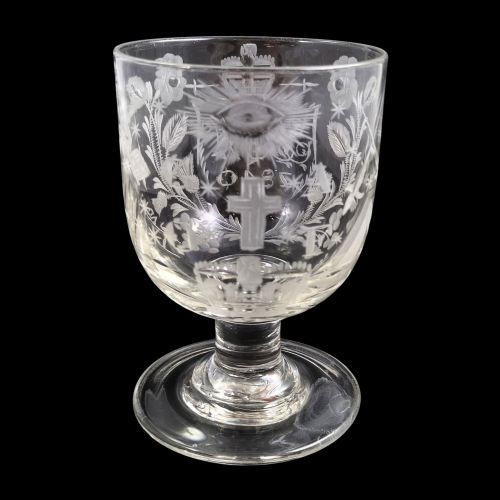
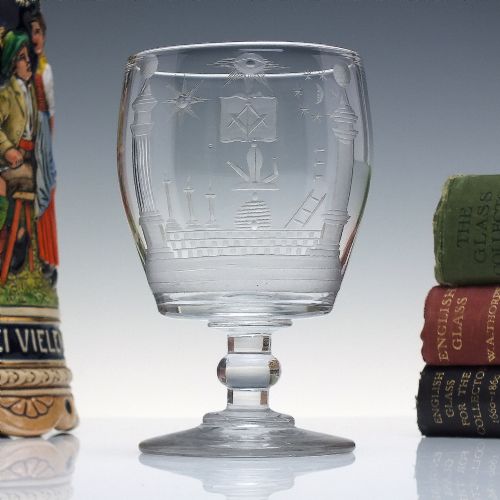
These wheel engraved rummer pieces are heavy drinking vessels built for toasts and taverns, prized by collectors for their crisp wheel-cut ornamentation.
Wheel Engraved Rummer
When you search for a wheel engraved rummer, you are looking at substantial drinking vessels designed for toasts, ale, and wine across the Georgian, Regency, and Victorian eras. These robust glasses often feature wide bowls set upon sturdy stems and feet, intended for daily tavern or dining table use.
The versions you are most likely to meet on this page span from the late eighteenth century through the nineteenth century, with English and Bohemian origins predominating. They display traditional motifs ranging from botanical hops and barley to commemorative Masonic symbols and sailing ships.
Forms vary from large serving bowls to pairs of pan rummers and ale glasses, capturing the changing domestic tastes of the periods. Collectors prize these objects for their tactile weight and the distinct character of their hand-cut decoration.
How they were made
Makers produced these pieces using lead glass, lead crystal, clear glass, and flint glass, yielding a heavy and brilliant substance suitable for deep cutting. Artisans then applied wheel engraving techniques to carve detailed imagery directly into the vessel surface.
The manufacturing process combined traditional glassblowing to form the robust bowl, stem, and foot with abrasive wheel-cutting to create crisp lines and polished facets. This combination of hot glass forming and cold lathe work defined the output of English and Bohemian glasshouses.
One cheerful rummer carries the initials WIS alongside an engraved ship, proving someone really wanted their sailing priorities recorded in glass.
What varies in quality
The distinction between standard examples and superior pieces rests upon the depth, clarity, and precision of the wheel engraving. Crisp detailing in motifs like hops, barley, or ships indicates a skilled hand at the cutting lathe.
Quality also hinges on the material itself, where heavy lead crystal and clear flint glass display superior brilliance and resonance compared to simpler utilitarian metal. The overall balance and heft of the vessel further separate fine examples from routine production.
The Wheel Engraved Rummer Glossary
- Lead glass
- A type of glass containing lead oxide that increases weight, clarity, and brilliance. This material allowed makers to achieve deeper and sharper cuts during wheel engraving.
- Flint glass
- An early term for high-clarity glass used in quality tableware. It provides the heavy feel and bright refraction characteristic of Georgian and Regency pieces.
- Pan rummer
- A specific drinking vessel form featuring a straight-sided, bucket-like bowl. These items often showcase cut or etched decoration around the upper body.
- Roemer
- A continental European drinking glass style, particularly associated with Bohemian workshops. They frequently incorporate coloured glass and detailed surface etching.
Wheel Engraved Rummer: Frequently Asked Questions
What were rummers used for?
These large vessels served for drinking ale, wine, and punch during social gatherings and toasts. Their substantial size and sturdy build suited them for lively tavern use and formal dining tables alike.
Over time, their role shifted from everyday drinking glasses to collectible display pieces that showcase historical engraving techniques and social history.
How do I date an antique rummer?
Dating relies on examining the form of the bowl, the thickness of the metal, and the style of the foot or stem. Georgian examples often display heavier lead glass and specific cutting patterns that evolved into the Victorian era.
Specific motifs like Masonic symbols, ships with initials, or botanical hops also help narrow down the decade of production when compared with verified archive pieces.
Are these glasses safe to use?
While these historical vessels remain structurally sound, collectors generally avoid using them for daily dining due to their age and fragility. Gentle handling preserves the delicate wheel-engraved surfaces and prevents accidental damage.
Displaying them in cabinets or on shelves allows you to appreciate their weight, clarity, and historical craftsmanship without risking the antique glass.
What is the difference between etching and engraving?
Wheel engraving involves holding the glass against a rotating abrasive wheel to cut deep, crisp lines and facets into the material. Etching typically utilises acid to bite designs into the surface, producing a softer texture.
Both techniques appear across the periods represented here, contributing distinct visual textures to the bowls of the vessels.