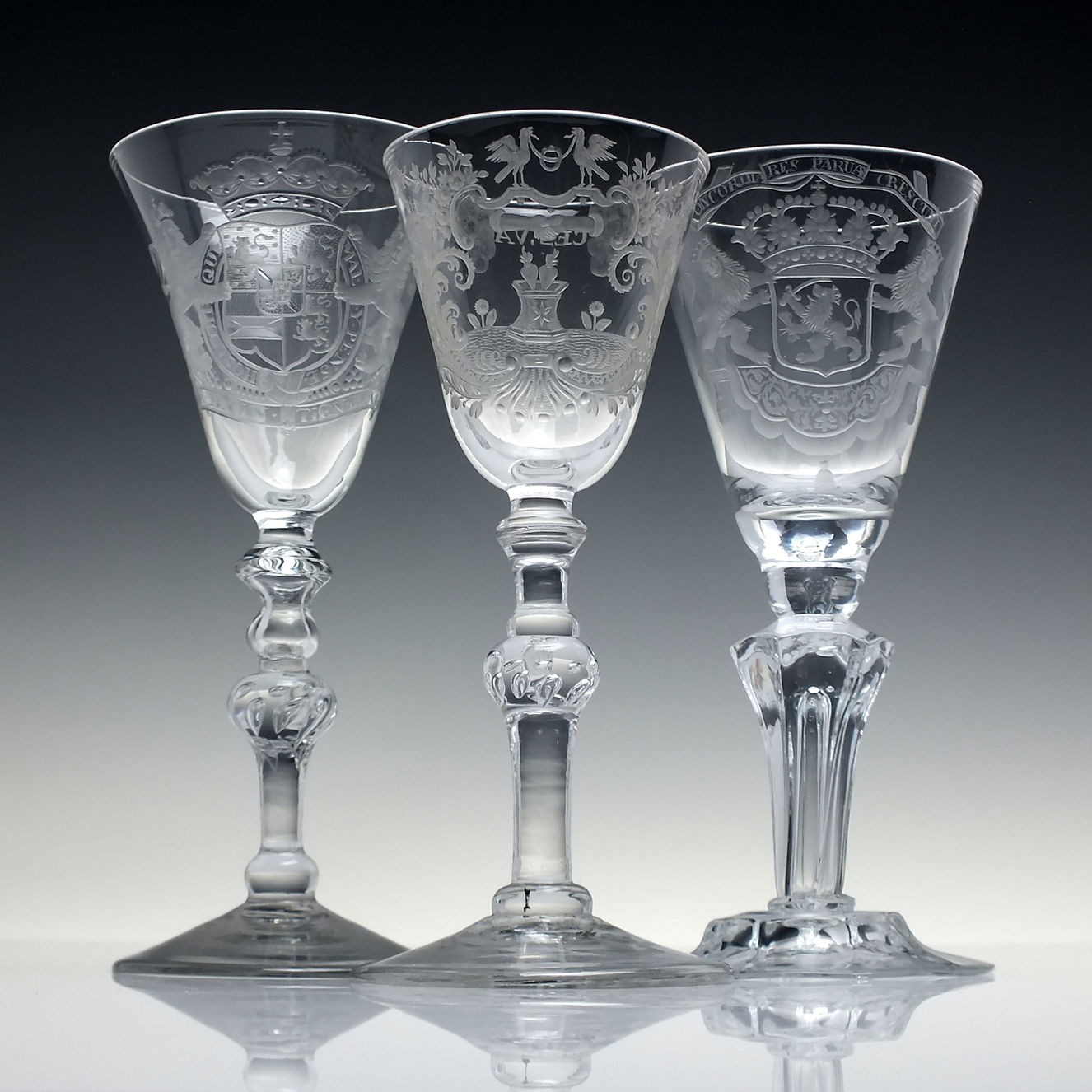
Exhibit Antiques has dated this Engraved Marriage Wine Goblet to the Georgian era.
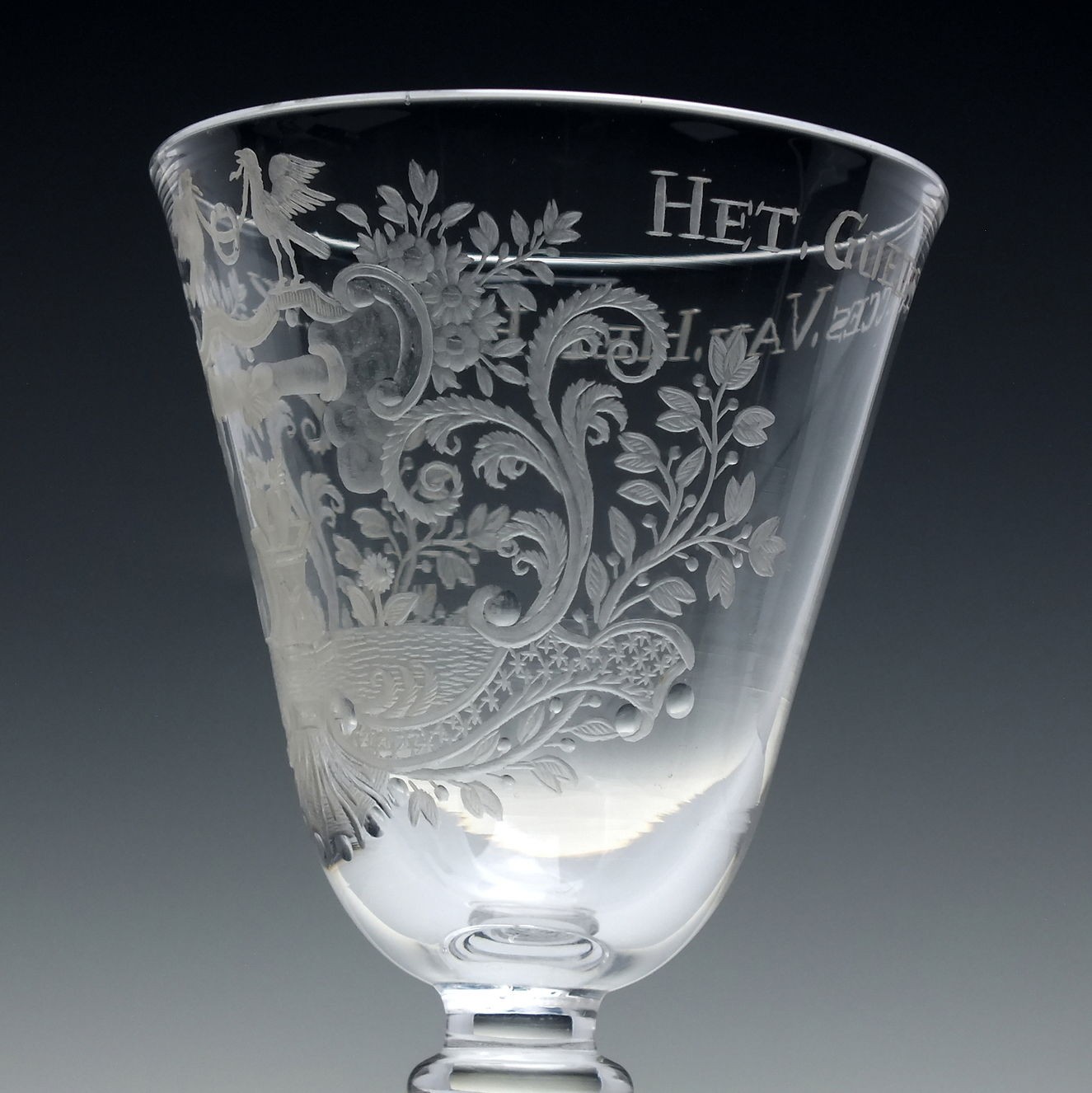
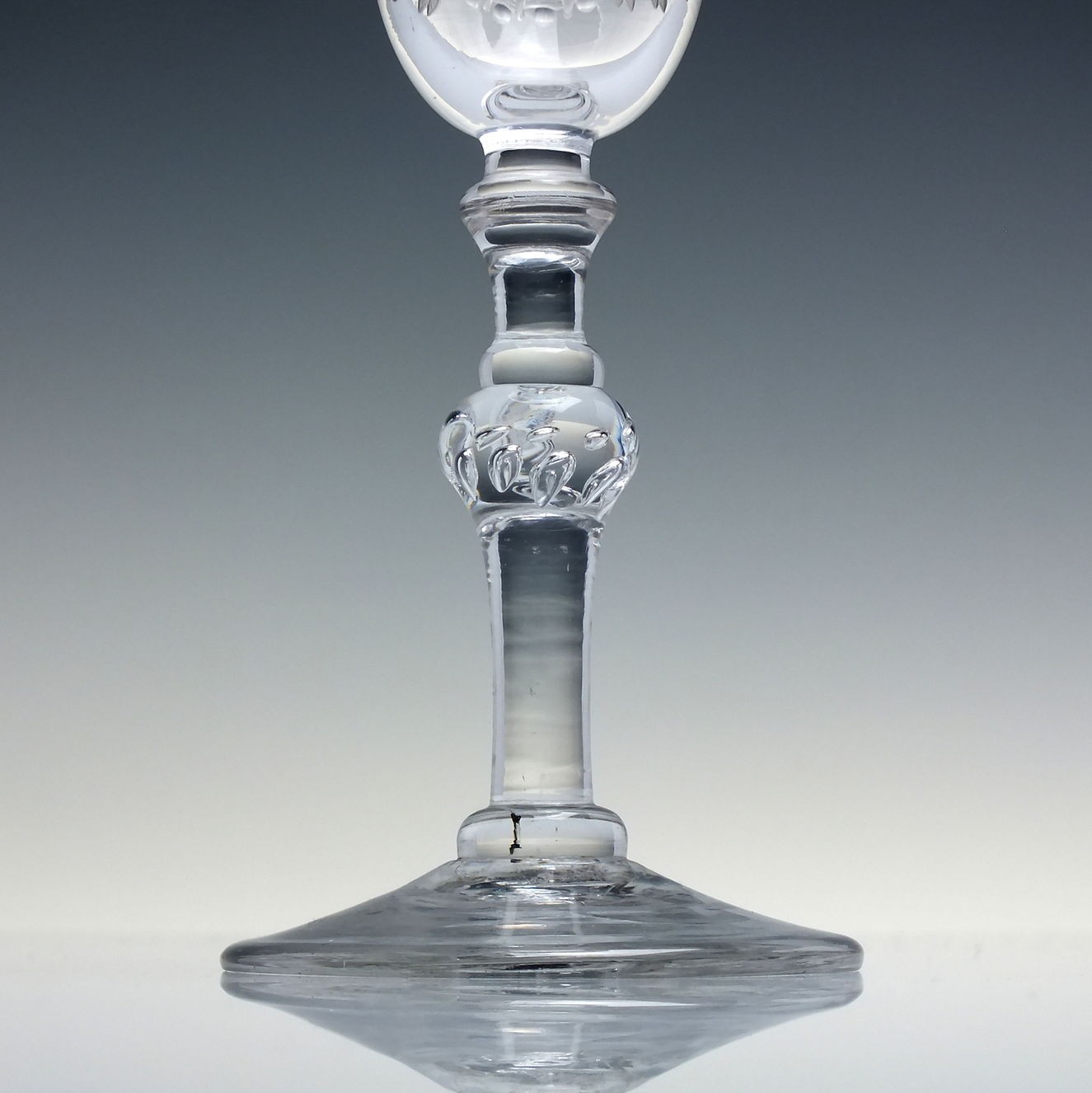
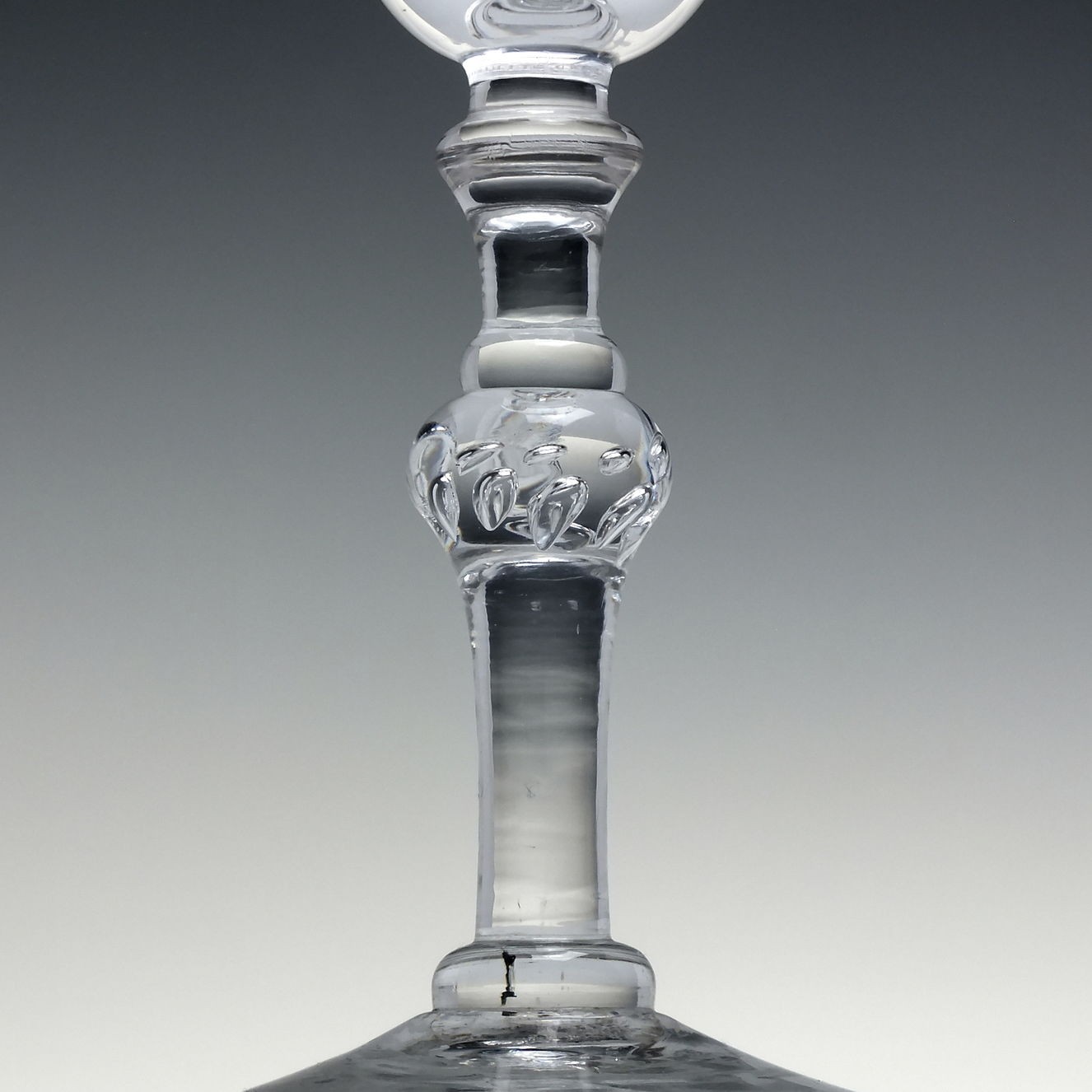
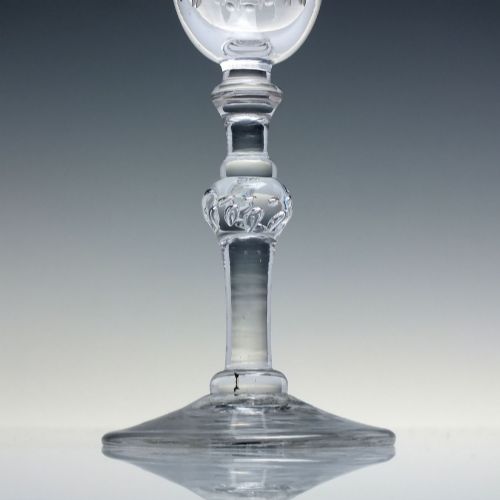
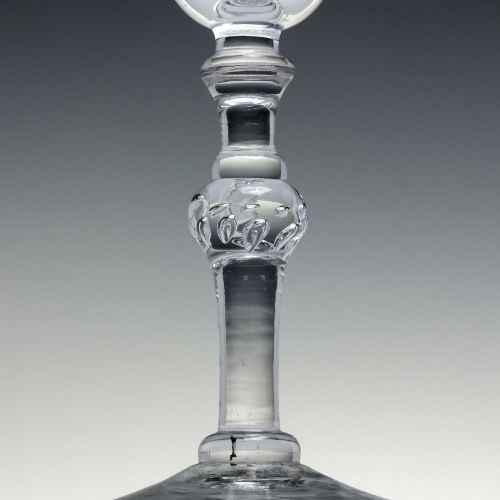
A beautiful 'Newcastle' light baluster wine goblet produced in England circa 1750. It has a large, pointed, round funnel bowl with a marriage engraving in the Rococo style.
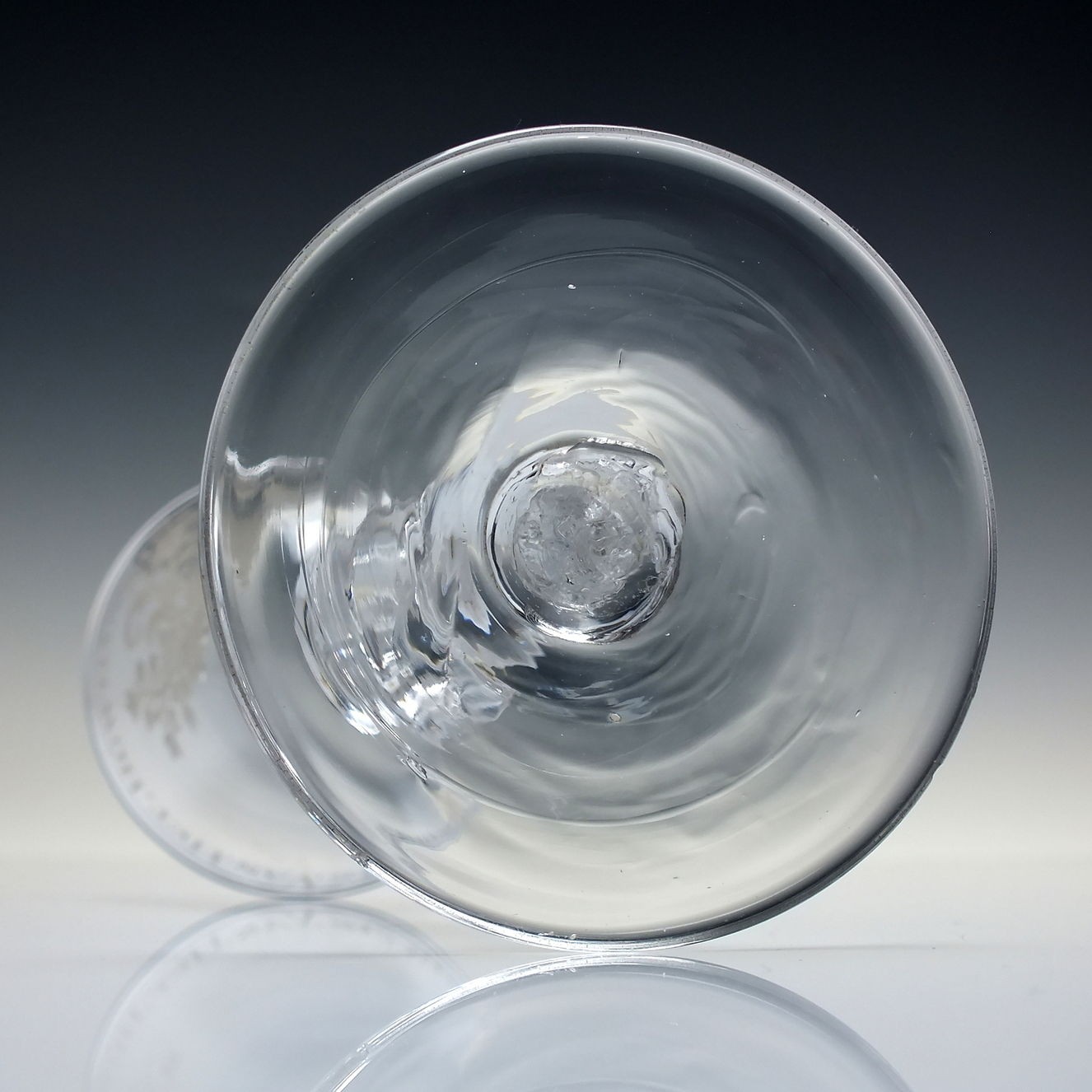
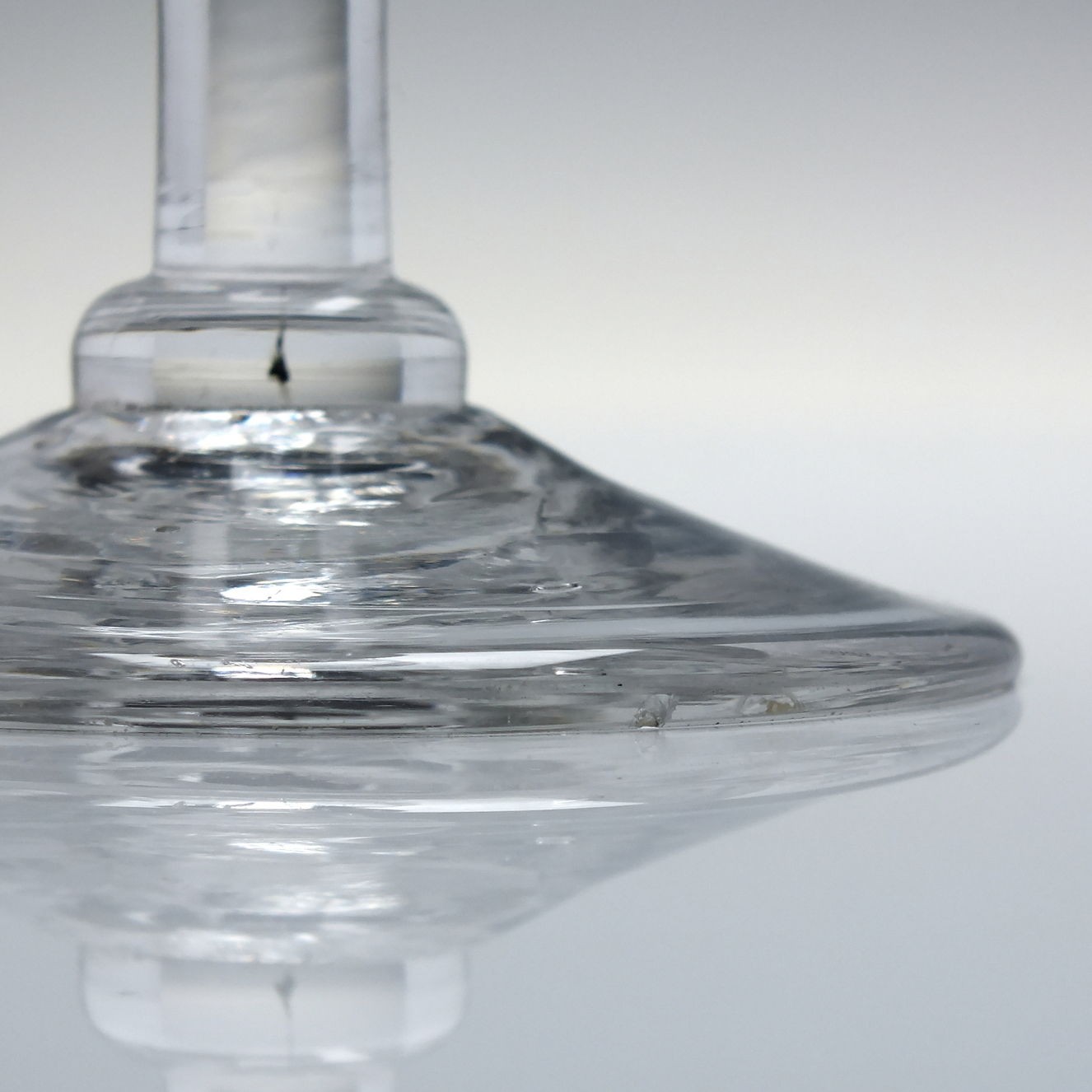
Conical foot with a rough snapped pontil.
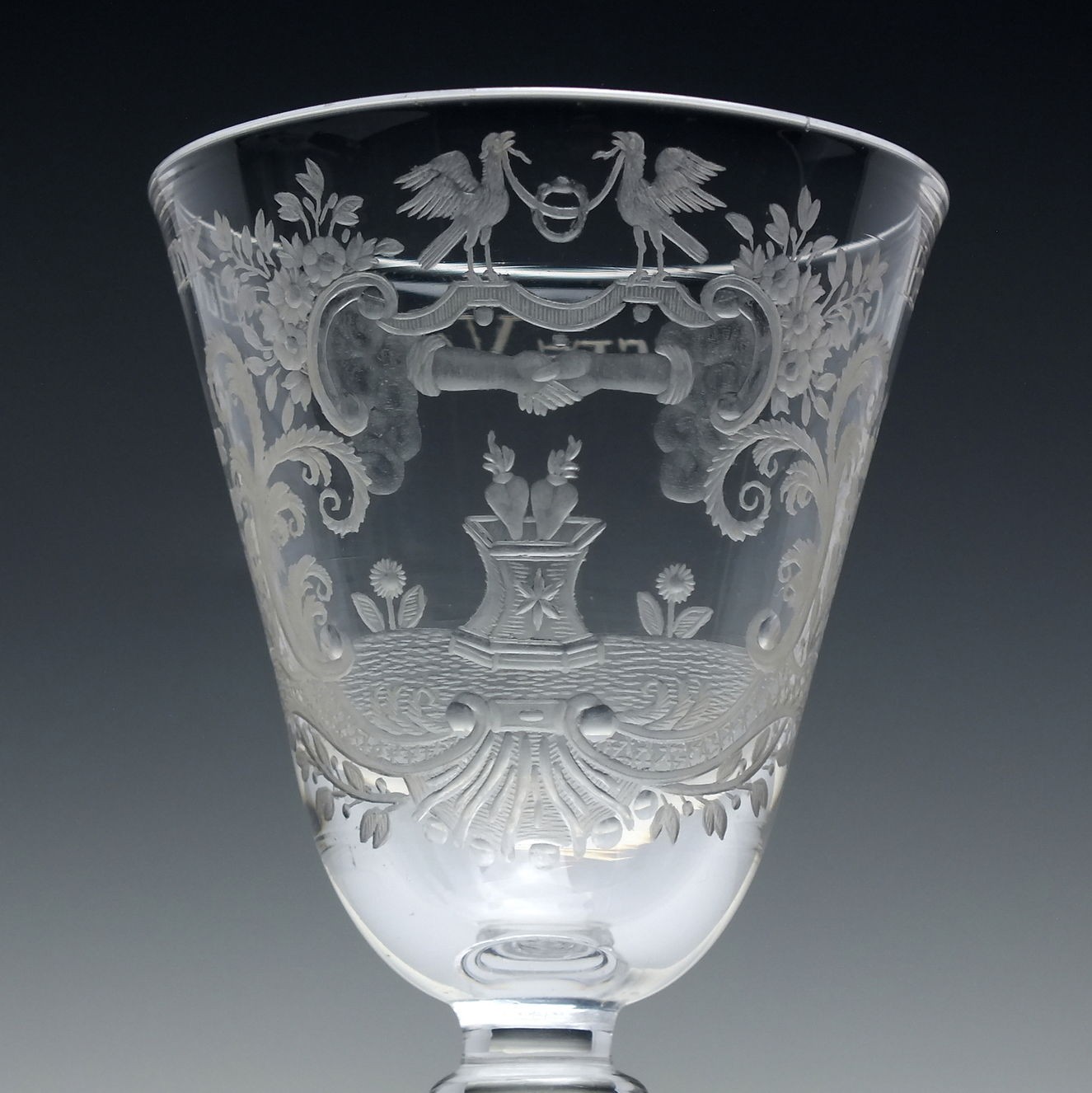
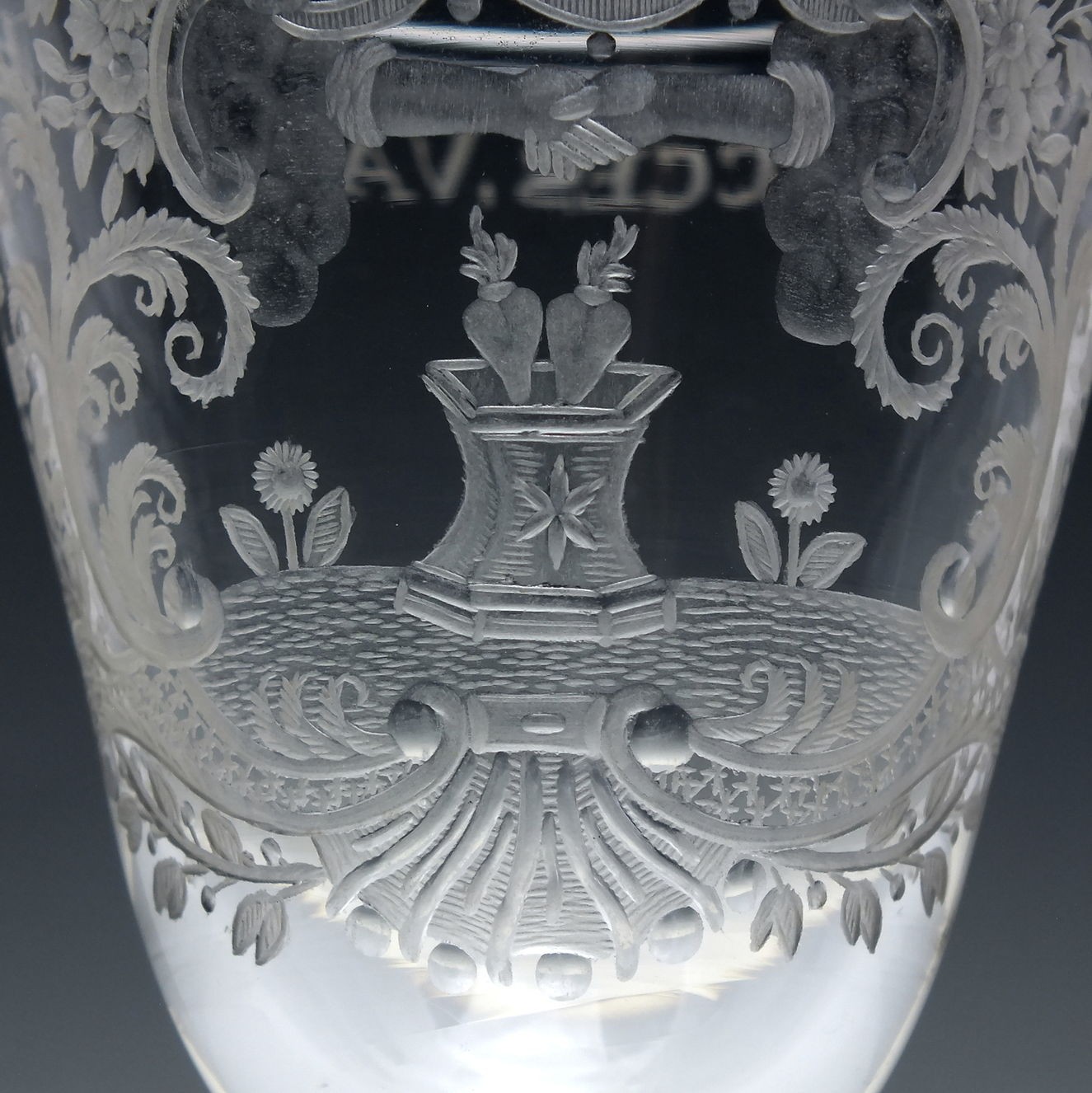
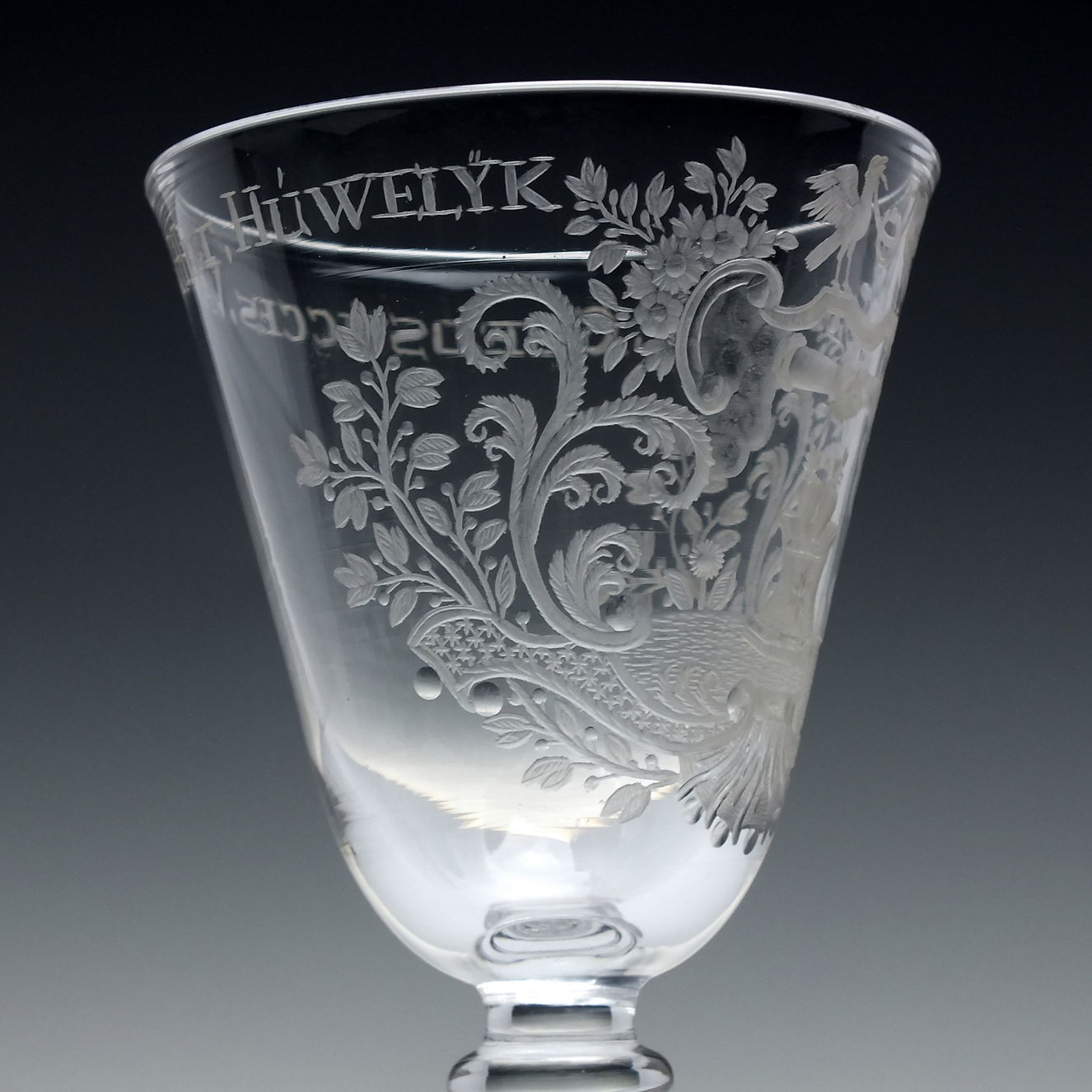
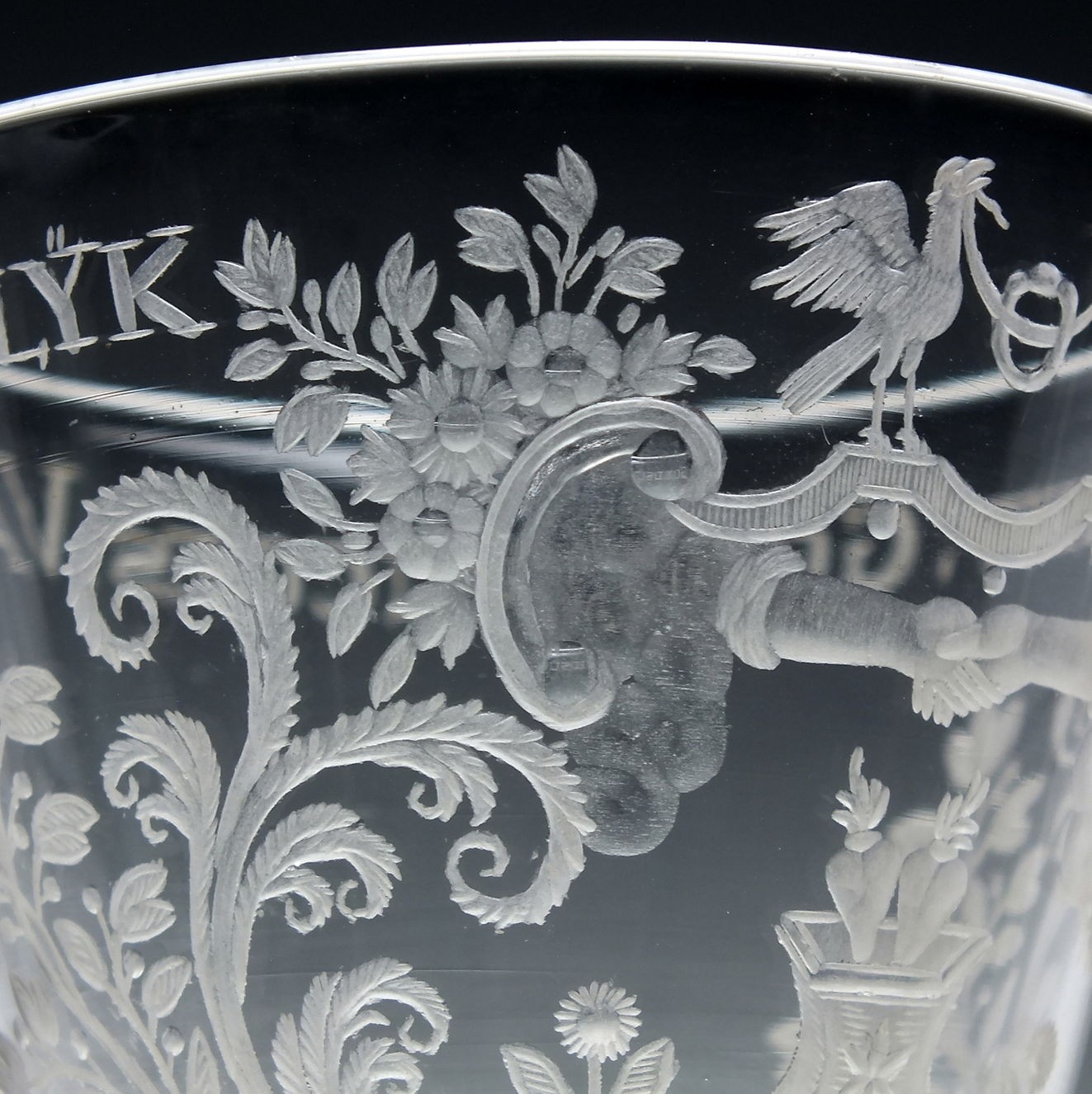
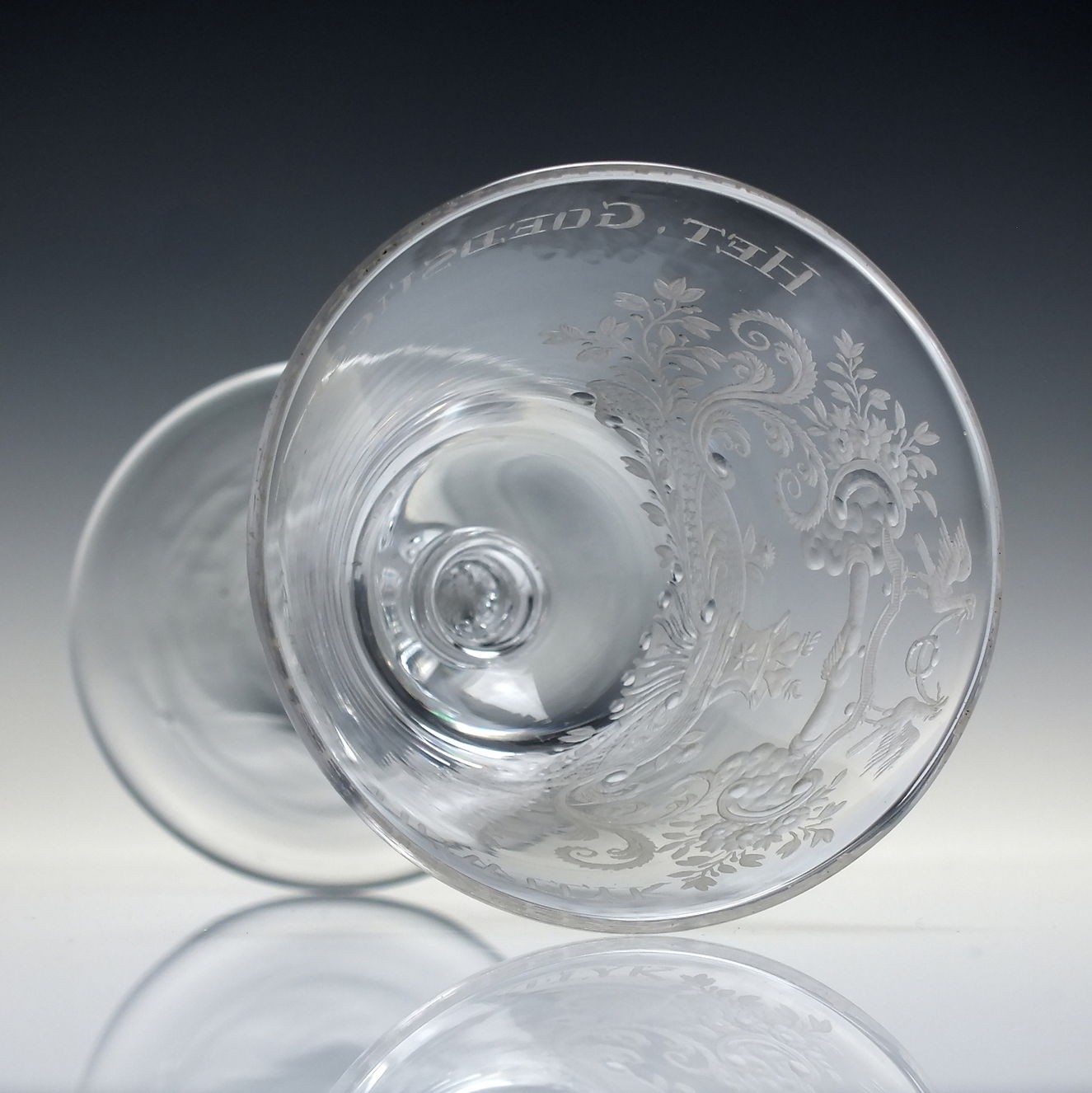
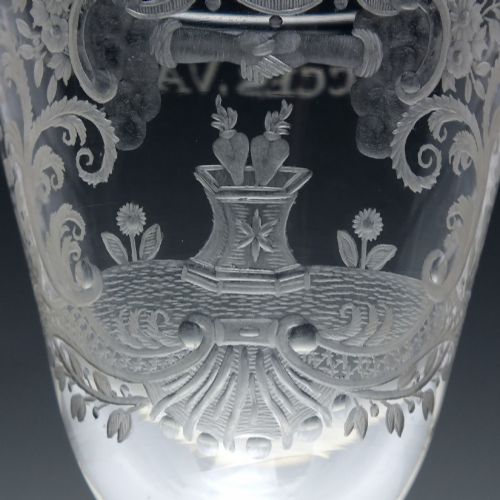
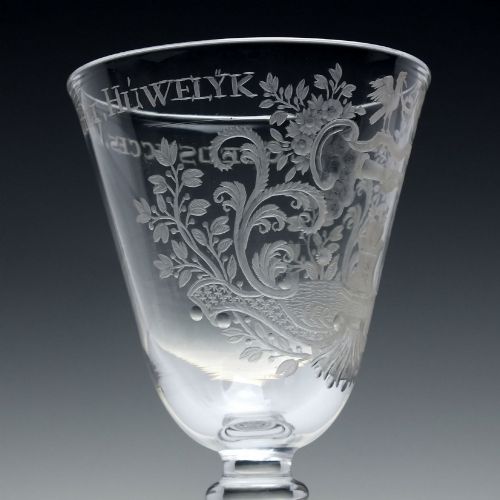
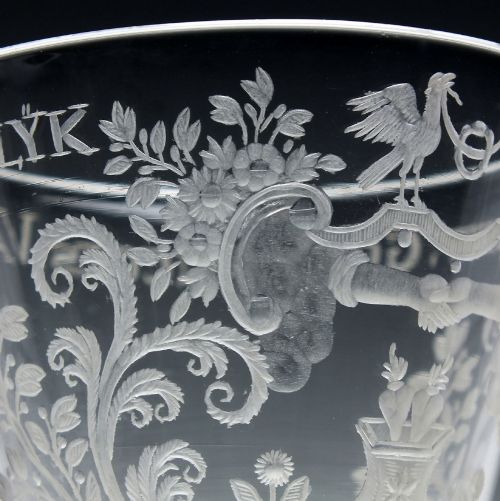
The Engraving: A very fine wheel engraving of the Altar of Hymen decorated with a star; on the altar are two flaming hearts. Two birds are hovering above, holding a garland and a ring. The altar stands in a meadow flanked by flowers on either side. It is decorated in the Rococo ‘rocaille et coquille’ (rock and shell) style, with loral branches flanking either side and floral sprays above. Polished detailing throughout. To the rim, an engraved inscription “HET GOEDSUCCESS VAN HET HUWELYK”, translated; this toast is to “The Success of the Marriage”.
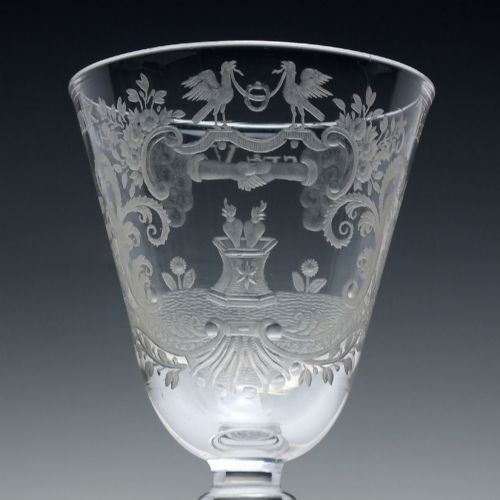
A beautifully engraved, elegant, and well-balanced wine goblet, given as a wedding present some 275 years ago. We are but there custodians for a short time.
Date & Origin
England, c1750. Period of King George II.
Condition
Excellent. There are two insignificant 1 mm “flea bites” to the wear line of the foot, consistent with natural wear over approximately 250 years. No cracks or restoration.
Dimensions
Height: 18.2cm
Rim diameter: 7.3cm
Foot diameter: 8.3cm
Provenance
The Dr Rigby Collection
If you wish to see more from the Dr Rigby Collection, comprising over 100 fine 18th-century wine glasses, please use the link.
Historical Context
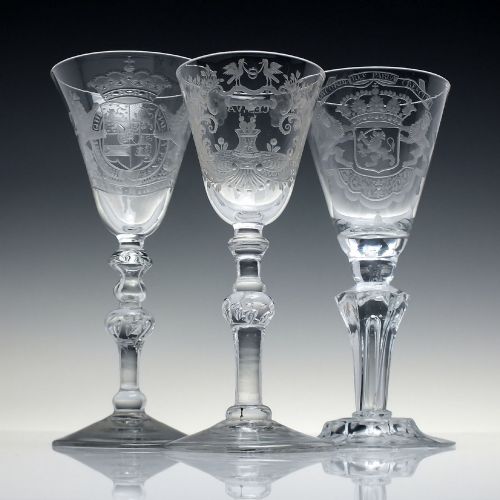
This goblet represents a sophisticated 18th-century "cultural exchange" between England and the Netherlands. While the glass itself was blown in England—likely in Newcastle or London—it was almost certainly exported as a "blank" to be decorated by master wheel-engravers in Holland.
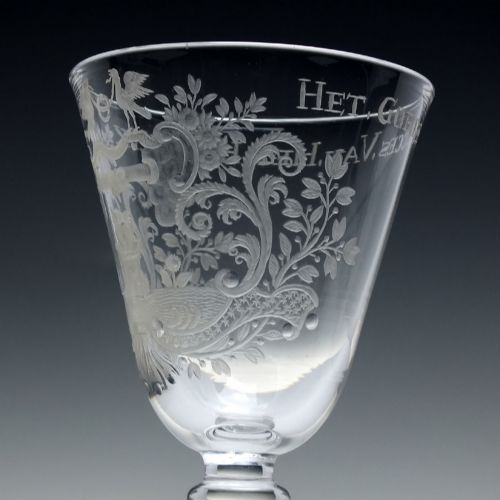
The Dutch Connection: During this period, English lead glass (or flint glass) was the most coveted in Europe because of its clarity, weight, and "softness," which made it the perfect canvas for the intricate wheel-engraving seen here. The Dutch market had a specific fondness for these English "light balusters" to celebrate significant life milestones.
A Toast to Stability: The inscription “Het Goed Success Van Het Huwelyk” (The Success of the Marriage) indicates this was a commemorative marriage goblet. In the 1750s, such a glass would not have been used daily; it was a ceremonial centrepiece used by the bride and groom for a formal toast, often kept thereafter as a cherished family heirloom.
The Altar of Hymen: The iconography is deeply rooted in 18th-century Neoclassicism. Hymen was the Greek god of marriage ceremonies; the "Altar of Hymen," with flaming hearts, was a popular contemporary symbol of a union fueled by both piety and passion. The delicate Rococo "rock and shell" framing reflects the height of European fashion in 1750, a time when design was moving away from heavy Baroque symmetry toward the light, airy, and nature-inspired motifs seen in this engraving.
Exhibit Antiques has dated this Engraved Marriage Wine Goblet to the Georgian era.
Specialists in 18th & 19th century antique glass
You can view the stock and full dealer information on the Exhibit Antiques Profile Page
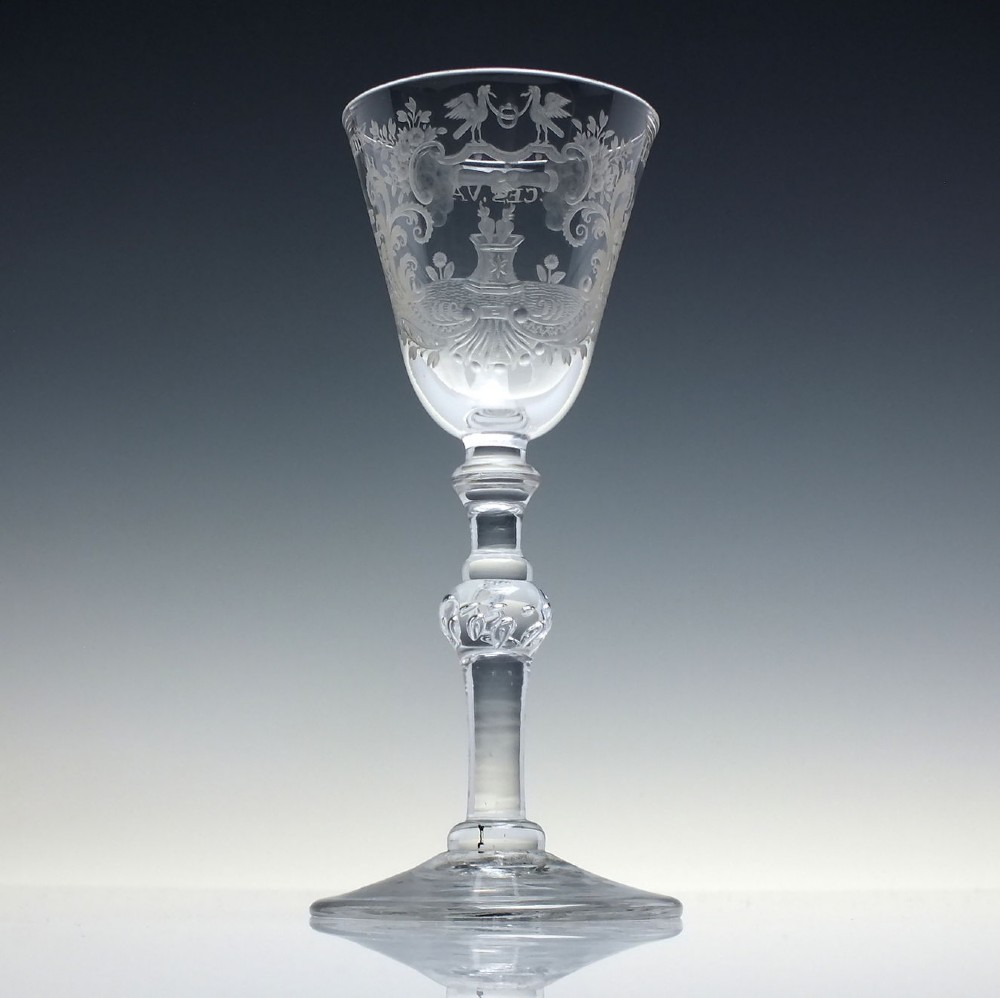
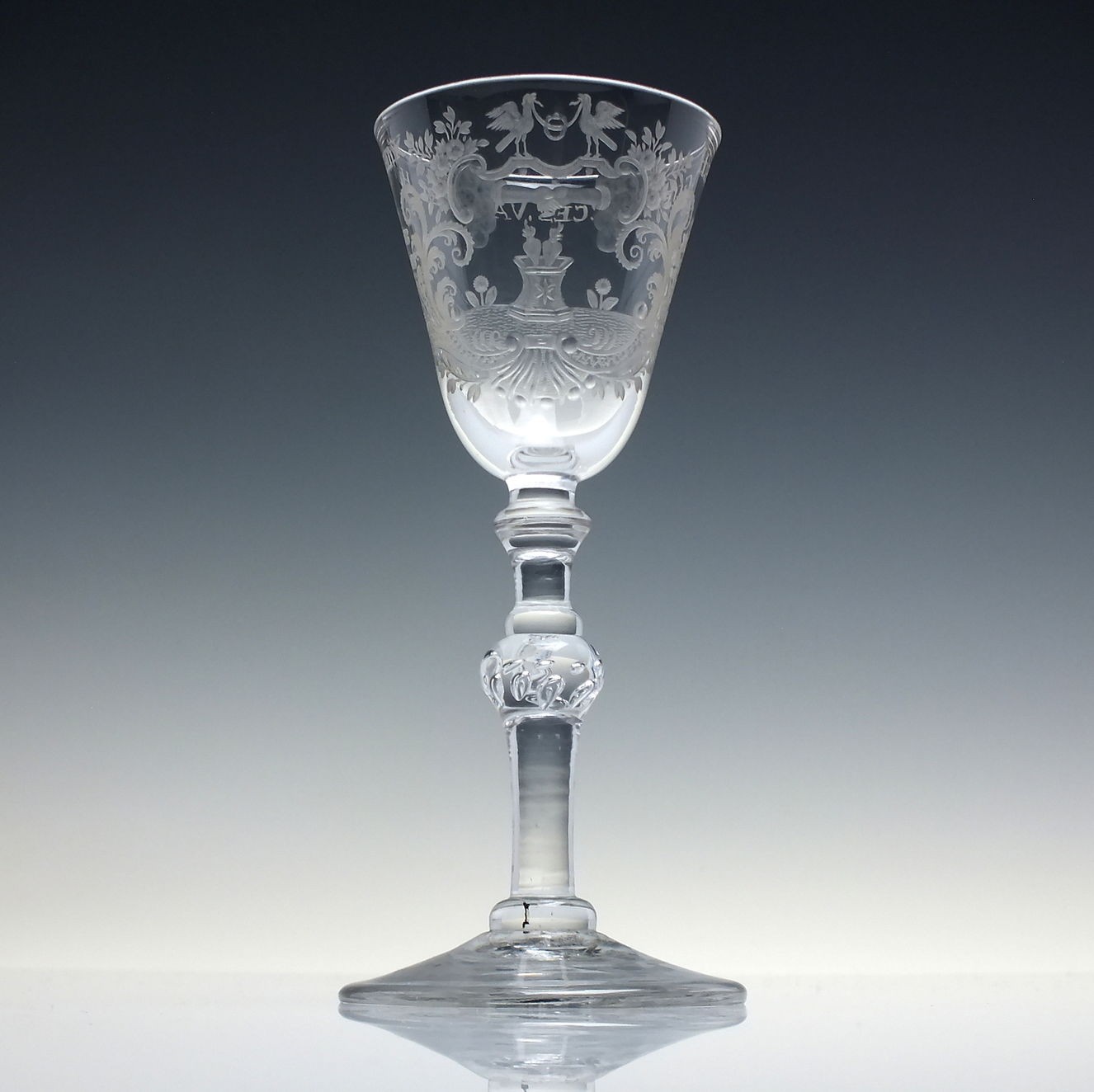
18th Century Engraved Newcastle Light Baluster Marriage Wine Goblet C1750