



Irish Cut Glass
Irish cut glass delivers heavy lead crystal weight and deep optical brilliance to dining tables and sideboards.
Irish Cut Glass
When buyers search for irish cut glass, they encounter heavy tableware and serving vessels formed from lead crystal.
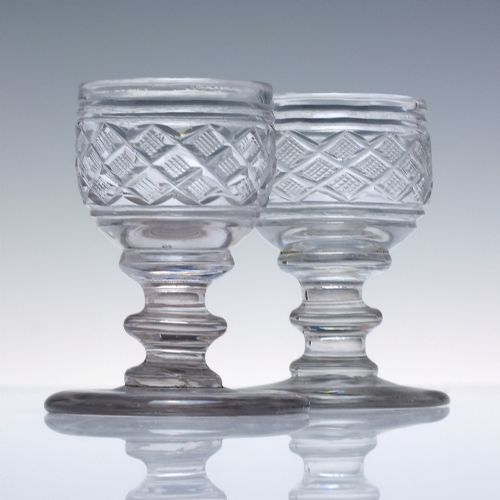
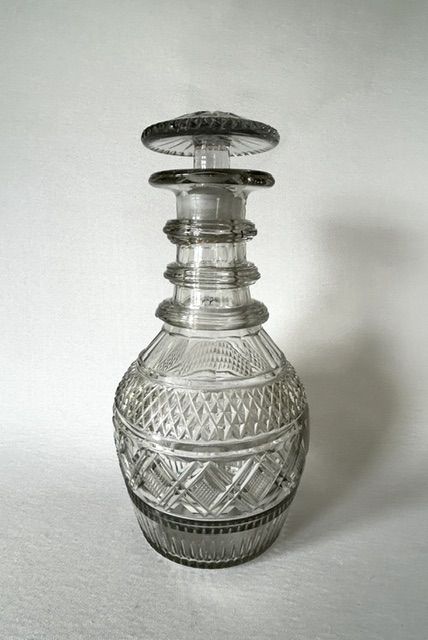
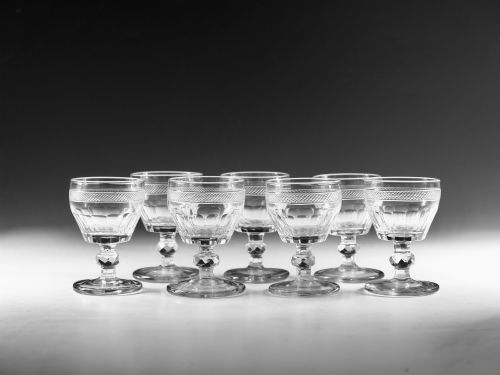
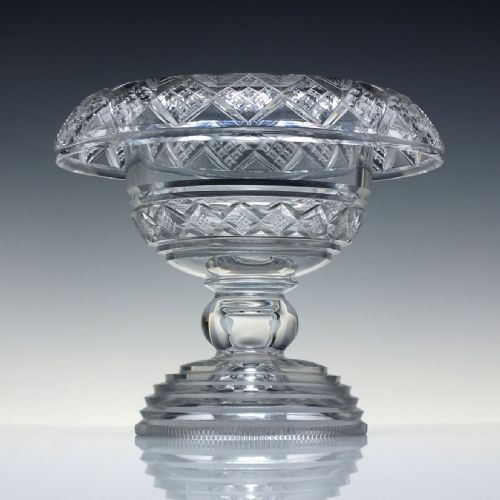
The objects span drinking vessels such as rummers and port glasses, alongside large serving pieces including turnover bowls, punch bowls, and decanters.
Georgian and Regency examples dominate the selection, bringing substantial forms and deep facet cutting to the table.
Materials and construction
Maker operations utilised heavy lead crystal, hand-blown and shaped before cold-cutting wheel techniques carved deep geometric facets into the dense material.
Support elements incorporate secondary materials such as mahogany and brass, particularly in specialist storage vessels like tantalus frames.
Piggin vessels successfully translate wooden coopering techniques into heavy lead crystal.
Assessing the pieces
Depth and crispness of the wheel-cut facets dictate visual sharpness, separating master craftsmanship from softer, shallower cutting.
Clarity and weight of the lead crystal indicate raw material quality, while intact rims and minimal surface wear preserve structural integrity.
Waterford
The Irish Cut Glass Glossary
- Lead crystal
- Heavy glass containing metallic oxide that increases refractive index and softness for deep cutting. This composition gives the pieces their characteristic weight and ring.
- Rummer
- A large drinking glass with a short stem used for ale or wine. These sturdy vessels frequently feature heavy cutting around the lower bowl.
- Sweetmeat jar
- A covered vessel designed for preserved fruits or confectionery. These lidded pieces often combine cut bowls with matching saucers or stands.
- Turnover bowl
- A large serving vessel with an everted, folded rim formed while hot. These bowls sit on pedestal bases and showcase expansive facet cutting.
- Piggin
- A small wooden or glass vessel with a vertical stave handle. Glass iterations translate coopered drinking vessels into lead crystal.
Irish Cut Glass: Frequently Asked Questions
How do I clean antique Irish crystal?
Wash pieces by hand in lukewarm water using mild detergent, avoiding sudden temperature changes that risk thermal shock to old lead crystal.
Dry immediately with a soft lint-free cloth to maintain the clarity of the cut facets.
Are these decanters safe for modern wine?
Most antique decanters remain functional for serving wine, provided the interior shows no persistent clouding or staining from historic contents.
Inspect the ground glass stopper for a matching fit to ensure a proper seal.
How can I date an old cut glass bowl?
Examine the base for a polished pontil mark, where the holding rod was snapped off and ground flat during manufacture.
Earlier Georgian and Regency pieces display deeper, sharper prismatic cutting compared to later Victorian and twentieth-century production.
Can I use these salt cellars daily?
Small salt cellars and open salts add character to a dining table, though acidic contents should not sit in old glass for extended periods.
Hand wash promptly after use to protect the lead crystal surface from corrosion.