6,393  PAGES BROWSED TODAY PAGES TODAY • 17 ANTIQUES UPLOADED TODAYNEW ARRIVALS
GIFTS
17 ITEMS ADDED TODAY
Sort Order
Items Per Page
Browse Categories
Sort order
Relevant Links
Items per page
ID #SA1244673
FOR SALE
£120
Email Phone
Save
Anglo Irish Georgian Toastmaster Dram Glass C1810
For sale by Exhibit Antiques
for sale €140     $152
£120
Exhibit Antiques

Exhibit Antiques

Sellingantiques Verified Since Mar 2019
Browse dealers 248 items
  • About Us
    Specialists in 18th & 19th century antique glass
Id #SA1244673
PDF SHARE
SAVE

Anglo Irish Georgian Toastmaster Dram Glass C1810

18th century
For Sale by Exhibit Antiques
Description

Description

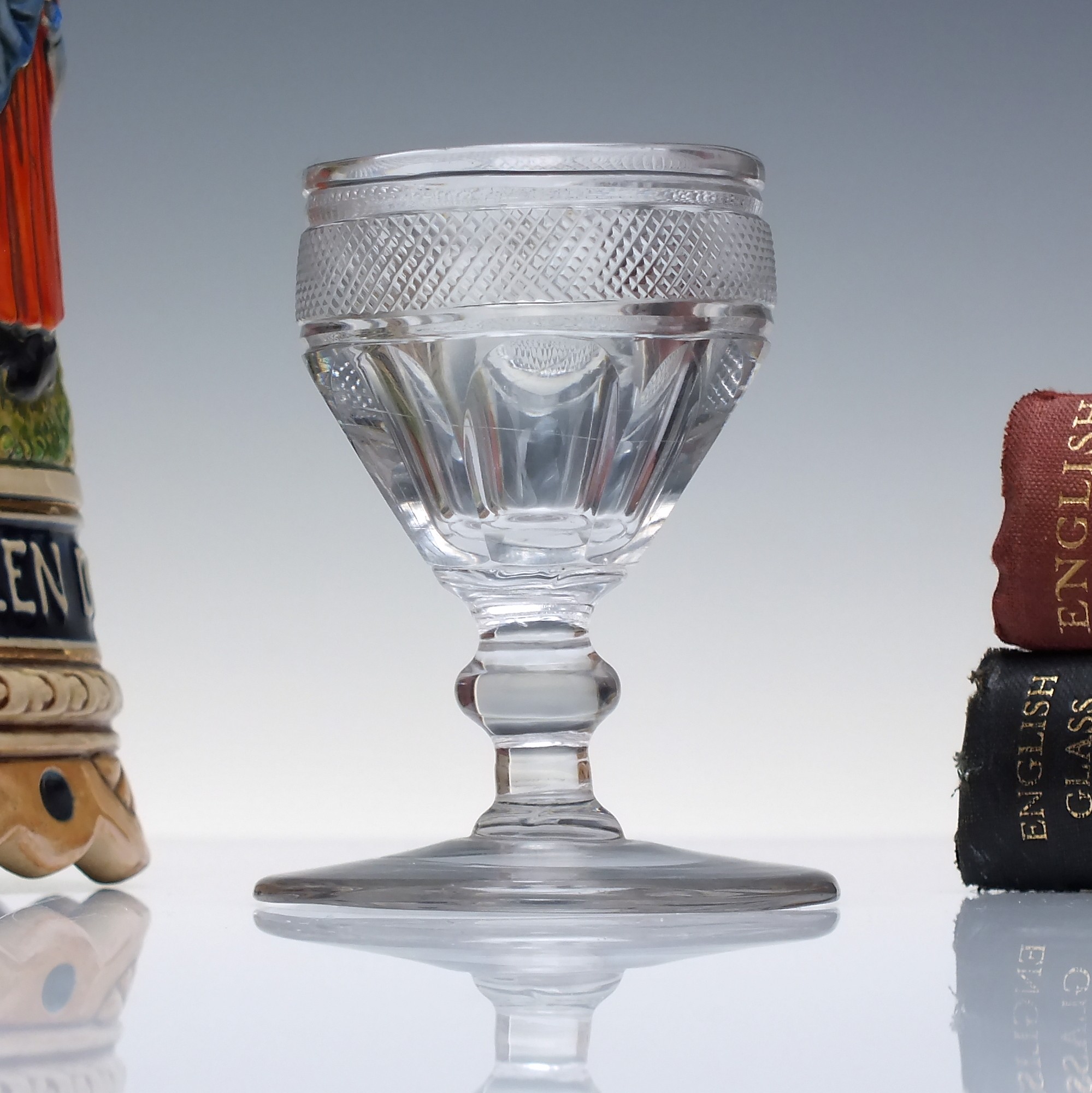
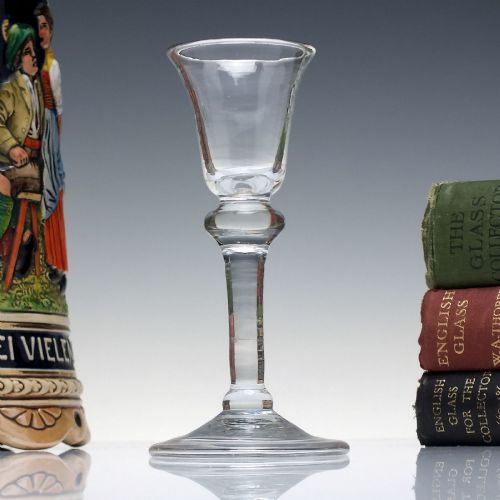
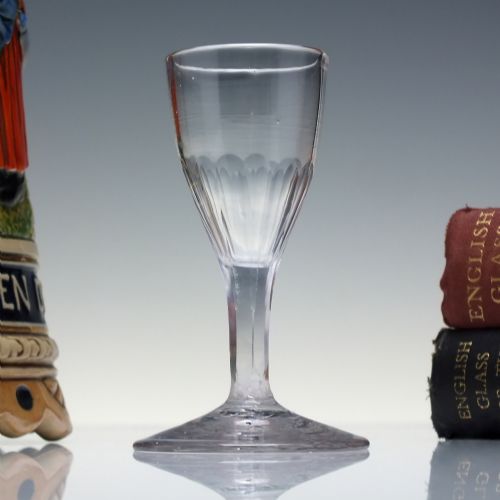
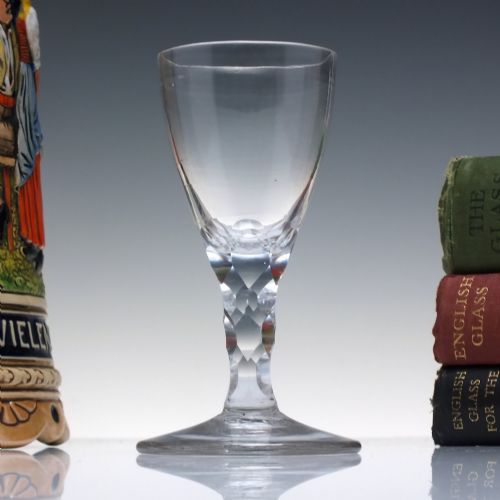
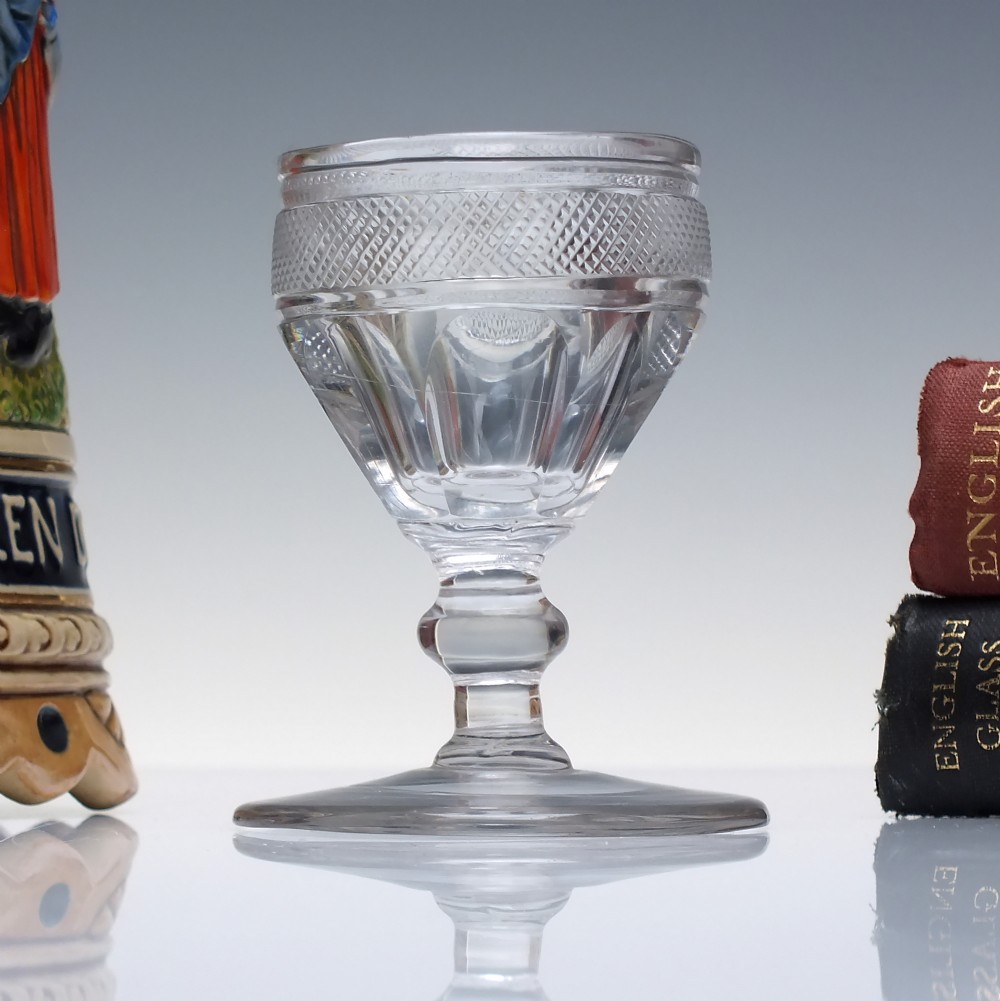
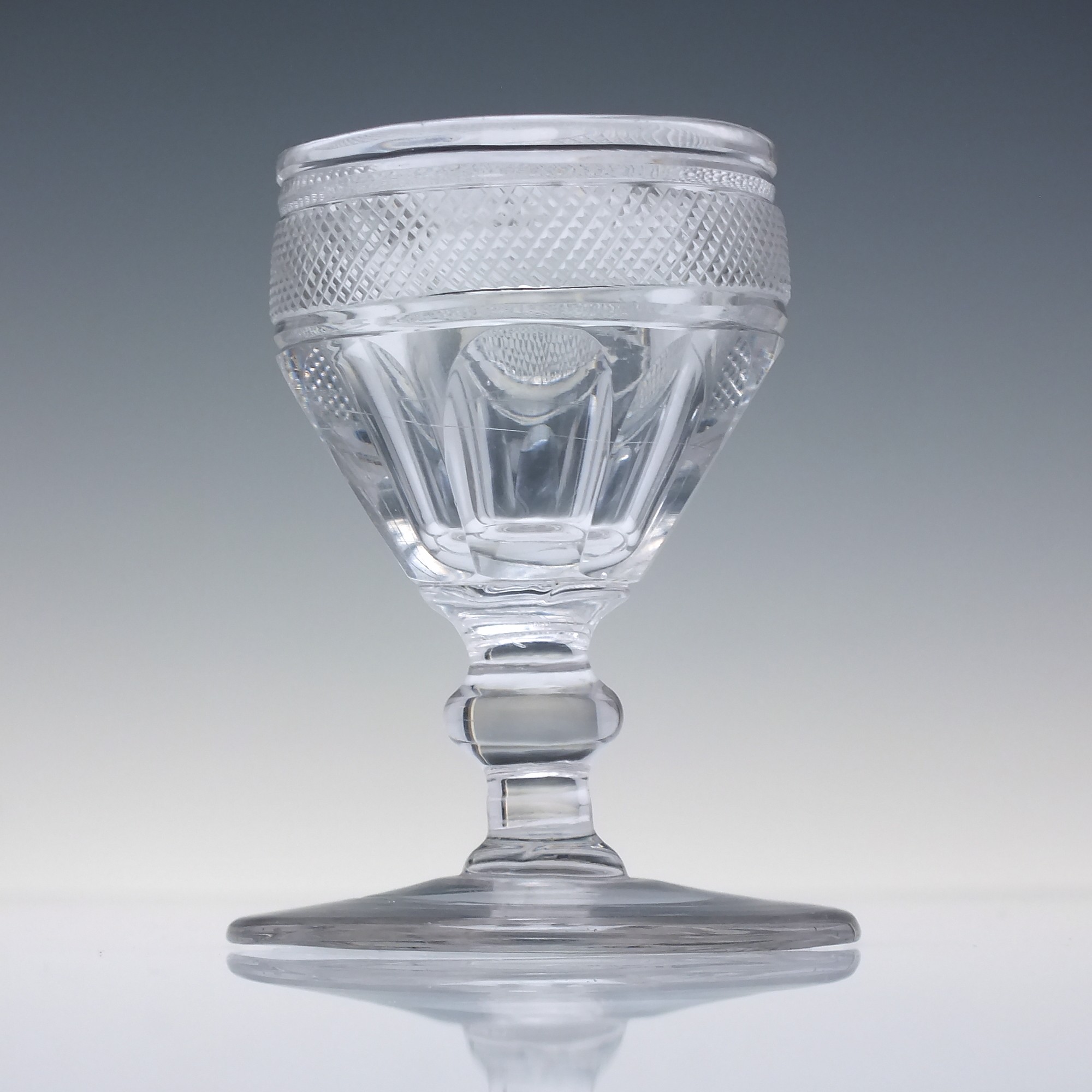
An exceptional early 19th-century Anglo-Irish deceptive dram glass, dating to c1810.
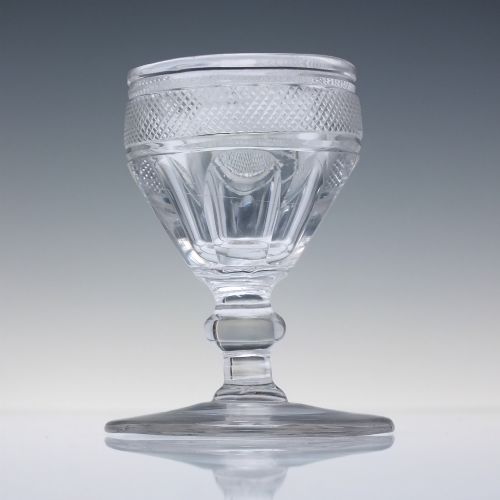
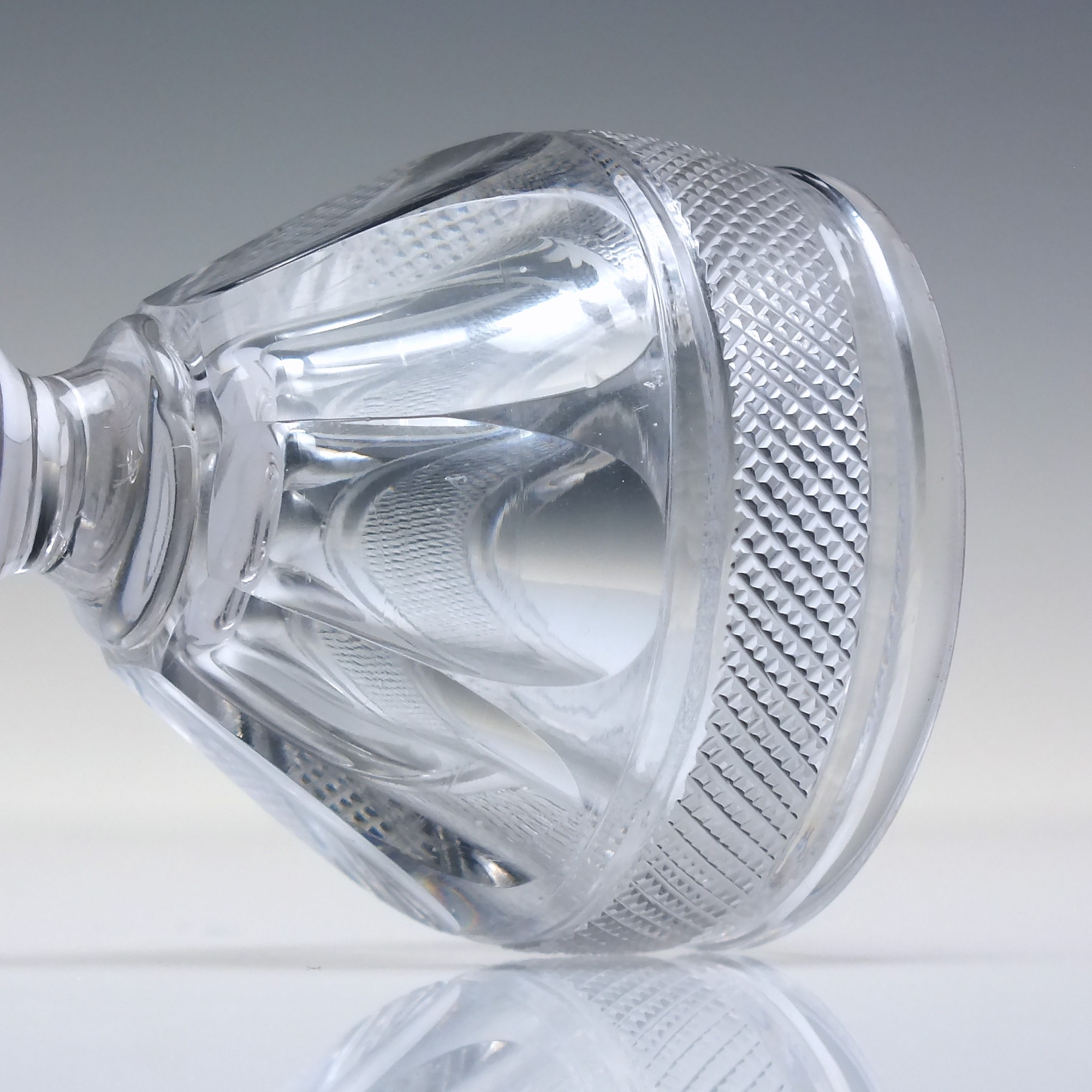
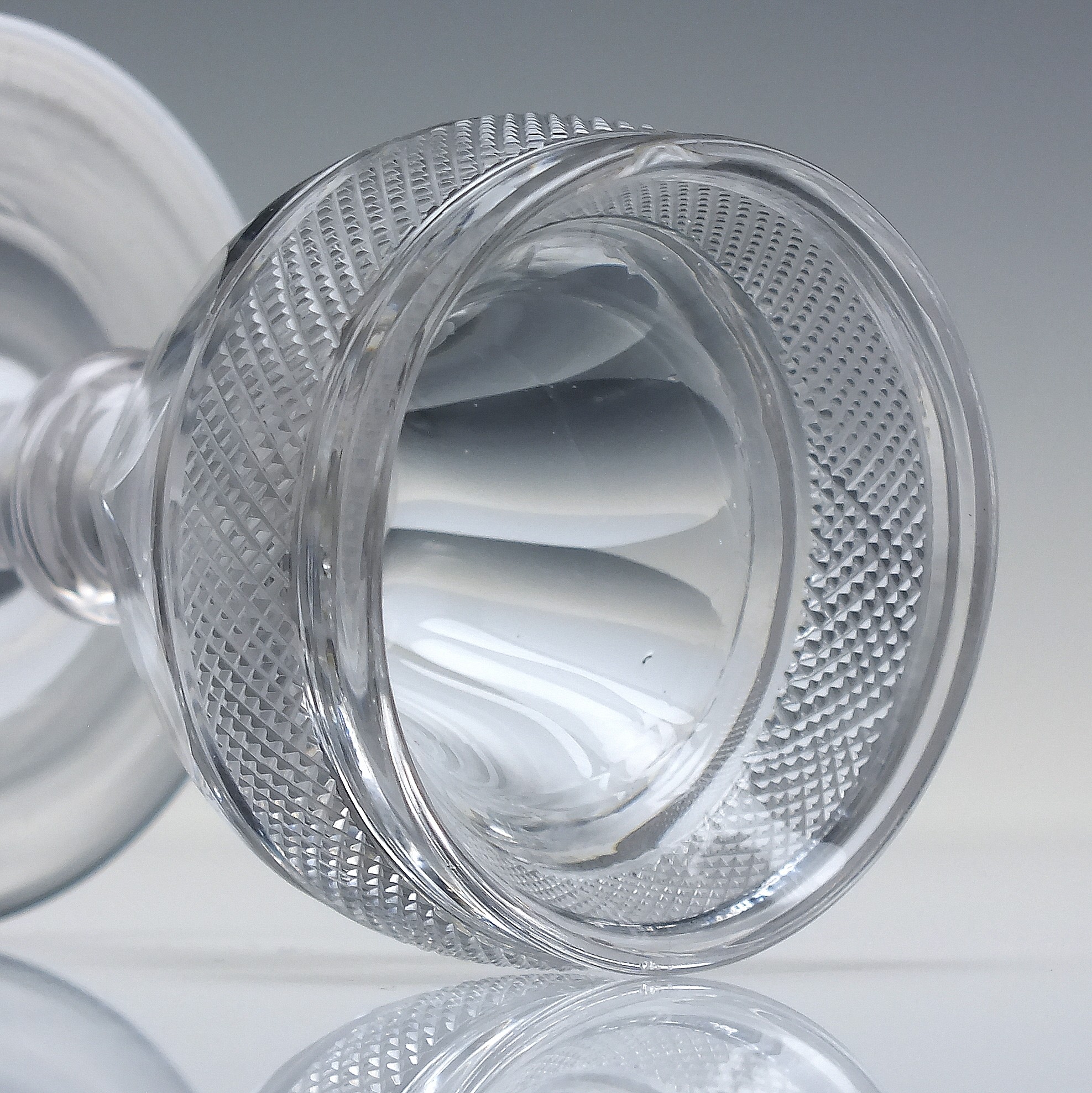
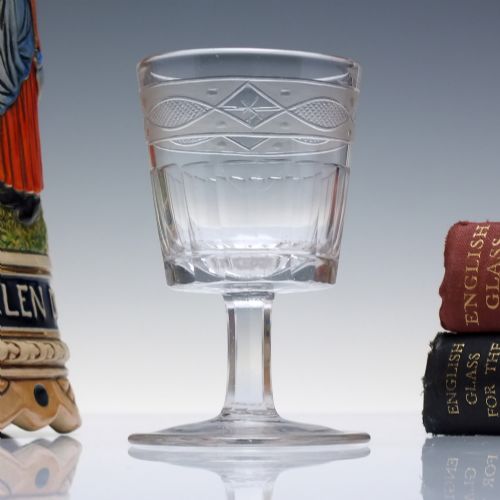
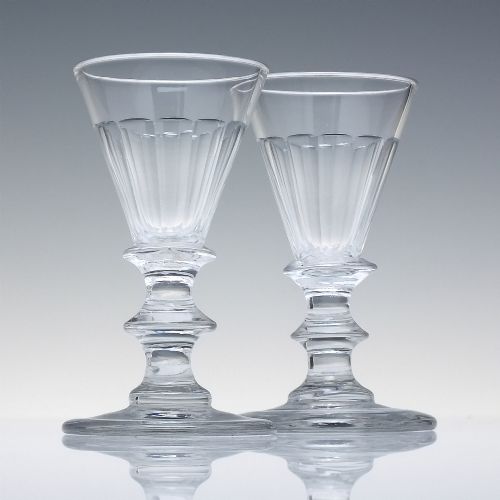
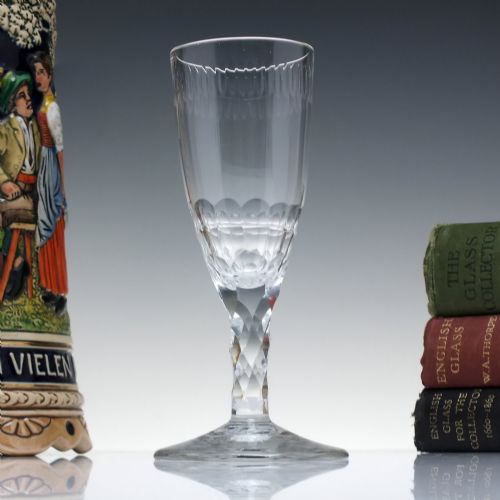
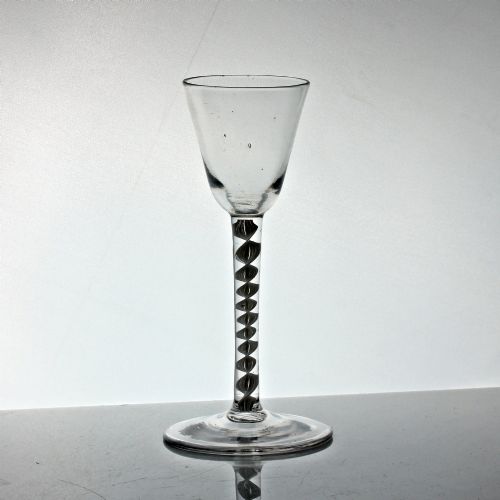
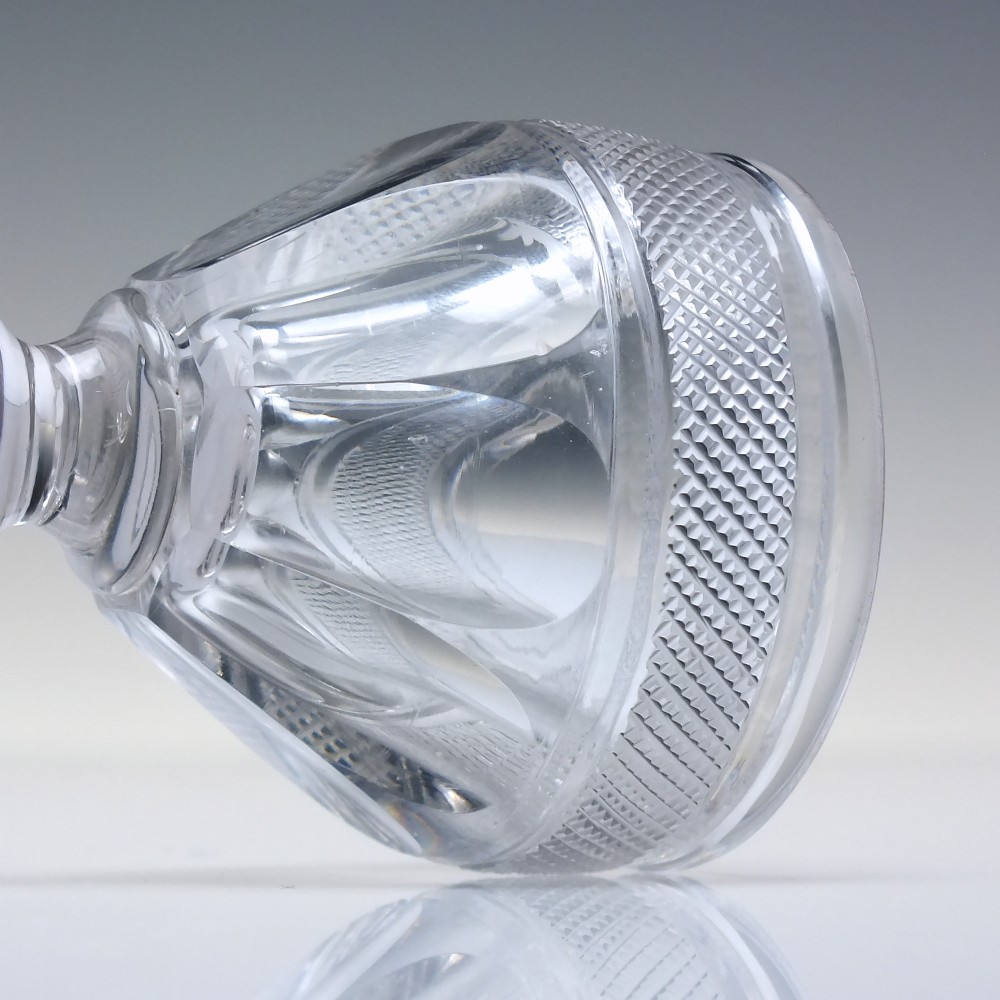
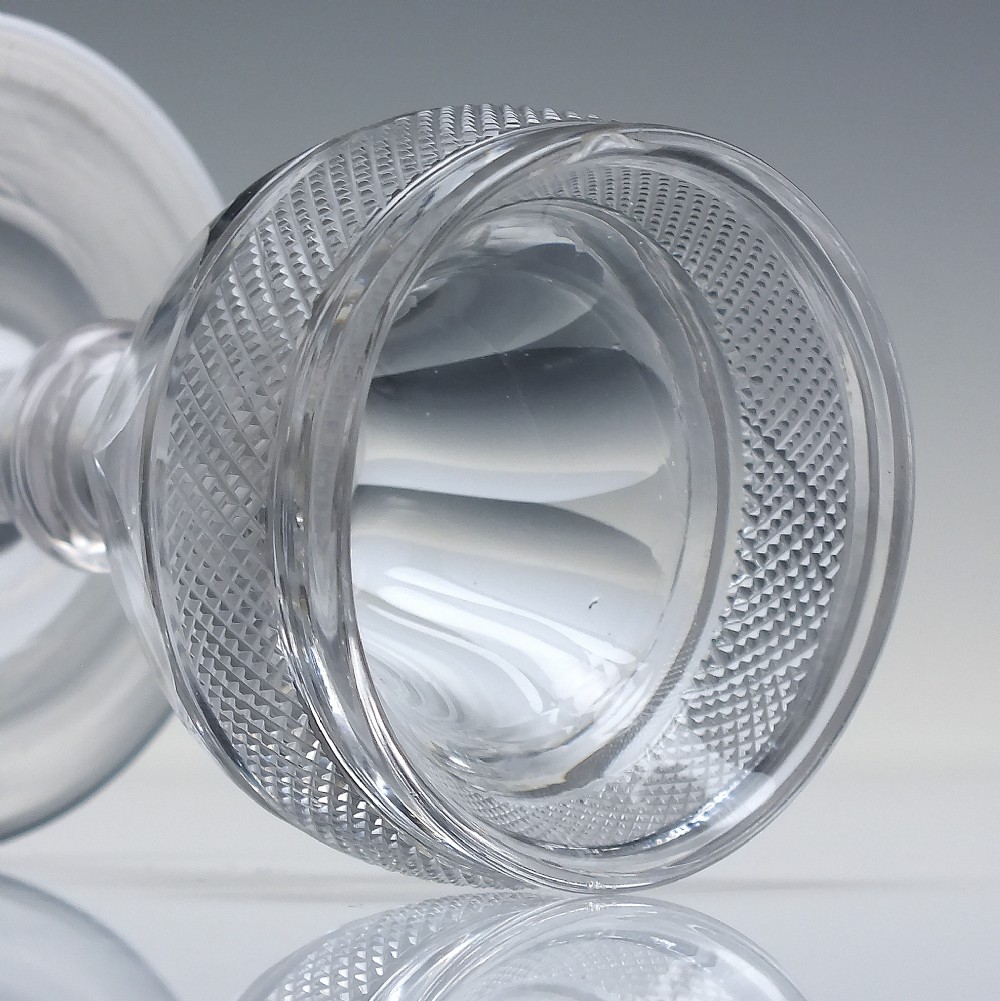
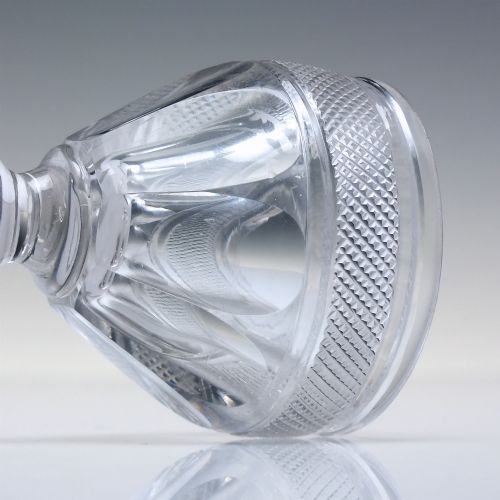
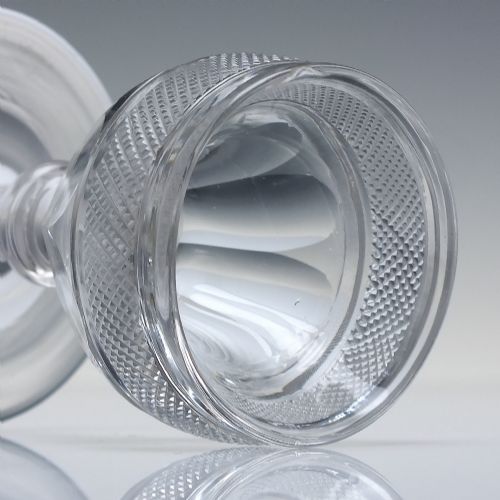
It has a thick ogee bowl with a broad band of fine diamond cutting around the rim, set between polished prism cuts with flute cutting extending towards the base of the bowl.

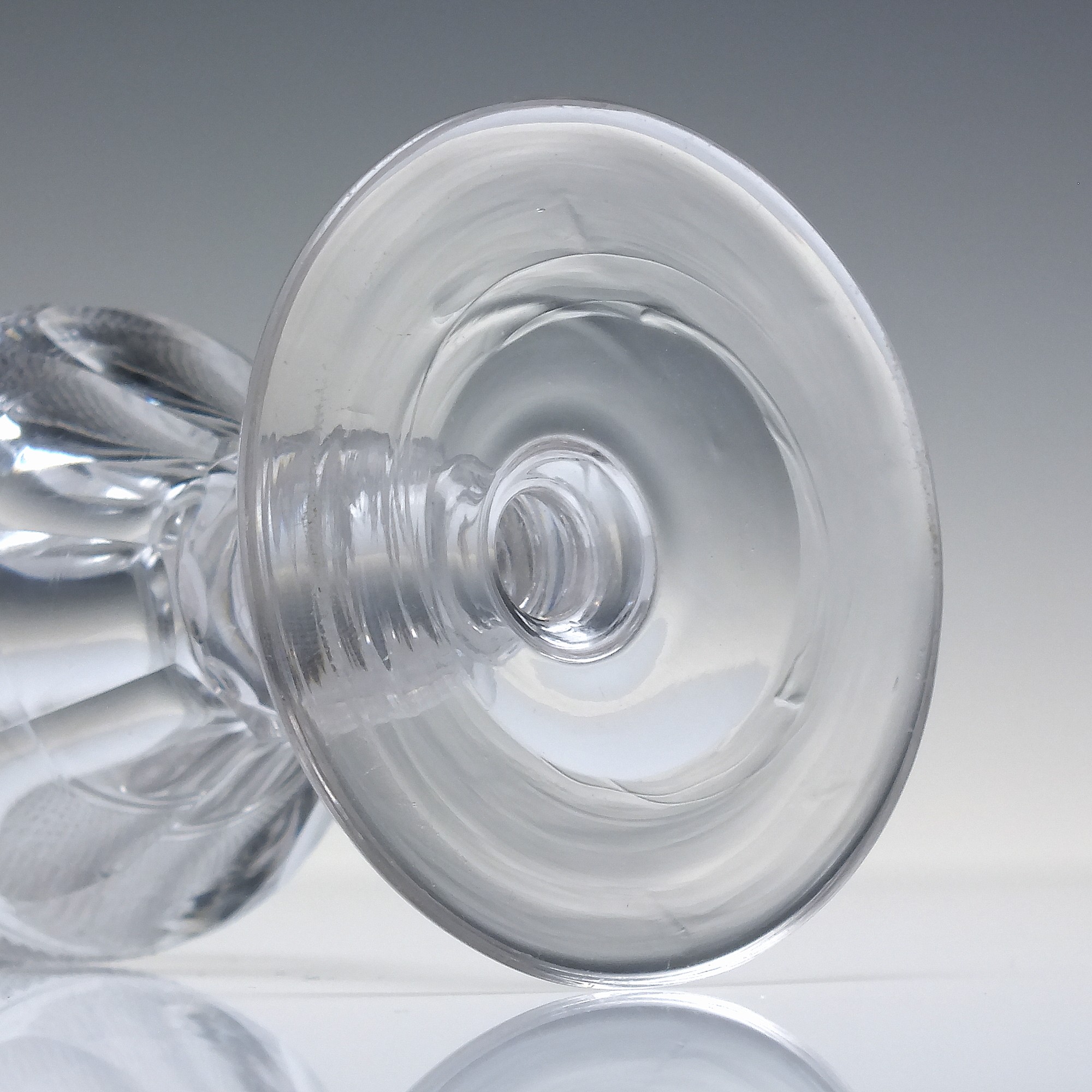
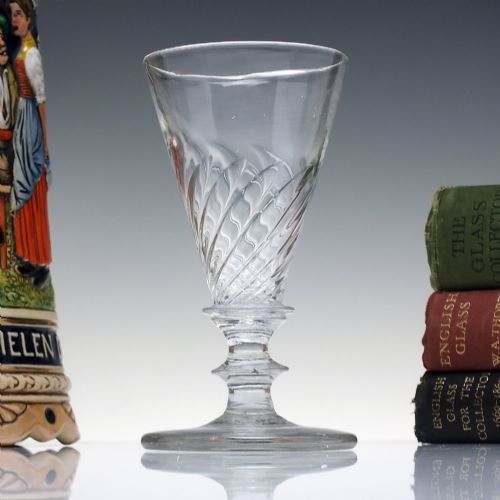
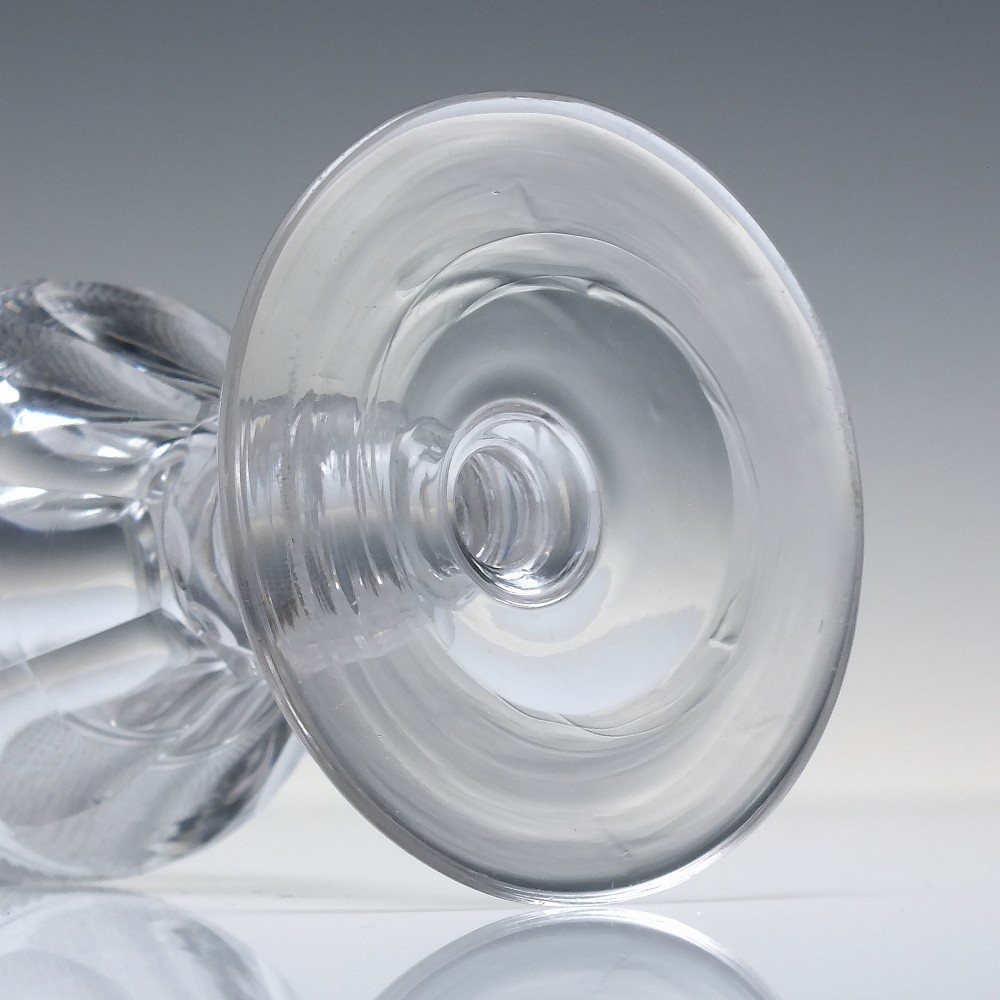
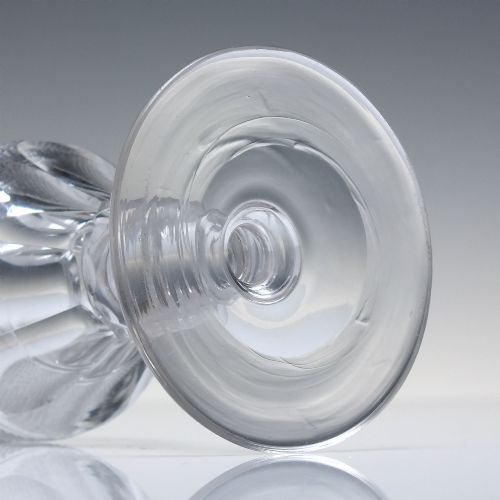
The bowl sits on a short stem with a central knop, above a wide conical foot with a polished pontil.

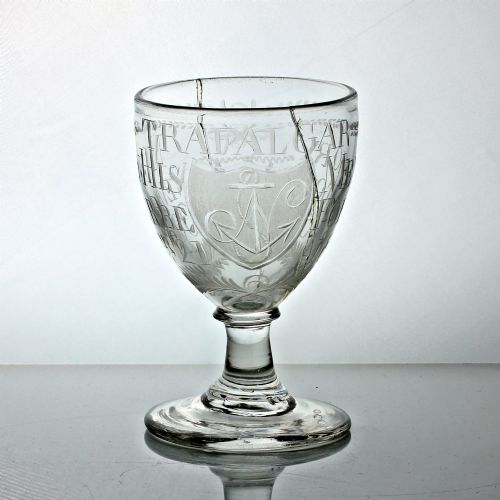
A fine example of an Anglo-Irish deceptive dram glass, combining high-quality cutting with an unusually thick bowl designed to hold considerably less liquid than its external appearance suggests.
Date & Origin

Ireland or England, c1810. Period of King George III

Condition

Excellent. No chips, cracks, or restoration.

Dimensions

Height: 8cm

Rim diameter: 5.1cm

Foot diameter: 6.5cm

Weight: 186 grams

Historical Context
Deceptive glasses were produced with unusually thick bowl walls and heavy bases, giving the appearance of a larger drinking capacity than they actually possessed. Some examples could hold approximately half the volume of a conventional glass of comparable external dimensions.
They are traditionally associated with tavern landlords and toastmasters during the 18th and early 19th centuries.

A landlord could use a deceptive glass when a customer offered him a drink, allowing him to accept the gesture while consuming less alcohol. This also offered the potential to retain more of the drink's value in the till.

Toastmasters could similarly use deceptive glasses during lengthy dinners and celebrations, enabling them to participate in repeated toasts without consuming the same quantity of alcohol as their guests.

Date of Manufacture

Exhibit Antiques has dated this Georgian Toastmaster Dram Glass to the Georgian era.

Independent Date Check ID 09712711
Dealer's Item DateGeorgian era
Sellingantiques DateGeorgian era
Sellingantiques agingItem 190-230 years old
Test ResultsPassed dating check
Why Sellingantiques dated this piece to THE GEORGIAN ERA:
Polished pontil depression under the base: glassblowing practice of the early 19th century.
Sharp hand-cut diamond relief and fluting: cutting style popular in late Georgian tableware.
Very thick glass walls: deceptive bowl made to hold only a small dram.
Fine circular scratches under the foot rim: honest wear from standing on tables.

This is an independent date report produced by Sellingantiques using its own proprietary system. The process uses the photographs shown on this page. The system is never told the date the dealer has declared. This report shows that the two dates corroborate.

Reference Numbers
Sellingantiques Reference
SA1244673
Dealers Internal Reference
SG2026081602
Description
Description

An exceptional early 19th-century Anglo-Irish deceptive dram glass, dating to c1810.

“
It has a thick ogee bowl with a broad band of fine diamond cutting around the rim, set between polished prism cuts with flute cutting extending towards the base of the bowl.
Exhibit Antiques
fig 1. A Georgian Anglo-Irish cut lead crystal toastmaster dram glass with diamond facet cutting around the bowl and a knopped stem on a flat circular foot.
fig 1. Anglo Irish Georgian Toastmaster Dram Glass C1810

The bowl sits on a short stem with a central knop, above a wide conical foot with a polished pontil.

A fine example of an Anglo-Irish deceptive dram glass, combining high-quality cutting with an unusually thick bowl designed to hold considerably less liquid than its external appearance suggests.

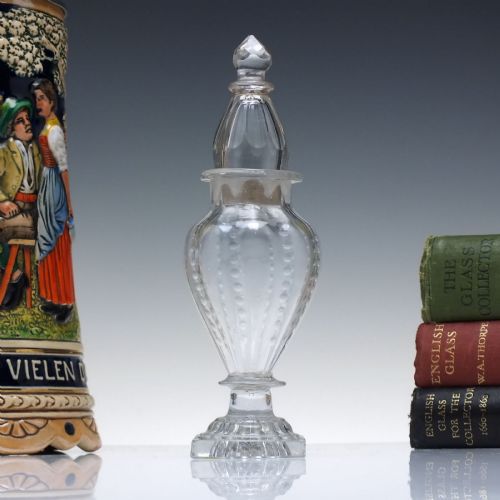
fig 2. A Georgian Anglo-Irish cut lead crystal toastmaster dram glass with diamond facet cutting around the bowl and a knopped stem on a flat circular foot.
fig 2. Anglo Irish Georgian Toastmaster Dram Glass C1810

Date & Origin

Ireland or England, c1810. Period of King George III

Condition

Excellent. No chips, cracks, or restoration.

Dimensions

Height: 8cm

Rim diameter: 5.1cm

Foot diameter: 6.5cm

Weight: 186 grams

Historical Context

fig 3. A Georgian Anglo-Irish cut lead crystal toastmaster dram glass with diamond facet cutting around the bowl and a knopped stem on a flat circular foot.
fig 3. Anglo Irish Georgian Toastmaster Dram Glass C1810

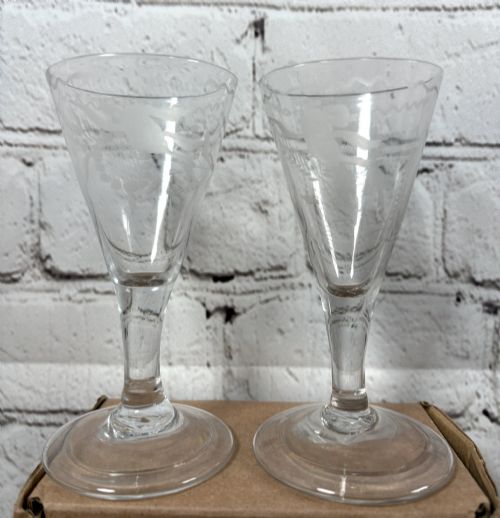
Deceptive glasses were produced with unusually thick bowl walls and heavy bases, giving the appearance of a larger drinking capacity than they actually possessed. Some examples could hold approximately half the volume of a conventional glass of comparable external dimensions.

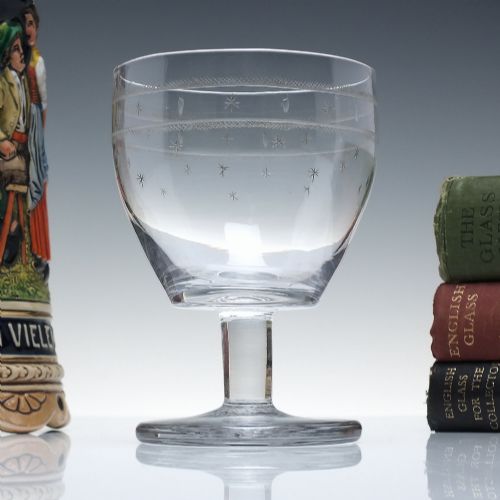
fig 4. A Georgian Anglo-Irish cut lead crystal toastmaster dram glass with diamond facet cutting around the bowl and a knopped stem on a flat circular foot.
fig 4. Anglo Irish Georgian Toastmaster Dram Glass C1810

They are traditionally associated with tavern landlords and toastmasters during the 18th and early 19th centuries.

A landlord could use a deceptive glass when a customer offered him a drink, allowing him to accept the gesture while consuming less alcohol. This also offered the potential to retain more of the drink's value in the till.

Toastmasters could similarly use deceptive glasses during lengthy dinners and celebrations, enabling them to participate in repeated toasts without consuming the same quantity of alcohol as their guests.

Date of Manufacture

Exhibit Antiques has dated this Georgian Toastmaster Dram Glass to the Georgian era.

Independent Date Report ID 09712711
Dealer's Item DateGeorgian era
Sellingantiques datingGeorgian era
Sellingantiques agingItem 190-230 years old
Test ResultsPassed dating check
Why Sellingantiques dated this piece to the Georgian era:
Polished pontil depression under the base: glassblowing practice of the early 19th century.
Sharp hand-cut diamond relief and fluting: cutting style popular in late Georgian tableware.
Very thick glass walls: deceptive bowl made to hold only a small dram.
Fine circular scratches under the foot rim: honest wear from standing on tables.

This is an independent date report produced by Sellingantiques using its own proprietary system. The process uses the photographs shown on this page. The system is never told the date the dealer has declared. This report shows that the two dates corroborate.

Reference Numbers
Sellingantiques Ref
SA1244673
Dealers Internal Ref
SG2026081602
Exhibit Antiques
Exhibit Antiques
Sellingantiques verified Since Mar 2019

Specialists in 18th & 19th century antique glass

Dealer Profile

You can view the stock and full dealer information on the Exhibit Antiques Profile Page
PDF SHARE
SAVE
A Georgian Anglo-Irish cut lead crystal toastmaster dram glass with diamond facet cutting around the bowl and a knopped stem on a flat circular foot.
1 / 5
Archive I A Georgian Anglo-Irish cut lead crystal toastmaster dram glass with diamond facet cutting around the bowl and a knopped stem on a flat circular foot.

Anglo Irish Georgian Toastmaster Dram Glass C1810
Archive II A Georgian Anglo-Irish cut lead crystal toastmaster dram glass with diamond facet cutting around the bowl and a knopped stem on a flat circular foot. View II
Archive III A Georgian Anglo-Irish cut lead crystal toastmaster dram glass with diamond facet cutting around the bowl and a knopped stem on a flat circular foot. View III
Archive IV A Georgian Anglo-Irish cut lead crystal toastmaster dram glass with diamond facet cutting around the bowl and a knopped stem on a flat circular foot. View IV
Archive V A Georgian Anglo-Irish cut lead crystal toastmaster dram glass with diamond facet cutting around the bowl and a knopped stem on a flat circular foot. View V
FURTHER BROWSING

Visitors also looked at these ⇣

Enlarged Archival View
Telephone 01501 228 282
Location
Glasgow
Scotland
United Kingdom
Verified Since Mar 2019
Items For Sale 248
Items Sold 2,199
Exhibit Antiques
Exhibit Antiques
Verified Since Mar 2019
View Dealer Info
Location: Glasgow, Scotland, United Kingdom
Verified
Mar 2019
For Sale
248
Sold
2,199
A Georgian Anglo-Irish cut lead crystal toastmaster dram glass with diamond facet cutting around the bowl and a knopped stem on a flat circular foot.
Anglo Irish Georgian Toastmaster Dram Glass c1810
Ref: SA1244673
A Georgian Anglo-Irish cut lead crystal toastmaster dram glass with diamond facet cutting around the bowl and a knopped stem on a flat circular foot.
Detail View 1
Detail View 2
Detail View 3
Detail View 4
Archival Detail
Every single antique dealer on our platform is individually approved by our internal team. We verify their professional trade history, ethical standards, and photographic quality to ensure a secure, high-standard buying environment. Upon joining, every dealer agrees to a strict 9-point code of conduct. While issues can occasionally arise, our dealers typically resolve them swiftly and directly with the buyer. In fact, since our founding in 2002, Sellingantiques has only had to step in to help resolve an issue on roughly five occasions—a true testament to the quality of our dealers and their dedication to your happiness.
Our dealers are highly experienced in packing and shipping fragile, high-value antiques. Because you are in direct contact with the dealer, you will be able to easily go through all available shipping and insurance options together to ensure your item arrives safely.
Antiques are the ultimate green purchase. By choosing historical pieces over newly manufactured goods, you completely eliminate the carbon footprint of modern mass production while preserving exceptional, timeless craftsmanship.
Written by Sellingantiques from the dealer’s photographs and listing
  • ObjectGlassware
  • Period18th century
  • StyleGeorgian
  • MaterialLead Crystal, Cut Glass
  • ColourClear
  • MotifsDiamond cut band, Petal facet cuts, Knopped stem

This clear lead crystal toastmaster dram glass dates to the Georgian period, specifically around 1810. The thick ogee bowl displays a broad band of fine diamond cutting around the rim, polished prism cuts, and flute cutting extending towards the base. The bowl rests upon a short stem featuring a central knop, which is set above a wide conical foot with a polished pontil. Measuring 8 cm in height, this deceptive glass has a remarkably thick wall designed to hold considerably less liquid than its external appearance suggests. In a modern home, it suits display on a sideboard top or within a collection of historical glassware, representing a practical piece historically used by tavern landlords and toastmasters during lengthy celebrations.

A toastmaster glass, also known as a deception glass, was designed during the Georgian era with exceptionally thick glass walls and a shallow bowl interior. This feature allowed the toastmaster to appear to consume a full measure of alcohol during repeated toasts while consuming a fraction of the liquid.

Pieces from this period were hand-blown and hand-cut using heavy lead crystal. Lead oxide added to the glass mixture increased clarity, weight, and refractive index, allowing deep geometric cutting patterns.

Authentic Georgian lead crystal exhibits high density and weight, a slight greyish tint under specific light, and minor irregularities from hand-cutting. Stem joints, knops, and foot edges will feature soft wear consistent with period handling, alongside a ground or polished pontil mark on the underside.

Antique glass items are typically styled in lighted display cabinets, arranged on vintage bar carts, or grouped on a sideboard top alongside silver tray accessories to highlight light refraction.

Hand wash in lukewarm water using mild detergent and a non-abrasive sponge. Avoid dishwashers and sudden temperature changes, which cause thermal shock, and dry immediately with a lint-free cotton cloth.
items
Add keywords to the filter
Price
£100
£250000
Era
Period
Style
Material
Origin
Stock Location
Recently Added
Online Payments
Categories