


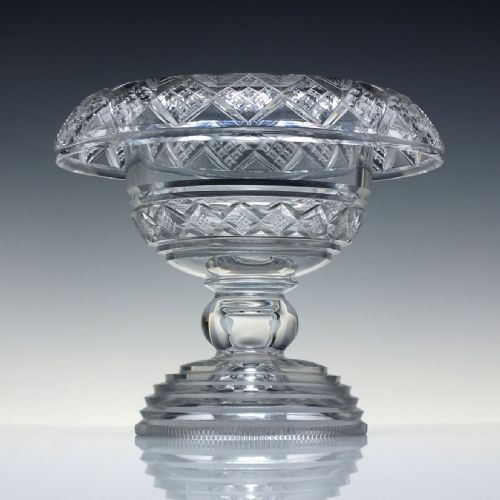


Georgian Cut Glass Bowl
A georgian cut glass bowl is a heavy, light-catching vessel that anchors a dining table and rewards a close look.
Georgian Cut Glass Bowl
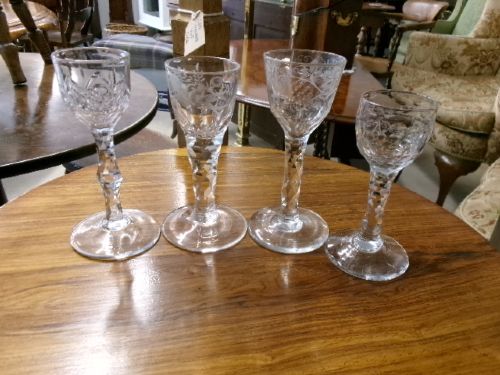
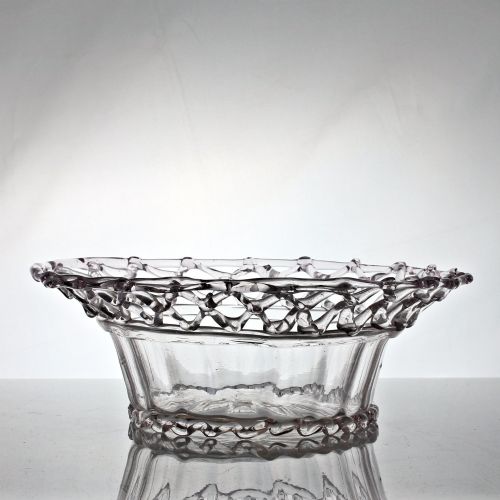
A georgian cut glass bowl encompasses several distinct forms designed for the table and sideboard, from large standing fruit bowls to deep mixing bowls made for tea and punch. The examples found here span the late eighteenth and early nineteenth centuries, covering the Georgian, Regency, and early Victorian periods.
Most pieces show deep geometric cutting across lead crystal, with specific variants including oval fruit bowls, Irish turnover bowls, and smaller finger bowls intended for use between courses. Some examples retain their original pairing with mahogany tea caddies or silver mountings, showing how the glass functioned within broader household rituals.
How they were made
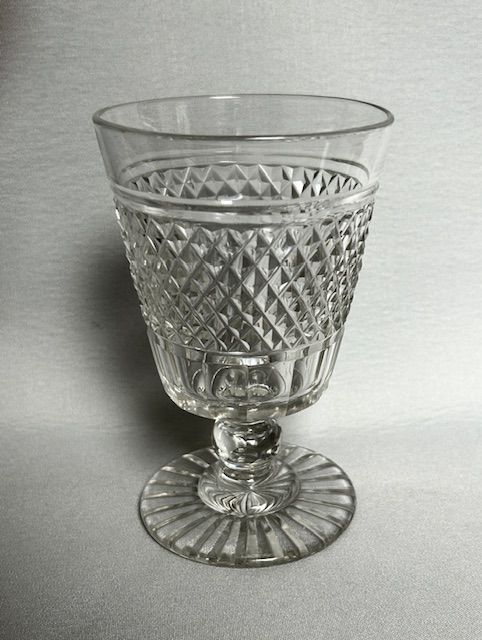
Makers shaped these objects using heavy lead crystal and hand-blown glass, working the molten material while hot to create thick walls capable of sustaining deep facets. Artisans then applied wheel-cutting techniques to carve hobnail patterns, flutes, and slices into the cooled surface.
The characteristic weight and clarity of the glass stem from lead oxide added to the batch during melting, which made the metal softer for cutting and brighter in light. Skilled hands polished the cut facets either to a sharp finish or left them with a softer touch, depending on the workshop and period.
Georgian Cut Glass Bowl Retail Price Guide 2026
Typical asking prices for georgian cut glass bowl among the pieces listed under this phrase on Sellingantiques today, from the lower quarter to the upper quarter. They describe what is for sale here now, not the wider market.
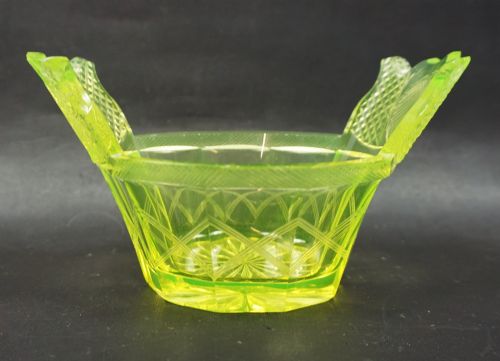
The listings here include lead crystal, uranium glass, hand-blown glass, mahogany, and silver across the Georgian, Regency, and Victorian periods.
What varies in quality
Quality rests in the depth and crispness of the wheel-cut facets, where sharper, cleaner edges demonstrate superior handwork by the glasscutter. Thickness of the metal and the resonance of the crystal when struck also mark the distinction between standard vessels and those made for wealthy households.
Proportion and form dictate the visual balance of the piece, particularly in standing bowls and Irish vessels where the weight of the bowl matches the stability of the foot. Colour and clarity of the glass matter greatly, with premium pieces showing high transparency and minimal internal bubbles.
The Georgian Cut Glass Bowl Glossary
- Hobnail cut
- A surface pattern of square-topped, projecting pyramids resembling the hobnails used in country boots. It creates intense light refraction across the body of the bowl.
- Turnover bowl
- A vessel with an everted, folded rim characteristic of Irish glasshouses from the late eighteenth century. The top edge is turned outward during forming to create a thick, rounded lip.
- Lead crystal
- Glass containing lead oxide, which increases weight, refractive index, and working time for the cutter. This material provides the substantial feel expected in period tableware.
- Slice cut
- Broad, shallow parallel facets cut into the body or stem of a vessel. It gives a linear texture that catches light smoothly along the curves of the glass.
- Finger bowl
- A small, rounded bowl filled with scented water for rinsing fingers between courses at formal dinners. These items often match the larger service bowls in pattern and period.
Georgian Cut Glass Bowl: Frequently Asked Questions
How do I clean a cut glass bowl?
Wash the bowl gently in warm water using a mild liquid soap and line the sink with a thick cloth to prevent chips against the porcelain.
Dry the vessel immediately with a lint-free linen cloth to restore the clear sparkle of the lead crystal without leaving water marks.
Were these bowls used for fruit or punch?
The larger oval and standing bowls served multiple purposes on the dining table, holding fresh fruit, flowers, or iced water for rinsing glasses during long meals.
Deep mixing bowls accommodated tea leaves or punch, while smaller variants sat on the sideboard for condiments or sweet preserves.
How can I tell Irish glass from English pieces?
Irish glass from this era often displays a slightly darker, blue-toned clarity coupled with a heavier weight and deeply impressed cutting styles.
Facets on Irish pieces tend to feel sharper and more defined, reflecting the output of prominent glasshouses operating in Cork, Waterford, and Dublin.
Can I use these bowls for serving food today?
These vessels remain entirely functional for dry foods, fruit, or cold dishes, provided they are handled with care and washed by hand rather than in a machine.
Sudden changes in temperature must be avoided to protect the old lead crystal from thermal shock and hairline cracking.