




Georgian Glass Centrepiece
These Georgian glass centrepieces are commanding table focal points shaped by cut glass and silver, designed to anchor a formal dining table with period elegance.
Georgian Glass Centrepiece
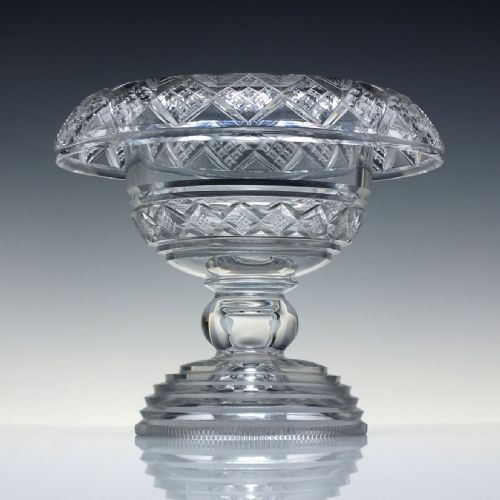
A georgian glass centrepiece comprises significant table vessels and stands created during the Georgian and Regency eras, taking the form of large glass tazzas, standing bowls, fruit bowls, and multi-bottle cruet sets. Buyers search for these items to secure a substantial table centre that reflects the glassmaking standards of the eighteenth and early nineteenth centuries.
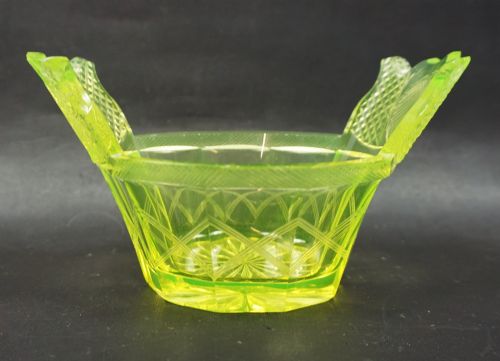
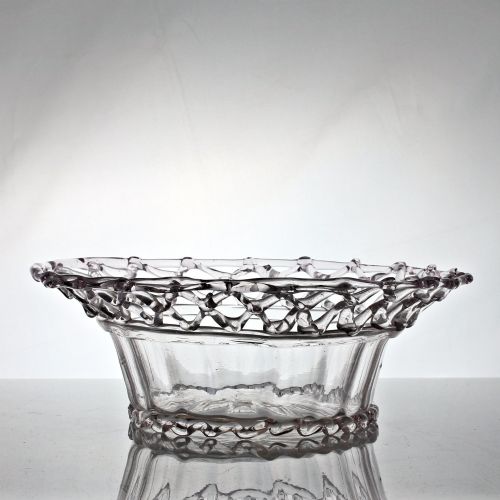
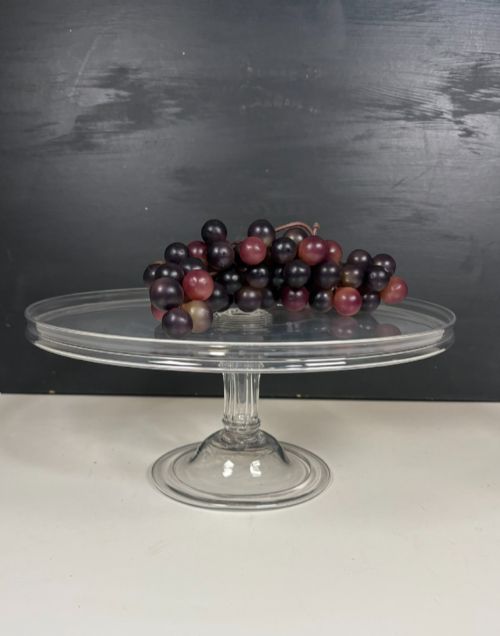
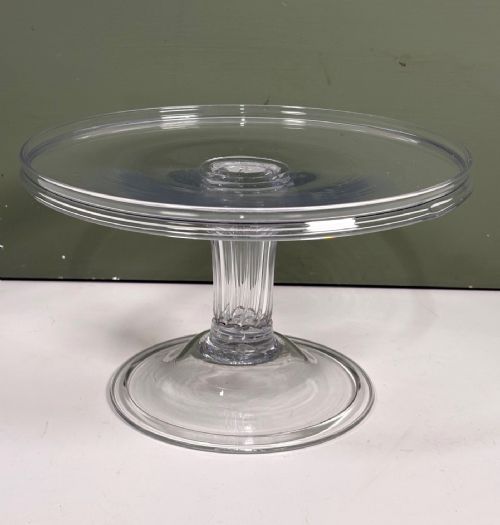
The pieces appearing on this page range from Irish cut glass standing bowls and George III glass tazzas to Bohemian uranium glass dishes and Old Sheffield plate epergnes. These objects served functional roles on the dining table for serving fruit, condiments, or sugar, combining utility with decorative presence.
Forms extend from oval fruit bowls and turnover bowls to complex epergnes and silver-mounted baskets incorporating cobalt glass or lead crystal. Each variation offers a glimpse into the dining rituals of the period, anchored by distinctive regional cutting styles from Britain, Ireland, and continental Europe.
Factors of quality
Quality rests upon the crispness of the cutting, the weight and clarity of the metal, and the harmony between glass vessels and their metal mounts. Superior pieces display deep, sharp facet cutting and well-proportioned forms without clouding in the glass.
The integrity of the ensemble affects value, particularly in cruet sets and epergnes where matching bottles and original stands must align correctly. Marks of hand-finishing, such as polished pontil scars and precise silver hallmarks, distinguish finer workshop output.
Some early nineteenth-century Bohemian dishes glow under ultraviolet light due to the uranium content used to achieve their vibrant green hue.
George Fox
The Georgian Glass Centrepiece Glossary
- Tazza
- A shallow bowl or plate mounted on a stem and foot, used for serving fruit or sweetmeats on the dining table.
- Epergne
- A large ornamental centrepiece featuring multiple tiered dishes or baskets branching from a central stand for food service.
- Traforato
- Pierced or openwork decoration, often found on metalwork or glass frames to create light, intricate borders.
- Hobnail pattern
- A raised, faceted pattern cut into the surface of glassware resembling the head of a hobnail, popular in the Regency period.
- Turnover bowl
- A large glass bowl with a folded or turned-over rim, typical of late eighteenth-century Irish and English production.
Georgian Glass Centrepiece: Frequently Asked Questions
What is a georgian glass centrepiece used for?
These pieces served as the main decorative and functional focal point on formal dining tables during the eighteenth and nineteenth centuries.
They held fruit, condiments, sugar, or sweetmeats, combining practical service with display.
How do I date a georgian glass centrepiece?
Dating relies on stylistic clues such as cutting patterns, glass colour, metal mounts, and manufacturing techniques.
Heavier lead crystal, specific hobnail or prismatic cutting, and hallmarks on associated silver components help narrow the period.
Are Irish glass centrepieces different?
Irish pieces from this era often feature a distinctive dark grey-blue tone in the metal and exceptionally deep, bold cutting.
Glasshouses in Cork and Waterford produced heavy standing bowls and turnover bowls noted for their robust brilliance.
How should I clean my centrepiece?
Wash glass components gently in lukewarm water using mild detergent, avoiding harsh abrasives that can scratch old surfaces.
Metal mounts require separate, careful maintenance depending on whether they are silver, silver plate, or brass.
Can I use these pieces on the table?
While sturdy enough for display and careful occasional use, antique glass requires gentle handling to prevent damage.
Hand-washing is essential, and thermal shock from hot liquids must be avoided to protect the aged material.