



Georgian Glass Tazza
A georgian glass tazza is a pedestal dish designed for fruit or sweetmeats, offering heavy lead metal and crisp baluster stems that anchor a formal table.
Georgian Glass Tazza
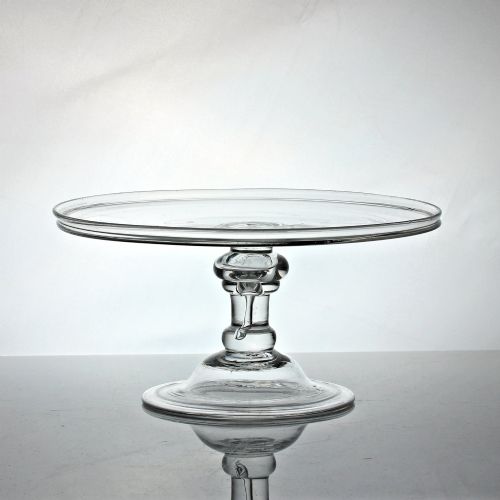
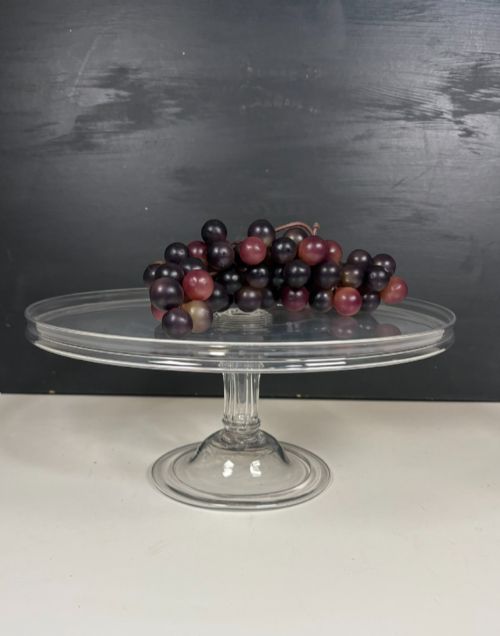
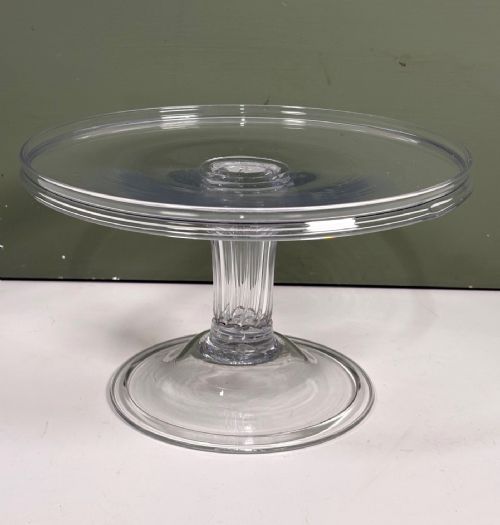
The georgian glass tazza is a raised circular plateau, serving as both display and serveware for confectionery during the eighteenth century. Buyers seeking these pieces will find elevated glass dishes designed with distinct stems and folded feet.
The versions most commonly met on this page include baluster tazzas, patch stands, and small sweetmeat glasses spanning the eighteenth century and around eighteen hundred. These forms range from miniature patch stands to large crystal display plates.
Examples appear in formats such as the flat glass tazza, pieces with silesian stems, and rib-moulded sweetmeat glasses. Each item reflects the domestic dining habits of the georgian period through distinct circular tops and supporting feet.
How they were made
Makers utilised lead glass, lead crystal, and flint glass, heavy materials that allowed deep optical clarity and substantial handling weight. The metal was blown and manipulated whilst hot to form the broad plate and hollow or solid stem.
Stems were often shaped as balusters or triple-knop formations, sometimes incorporating moulding techniques like honeycomb patterns or rib-moulding. Feet were typically fashioned as spreading folded edges or terraced bases to provide stability for the heavy top.
Georgian Glass Tazza Retail Price Guide 2026
Typical asking prices for georgian glass tazza among the pieces listed under this phrase on Sellingantiques today, from the lower quarter to the upper quarter. They describe what is for sale here now, not the wider market.
Listings feature lead crystal, clear glass, and flint glass across the eighteenth century and the year eighteen hundred, spanning baluster tazzas, patch stands, and sweetmeat glasses.
What varies in quality
Quality rests in the handle and weight of the metal, where denser lead crystal provides superior brilliance and ring compared to ordinary clear glass. The crispness of moulded patterns, such as honeycomb facets or ribbing, dictates the clarity of the design.
Proportion defines the better examples, where the diameter of the plate balances harmoniously against the height and turned complexity of the stem. The presence of a clean, folded foot adds structural integrity and indicates careful execution by the glasshouse.
The Georgian Glass Tazza Glossary
- Tazza
- A small pedestal dish or plateau used for serving sweetmeats or fruit. It sits on a central foot and forms a centrepiece on a dining table.
- Baluster stem
- A thick, turned stem resembling an architectural baluster. This heavy form is typical of early eighteenth-century drinking vessels and serving pieces.
- Patch stand
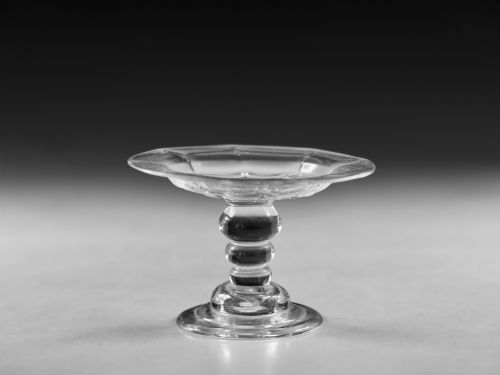
- A miniature pedestal dish originally used to hold cosmetic patches. These small stands share the construction methods of larger tazzas.
- Folded foot
- A base formed by turning the edge of the glass back under itself to create a thickened rim. This technique adds weight and prevents chipping.
- Silesian stem
- A four-sided or multi-sided moulded stem tapering towards the top. It frequently appears on heavy lead glass pieces from the georgian era.
Georgian Glass Tazza: Frequently Asked Questions
What is a georgian glass tazza?
A georgian glass tazza is an elevated serving dish featuring a flat circular top supported by a stem and foot. These pieces were made in lead glass during the eighteenth century for display and dining.
They function as raised display plates for small sweetmeats, fruit, or confectionery. The heavy lead metal gives them substantial weight and a distinct ringing tone when struck gently.
How do I use a tazza today?
A tazza can be used on a dining table or sideboard for serving small items like fruit, nuts, or chocolates. The elevated form adds height and visual interest to a table setting.
When living with these pieces, place them away from high traffic edges due to their weight and age. Hand washing in tepid water preserves the historic lead glass without thermal shock.
What is a patch stand?
A patch stand is a miniature version of a tazza, designed to hold small silk cosmetic patches used in the eighteenth century. They measure only a few inches across but share the exact manufacturing quality of full-sized vessels.
These tiny stands often feature triple-knop stems and terraced feet. Their diminutive scale makes them a distinct collecting category separate from larger table serveware.
How do I tell early georgian glass apart?
Early georgian glass is distinguished by heavy lead metal, thick walls, and deep optical grey tones. Forms tend to rely on baluster stems, folded feet, and simple hand-formed proportions rather than intricate cutting.
Later pieces from around eighteen hundred often show sharper mouldings, clearer metal without grey undertones, and different stem styles. Comparing foot construction and metal weight helps separate the earlier periods.