
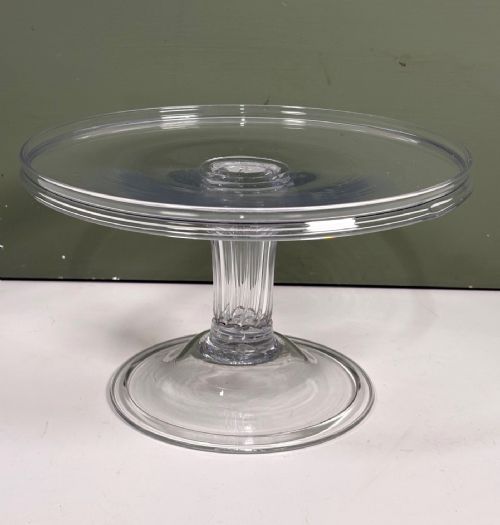


Georgian Lead Glass Tazza
A georgian lead glass tazza brings serious eighteenth-century presence to a table, combining substantial weight with the distinctive grey-blue tone of early metal.
Georgian Lead Glass Tazza
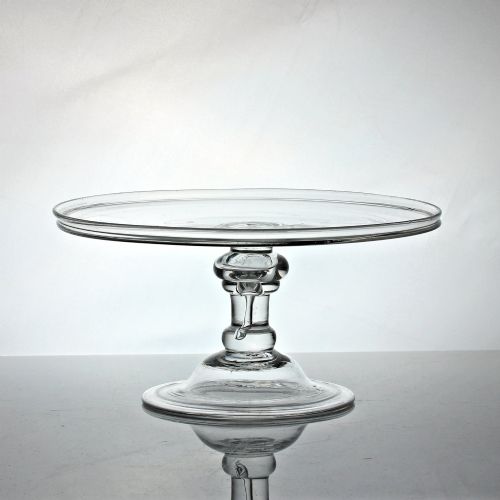
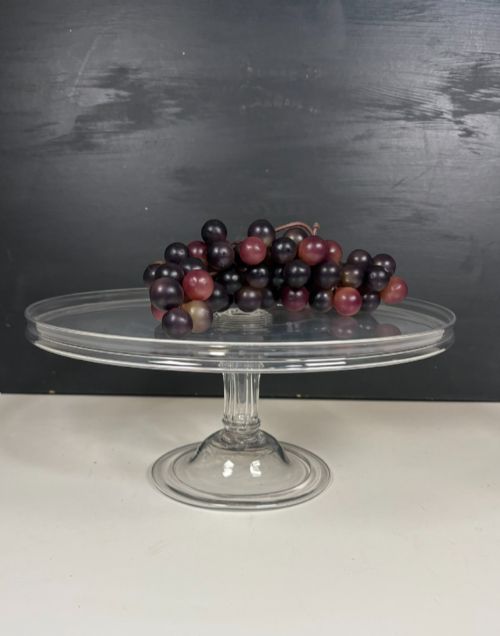
A georgian lead glass tazza is a low-footed serving dish designed for sweetmeats, fruit, or small patches, emerging during the eighteenth century in clear lead metal. These pieces sit on spreading folded feet or terraced bases, supporting circular plates that often feature moulded or rib-moulded decoration.
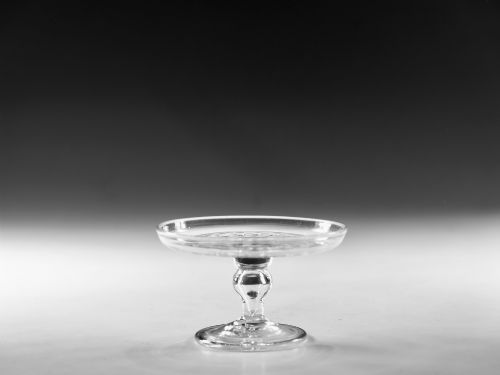
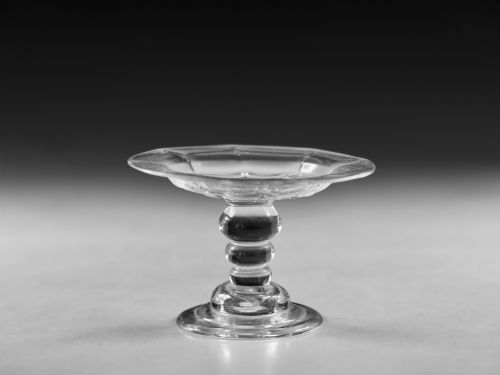
The versions most commonly met on this page date from the 1730s to the 1800s, encompassing both George II and George III periods. Alongside standard serving plates, the selection includes miniature patch stands and sweetmeat glasses sharing the same baluster stems and heavy proportions.
Materials and construction
Makers utilised lead glass, flint glass, and lead crystal, which gave the metal its characteristic density, heft, and refractive depth. This heavy batch composition allowed workers to form crisp optical effects and substantial structural elements without losing clarity.
Stems were frequently formed with baluster turns, triple-knops, or rib-moulded details before being joined to spreading folded feet. Moulding techniques such as honeycomb patterns were pressed into the glass while hot, creating tactile surfaces that caught candlelight.
Some miniature stands measure barely larger than a coin, once holding the tiny silk patches eighteenth-century figures stuck to their faces.
Judging quality in early glass
Quality rests in the distribution of the metal and the crispness of the forming work. A finer tazza displays an even thickness across the plate and a stable, well-balanced foot without excessive heaviness in the wrong joints.
The metal itself reveals distinctions in purity and colour. Better pieces show a clear, bright body with minimal seed bubbles, whereas lesser examples may exhibit a duller grey cast or uneven surface tension from the forming process.
The Georgian Lead Glass Tazza Glossary
- Tazza
- A shallow bowl or plate mounted on a stem and foot, used on the dining table for serving sweetmeats or fruit. These vessels evolved from earlier silver forms into heavy lead glass during the eighteenth century.
- Patch stand
- A miniature version of a tazza, often measuring only a few centimetres across, originally used on a dressing table to hold small silk cosmetic patches. They share the same baluster stems and folded feet as their larger counterparts.
- Baluster stem
- A thick, turned stem shape reminiscent of an architectural baluster, frequently found on English drinking glasses and tazzas from the early eighteenth century. These stems add significant weight to the lower portion of the object.
- Folded foot
- A base edge turned back under itself during manufacture to create a smooth, rounded rim that resists chipping. This technique provides extra stability and strength to heavy lead glass vessels.
- Rib-moulded
- A decorative pattern formed by blowing the hot glass into a ribbed dip-mould before expanding and shaping the vessel. The resulting ridges catch and refract light across the body of the glass.
Georgian Lead Glass Tazza: Frequently Asked Questions
What is a georgian lead glass tazza?
A georgian lead glass tazza is an eighteenth-century pedestal serving dish made from heavy lead metal, designed to hold sweetmeats or small confectioneries on the dining table.
These pieces feature circular plates raised on baluster stems and spreading feet, combining practical utility with the distinctive grey-blue refractive quality of early English glassmaking.
How were these glass tazzas used?
They served as elevated display dishes for rich foods, sweetmeats, and dried fruits during formal eighteenth-century dessert courses.
Smaller versions, known as patch stands, were kept on dressing tables to hold cosmetic silk patches used by fashionable society.
How do I date an 18th-century tazza?
Dating relies on observing structural characteristics such as foot construction, stem form, and the method of manufacture.
Early pieces from the 1730s often incorporate heavy baluster stems and folded feet, while later George III examples tend towards simpler stems and lighter proportions.
How do I care for antique glass?
Antique lead glass requires gentle hand washing in warm water with mild detergent, avoiding sudden temperature changes that can stress the old metal.
Storing them on stable, flat surfaces away from edge vibrations protects the wide plates and spreading feet from accidental knocks.