




Clear Glass Platter
A clear glass platter brings bright, reflective utility to a table, combining simple serveware with the crisp brilliance of lead crystal or moulded glass.
Clear Glass Platter
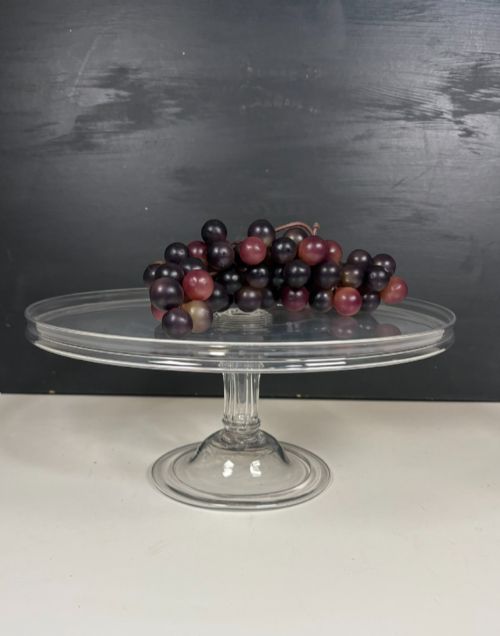
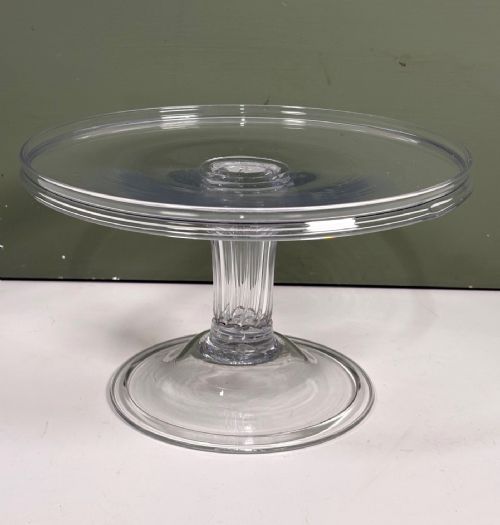
When you search for a clear glass platter, you are looking at utilitarian and decorative serveware produced across several centuries. The pieces range from Georgian table tazzas to Edwardian cut glass dishes and 20th-century decorative plates.
The versions you are most likely to meet on this page span the 18th century, the Edwardian era, and the early 20th century. These include moulded glass, lead crystal, and notable Art Deco designs.
Forms vary from footed glass tazzas and serving dishes to flat trays and decorative plates. Origins include English, Italian, and French production.
Methods of manufacture
Makers utilised glass and lead crystal, shaping them through cutting, moulding, and staining techniques. Pieces from the 18th century often take the form of heavy glass tazzas, while later items employ specialised surface decoration.
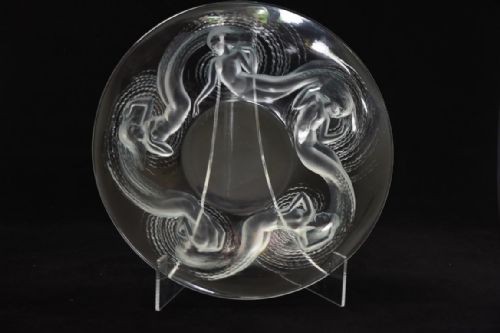
Art Deco and modernist examples incorporate sepia stain and opalescent finishes on moulded glass plates. Italian production draws on Venetian traditions to form decorative trays.
Listings span periods from the 18th century through to the 1930s, featuring materials such as lead crystal, moulded glass, and sepia stain.
Distinctions in quality
Quality rests upon the clarity of the glass and the crispness of any cut or moulded detail. Sharpness in decorative motifs, such as those found on pressed plates, distinguishes finer examples from simpler utilitarian wares.
Weight and balance also define the standard of a piece, particularly in footed tazzas and heavy lead crystal dishes where stability and proportion matter.
Rene Lalique
The Clear Glass Platter Glossary
- Tazza
- A small shallow bowl or plate mounted on a stem and foot. This footed form was traditionally used for serving fruit or sweetmeats on the dining table.
- Cut glass
- Glass decorated by grinding facets or patterns into the surface with a wheel. This technique enhances the refractive quality of lead crystal.
- Lead crystal
- Glass containing metal oxides that increase its weight, brilliance, and clarity. It allows for deeper and sharper cutting than standard glass.
- Opalescent
- Glass that exhibits a milky, milky-blue, or fire-like iridescence when lit. It became a hallmark of decorative glassware in the early 20th century.
- Sepia stain
- A brown pigment applied to pressed glass surfaces to highlight moulded designs and create tonal depth. It is frequently seen on French Art Deco plates.
Clear Glass Platter: Frequently Asked Questions
What is a glass tazza?
A tazza is a footed dish or shallow bowl raised on a pedestal, designed to present food prominently on a dining table.
In earlier periods, these pieces served sweetmeats, fruit, or small cakes during formal meals.
How do I style a glass tray?
Clear glass trays work well as decorative centrepieces on dining tables, sideboards, or coffee tables. Their reflective surfaces catch the light and complement various interior settings.
They can be left empty to display the glasswork or used to hold small decorative objects.
Are these plates for food use?
While many antique and vintage glass plates and dishes were originally made for dining or serving, modern use depends on the fragility of the specific piece.
Heavier cut glass and moulded items tolerate careful serving, whereas delicate decorative plates from the 20th century are better suited for display.
How do I date antique glass?
Dating relies on identifying stylistic markers, manufacturing techniques, and the type of glass used. Georgian pieces often feature heavy lead metal and distinct pontil marks.
Edwardian and Art Deco examples display characteristic cutting patterns, moulding styles, or signatures associated with early 20th-century designers.