

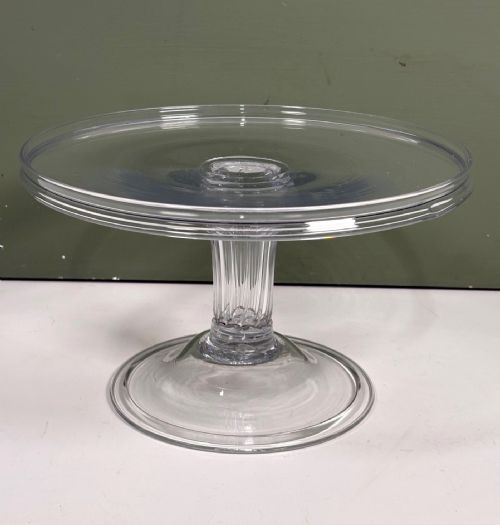


18th Century Glass Tazza
An 18th century glass tazza is a pedestal serving dish designed for sweetmeats and fruit, bringing tactile history and bright clarity to a table.
18th Century Glass Tazza
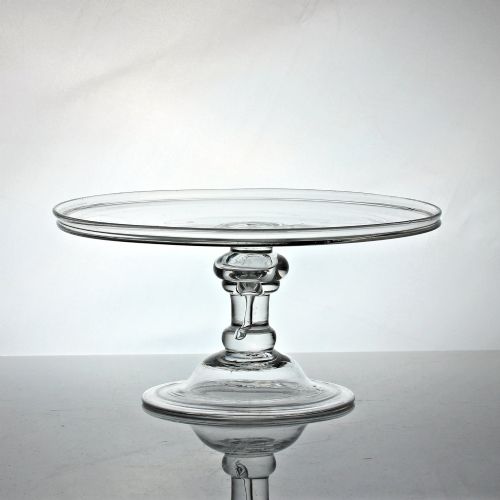
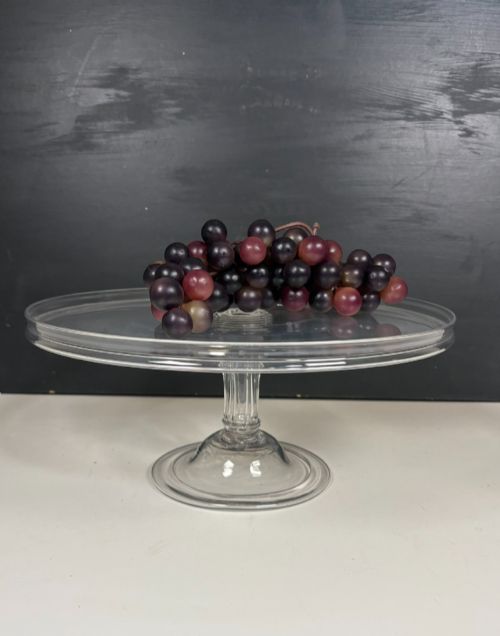
An 18th century glass tazza functions as a raised plateau for display and serving, taking the form of a flat or shallow plate elevated on a central stem and foot. Collectors search for these pieces to acquire early table glass that displays the distinctive weight and presence of the Georgian period.
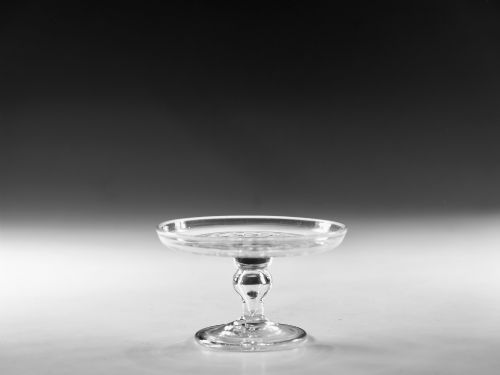
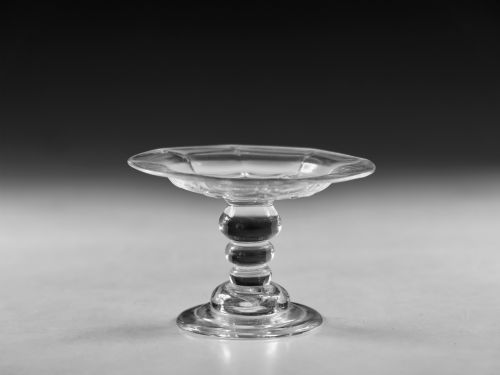
The versions met most frequently on this page span the 18th century, including George II and George III eras, alongside related miniature patch stands and sweetmeat glasses. These examples range from compact baluster forms measuring small proportions up to larger display pieces.
Originating primarily from English glasshouses, the selection includes pieces with folded feet, terraced bases, and moulded bowls. Each object reflects the changing decorative preferences of Georgian dining, moving from baluster stems to wider salvers.
What varies in quality
The distribution of weight and the sharpness of moulding separate examples across the range, particularly in how cleanly the stem joins the foot and the plateau. Honeycomb and rib patterns show varying depth and crispness depending on the skill of the blower and the wear on the mould.
The quality of the metal itself differs in its brilliance, surface character, and the presence of natural manufacturing bubbles or striations inherent to early glasshouse production. Proportion and balance between the width of the plate and the height of the stem define the most successful forms.
18th Century Glass Tazza Retail Price Guide 2026
Typical asking prices for 18th century glass tazza among the pieces listed under this phrase on Sellingantiques today, from the lower quarter to the upper quarter. They describe what is for sale here now, not the wider market.
Miniature patch stands once held tiny cosmetic patches made of silk or velvet that fashionable Georgians stuck to their faces.
The 18th Century Glass Tazza Glossary
- Tazza
- A circular plate or salver raised on a foot or stem, used in the 18th century for serving sweetmeats and small confections. The form derives from earlier metal prototypes adapted by glassmakers.
- Patch stand
- A miniature pedestal dish originally used to hold small cosmetic patches, closely related in form and scale to small tazzas. These delicate pieces share the baluster stems and folded feet of larger table glass.
- Sweetmeat glass
- A small stemmed vessel designed for serving wet or dry sweetmeats, often featuring moulded decoration on the bowl. They frequently overlap in size and function with patch stands and small tazzas.
- Baluster stem
- A heavy, thick stem turned or moulded with knops, characteristic of English lead glass from the early and mid-18th century. This construction provides the necessary stability for a raised serving surface.
- Folded foot
- A glass base where the outer edge is turned underneath while hot to create a rounded, doubled rim for added strength. This technique appears frequently on early Georgian serveware.
18th Century Glass Tazza: Frequently Asked Questions
What is an 18th century glass tazza?
An 18th century glass tazza is an elevated serving dish featuring a flat or shallow plate supported by a stem and foot. They were produced in England during the Georgian period for displaying sweetmeats, fruit, and small confectioneries.
These pieces combine utilitarian table function with the heavy, luminous quality of early lead glass and flint glass. Surviving examples demonstrate a range of stem designs, from simple balusters to ribbed and moulded supports.
How were glass tazzas used?
In the 18th century, glass tazzas occupied a central place on the dining table or dessert service, holding sweetmeats, nuts, and small sugar plums. Their elevated design allowed dishes to be layered visually across the table.
Smaller variants, such as patch stands and sweetmeat glasses, served more intimate or specialised roles in the parlour and dressing room. Today, collectors use them as display objects or for serving small items at table.
How do you date an antique glass tazza?
Dating relies on observing stylistic markers such as the form of the stem, the shape of the foot, and the manufacturing technique. Early Georgian pieces often feature heavy baluster stems, folded feet, and terraced bases.
As the century progressed into the George III period, forms shifted towards lighter profiles and different decorative mouldings. Comparing the metal weight, colour, and pontil mark helps establish the likely production period.
How do I care for antique glass?
Antique glass requires gentle handling and should be washed by hand in warm water using mild soap, avoiding sudden temperature changes. Soft cloths prevent scratching the softer lead metal typical of 18th century pieces.
Display surfaces should be stable and protected from vibrations, as early lead glass and crystal can be vulnerable to knocks. Keeping pieces away from direct, intense heat sources preserves the material safely.