

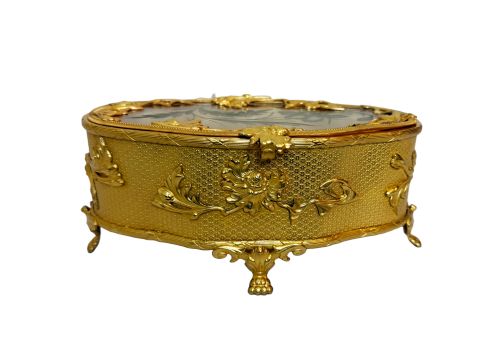
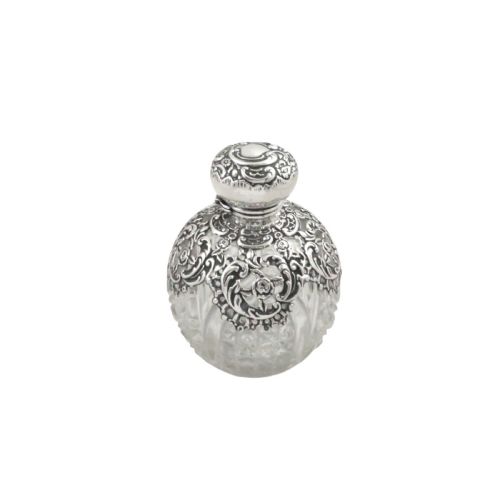
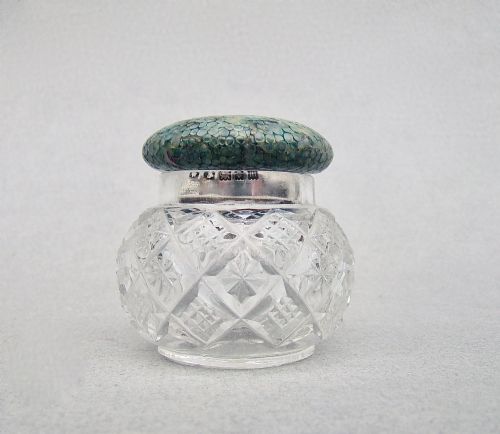
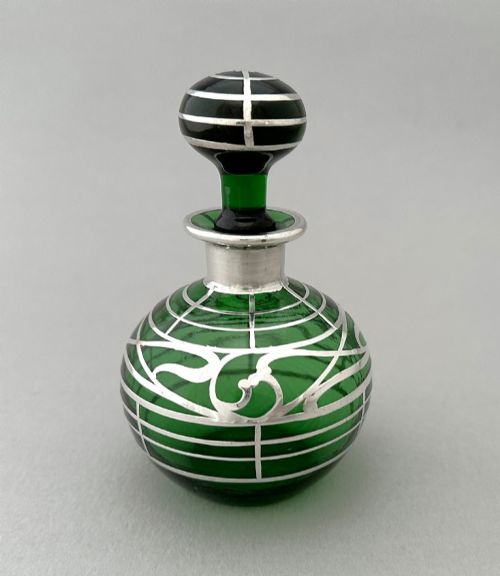






Antique Dressing Table Glass
Antique dressing table glass encompasses glass mirrors and containers from the 18th century to the Art Deco period, providing functional elegance for the vanity.
Antique Dressing Table Glass
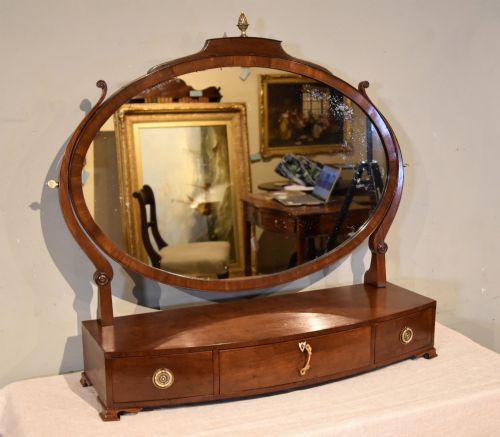
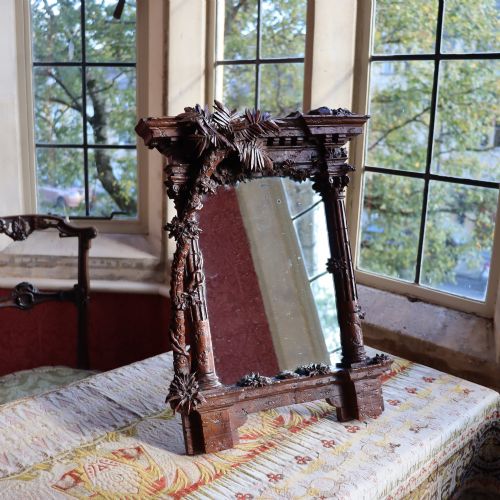
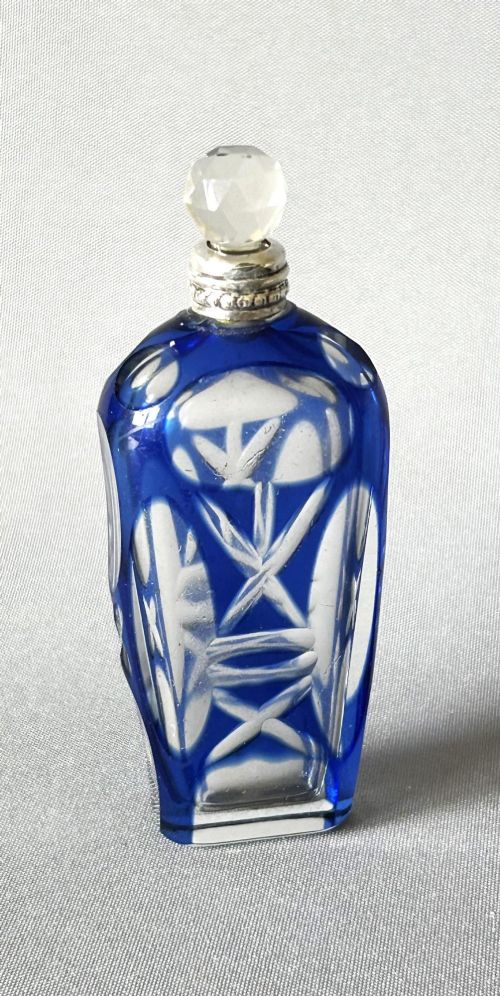
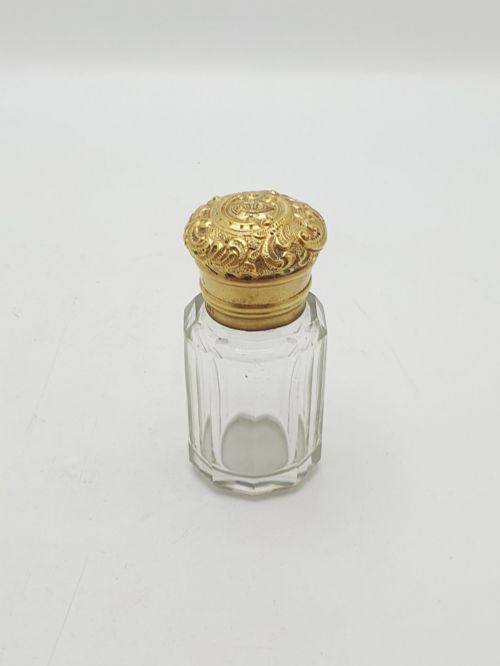
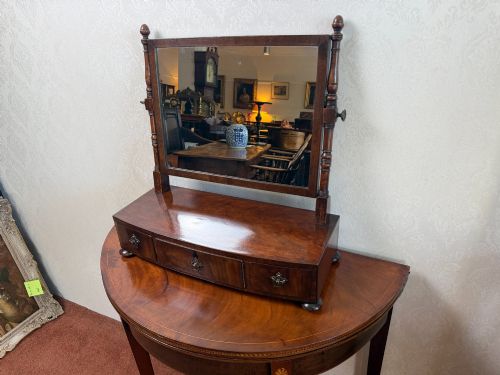
When you search for antique dressing table glass, you encounter a range of items centred around the vanity, from small swing mirrors to cut crystal scent bottles and silver-lidded jars. The selection spans centuries of design, reflecting changing habits of grooming and personal care.
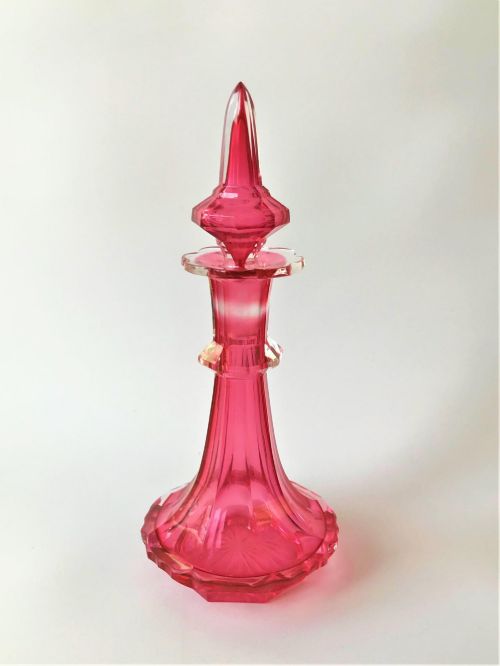
The most common forms on this page include mahogany swing mirrors, Edwardian powder jars, and Victorian scent bottles in coloured or sliced-cut glass. These pieces range from simple utilitarian toilet mirrors to ornate dresser sets mounted in sterling silver.
Earlier examples typically feature walnut or mahogany frames paired with hand-silvered mirror glass, while 20th-century items lean towards geometric Art Deco glass and guilloché enamel. Each period brings distinct materials and shapes to the dressing table.
Materials and construction methods
Makers combined solid timbers such as mahogany, walnut, and oak with glass, brass, and sterling silver. Mirror plates were often bevelled by hand, while glass containers utilised mould-blowing, cutting, and pressed techniques.
Metal mounts, collars, and lids were frequently cast in sterling silver or brass, sometimes accented with enamel or tortoiseshell. Cabinetmakers constructed wooden frames using traditional joinery, housing the glass in adjustable swing pivots.
Antique Dressing Table Glass Retail Price Guide 2026
Typical asking prices for dressing table glass among the pieces listed under this phrase on Sellingantiques today, from the lower quarter to the upper quarter. They describe what is for sale here now, not the wider market.
Listings feature items spanning the 17th century through the 1930s, utilising materials like sterling silver, mahogany, walnut, and coloured glass.
Factors that distinguish finer examples
Quality rests in the clarity of the glass, the weight of the silver mounts, and the crispness of the cutting or moulding. Finer scent bottles and jars exhibit sharp facets and well-fitted precious metal lids bearing clear hallmarks.
For mirrors, the condition of the original glass plate and the selection of figured timber on the frame dictate the standard. Superior pieces maintain their original hardware, pivots, and backboards without structural alterations.
A. J. Pepper & Co·Henry Clifford Davis·A. Bromet & Co·Heal & Sons·Rene Lalique·Asprey
The Antique Dressing Table Glass Glossary
- Toilet mirror
- A smaller mirror designed to sit upon a chest of drawers or a dedicated dressing table. These often feature small box bases fitted with tiny drawers.
- Guilloché enamel
- A decorative technique where a precise, intricate pattern is mechanically engraved into metal beneath a translucent layer of enamel.
- Slice-cut glass
- A method of cutting flat, broad facets into the surface of a glass vessel, common on Victorian scent bottles and decanters.
- Cheval mirror
- A full-length swing mirror supported in a freestanding frame with four legs, allowing the glass to tilt fully.
- Sterling silver
- An alloy of silver containing 92.5% pure silver and 7.5% other metals, widely used for the mounts and lids of vanity items.
Antique Dressing Table Glass: Frequently Asked Questions
What is a toilet mirror?
A toilet mirror is a portable table mirror used for grooming, distinct from larger wall-hung or full-length mirrors.
They usually sit on top of a dressing chest or table, often supported by upright arms that allow the glass to swing back and forth.
How do I date antique glass?
Dating antique glass relies on examining the manufacturing techniques, such as pontil marks, mould seams, and the clarity of the material.
Silver mounts and lids often carry hallmarks with maker's marks and date letters, which provide a precise year of manufacture.
Are swing mirrors adjustable?
Yes, swing mirrors feature brass thumbscrews or wooden pivots on the side uprights to alter the angle of the glass.
This mechanism allows the user to tilt the mirror plate for optimal viewing during daily grooming routines.
What is cut glass?
Cut glass refers to vessels that have had decorative facets or patterns ground and polished into the surface using a rotating wheel.
This technique creates sharp edges and brilliant light refraction, frequently seen on Victorian and Edwardian perfume bottles.