


Serpentine Base Mirror
A serpentine base mirror brings fluid curves and warm timber grain to a dressing table.
Serpentine Base Mirror
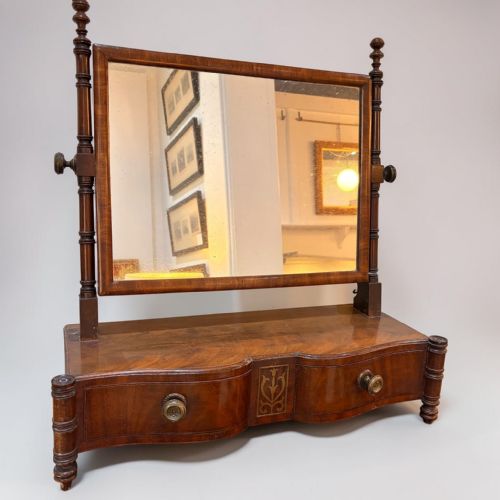
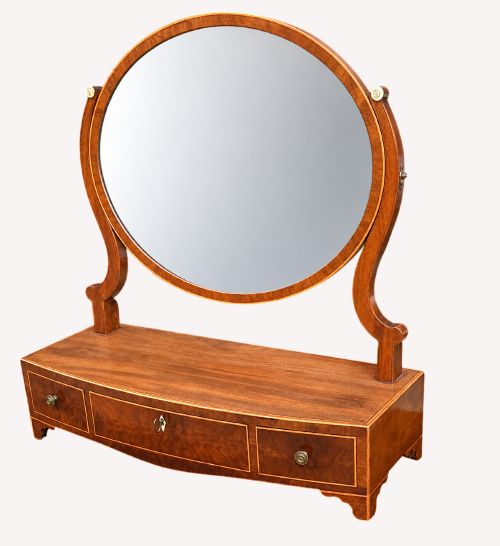
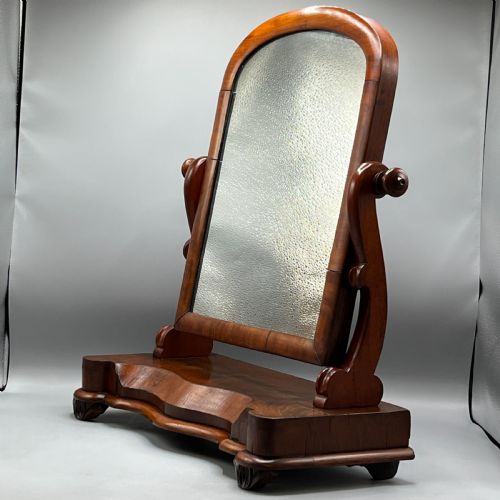
A serpentine base mirror is a tabletop looking glass featuring a distinctive undulating wooden plinth beneath the frame. You will frequently encounter mahogany examples dating from the Georgian and Victorian periods, often configured as swing mirrors or toilet mirrors.
These pieces function as practical dressing accessories while providing architectural interest through their curved box bases and drawer compartments. The forms range from simple rectangular plates to oval glasses supported by delicate upright arms.
How they were made
Cabinet makers constructed the frames and shaped bases primarily using solid mahogany, occasionally incorporating boxwood inlay for decorative contrast. The timber was carefully cut and joined to form the characteristic wavy front outline of the plinth.
Mirrors utilised traditional glass secured within wooden surrounds, pivoting on brass hardware to allow tilt adjustment. Some iterations included small drawers fitted with bone pulls, requiring precise woodworking and joinery skills.
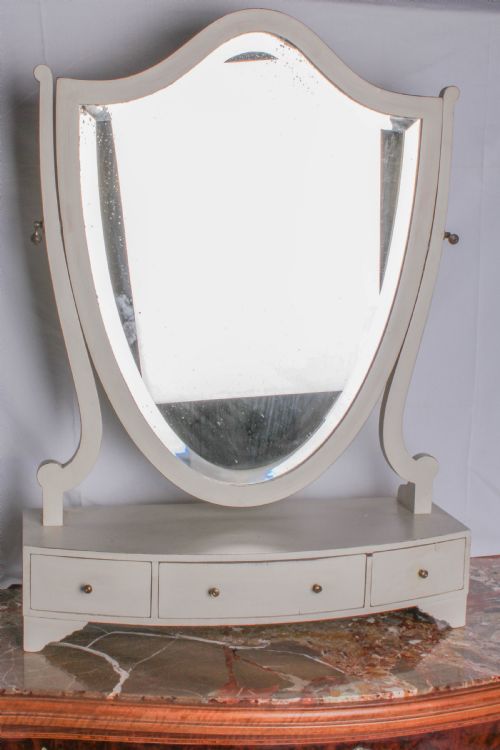
This site's listings show mirrors spanning the Georgian, Victorian, and Edwardian periods in mahogany, painted wood, and brass.
What varies in quality
Quality rests upon the crispness of the serpentine curve in the wooden base and the proportion between the glass frame and the supporting structure. Superior examples display finely figured mahogany timber and balanced drawer configurations that complement the overall silhouette.
The refinement of the brass pivots and the presence of original mirror glass distinguish higher grade pieces. Subtle details such as neat boxwood inlay or well-executed painted finishes elevate the standard of manufacture.
The Serpentine Base Mirror Glossary
- Serpentine base
- A furniture plinth featuring a convex centre flanked by concave curves, creating a wavy outline.
- Toilet mirror
- A smaller dressing glass designed to sit upon a chest of drawers or a dedicated dressing table.
- Swing mirror
- A looking glass mounted on upright pivots allowing the angle of the plate to be tilted.
- Boxwood inlay
- Contrasting pale wood inserted into recesses within the darker mahogany surface for decoration.
Serpentine Base Mirror: Frequently Asked Questions
Where do you place a serpentine base mirror?
These mirrors sit comfortably atop a chest of drawers, a sideboard, or a traditional dressing table.
Their compact footprints allow them to function effectively in bedrooms and hallways alike.
How do you date a mahogany toilet mirror?
Dating relies on observing the construction methods, timber choice, and the overall style of the base.
Georgian and Victorian pieces display different proportions, hardware types, and edge mouldings.
What is the difference between a dressing mirror and a toilet mirror?
The terms are often used interchangeably to describe movable tabletop looking glasses.
Historically, toilet mirrors were associated with the dressing table or washstand.
Are these mirrors attached to tables?
The pieces seen here are freestanding tabletop items rather than permanently fixed attachments.
They rest securely on their own serpentine bases without requiring wall mounting.