



Arched Dressing Mirror
An arched dressing mirror brings distinct curve and reflection to a room, offering both practical use and period character.
Arched Dressing Mirror
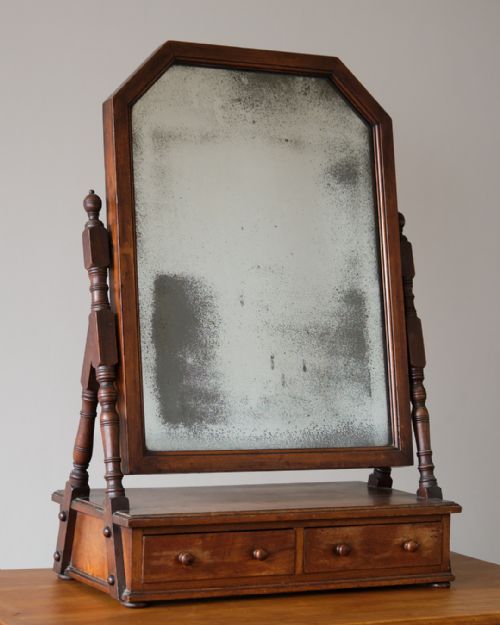
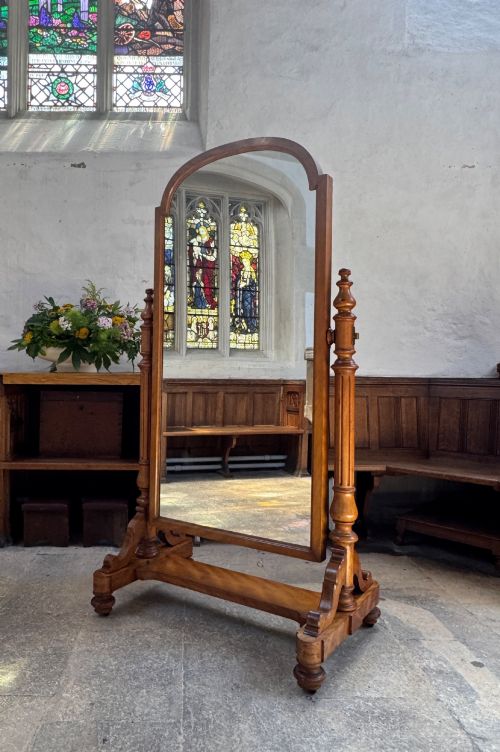
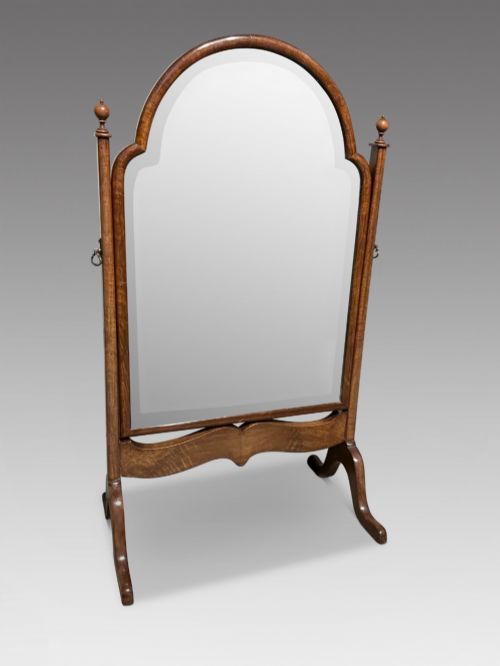
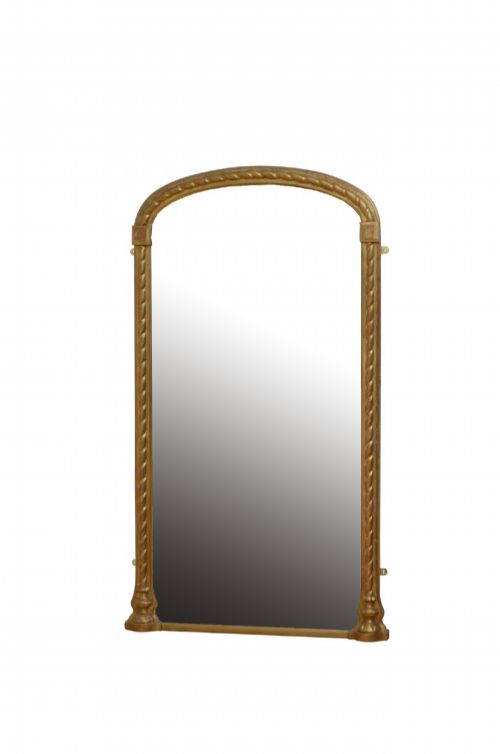
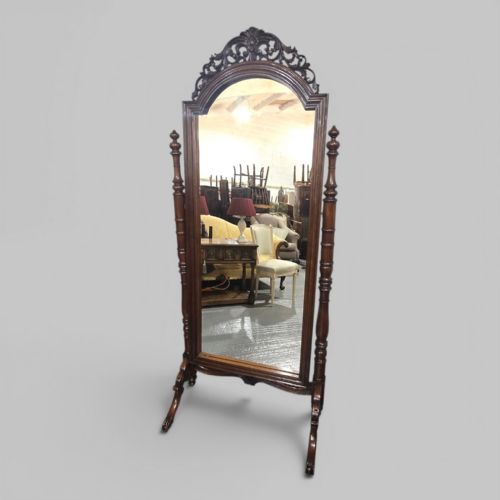
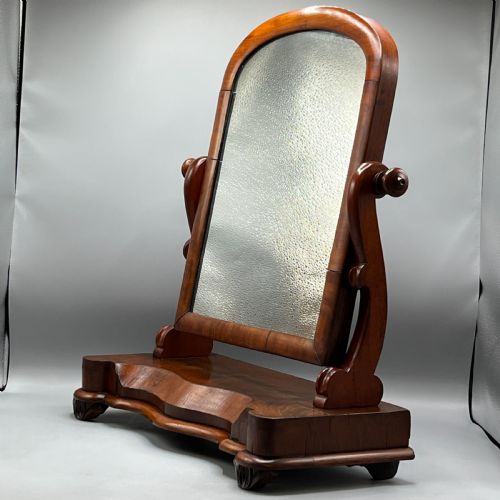
An arched dressing mirror sits atop a table, swings on a frame, or stands independently as a full-length cheval glass. When searching for an arched dressing mirror, buyers encounter table models, vanity pieces, and large floor-standing examples dating from the nineteenth century into the twentieth century.
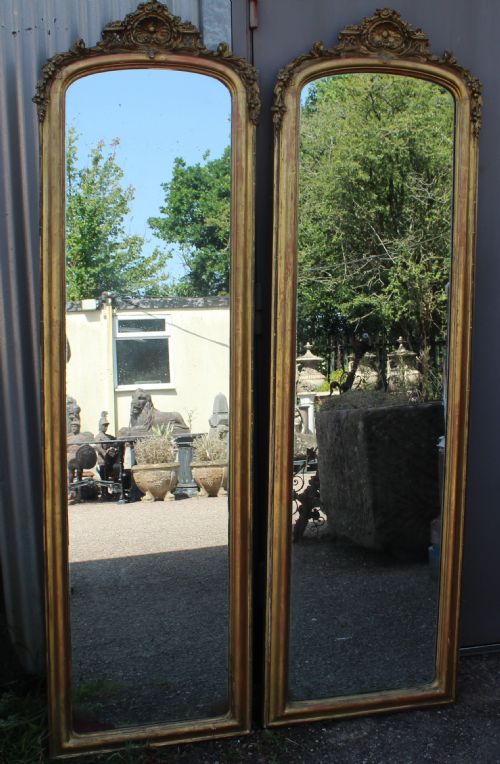
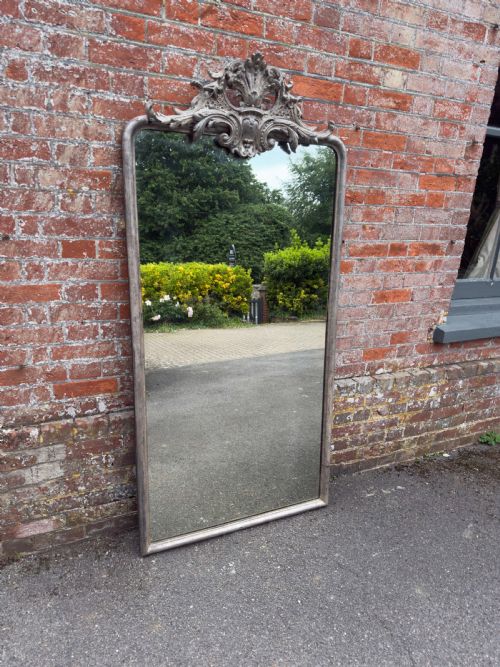
The selection ranges from compact Victorian mahogany swing frames to large French gesso and carved wood pieces with curved tops. Walnut, satin birch, and painted finishes appear frequently alongside simpler wooden structures.
Materials and construction
Cabinetmakers utilised solid timbers such as mahogany and walnut, often applying veneers over secondary woods to create figured surfaces. Giltwood and carved gesso provided decorative frames, sometimes enhanced with paint or silvering.
Hardware such as brass hinges, candle holders, and swing pivots allowed the glass to tilt on its frame. Joinery methods relied on traditional dovetails and tenons to support the weight of the heavy glass plates.
Listings feature mahogany, walnut, satin birch, gesso, and giltwood spanning the nineteenth and early twentieth centuries.
Assessing quality
Quality rests in the crispness of the carved wood or gesso details and the depth of the timber figuring. Finer pieces display well-proportioned arches and robust framing that securely holds the mirror plate without sagging.
Original brass fittings and uncompromised silvering on the glass elevate a piece. The integration of auxiliary drawers, bureau fitments, or articulated candle holders demonstrates higher craftsmanship.
Heal & Sons
The Arched Dressing Mirror Glossary
- Cheval mirror
- A freestanding full-length mirror suspended in a frame that allows it to swing entirely. These large pieces usually stand on four feet.
- Gesso
- A plaster-like mixture applied to wood frames and carved or moulded into ornate decorative shapes before gilding or painting. It defines many nineteenth-century French frames.
- Swing mirror
- A glass plate mounted on vertical pivots between two upright posts, allowing the angle of reflection to adjust. This form dominates dressing table examples.
- Triptych
- A three-panel mirror where the outer two sections hinge to fold inward. This format appears on dressing tables and vanity setups.
- Pier mirror
- A tall mirror designed to hang on the wall between windows or stand against a narrow pier of wall. They often feature arched or shaped tops.
Arched Dressing Mirror: Frequently Asked Questions
Where should I place an arched dressing mirror?
Smaller table versions sit comfortably on chests of drawers or dressing tables to provide a functional reflection for daily routines. Larger floor-standing cheval mirrors fit well in bedrooms or dressing rooms where they reflect light and anchor the space.
Positioning them opposite a window maximises natural light distribution across the room.
How do I date an antique arched mirror?
Dating relies on examining the timber species, framing style, and construction methods. Nineteenth-century examples often feature solid mahogany or walnut with hand-cut joinery, while later twentieth-century pieces incorporate different veneer patterns and hardware.
Looking at the backboards and fixings also helps determine the manufacturing era.
How do I clean an antique frame?
Dust wooden and gilt frames gently with a dry, soft cloth to prevent buildup without harming delicate finishes. Avoid commercial chemical sprays or excessive water, especially on gesso or silvered surfaces.
Standard glass cleaner works well on the mirror plate, provided it does not seep behind the bevel and damage the backing.