
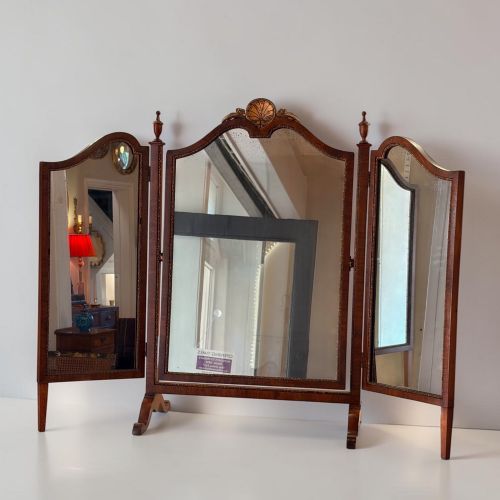
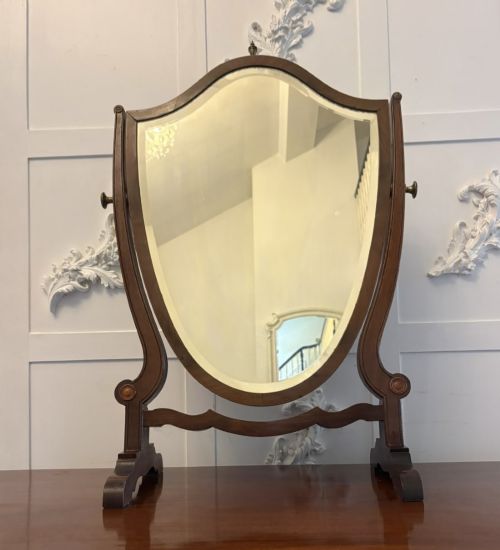
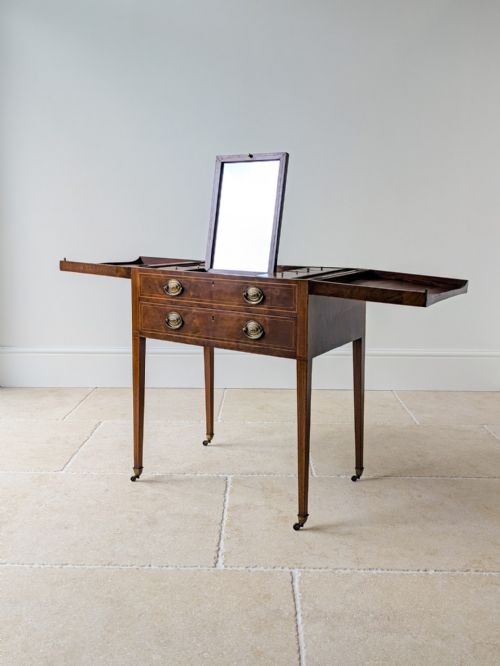
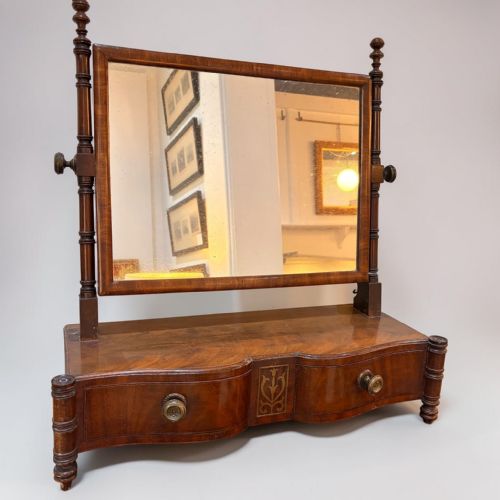
Toilet Mirror Mahogany
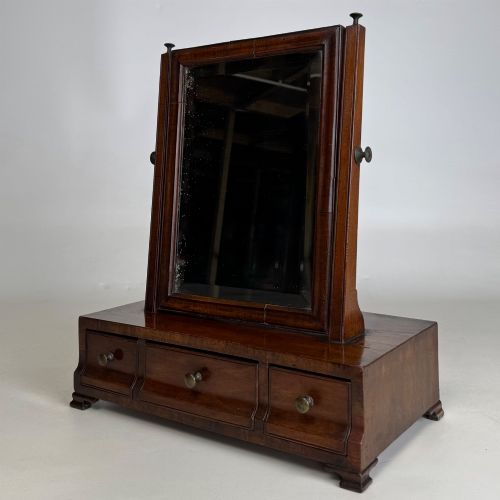
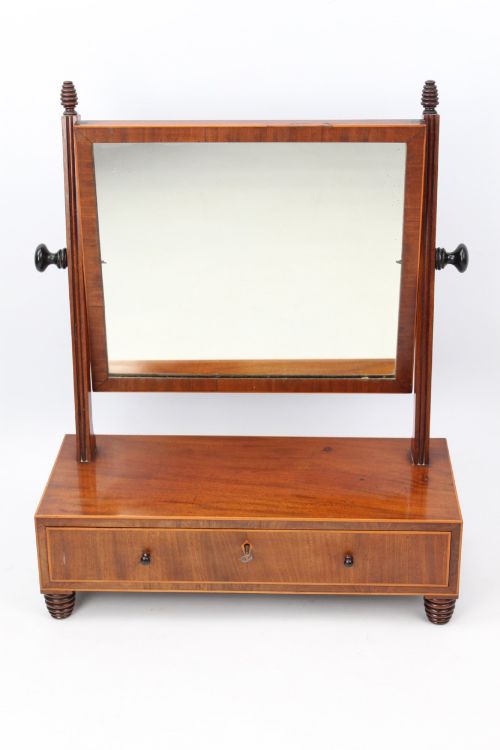
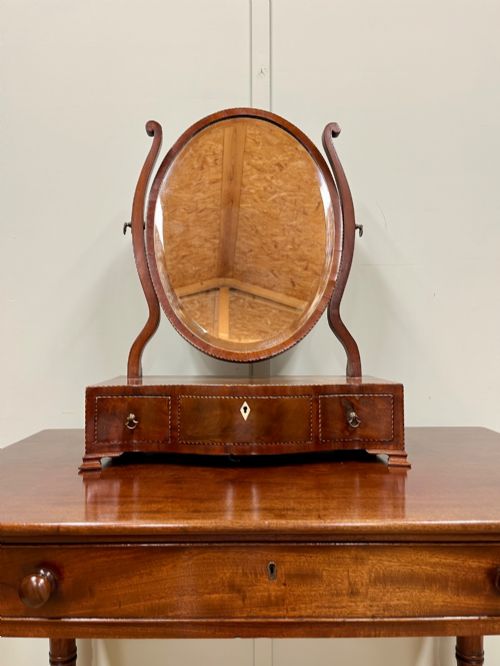
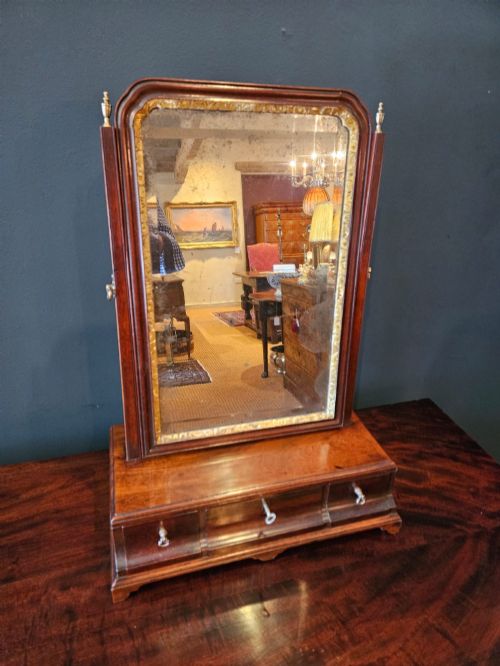
Toilet mirror mahogany pieces are functional dressing furniture built to sit upon chests or tables, offering adjustable reflection for personal grooming.
Toilet Mirror Mahogany
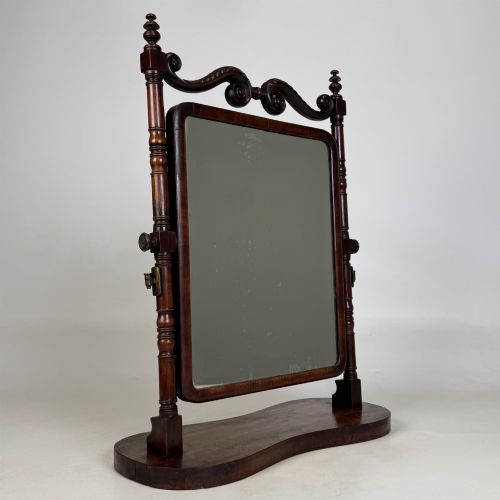
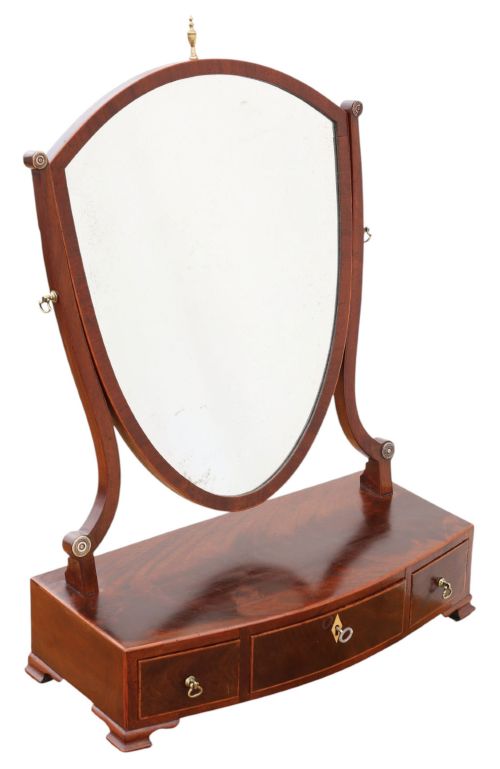
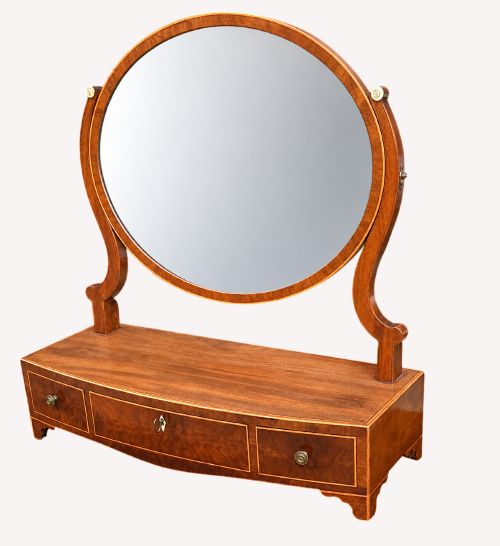
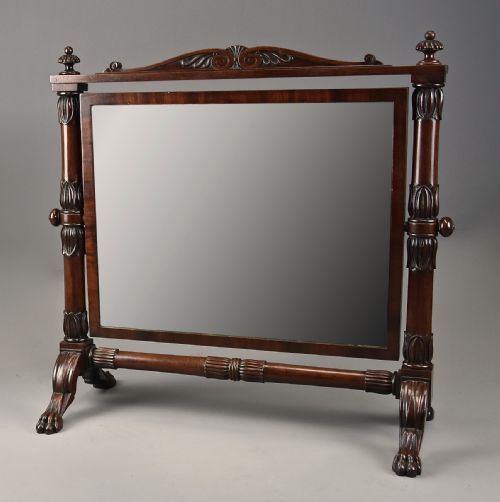
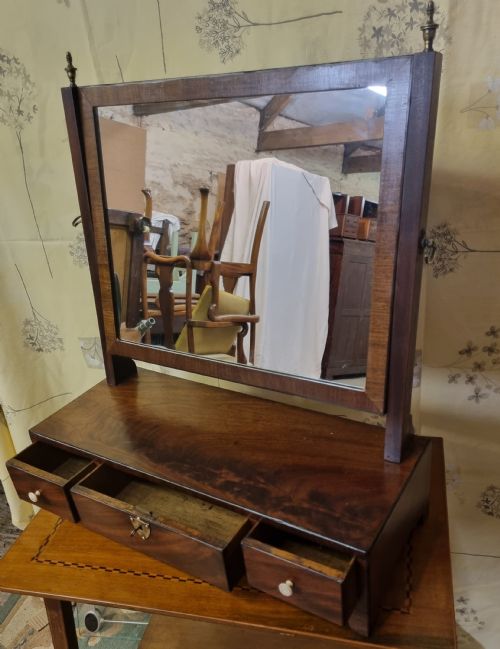
When searching for toilet mirror mahogany, a buyer encounters dressing furniture designed primarily for the bedroom or dressing room, spanning the eighteenth to the early twentieth century. The selection ranges from compact table-top models with small storage drawers to larger swinging plates supported by upright pillars.
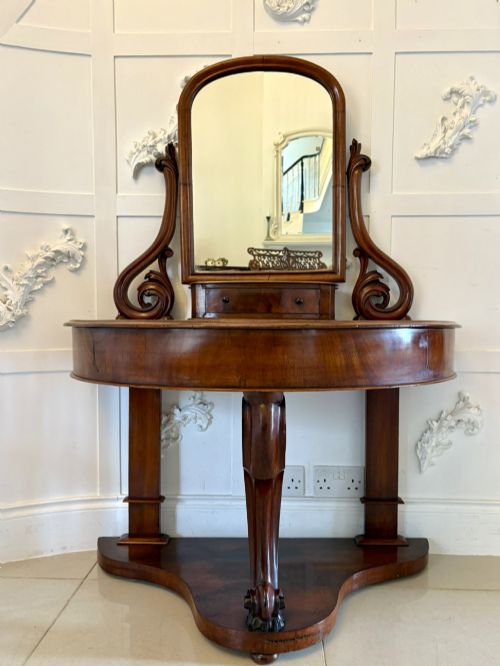
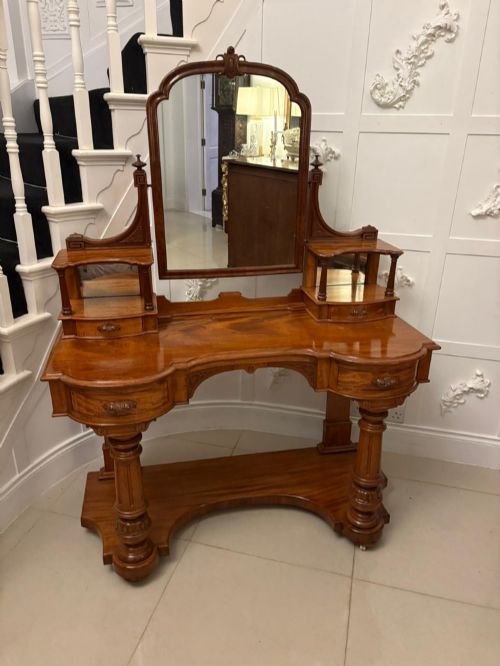
Pieces originate across distinct eras, with Georgian, Regency, Victorian, and Edwardian specimens appearing frequently. Simpler forms sit directly on surfaces, while others integrate into dressing chests or vanity tables.
Materials and Construction
Cabinet makers utilised solid mahogany and mahogany veneers as the primary framing timber, frequently pairing the rich dark wood with contrasting satinwood inlay or parcel-gilt accents. Structural integrity relies on traditional joinery methods within the box bases and upright supports.
Mirrors utilise actual glass plates, sometimes accompanied by brass adjusting screws, bone escutcheons, and small turning knobs on the drawer fronts. Finer specimens incorporate decorative carving, crossbanding, and period-specific mirror glass.
Surfaces receive polished finishes that highlight the natural grain patterns of the timber, while specialist fittings such as brass candle sconces or pivoting arms allow the glass angle to shift.
Some Georgian mirrors conceal tiny secret compartments behind the drawer runners for hiding love letters.
Distinctions in Quality
Quality reveals itself through the crispness of carved details, the selection of figured mahogany veneers, and the restraint or elegance of the proportions. Superior examples display meticulous attention to secondary timbers and the precision of the drawer dovetails.
The integration of brass hardware and the overall weight of the standing frame signal the tier of craftsmanship. Better pieces maintain stability in the swing mechanism without relying on replacement supports or heavy modern reinforcements.
Heal & Sons
The Toilet Mirror Mahogany Glossary
- Toilet Mirror
- A small adjustable mirror designed to sit on a table, dressing chest, or sideboard. These pieces usually feature a tilting glass plate mounted within a frame above a small set of drawers.
- Cheval Mirror
- A full-length standing dressing mirror supported by four legs or a heavy frame. The glass swings freely within the vertical structure, allowing a full view.
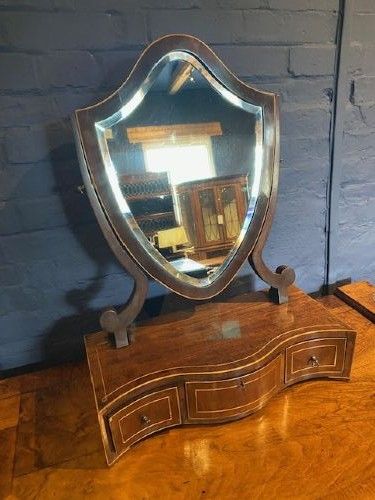
- Shield Mirror
- A dressing glass cut into the shape of a heraldic shield. This style gained popularity during the Georgian period.
- Crossbanding
- A decorative border technique where thin strips of veneer are laid across the grain of the primary wood. This method frames the edges of drawer fronts and table tops.
- Parcel-gilt
- Partially gilded woodwork where gold leaf highlights specific carved elements or mouldings against a dark timber background.
Toilet Mirror Mahogany: Frequently Asked Questions
How do I date a mahogany mirror?
Dating relies on examining the construction of the base drawers, the shape of the mirror plate, and the secondary woods used inside. Georgian examples often feature slender uprights and box bases with hand-cut dovetails.
Later Victorian and Edwardian versions introduce heavier mouldings, machine-cut joints, and different inlay patterns that reflect the aesthetic tastes of those periods.
Where should I place it?
These mirrors suit placement on top of low chests of drawers, sideboards, or dedicated dressing tables where the height allows comfortable use. They add a reflective surface and traditional character to bedrooms or hallways.
Ensure the supporting furniture is deep and sturdy enough to hold the weight of the mirror frame safely.
How do the swing mechanisms work?
The glass plate hangs between two vertical posts using threaded brass screws or wooden pegs inserted through the sides. Tightening these fixings holds the mirror at the desired viewing angle.
Original hardware moves smoothly while maintaining enough friction to prevent the glass from slipping forward or backward on its own.