



Tri Fold Mirror Vanity
These pieces give a tri fold mirror vanity its distinctive three-panel adjustment, bringing period charm and functional dressing space to a room.
Tri Fold Mirror Vanity
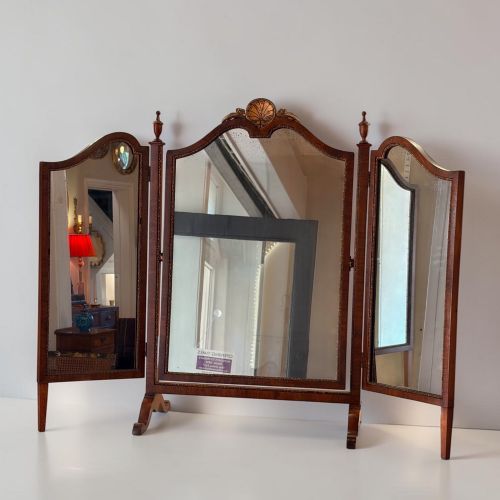
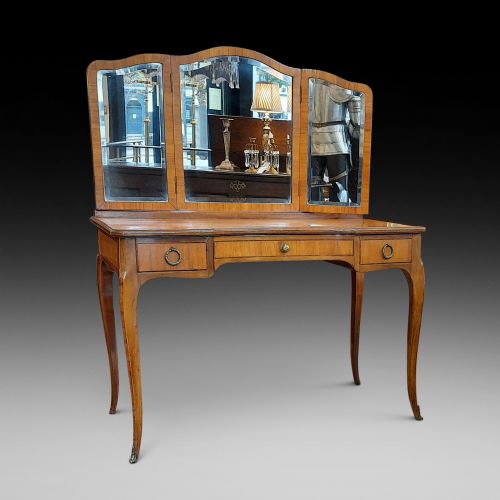
A tri fold mirror vanity brings together dressing tables and adjustable folding mirrors spanning from the late nineteenth century through to the mid twentieth century. These furnishings combine surface space and pivoted glass panels, often originating from French workshops or British makers.
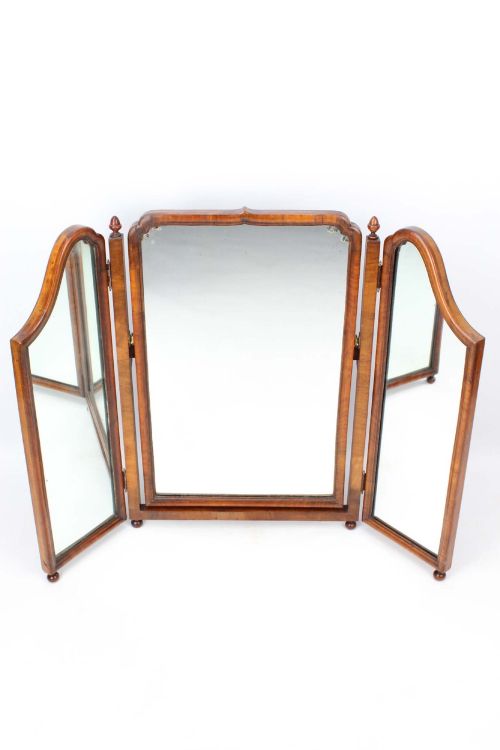
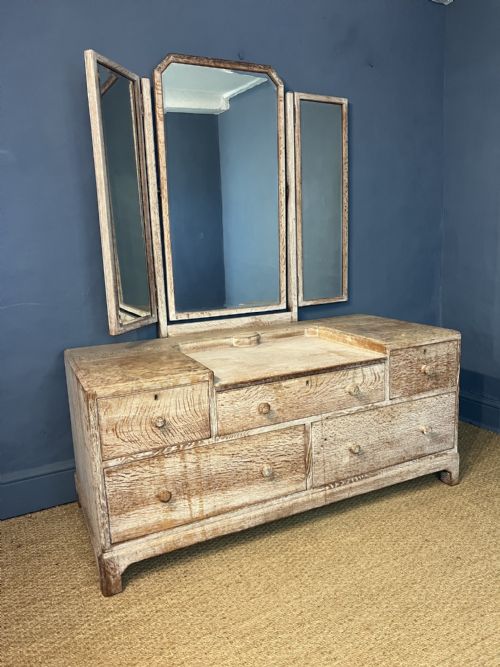
The selections available include full dressing tables equipped with fixed or separate mirrors, alongside standalone tabletop dressing mirrors. Woods such as oak, limed oak, mahogany, walnut, and kingwood appear frequently across the periods recorded.
How they were made
Cabinetmakers utilised solid timbers and crossbanded veneers, applying marble tops and brass embellishments to enhance the structure. Frames feature carved ornamentation, particularly within French Rococo revival and Tudor revival pieces.
Mirror glass is held within hinged metal or wooden frames that allow the side panels to angle inward. Brass hardware provides the pivots and fixings needed for adjustment.
Brass Pierage mirrors bring a reassuring mid-century clank to your morning routine.
What varies in quality
Quality rests on the selection of timber veneers, the crispness of carved details, and the weight of the brass fittings. Finer examples display meticulous crossbanding, substantial marble tops, and robust hinge mechanisms that hold the glass firmly at any angle.
Simpler pieces rely on plain painted surfaces or basic turned woodwork without decorative mounts. The condition of the original mirror glass and the smoothness of the folding action distinguish superior execution from standard production.
Heals
The Tri Fold Mirror Vanity Glossary
- Crossbanding
- A border of veneer laid with the grain running perpendicular to the main surface. This technique creates a neat framing effect on drawer fronts and table tops.
- Limed oak
- Timber treated with a white or pale compound to fill the grain and lighten the overall colour. Heals utilised this finish during the twentieth century.
- Trio mirror
- An alternative term for a three-panel folding mirror. The outer wings adjust independently around a central glass.
Tri Fold Mirror Vanity: Frequently Asked Questions
What periods do these pieces date from?
The listings include items originating from the late nineteenth century up through the nineteen-fifties. Most examples cluster around the early twentieth century.
Designs reflect prevailing tastes of their decade, ranging from French Provincial styles to Art Deco and Mid-Century Modern forms.
How do the side mirrors adjust?
Hinges connect the two outer glass panels to the central frame. This allows the wings to pivot inward or outward.
Such movement helps the user catch different angles while seated at the dressing table.
Are the mirrors attached to the tables?
Some listings combine the dressing table and mirror into a single integrated unit. Other pieces consist of standalone tabletop mirrors meant to sit atop a separate surface.
French and British makers produced both integrated dressing tables and portable vanity mirrors.
What materials appear most often?
Oak, mahogany, walnut, and kingwood form the primary wooden structures. Brass hardware and marble tops provide decorative and functional accents.
Fabrics and limed finishes also appear on specific period examples.