
Mahogany Mirror with Drawers
These mahogany mirror with drawers pieces are practical bedroom furnishings built in Georgian, Regency, and Victorian periods.
Understanding mahogany mirror with drawers
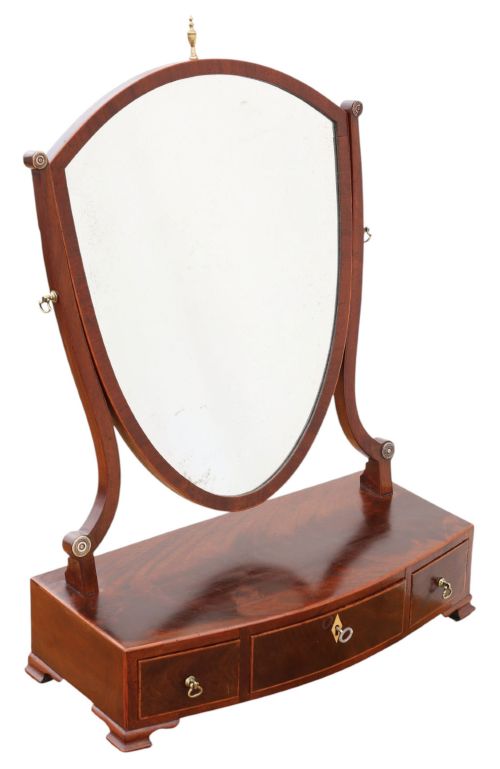
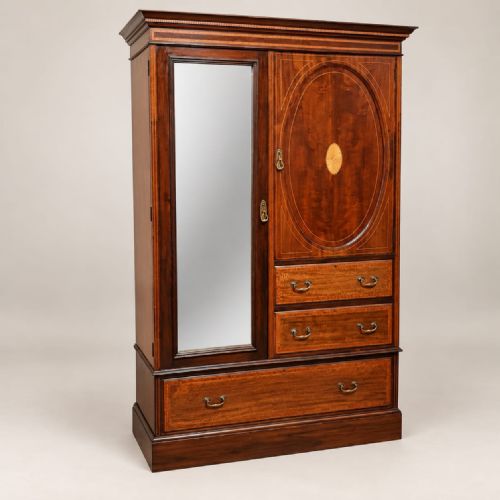
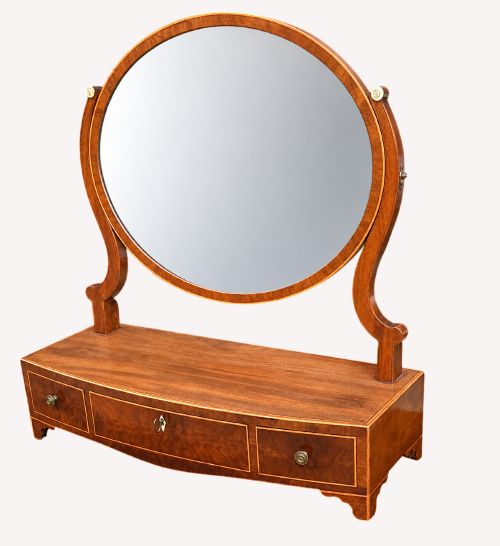
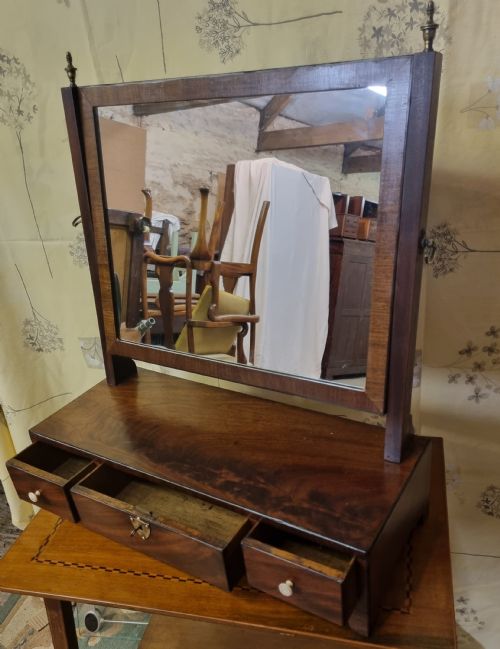
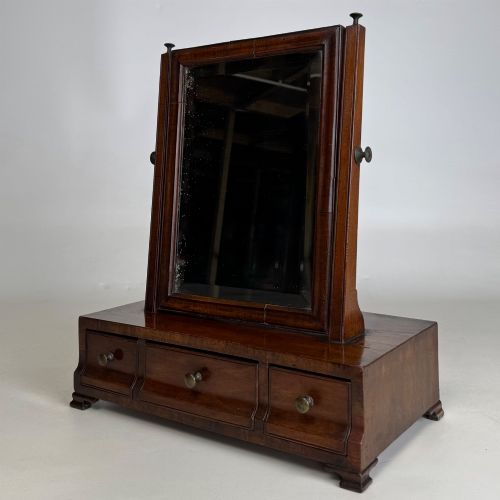
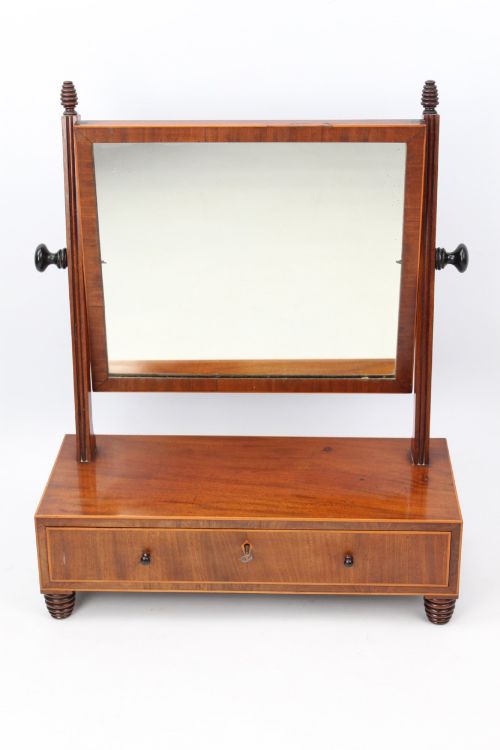
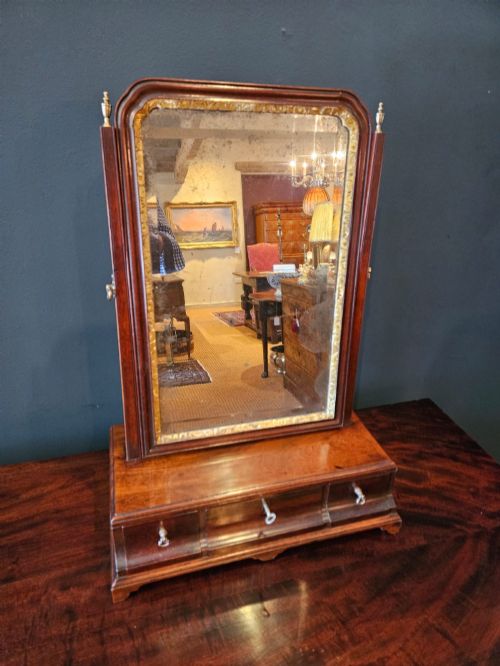
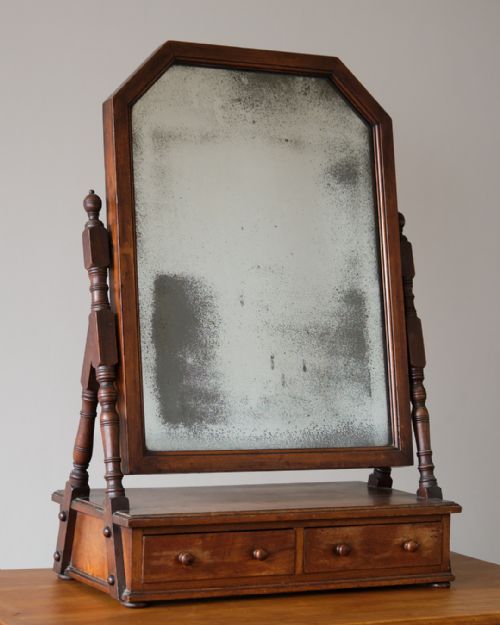
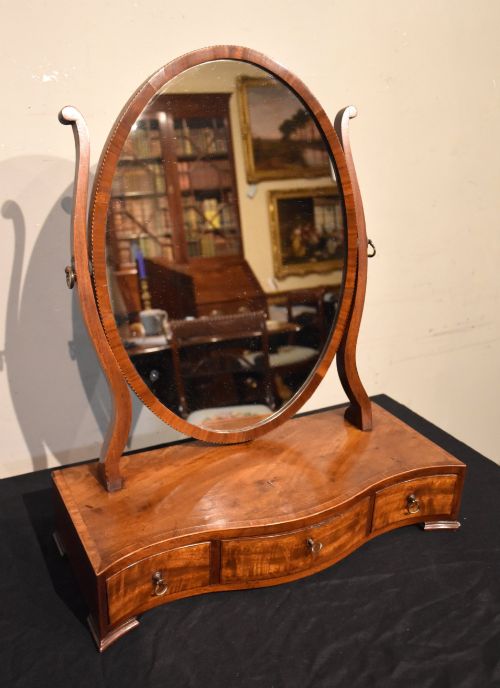
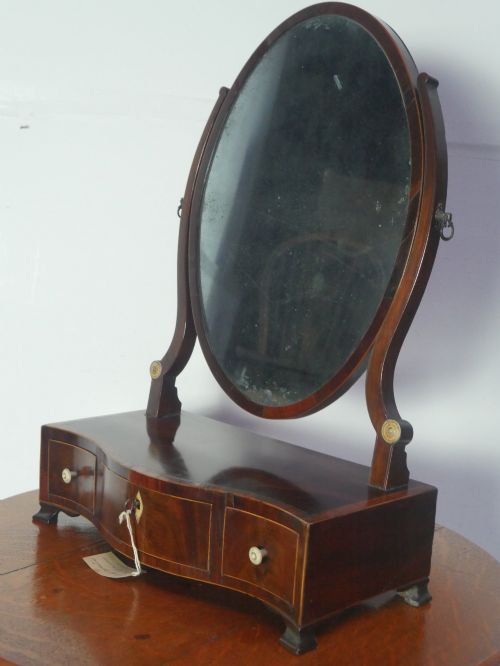
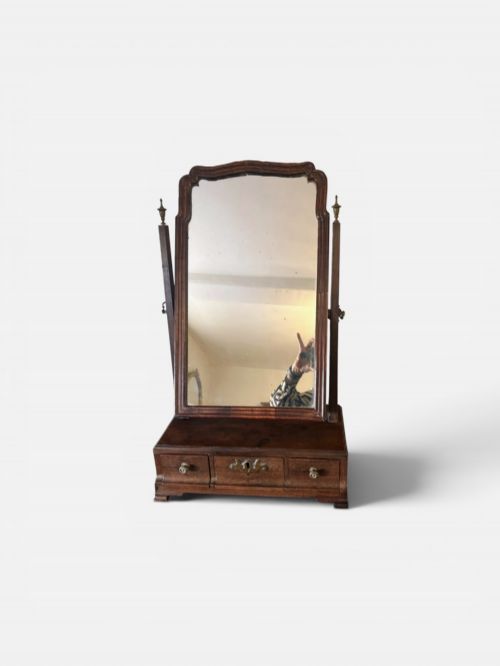
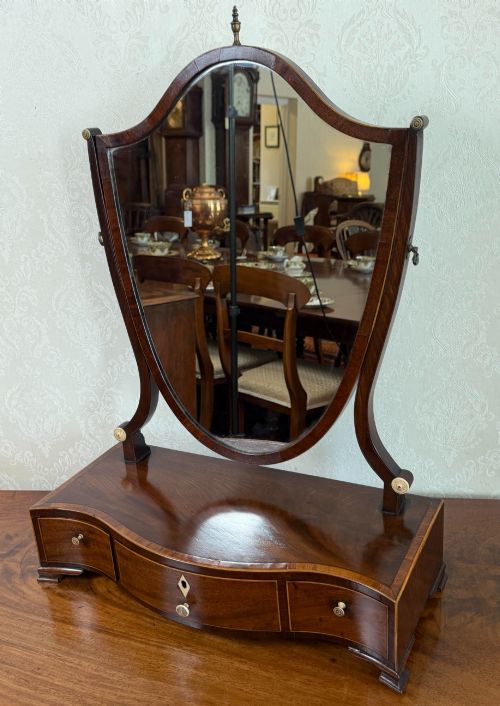
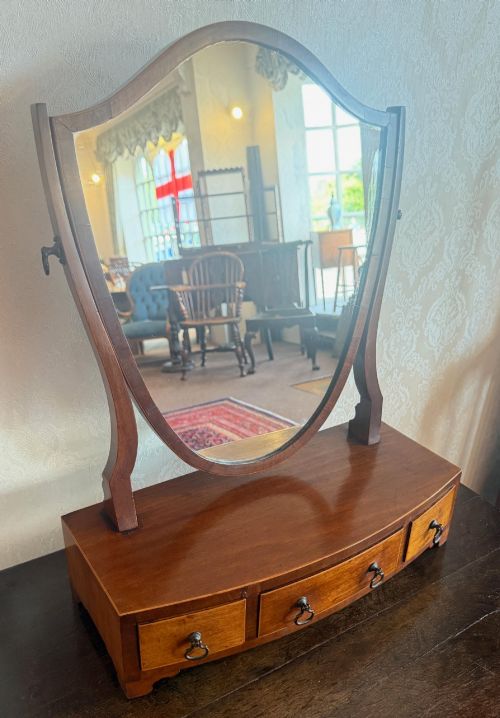
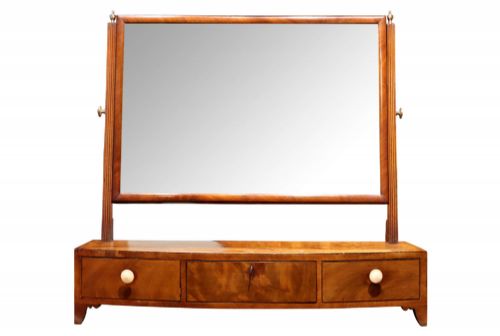
A mahogany mirror with drawers brings together a functional looking glass and small storage compartments, serving as a dressing table accessory or a standalone toilet mirror. The forms include rectangular dressing mirrors, swiveling table glasses, and shield-shaped mirror plates mounted on box bases fitted with small drawers.
Most examples found in this category belong to the Georgian, Regency, and Victorian eras, alongside later nineteenth-century pieces built in the Georgian style. These versatile pieces sat upon chest of drawers or dressing tables in period bedchambers for daily grooming and personal storage.
Materials and construction
Cabinet makers utilised solid mahogany and mahogany veneers over secondary timbers, often accentuating the surfaces with boxwood stringing or brass fittings such as swan neck handles and finials. Mirror plates are set within adjustable wooden frames supported by upright arms above the drawer sections.
The base structures incorporate small lidded compartments or sets of working drawers, frequently raised on bracket feet or ogee feet. Joinery techniques of the period relied on hand-cut dovetails for the drawer boxes and turned wooden pivots or brass screw nuts to hold the tilting mirror frames.
Retail Price Guide 2026
Typical UK retail prices for mahogany mirror with drawers, calculated from the Sellingantiques database of over a million retail prices indexed since 2003. This retail price guide relies exclusively on Sellingantiques data; no external sources or auction records are used, so the figures do not describe the wider market.
Some dressing mirrors include hidden compartments tucked behind the small drawers for secret letters.
Distinguishing quality in design
Quality rests in the selection of richly figured mahogany timbers and the crispness of decorative details like boxwood inlay and brass hardware. Superior examples display balanced proportions between the mirror frame and the drawer base, alongside fine dovetailing in the concealed drawer construction.
The graduation from standard utility pieces to finer items is marked by the retention of original glass plates, well-turned support arms, and secondary woods that match the period of manufacture. Lesser pieces show clumsy proportions or replaced feet and hardware that disrupt the original silhouette.
The Mahogany Mirror with Drawers Glossary
- Toilet mirror
- A smaller dressing glass designed to sit on top of a table or chest of drawers rather than stand independently on the floor.
- Bracket foot
- A structural foot fitted beneath the corners of a case piece, shaped in a simple ogee or bracket profile typical of Georgian cabinetry.
- Swan neck handle
- A metal drawer pull shaped with double curves resembling a bird's neck, widely utilised on brass plates during the eighteenth and nineteenth centuries.
- Shield mirror
- A dressing glass cut into the curved outline of a heraldic shield, popular during the later Georgian and Edwardian periods.
- Cheval mirror
- A large floor-standing dressing glass mounted in a frame that allows the entire plate to tilt on vertical pivots.
Frequently Asked Questions
Where did people put these mirrors?
These items were placed upon dressing tables, chests of drawers, or washstands within bedchambers and dressing rooms. They provided a reflective surface combined with compact storage for small personal valuables.
Because of their movable frames, users could tilt the glass to adjust the angle of reflection during morning routines. The underlying drawers held items such as jewellery, ribbons, and grooming tools close at hand.
How do I spot a Georgian piece?
Georgian pieces are identified by timber selection, hand-cut dovetails in the drawers, and simpler bracket feet. The frames often feature slender upright arms and brass tension screws.
Later Victorian and Edwardian interpretations tended to introduce heavier proportions, bevelled glass, and machine-cut elements. Comparing the secondary timbers and the style of the brass handles helps establish the manufacturing era.
Are the mirror plates original?
Many older looking glasses retain their original mercury or early silvered glass plates, which often display subtle foxing and age spots. Replacements are common due to the fragile nature of old glass.
An original plate sits securely within the rabbet of the wooden frame, secured by old wooden slips or backing boards held with period screws. Clear, unblemished glass in an eighteenth-century frame usually indicates a later replacement.
How do I care for mahogany woodwork?
Maintenance involves keeping the timber away from direct sunlight and sudden temperature shifts that can dry out the mahogany veneer. Regular dusting with a soft, dry cloth preserves the polished surface.
Avoid modern silicone sprays or heavy waxes that build up a cloudy residue over time. A light application of traditional beeswax helps nourish the wood and maintain its natural lustre.