


Antique Glass Cake Stand
An antique glass cake stand is a raised serving piece for the table, prized for carrying desserts on a clear or coloured glass surface.
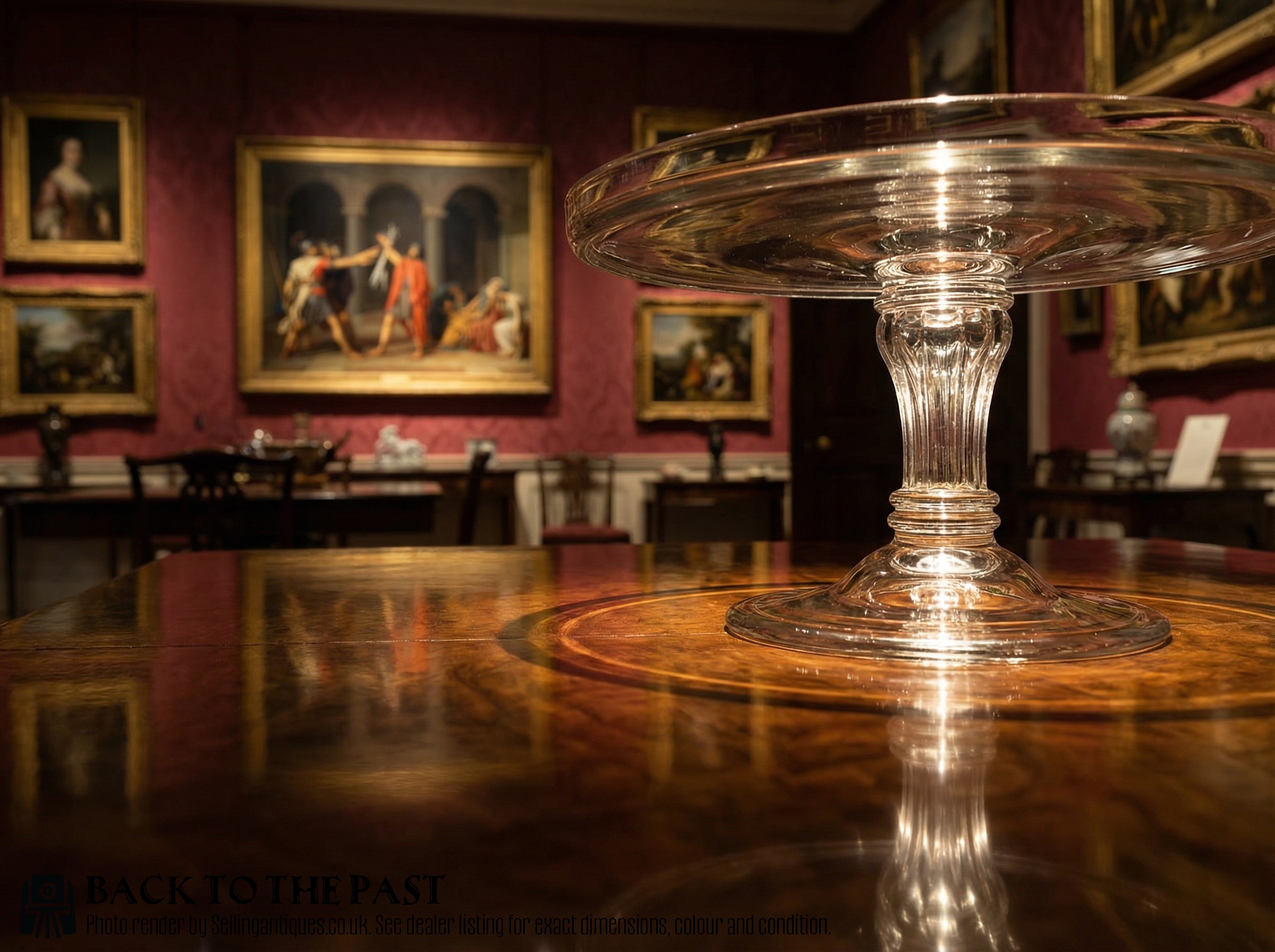
Antique Glass Cake Stand
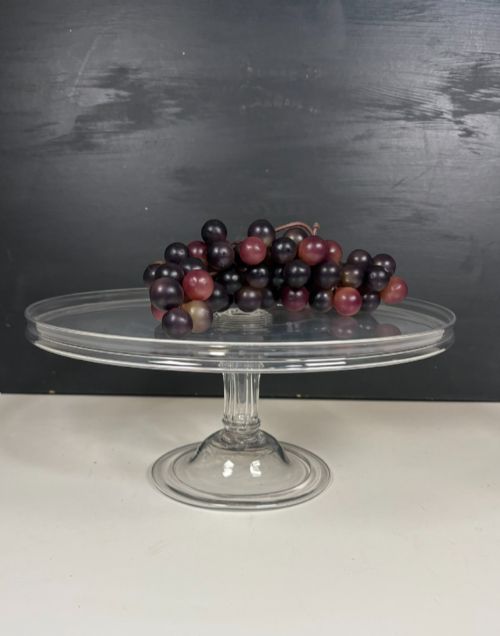
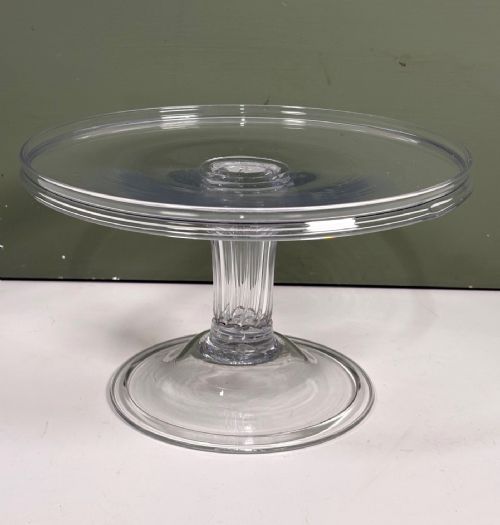
When you search for an antique glass cake stand, you encounter elevated serving pieces designed to display pastries, fruit, and sweetmeats upon the dining table or sideboard. These items appear primarily under the historic forms of tazzas, salvers, and table plateaus rather than modern tiered cake stands.
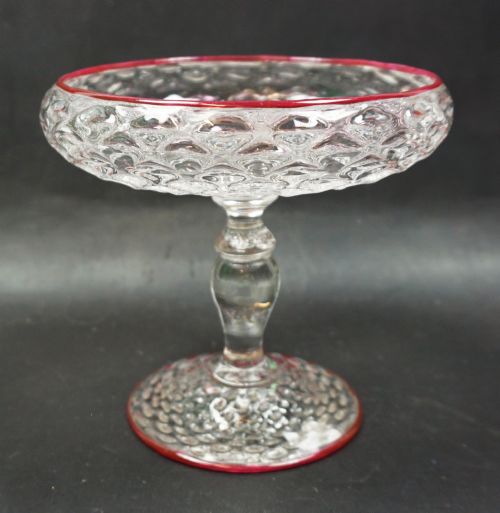
The pieces on this page span several centuries, reaching from the robust baluster forms of the early 1700s through the symmetrical elegance of the Georgian period to the pressed and patterned wares of the Victorian era. You are most likely to meet clear crystal and pressed glass tazzas, alongside occasional opalescent and mirrored examples.
Originating largely in English workshops, these items served a practical function in aristocratic and middle-class dining before surviving as decorative display items. Their sturdy stems and spreading feet elevate the surface, turning simple confectionery into the centrepiece of a room.
How they were made
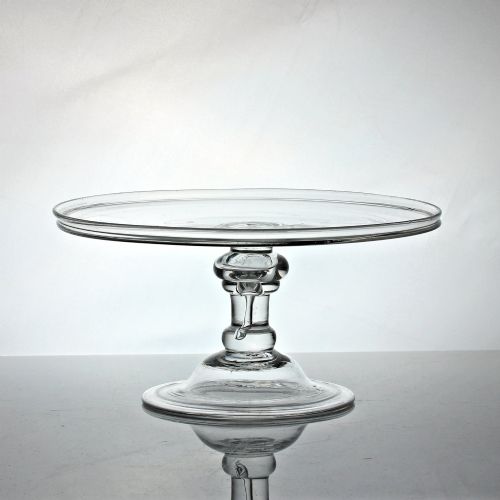
Makers shaped these items using lead glass, clear crystal, and pressed glass, employing techniques that combined heavy metal content with brilliant refractive qualities. Early pieces often relied on thick lead crystal blown into baluster stems and finished with a spreading folded foot.
Later Victorian examples utilised mechanical pressing methods to create patterned surfaces like blue pearline, honeycomb mouldings, and pressed reliefs. Artisans also decorated the glass plates through hand etching and applied details such as red cane decoration.
Some nineteenth-century tables sparkled a little brighter because a mirrored plateau sat underneath the cake stand, bouncing candlelight back up through the pastries.
What varies in quality
The division between standard domestic wares and superior examples rests upon the weight of the metal, the clarity of the crystal, and the depth of the cutting or etching. Heavier lead glass with a resonant ring and deep hand-finished facets commands greater attention than lighter, mechanically finished alternatives.
Proportion and form dictate the visual success of the piece, particularly the balance between the breadth of the plate and the solidity of the stem. Surviving feet with clean folded rims and undamaged moulded knops indicate superior original craftsmanship.
Davidson
The Antique Glass Cake Stand Glossary
- Tazza
- A shallow saucer or bowl raised on a stem and foot, used for serving food or displaying fruit. This is the primary historical form for an antique glass cake stand.
- Baluster
- A thick, architectural stem shape found on eighteenth-century drinking vessels and serving pieces, resembling a small column. It gives early glass a reassuring weight in the hand.
- Pearline
- A trade name used by Davidson for nineteenth-century pressed glass that shades from white to a translucent colour, most notably blue. It creates a striking graduated hue across moulded patterns.
- Table plateau
- A mirrored glass tray with a low frame, placed in the centre of a dining table to hold ornaments or dessert stands. It reflects candle light upwards through the glass above.
Antique Glass Cake Stand: Frequently Asked Questions
What is an antique glass cake stand used for?
These items were historically placed in the centre of the dining table to hold cakes, sweetmeats, fruit, or small desserts during formal meals. Today, they serve both as decorative display pieces and functional serving vessels for afternoon tea.
The elevated plate ensures that food sits above the clutter of the table surface, allowing light to pass through the clear or coloured glass beneath the display.
How do I tell an eighteenth-century tazza from a Victorian one?
Eighteenth-century examples typically feature heavy lead glass with thick baluster stems and folded feet, showing a simple, robust construction. Victorian pieces often rely on pressed glass patterns, acid etching, or bright colours like blue pearline.
Examining the underside of the foot reveals manufacturing clues, such as pontil marks on earlier hand-blown items compared to smooth, mould-pressed surfaces on later ones.
Can I use an antique glass cake stand for food?
Most pieces are robust enough to hold cakes, pastries, or fruit for modern entertaining, provided you handle them with care. Hand washing in warm, soapy water is essential to preserve the historic glass.
Avoid subjecting old glass to sudden temperature changes, as thermal shock can crack brittle crystal or weaken fragile nineteenth-century pressed wares.
Why do some stands have mirrored glass?
Mirrored table plateaus were designed to reflect the light of candles and oil lamps, brightening the dining table and making silver or glass objects appear more luminous. The mirror plate is usually protected within a wooden or metal base.
This reflective surface multiplied the visual impact of the dessert service, casting shimmering patterns across the ceiling and table linens during evening dinners.