
English Lead Glass
English lead glass brings historic weight to the table through dense, brilliant vessels crafted across the eighteenth and nineteenth centuries.
English Lead Glass
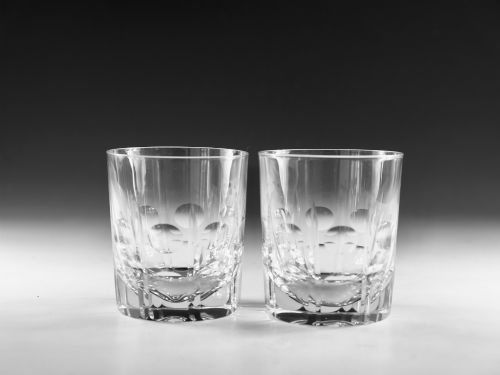
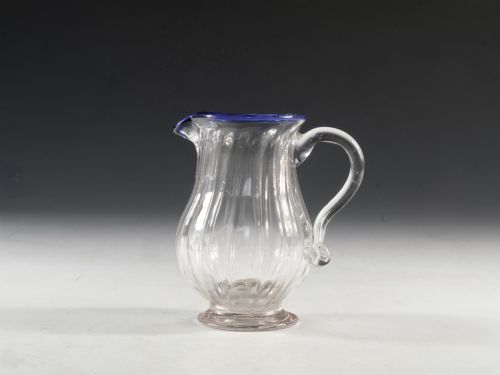
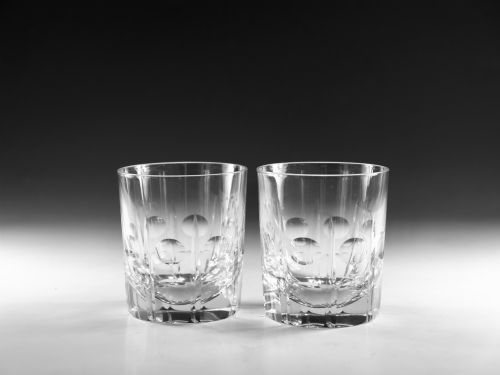
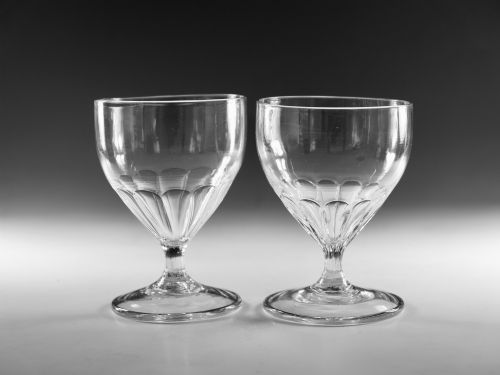
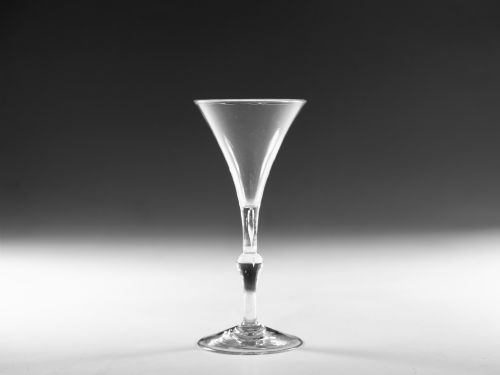
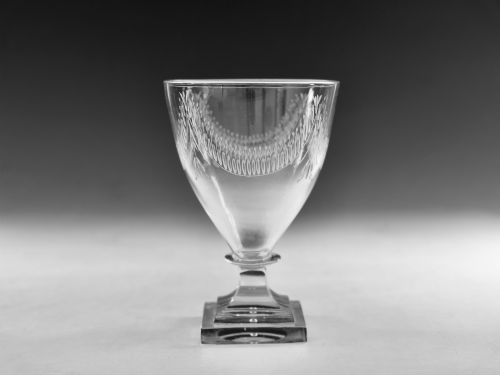
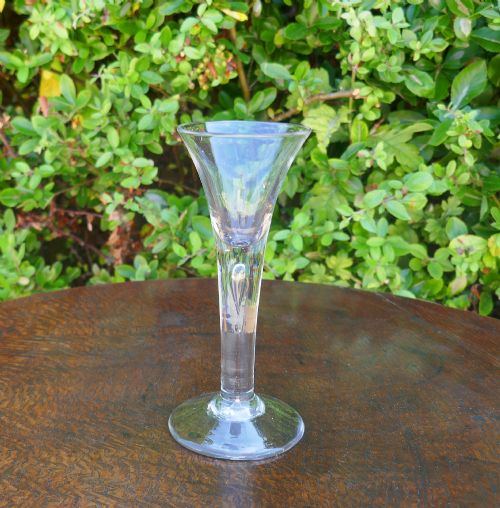
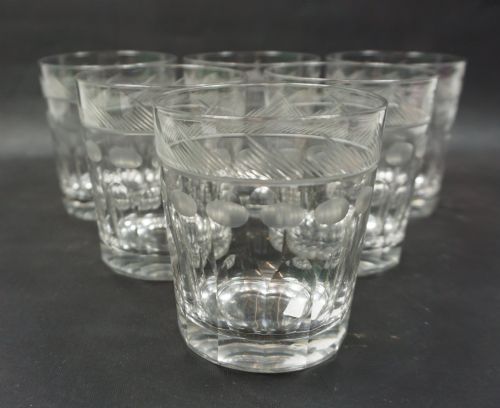
English lead glass encompasses drinking vessels, decanters, and tablewares originating primarily from the eighteenth and nineteenth centuries. Search results concentrate heavily on Georgian and Victorian drinking glasses, including wine glasses featuring intricate twist stems, rummers, ale glasses, and tumblers.
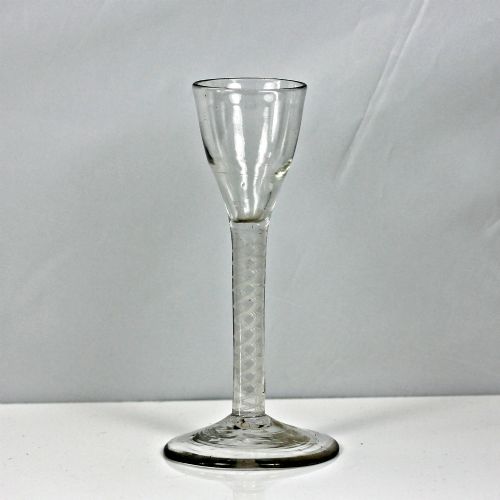
The objects span formal dining accessories and household utility pieces, ranging from delicate mid-eighteenth-century opaque twist wine glasses to sturdy Victorian rummers and nineteenth-century decanters. Pieces reflect changing domestic habits across the Georgian, Regency, and Victorian eras.
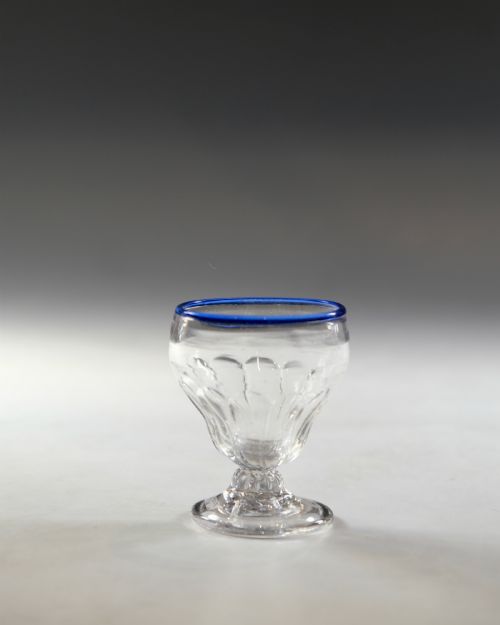
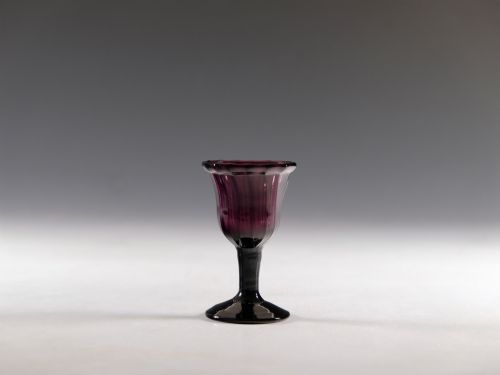
Most items appearing here take the form of glassware, with specialised forms like jelly glasses, bonnet glasses, and egg cups occurring alongside standard wine glasses and tumblers. The historical spread stretches from the mid-eighteenth century into the early twentieth century.
Variations in Quality
Quality rests upon the dexterity shown in forming internal stem structures, such as regular multi-spiral air twists or precise double-series opaque twist threads. Superior examples display clarity in the metal without excessive internal clouding or heavy impurities.
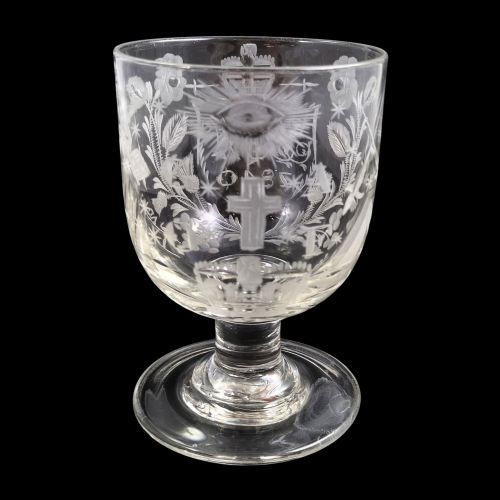
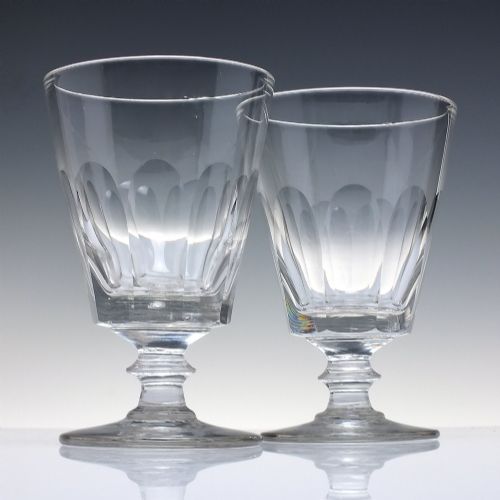
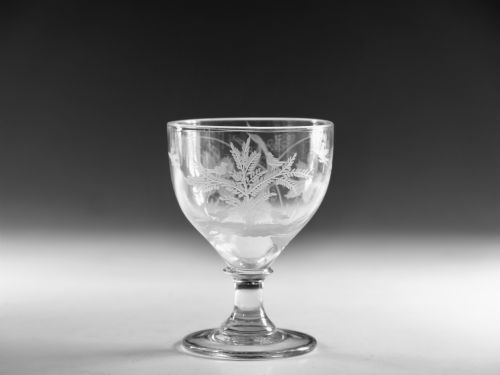
The crispness of wheel engraving and the precision of facet cutting dictate the upper tier of execution, where decorative motifs remain sharp and balanced across the surface of the bowl.
Listings span the eighteenth, nineteenth, and early twentieth centuries, featuring lead crystal, flint glass, and enamel decoration.
The English Lead Glass Glossary
- Air twist
- A stem formation enclosing elongated air bubbles drawn into spirals during the pulling process. This technique created shimmering internal threads visible beneath the bowl.
- Opaque twist
- A stem style incorporating white or coloured enamel glass rods twisted inside a clear outer casing. These threads formed single or double series patterns.
- Rummer
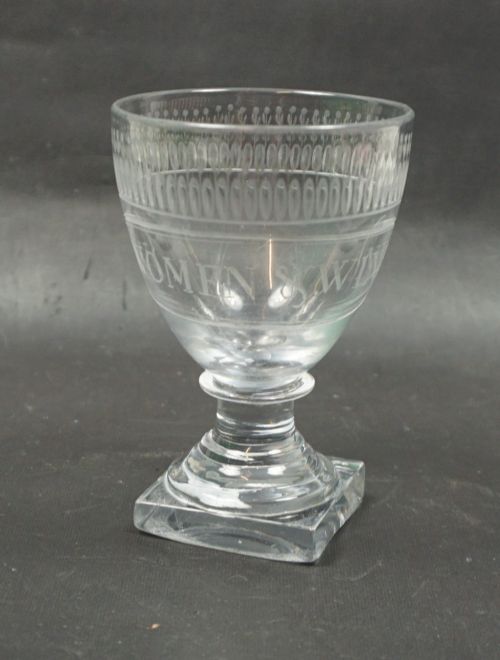
- A large, heavy-baluster drinking glass popular for ale, wine, or punch during the Georgian and Victorian periods. They frequently featured bucket bowls and short stems.
- Wrythen
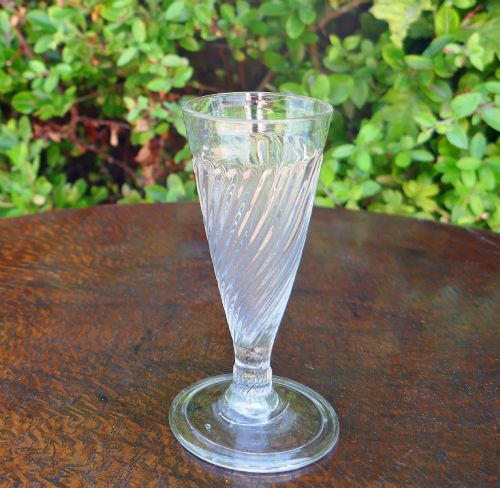
- A surface decoration featuring spiral moulded ribs twisting around the body of the glass. This pattern added texture and visual movement to simple vessels.
- Folded foot
- A rim turned under the base of a glass to create a smooth, thickened edge for strength. This method appeared frequently on eighteenth-century drinking vessels.
English Lead Glass: Frequently Asked Questions
What is an air twist wine glass?
An air twist wine glass is an eighteenth-century drinking vessel featuring a slender stem filled with spiralling air channels. These internal patterns caught the candle light during dinner.
The technique required great skill from the glassblower, who stretched bubbles trapped within the molten metal into delicate threads.
How do I care for antique lead glass?
Antique lead glass requires careful hand washing in warm water using mild soap. Sudden temperature changes can crack historic metal.
Avoid soaking pieces for long periods, and dry them immediately with a soft linen cloth to preserve the surface polish.
How can I date an old rummer?
Dating a rummer depends on its bowl shape, stem thickness, and pontil mark on the base. Earlier eighteenth-century examples tend to have more delicate proportions.
Victorian rummers generally appear heavier and sturdier, often featuring heavier cutting or engraved hops and barley motifs.
What makes lead glass different from normal glass?
Lead glass contains lead oxide, which increases the density and refractive index of the material. This composition gives the glass a heavier feel and a brighter ring when tapped.
The heavier metal allowed cutters to carve deeper facets without weakening the structural integrity of the vessel.