


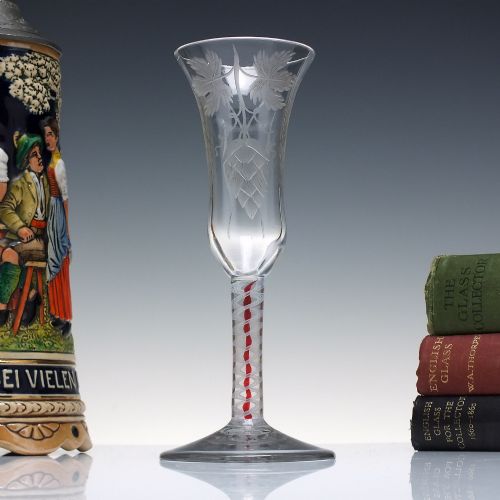
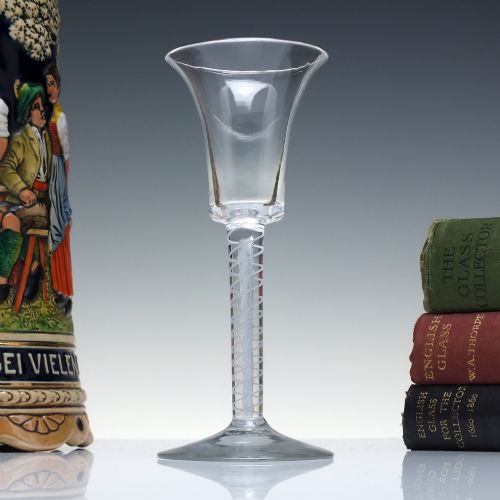
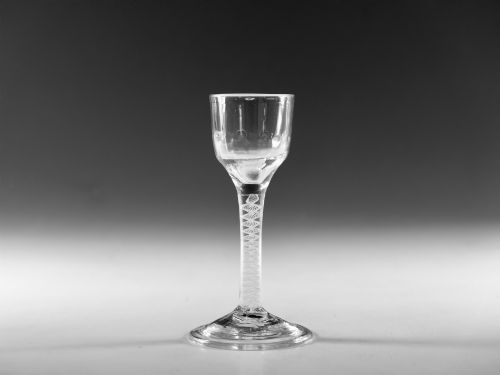
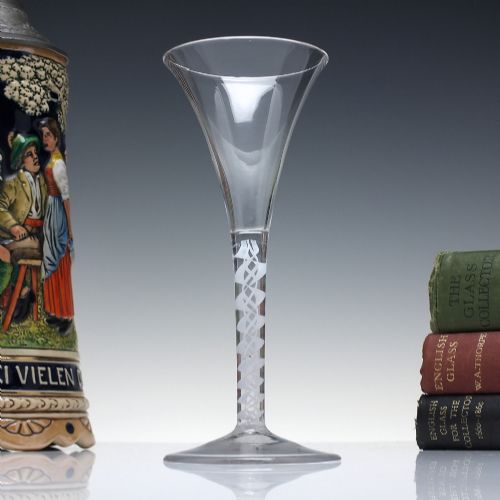
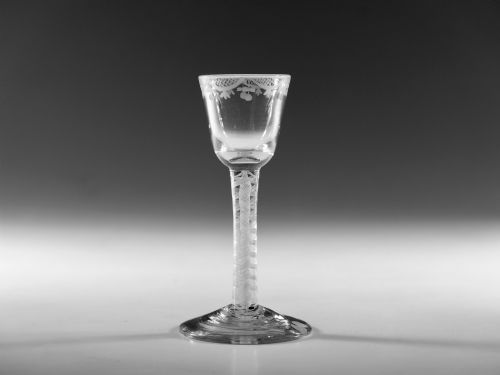


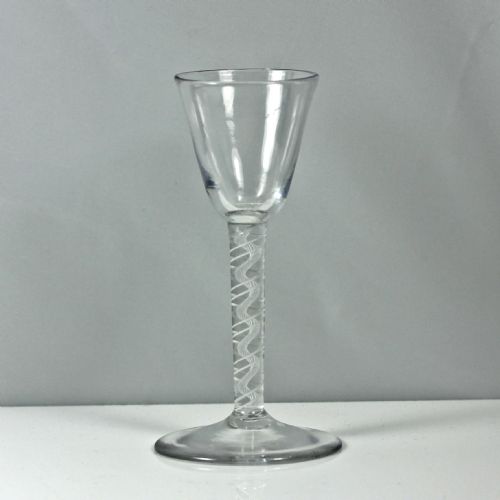
Georgian Opaque Twist Goblet
A georgian opaque twist goblet brings eight-teenth century lead glass craftsmanship to the table with delicate white enamel threads spun inside the stem.
Georgian Opaque Twist Goblet
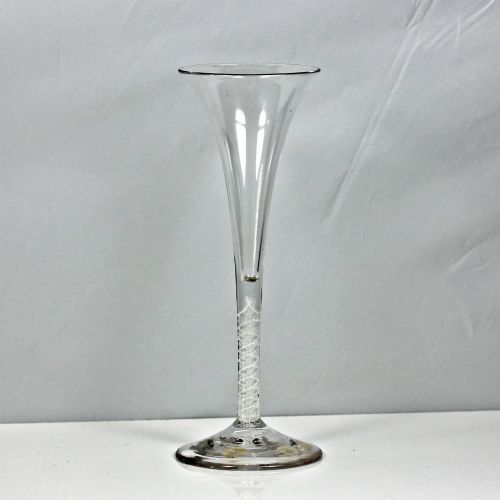
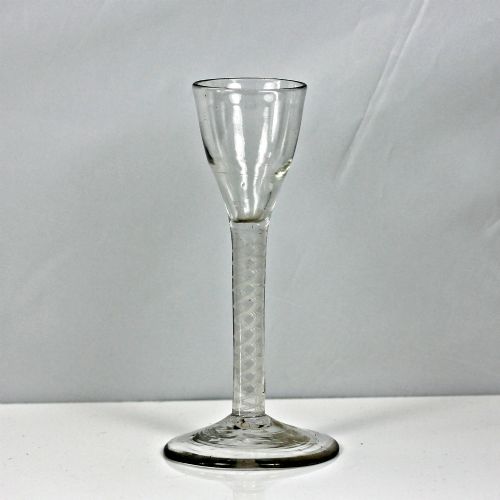
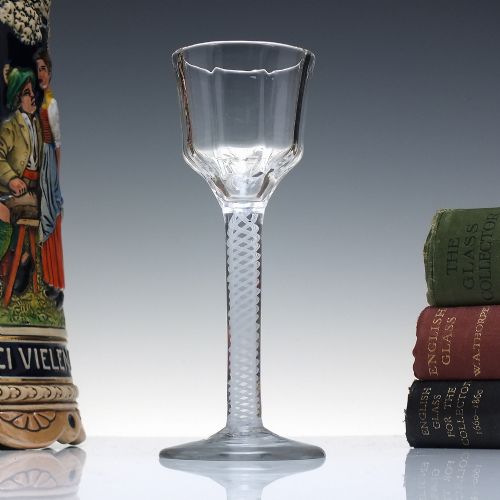
A georgian opaque twist goblet represents a larger drinking vessel produced during the eighteenth century, featuring a bowl above an engineered stem containing opaque white enamel rods. The pieces found here span the georgian period with a few later nineteenth century examples, alongside related wine and ale glasses sharing similar stem formations.
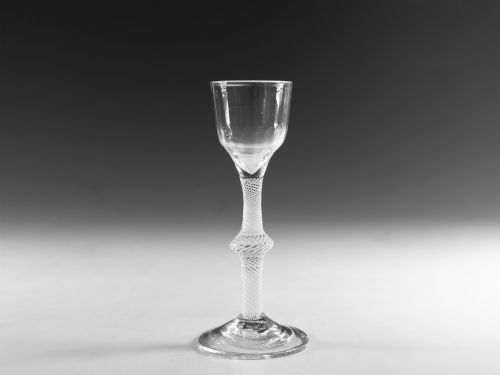
Most items on this page take the form of wine glasses or larger goblets with trumpet, ogee, or tulip shaped bowls. The stems incorporate single, double, or mixed twist configurations enclosed within clear lead glass or flint glass.
How they were made
Glasshouses utilised lead glass and flint glass to form these drinking vessels, drawing molten material into rods and twisting them to trap white enamel threads inside the stem. Craftsmen shaped bowls through blowing and moulding techniques before applying conical feet.
The internal patterns were created by arranging opaque white glass filaments within the stem structure prior to drawing and torsional manipulation.
Listings feature lead glass and flint glass materials spanning the eighteenth century alongside victorian pieces.
What varies in quality
The clarity of the lead glass and the precision of the internal enamel twist dictate the refinement of each piece. Complex multi-spiral formations and multiple knops demonstrate higher technical accomplishment by the glassmaker.
Proportion between the bowl, stem, and foot also influences the visual harmony of the goblet, alongside the crispness of any engraved decoration on the bowl.
The Georgian Opaque Twist Goblet Glossary
- Opaque twist
- A stem formation enclosing white enamel threads spun within clear lead glass. This technique gained popularity in English glasshouses during the mid eighteenth century.
- Knop
- A knob or protuberance on the stem of a drinking glass. Makers used single or multiple knops to add weight and decorative relief.
- Ogee bowl
- An S curved cup shape curving inward at the rim and outward below. This profile frequently appears on eighteenth century English wine glasses.
- Lead glass
- A heavy, clear glass formula containing lead oxide. It provides the refractive brilliance seen in georgian drinking vessels.
- Sweetmeat glass
- A small vessel designed for serving confectioneries, nuts, or sweetmeats. These pieces often feature wider bowls than standard wine glasses.
Georgian Opaque Twist Goblet: Frequently Asked Questions
What is an opaque twist goblet?
An opaque twist goblet is an eighteenth century drinking vessel featuring a clear lead glass stem enclosing spun white enamel threads. These pieces were produced primarily in England during the georgian era.
The large scale of a goblet distinguishes it from standard wine glasses, as these vessels were intended for formal toasts or substantial pours.
How do I date a georgian glass?
Dating relies on stylistic indicators such as bowl shape, foot formation, and the complexity of the stem twist. Glasshouses modified these designs across the eighteenth century.
Comparison with documented examples helps establish the manufacturing decade, noting that certain styles persisted into the victorian period.
How should I display my goblet?
Display these vessels in stable cabinets away from direct sunlight and areas subject to vibration. Proper support protects the delicate foot and stem.
Allowing adequate space between pieces prevents accidental contact with neighbouring glassware.
Can I use these for drinking?
While functional, historic glass requires careful handling and hand washing in lukewarm water. Sudden temperature changes can stress eighteenth century lead metal.
Many collectors prefer display over daily use to preserve the integrity of the glass.