

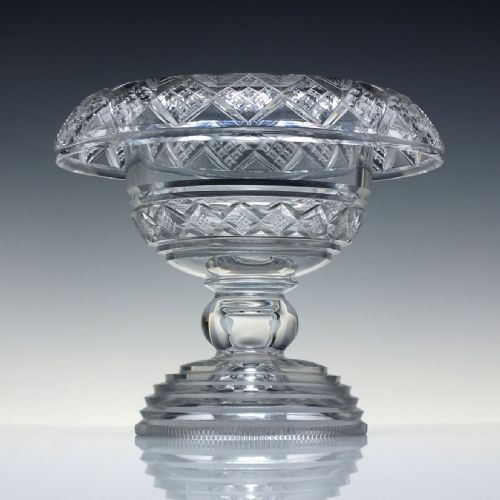


Lead Crystal Fruit Bowl
A lead crystal fruit bowl sits heavily on the sideboard, catching the light through deep wheel-cut facets.
Lead Crystal Fruit Bowl
A lead crystal fruit bowl brings substantial weight and refractive brilliance to a dining table or sideboard. These vessels serve primarily to hold fruit or act as standalone centrepieces in traditional settings.
The pieces available span several distinct periods, including Georgian, Victorian, and Edwardian eras. Forms range from low serving dishes and tazzas to large standing bowls.
Traditional Irish crystal and continental works appear alongside domestic Victorian and Edwardian examples. Each period brings specific weight, clarity, and cutting depth to the table.
How they were made
Makers formed these items using heavy lead crystal and glass compositions. High lead content increases the density and refractive index of the material, allowing for deep, sharp cutting.
Artisans shaped the vessels through blowing and pressing before applying wheel-cut decoration. Patterns such as hobnail cutting required precise handwork on the lapidary wheel, followed by extensive polishing.
The listings span the Georgian, Victorian, Edwardian, and Art Deco periods, featuring heavy lead crystal, cut glass, and blue over crystal.
What varies in quality
Clarity and resonance separate ordinary vessels from superior examples. High-grade lead crystal displays water-white transparency without cloudiness or internal seed bubbles.
The depth and crispness of the cutting define the upper tier of manufacture. Sharp, clean facets that catch the light evenly contrast with soft, rounded edges resulting from hurried wheel work.
Joseph Simon·Val St Lambert·Waterford
The Lead Crystal Fruit Bowl Glossary
- Hobnail pattern
- A raised, diamond-shaped geometric cutting resembling the hobnails on sturdy boots. This texture creates intense light refraction across the surface of the bowl.
- Tazza
- A shallow bowl raised upon a central foot or pedestal stem. Such pieces often function as decorative stands for fruit or sweetmeats.
- Over crystal
- A layered glass technique where a coloured glass layer coats a clear crystal core. Cutting through the top layer reveals the clear crystal beneath.
- Centrepiece bowl
- A large, prominent vessel designed to anchor the middle of a dining table. These items typically feature heavier cutting and larger proportions than side dishes.
Lead Crystal Fruit Bowl: Frequently Asked Questions
How do I clean an antique lead crystal fruit bowl?
Wash the vessel by hand in lukewarm water using a mild detergent. Avoid harsh scourers and extreme temperature changes to protect the historic glass.
Place a soft towel at the bottom of the sink to cushion the heavy lead crystal during washing. Dry thoroughly with a lint-free cloth to maintain the refractive sparkle.
Can I use these bowls for serving food?
These vessels accommodate fresh fruit, nuts, and dry confectionery safely. Acidic foods left for extended periods should be avoided.
Most antique glass compositions tolerate normal table use without issue. Hand washing preserves the polished surface and prevents scratching.
How do I distinguish Georgian cut glass from Victorian pieces?
Georgian items often display greyer metal, hand-polished facets, and distinct pontil marks on the base. Victorian examples tend to be heavier with sharper, machine-assisted pressed or wheel-cut decoration.
Examining the underside reveals the finishing techniques characteristic of each period. Earlier pieces show greater variation in thickness and bubble formation.