
Antique Glass Centrepiece
An antique glass centrepiece commands the dining table with glass and metal, anchoring the room with historical presence.
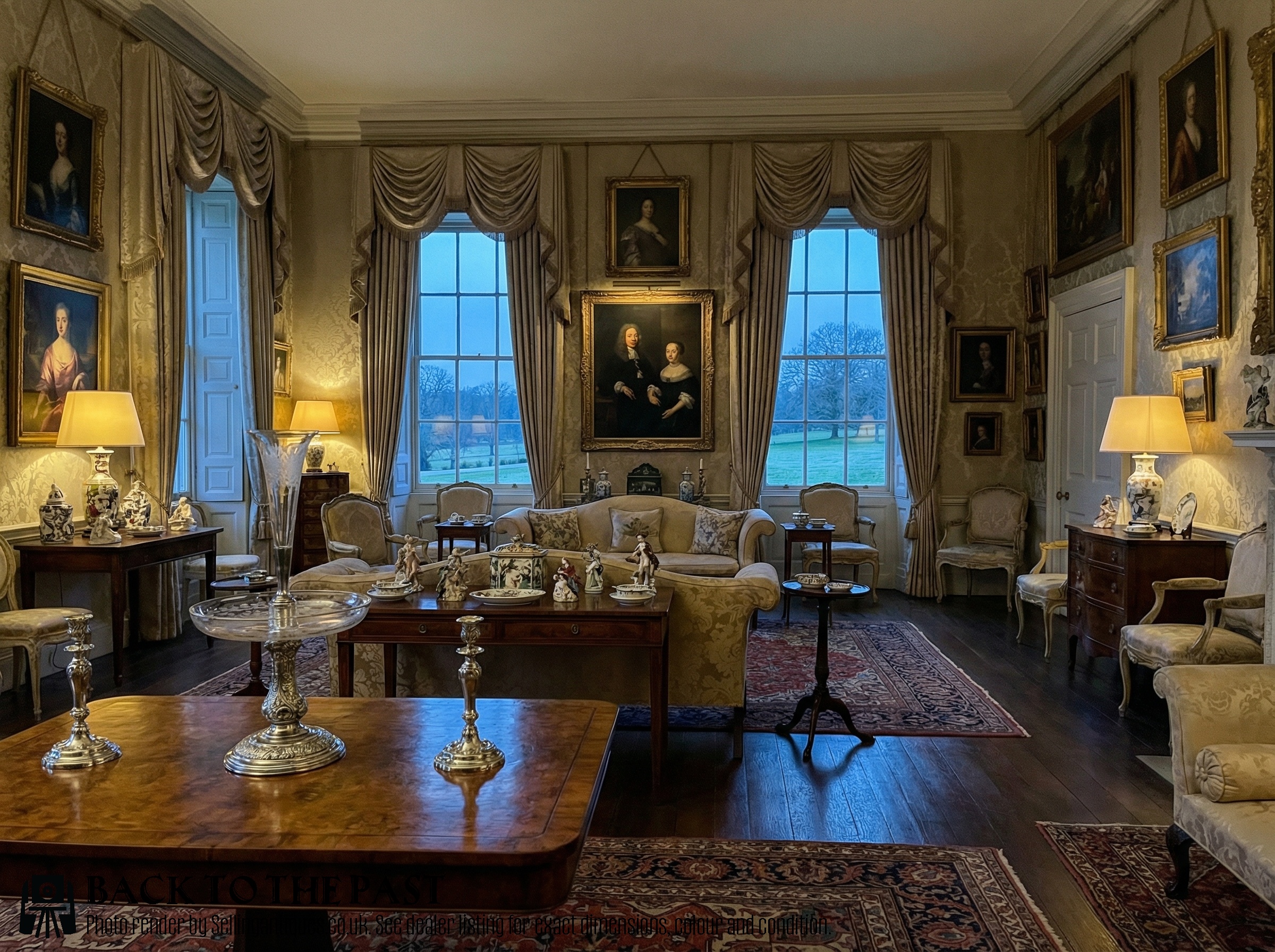
Antique Glass Centrepiece
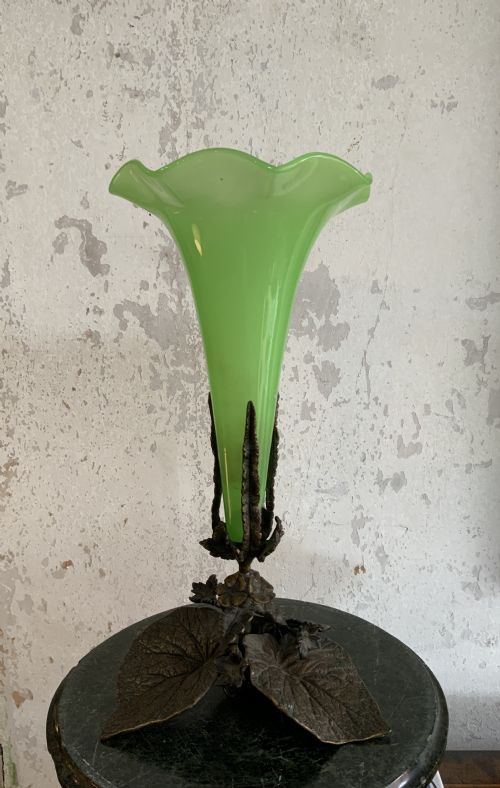
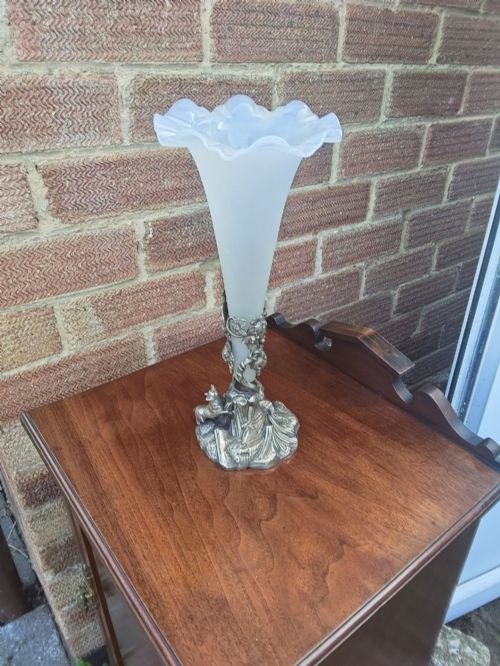
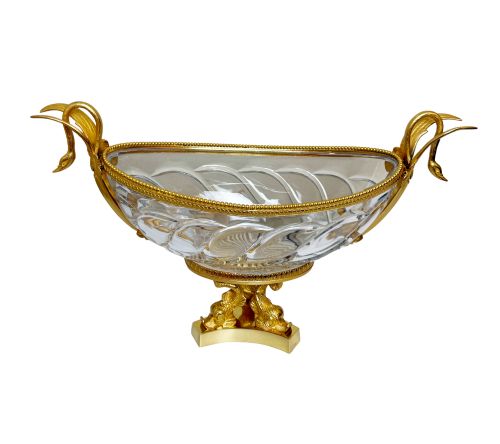
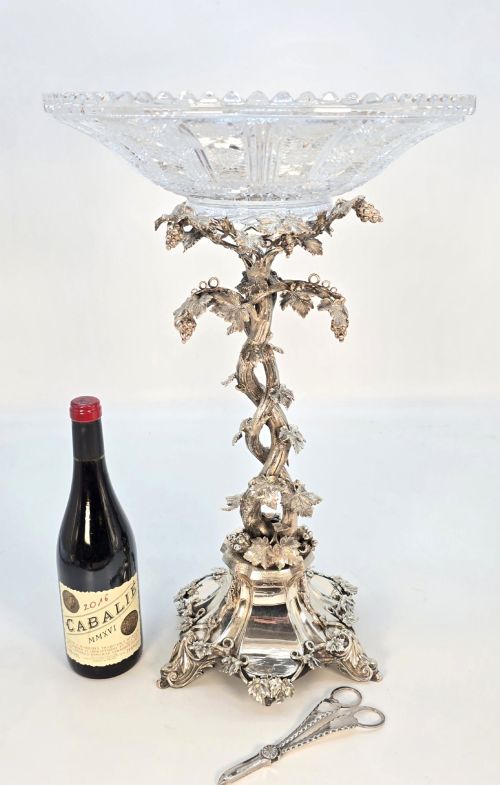
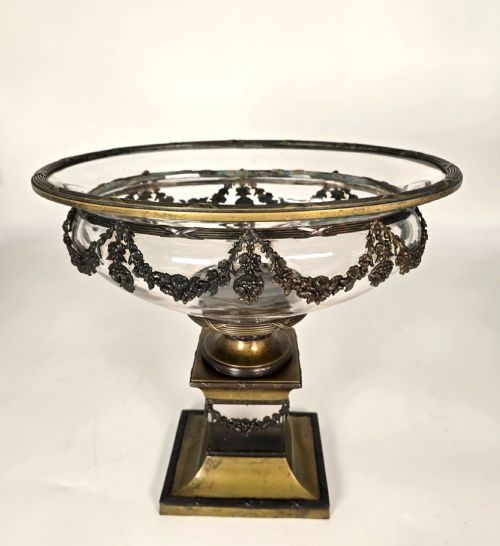
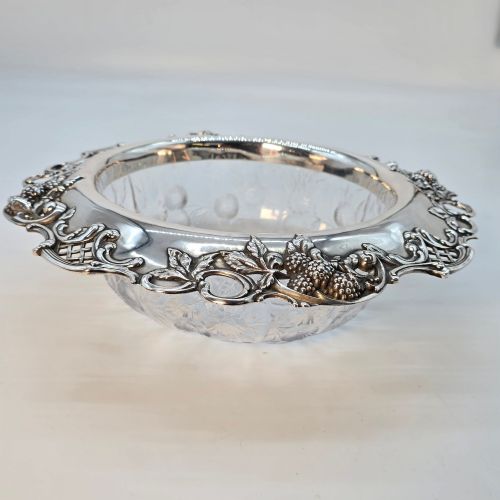
An antique glass centrepiece brings together a moulded, cut or blown vessel with supportive metal mounts of silver plate, sterling silver or gilt bronze. These decorative items range from large pedestal bowls and tazzas to multi-trumpet epergnes designed to hold fruit or flowers at the middle of a table.
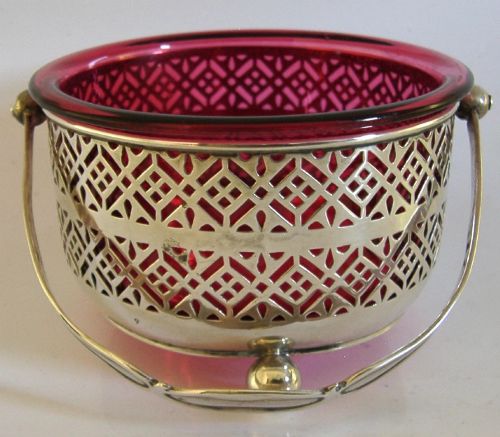
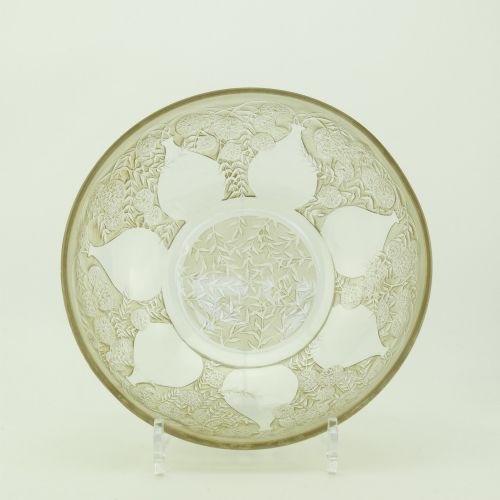
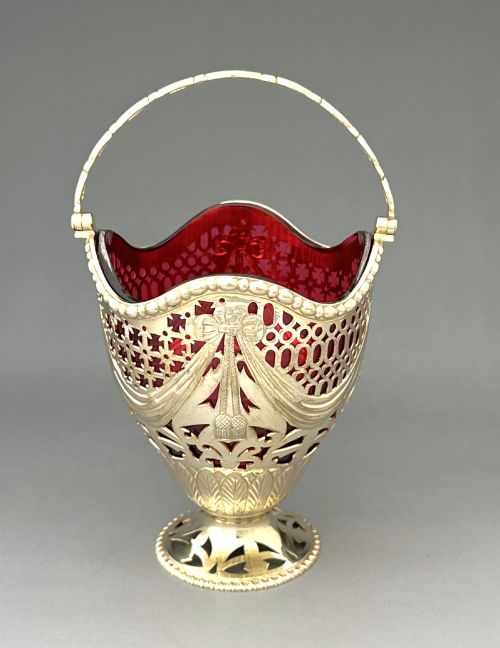
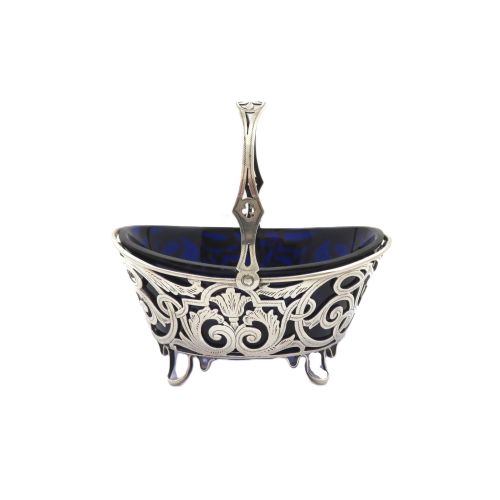
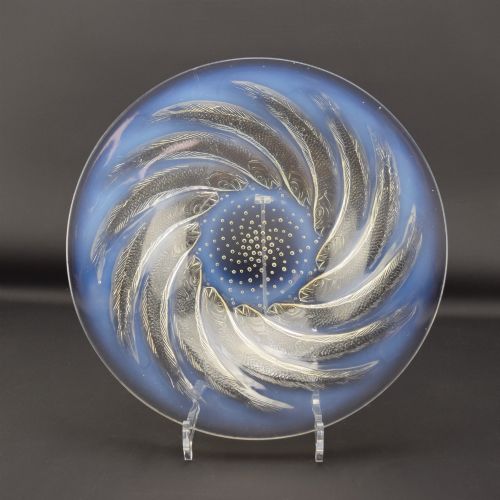
You are most likely to encounter Victorian and Edwardian examples featuring heavy cut glass or cranberry liners paired with pierced silver-plated frames. Pieces from the Art Deco period, including opalescent bowls by Rene Lalique, also appear regularly alongside 19th-century French and English designs.
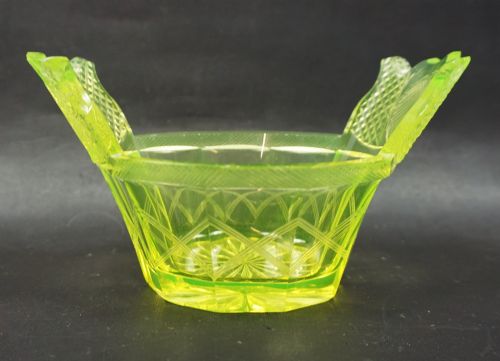
The form developed across the nineteenth and early twentieth centuries to serve formal dining rooms, shifting from Georgian glass tazzas to elaborate Victorian epergnes and low Art Nouveau vaseline glass bowls. Each style reflects the dining customs and interior aesthetics of its decade of manufacture.

Materials and construction methods
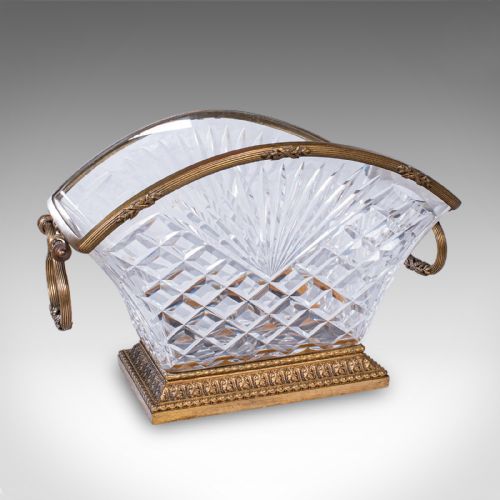
Makers combined lead crystal, cranberry glass, uranium glass or opalescent glass with metal components such as ormolu, gilt bronze, silver plate and sterling silver. Glass vessels were hand-blown, mould-pressed or deeply cut with geometric and floral motifs, then fitted into bespoke metal frames.
Foundries and silversmiths cast and chased the bronze mounts or pierced the silver-plated baskets to securely hold the glass liners. The integration of metal and glass required precise engineering to balance heavy crystal bowls within delicate stands or multi-branched epergnes.
Antique Glass Centrepiece Retail Price Guide 2026
Typical asking prices for glass centrepiece among the pieces listed under this phrase on Sellingantiques today, from the lower quarter to the upper quarter. They describe what is for sale here now, not the wider market.
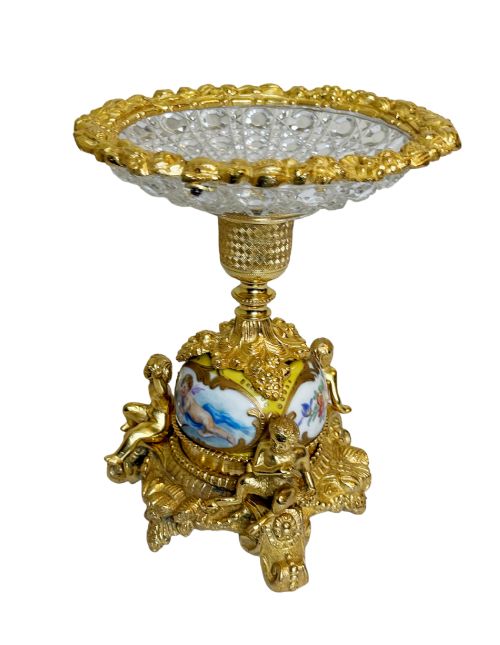
Several Victorian centrepieces feature sculpted metal stags, serpents and cherubs keeping permanent watch over the glass bowls.
Assessing craftsmanship and execution
The distinction between ordinary and superior items rests on the depth of the glass cutting and the crispness of the metal casting. Finer pieces display hand-finished details on the bronze mounts, such as cherubs or naturalistic vine leaves, rather than generic stamped ornamentation.
Weight and balance indicate higher grade production, where thick lead crystal or heavy opalescent glass sits securely in a substantial silver-plated or gilt bronze frame. The clarity of the glass and the uniformity of colour in cranberry or vaseline examples also determine the caliber of the piece.
Rene Lalique·Tiffany and Co·Elkington and Co·Henry Wilkinson and Co·Loetz Witwe·Val St Lambert·Vincenz Czokally·WMF
The Antique Glass Centrepiece Glossary
- Epergne
- A multi-tiered table centerpiece featuring a central bowl with attached trumpets or arms for holding fruit or flowers. These towering glass and metal structures dominated formal Victorian dining tables.
- Tazza
- A shallow ornamental bowl raised on a high foot or pedestal. Georgian and Victorian examples frequently used clear lead crystal.
- Ormolu
- Gilded bronze used for decorative mounts and stands. The technique involves applying a gold-mercury amalgam to a bronze base.
- Vaseline glass
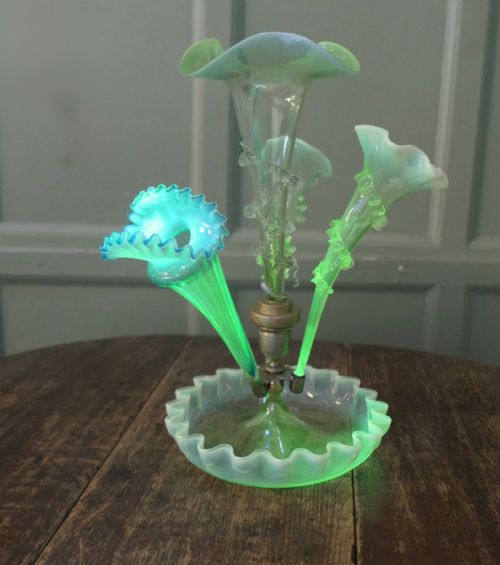
- A type of glass coloured with uranium dioxide that glows under ultraviolet light. It appears in transparent yellow or green shades.
- Comport
- A shallow dish or bowl on a standard used for serving fruit or sweetmeats at dessert. They form a key category of table centrepieces.
Antique Glass Centrepiece: Frequently Asked Questions
How were centrepieces used?
These pieces sat at the middle of dining tables during formal meals to display fruit, sweetmeats or cut flowers. Epergnes often held decorative arrangements while lower bowls served practical functions during multi-course dinners.
Over time their role shifted from serving food to purely decorative display on sideboards or dining tables. Wealthy households utilised them to showcase fine crystal alongside precious metals.
What is vaseline glass?
Vaseline glass is a transparent yellow or greenish glass made by adding uranium to the batch during manufacturing. It gained popularity during the Victorian and Art Nouveau periods for decorative table items.
The low levels of uranium give the glass its distinct translucent colour and cause it to fluoresce brightly under ultraviolet light.
How do I clean an antique glass centrepiece?
Wash the glass component gently in lukewarm water with mild soap, avoiding harsh scrubbing or abrasive materials that might damage the surface. Lift the glass liner out of its metal mount before cleaning to prevent moisture damage to silver plate or gilt bronze.
Dry the glass thoroughly with a soft cloth and polish the metal mounts separately using appropriate metal care products recommended for silver or bronze.
How do I date an epergne?
Examine the manufacturing technique of the glass and the style of the metal mounts to determine the period of origin. Victorian examples often feature multiple blown trumpets and silver-plated frames, while Edwardian pieces lean towards simpler lines.
Maker marks stamped onto silver-plated or sterling silver bases provide definitive dating evidence. Stylistic indicators like Art Nouveau whiplash curves or Art Deco geometric forms narrow down the decade further.