


Victorian Glass Epergne
These Victorian glass epergne centrepieces command a dining table with towering coloured trumpets and gleaming metal stands.
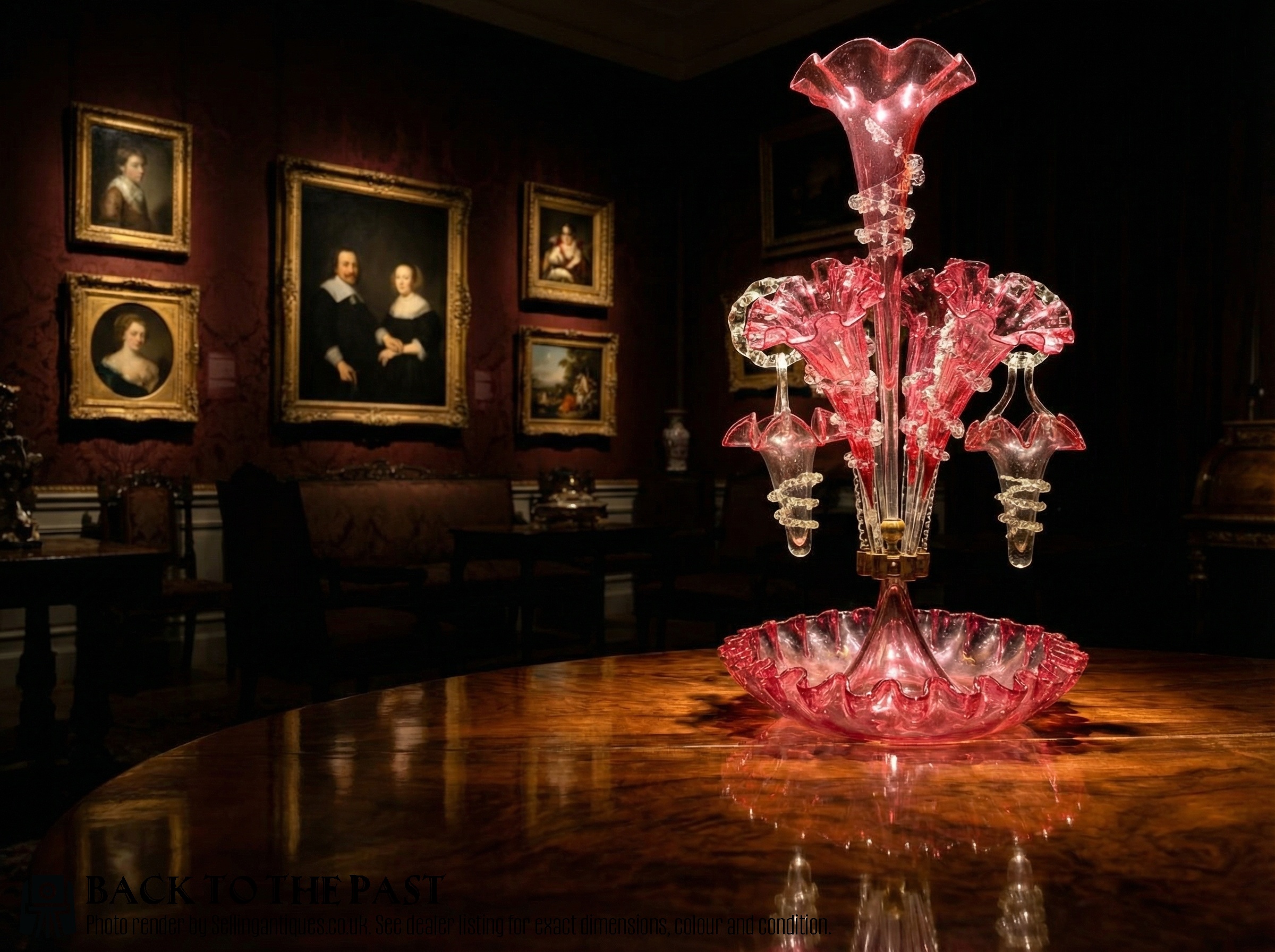
What a Victorian glass epergne is
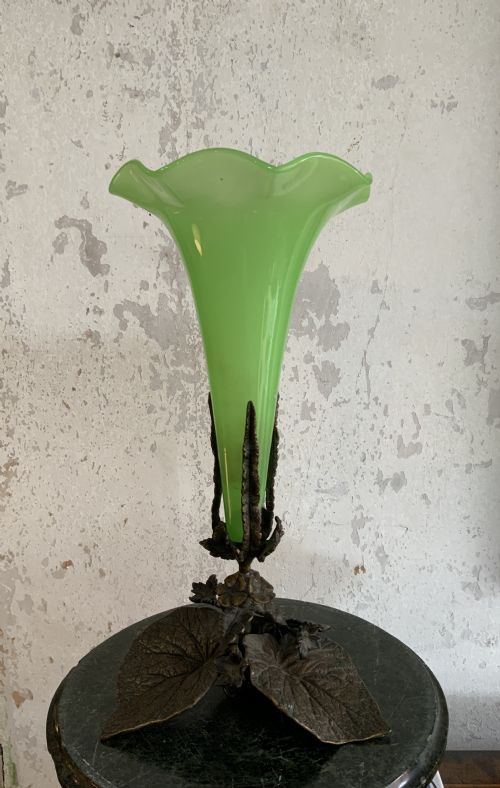
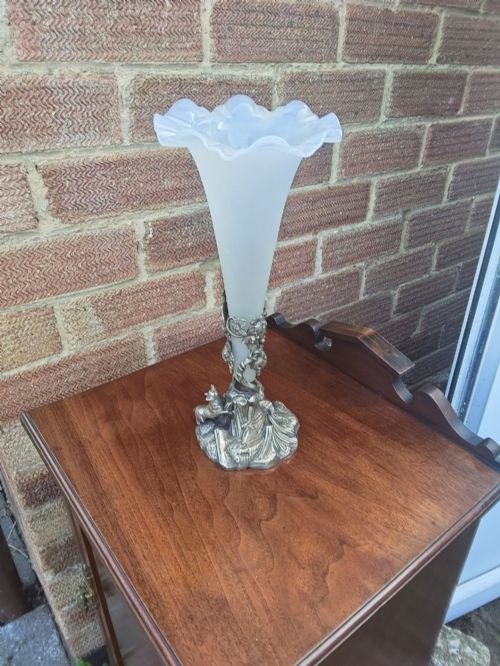
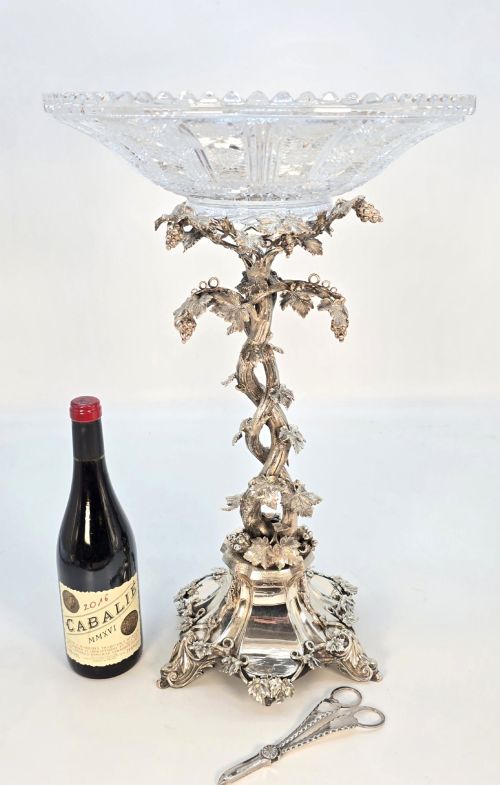
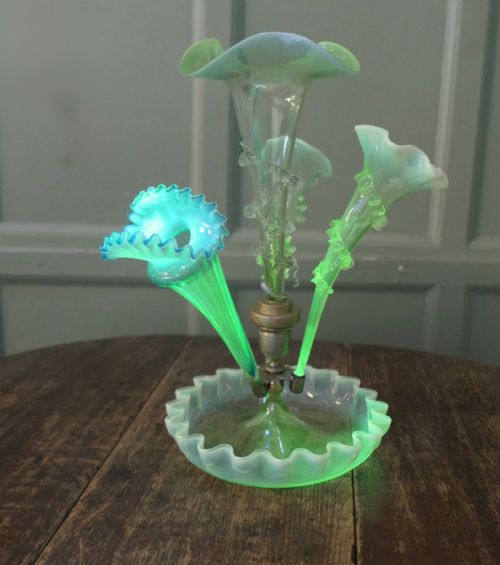
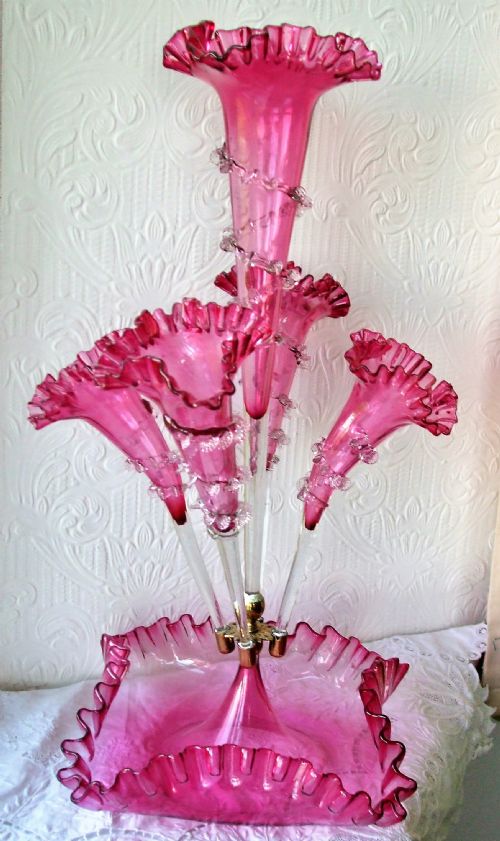
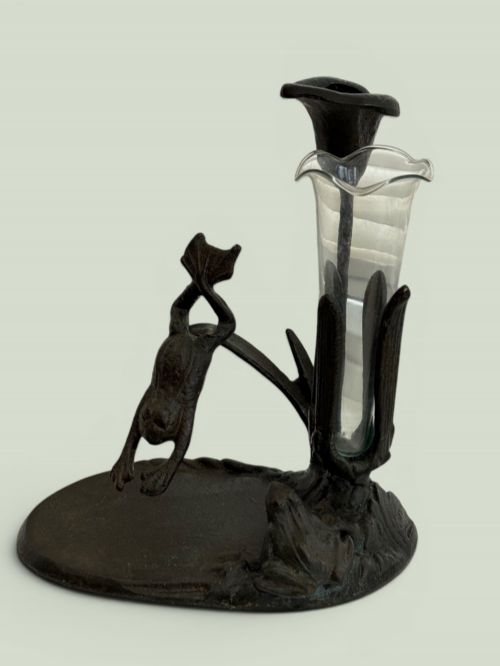
A Victorian glass epergne functions as a dramatic table centrepiece designed to hold fruit or flowers during nineteenth-century dining. These multi-vase structures stand upon sturdy bases of silver plate, brass, bronze, or white metal, supporting central bowls and branching trumpets.
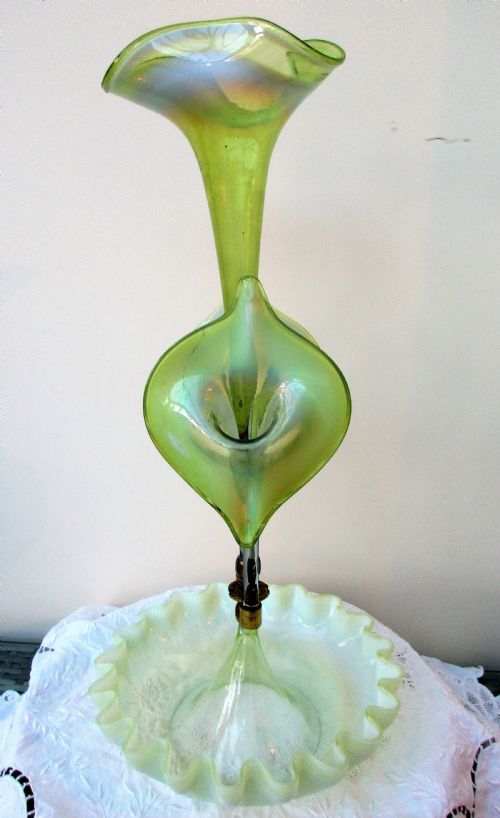
You will most frequently meet cranberry glass and uranium glass variations on this page, often featuring distinct jack-in-the-pulpit forms. The periods represented span the nineteenth century, including specific dates such as eighteen-eighty, eighteen-eighty-four, eighteen-ninety, and nineteen-hundred.
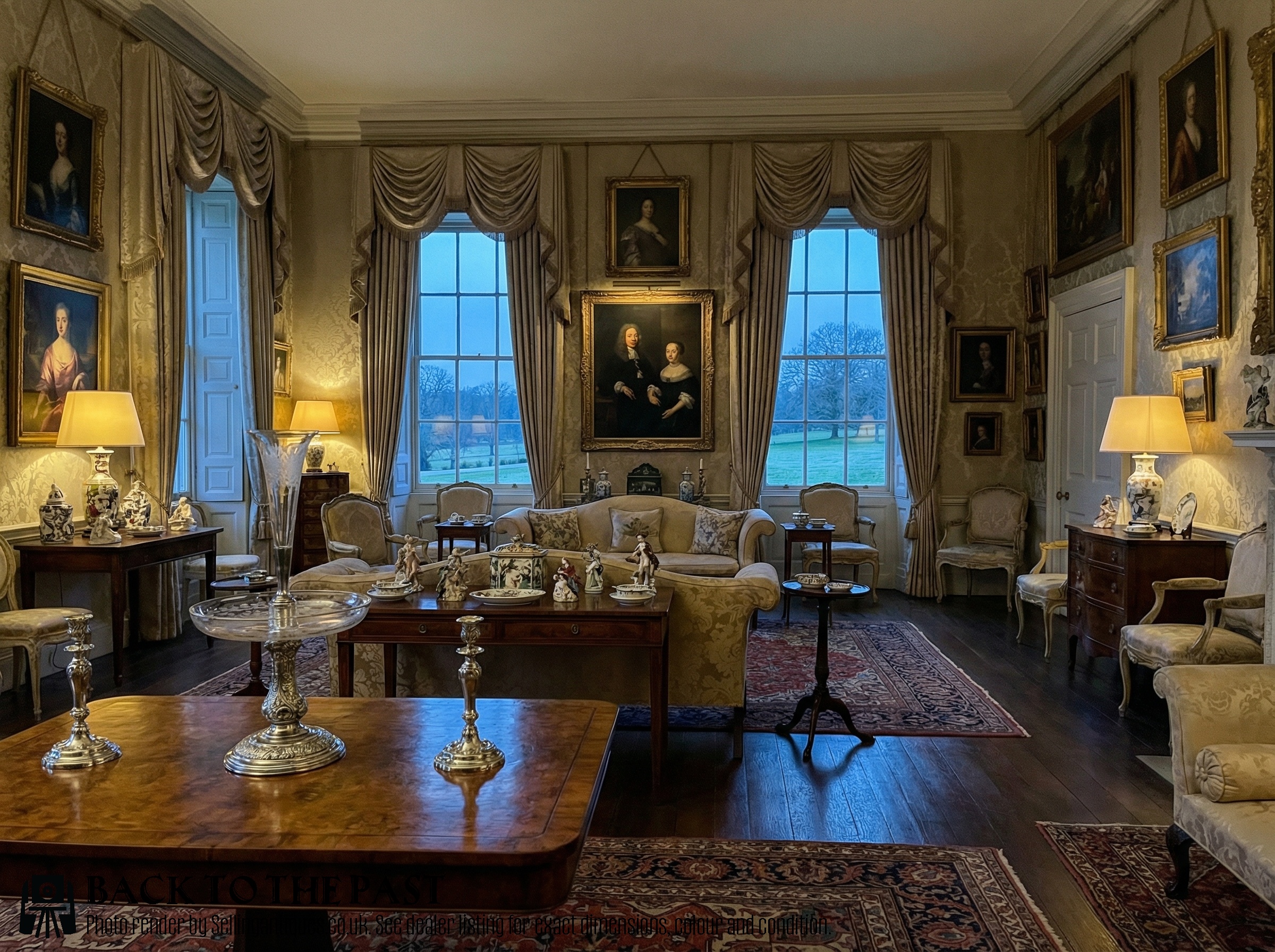
How they were made
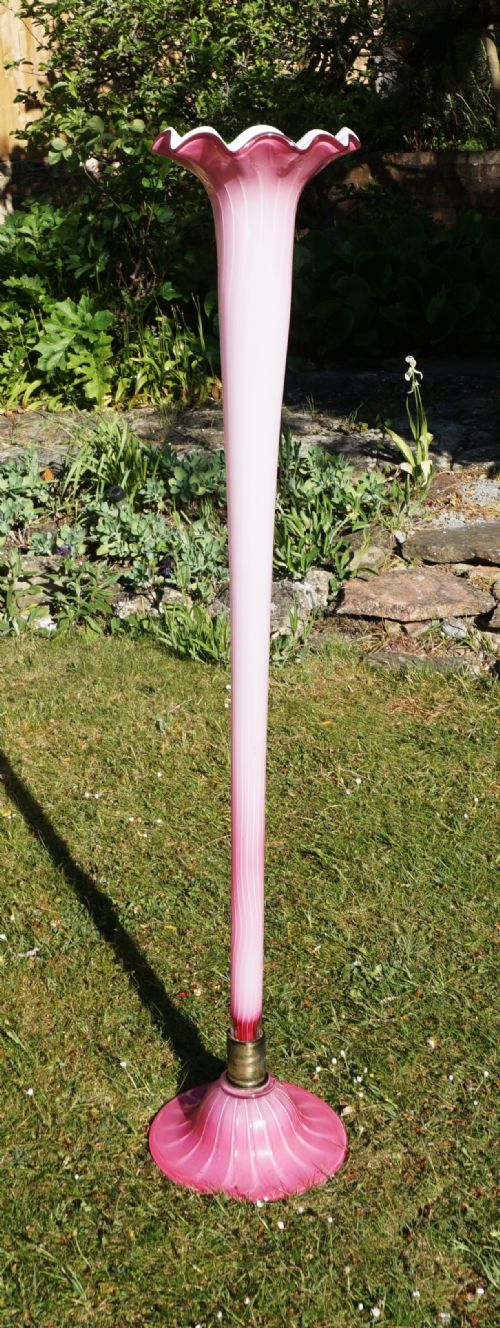
Glassblowers shaped vibrant cranberry, green vaseline, and uranium glass into ruffled vases and bowls while hot, utilising moulds and hand-shaping techniques. Etched glass elements received surface engraving to create frosted floral or geometric patterns against clear backgrounds.
Metalworkers cast and assembled structural bases in silver plate, brass, bronze, and white metal to securely cradle the heavy glass components. Gilt finishes and quadruple plating provided corrosion resistance and a bright metallic sheen to the supporting frames.
Retail Price Guide 2026
Typical UK retail prices for victorian glass epergne, calculated from the Sellingantiques database of over a million retail prices indexed since 2003. This retail price guide relies exclusively on Sellingantiques data; no external sources or auction records are used, so the figures do not describe the wider market.
Materials recorded across these listings include uranium glass, cranberry glass, silver plate, brass, and bronze from the nineteenth century.
What varies in quality
The sophistication of the metal base dictates much of the distinction, where marked silver-plated mounts from established makers surpass unbranded white metal frames. Heavier gauge brass and bronze provide superior structural integrity to support multiple cantilevered glass trumpets.
Glass quality rests in the depth of colour saturation, particularly within cranberry and vaseline examples, alongside crispness in hand-applied ruffles and floral edges. Finely etched details and complex combinations of contrasting glass hues elevate individual pieces above standard production models.
Walker & Hall
The Victorian Glass Epergne Glossary
- Epergne
- A large table centrepiece featuring multiple branching vases or baskets designed for fruit and floral displays. These items dominated nineteenth-century dining tables as ornamental focal points.
- Cranberry Glass
- A rich red-pink transparent glass created by adding gold chloride to the molten batch. It serves as the primary colour seen across numerous Victorian examples.
- Uranium Glass
- A yellowish-green glass containing trace amounts of uranium oxide that glows brightly under ultraviolet light. This material frequently forms the trumpet inserts of period centrepieces.
- Jack-in-the-Pulpit
- A specific glass form with a flared, curving rim resembling the spathe of the native plant. Makers shaped hot glass into this asymmetrical silhouette by hand.
- Vaseline Glass
- A transparent or translucent yellow-green glass named for its perceived colour similarity to petroleum jelly. It often exhibits a strong green fluorescence in ultraviolet illumination.
- Silver Plate
- A thin layer of silver bonded to a base metal core such as brass or white metal. Makers utilised this technique to provide the appearance of solid silver at a lower production cost.
Frequently Asked Questions
What is a Victorian glass epergne?
A Victorian glass epergne is a decorative table centrepiece consisting of a central bowl and multiple branching vases held in a metal stand.
Craftsmen produced these arrangements during the nineteenth century to hold fruit and fresh flowers during formal dining occasions.
How do you clean an epergne?
Cleaning requires separating the removable glass trumpets from the metal base to wash each component individually in warm soapy water.
Harsh abrasives must be avoided to protect silver-plated surfaces and delicate glass ruffles from damage.
Are these pieces English?
Many surviving examples originate from English workshops and factories dating throughout the nineteenth century.
Makers utilised local glassblowing techniques and metalfounding traditions to produce these complex multi-part centrepieces.
What metals support the glass?
Structural support typically comes from silver plate, brass, bronze, or white metal bases.
These metals provide the necessary weight and durability to anchor heavy glass bowls and outward-reaching trumpets.