


Ruby Glass Vase
Ruby glass vases are striking vessels of intense crimson hue, prized for their rich colour and decorative presence in any room.
What ruby glass vases are
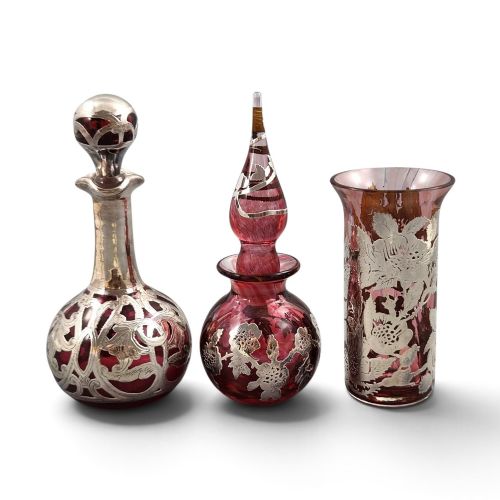
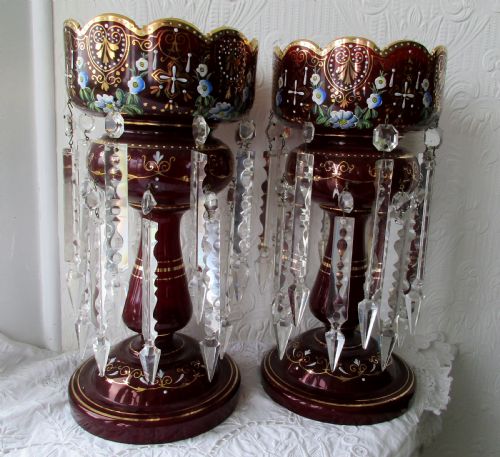
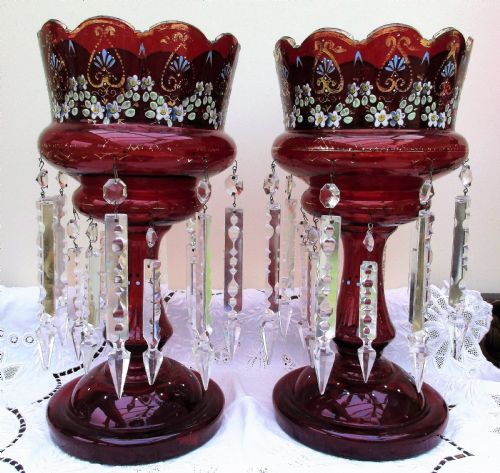
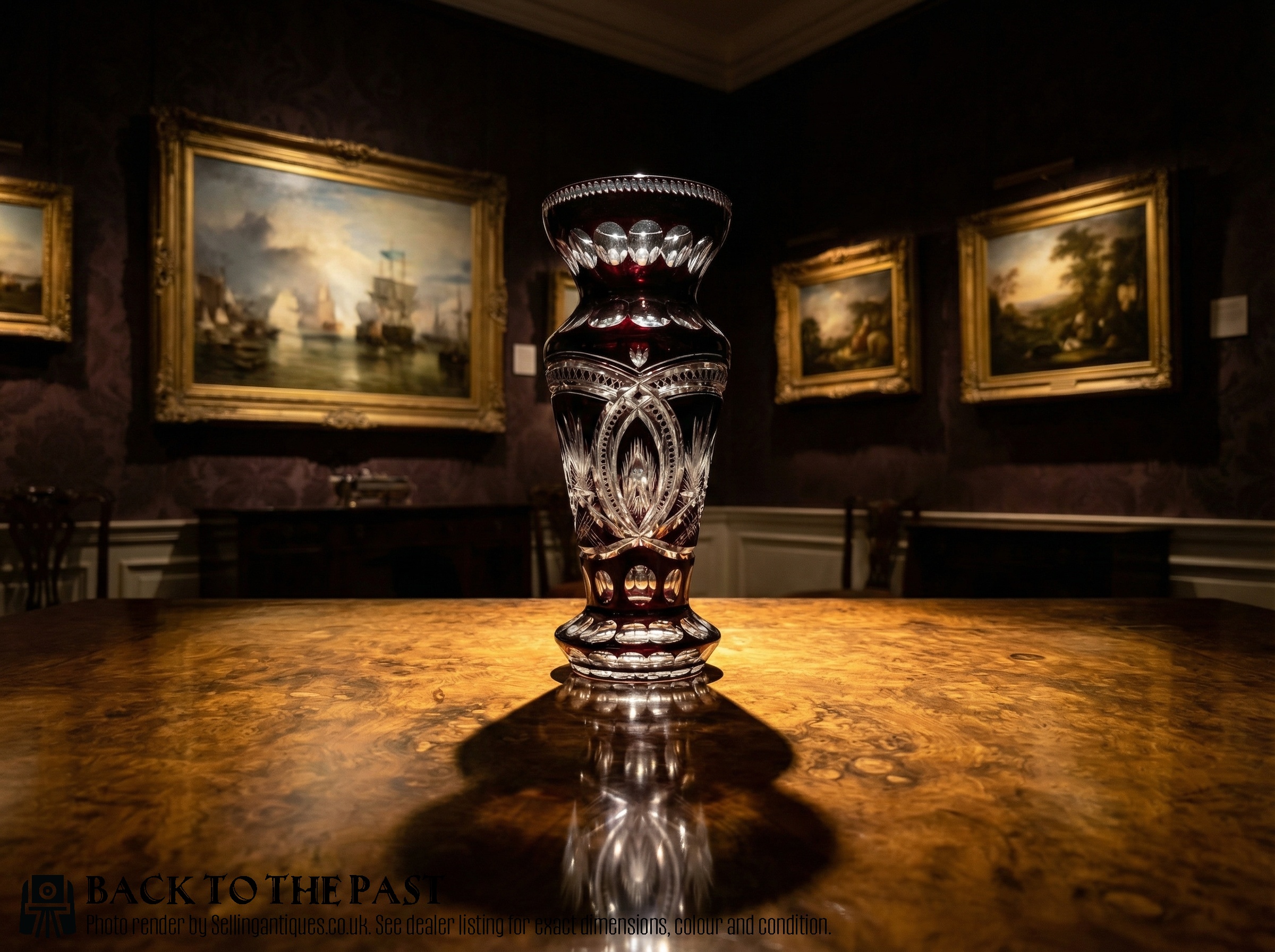
When you search for a ruby glass vase, you are looking at decorative vessels created in intense red tones that span the Victorian era, the nineteenth century, and the nineteen thirties. These pieces include table centrepieces, epergnes, and panelled ovoid or trumpet forms from English and continental makers.
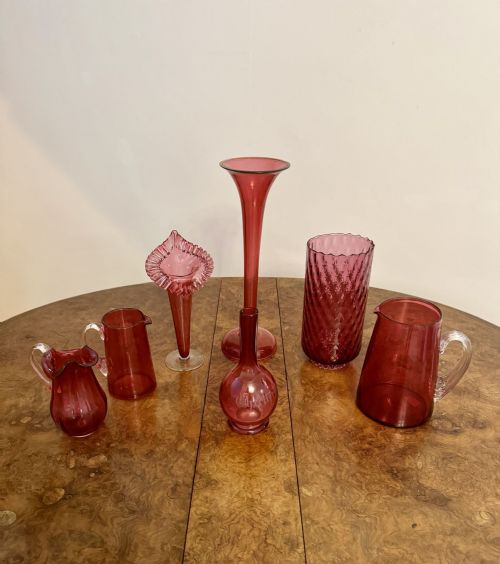
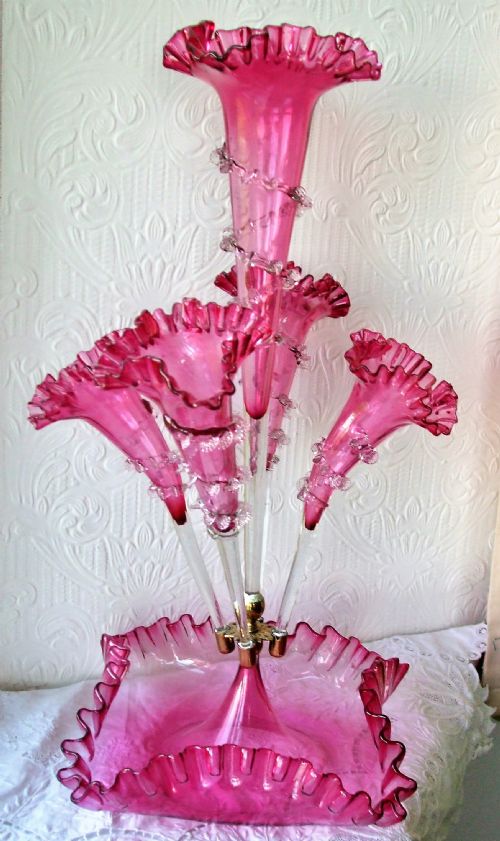
You are most likely to meet Victorian Bohemian examples on this page, often featuring overlaid or flash glass techniques. English cranberry glass and Belgian Art Deco designs also appear, showing how versatile this deep red material proved across different decades.
How they were made
These items utilise lead crystal, clear glass, and overlay glass fused with metallic colourants to achieve their characteristic deep red shade. Makers combined molten layers of glass before cutting, panel cutting, or blowing the metal into moulds.
Surface decoration involved hand-enamelling and flash glass methods, where a thin layer of ruby glass sits over clear crystal. Brass fittings sometimes support complex epergne structures alongside the blown glass trumpets.
Retail Price Guide 2026
Typical UK retail prices for ruby glass vase, calculated from the Sellingantiques database of over a million retail prices indexed since 2003. This retail price guide relies exclusively on Sellingantiques data; no external sources or auction records are used, so the figures do not describe the wider market.
Victorian dining tables often sparkled with cranberry epergnes holding sweet-smelling flowers alongside the evening roast.
What varies in quality
The distinction between ordinary and exceptional work rests on the depth of the red colour and the crispness of the glass cutting. Overlay glass that reveals sharp, clean contrasts between the ruby layer and the clear crystal underneath shows superior technical skill.
Hand-enamelling adds another layer of distinction, where precise, well-preserved details elevate a simple Bohemian or Victorian vessel. Heavy, clear ringing in the crystal and balanced proportions mark out the finest table centrepieces and vases.
Val St. Lambert
The Ruby Glass Vase Glossary
- Cranberry Glass
- A transparent pinkish-red glass coloured with gold chloride, popular in nineteenth-century tableware and epergnes. It differs from denser ruby glass by maintaining a lighter, translucent tint.
- Overlay Glass
- A technique where a layer of coloured glass is fused over a base of clear or contrasting glass. Subsequent cutting through the outer layer reveals the clear glass beneath.
- Flash Glass
- A thin coating of coloured glass applied over a colourless body before blowing or shaping. This method allowed makers to carve through the ruby surface to create clear patterns.
- Trumpet Bowl
- A vase shaped like a widening horn with a flared rim. This form appears often in nineteenth-century table vessels and epergnes.
Frequently Asked Questions
How do I date a ruby glass vase?
Dating relies on stylistic clues, manufacturing techniques, and material attributes recorded in the piece. Victorian examples often feature heavy ornamentation or hand-enamelling.
Later pieces from the nineteen thirties lean towards clean modernist lines, such as the works by Val St. Lambert. Comparing the depth of the overlay and the cut patterns helps narrow down the period.
What is the difference between ruby and cranberry glass?
Ruby glass generally refers to a deeper, more saturated red achieved through various metallic oxides. It can be dense and opaque or layered as flash glass.
Cranberry glass uses gold chloride as a colourant, resulting in a distinct pinkish-red transparency. Victorian makers utilised both, but they create different visual effects on the table.
Where were most antique ruby vases made?
Bohemia stands out as a primary source for nineteenth-century ruby glass vases, known for overlaid and panel-cut designs. English makers also produced significant quantities, particularly cranberry glass epergnes.
Belgian workshops contributed modernist interpretations during the nineteen thirties.
How should I clean my antique vase?
Wash glass items gently in lukewarm water using mild detergent and a soft cloth. Avoid harsh scrubbing, especially on pieces with hand-enamelled surface decoration.
Pat dry immediately with a lint-free cloth to prevent water spots on the crystal.