




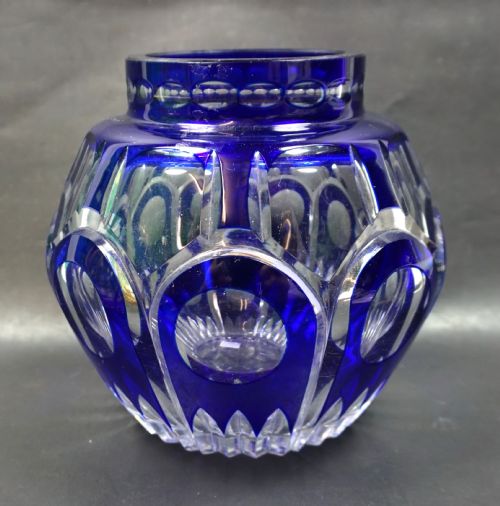


Art Deco Crystal Vase
These art deco crystal vase pieces bring the bold geometry and refined moulding of the interwar years straight into a modern room.
Art Deco Crystal Vase
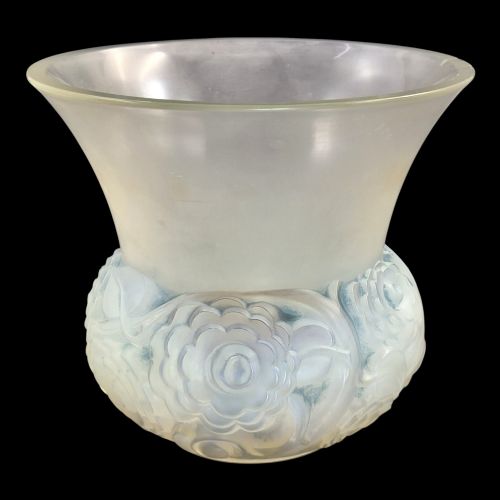
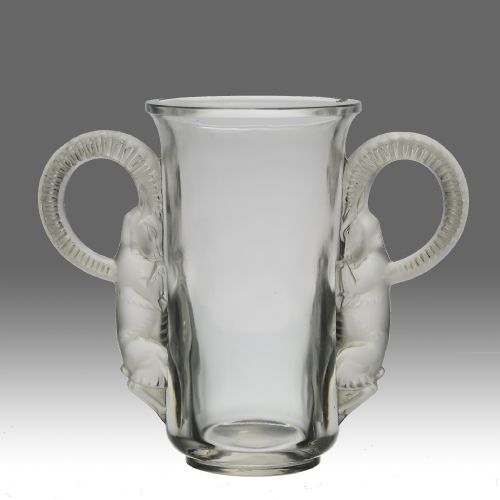
An art deco crystal vase combines the heavy lead content of fine glass with the sharp angles, stylised flora and symmetrical motifs typical of the 1920s, 1930s and 1940s. Buyers searching for an art deco crystal vase will find substantial forms designed to catch the light, ranging from geometric cut vessels to heavily moulded French opalescent masterworks.
The most common examples on this page hail from major European centres of glassmaking, particularly France and Belgium, spanning the interwar decades. Makers such as René Lalique, Daum, Jean Luce, Joseph Simon and Charles Graffart for Val Saint Lambert dominate the material record.
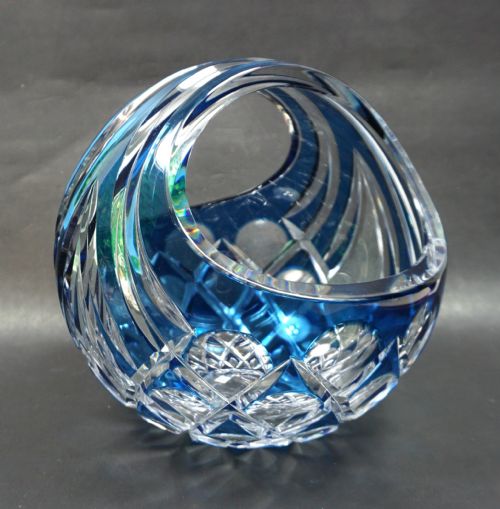
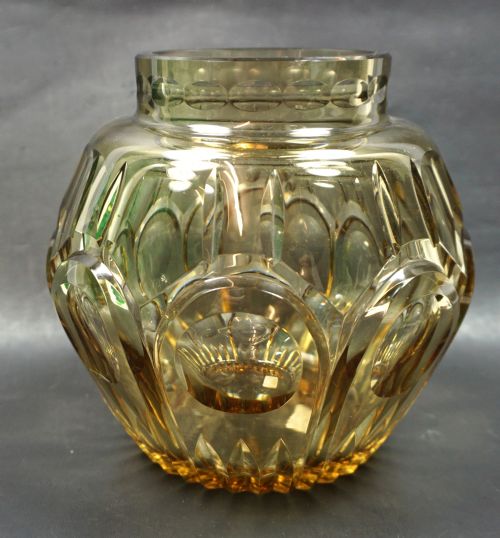
Forms vary from monumental bubble glass cylinders to richly coloured cased glass baskets and deeply etched modernist shapes. Whether clear, frosted, blue, green or topaz, each piece reflects the distinct stylistic shift away from Victorian clutter toward streamlined elegance.
How they were made
Makers utilised high-lead glass and heavy crystal blanks to achieve deep optical clarity and substantial physical weight. Techniques such as cased glass involved fusing distinct layers of coloured glass over a clear crystal core, allowing artisans to cut through the outer skin to reveal contrasting hues underneath.
Mould-pressing and acid-etching defined the output of French ateliers, where artists like René Lalique created opalescent and stained effects by manipulating heat and chemical composition. Deep wheel-cutting and faceted polishing required immense physical skill from glassblowers and cutters working in large Belgian and French factories.
Art Deco Crystal Vase Retail Price Guide 2026
Typical asking prices for art deco crystal vase among the pieces listed under this phrase on Sellingantiques today, from the lower quarter to the upper quarter. They describe what is for sale here now, not the wider market.
Some heavy specimens tip the scales at over twelve kilograms, proving that interwar decorating required serious upper body strength.
What varies in quality
The degree of artistic ambition separates standard production ware from premier studio output, evident in the crispness of the moulding and the depth of the wheel-cut facets. Pieces bearing signature marks from established designers or renowned factories command attention for their superior control of optical density and colour saturation.
Surface finish and material purity dictate the upper tier of the range, where complex double-layered cased glass or intricate opalescent patination remains crisp and unclouded. Subtleties in proportion, weight distribution and the absence of optical distortion within the heavy lead crystal distinguish the finest interwar glass.
René Lalique·Daum·Jean Luce·Val St. Lambert·Stevens & Williams
The Art Deco Crystal Vase Glossary
- Opalescent glass
- A milky, semi-translucent glass that shifts in colour tone depending on the angle of the light, often showing a bluish haze by transmitted light and warm amber by reflected light.
- Cased glass
- A method where a vessel is blown with two or more distinct layers of glass of different colours, enabling artisans to cut away portions of the outer layer for dramatic contrast.
- Lead crystal
- Glass containing a high percentage of lead oxide, which increases weight, refractive index and brilliance while making the material softer and easier to cut deeply.
- Frosted glass
- A matte surface finish achieved by acid-etching or sandblasting the clear or coloured crystal to diffuse light and accentuate sculptural low-relief motifs.
- Bubble glass
- Glass containing intentional trapped pockets of air within the thick walls of the vessel, adding textural depth and catching the ambient light.
Art Deco Crystal Vase: Frequently Asked Questions
Where should I display heavy crystal vases at home?
Place heavy vessels on sturdy, level surfaces near natural daylight or directional indoor spotlights to fully activate the refractive qualities of the thick lead crystal and coloured layers.
Keep them away from high-traffic edges where accidental knocks could topple pieces weighing several kilograms.
How can I tell a moulded vase from a cut one?
Moulded pieces feature raised sculptural relief work, soft tactile contours and seams or signatures pressed directly into the hot glass during production in workshops and factories.
Cut vessels display sharp, precise geometric facets with subtle surface striations left behind by spinning abrasive wheels during the finishing process.
What does cased glass mean for durability?
Cased glass involves multiple fused layers of coloured and clear material, resulting in heavier walls that provide robust structural integrity for everyday decorative display.
The thick layered construction means the vessel resists minor surface impacts better than thin blown glass, though severe thermal shock can still cause stress fractures.