





Vintage Lalique Glassware
Vintage lalique glassware brings Art Deco form and tactile opalescent glass into daily domestic spaces through vases, bowls and clocks.
Vintage Lalique Glassware
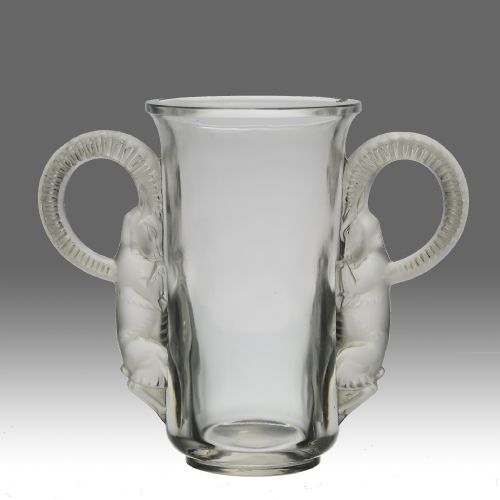
Vintage lalique glassware consists of decorative and functional objects produced during the early twentieth century, spanning the nineteen-twenties and nineteen-thirties. Pieces on this page comprise vases, decorative plates, bowls, dishes, clocks, powder boxes, candlesticks, cigarette holders, perfume bottles and decanters.
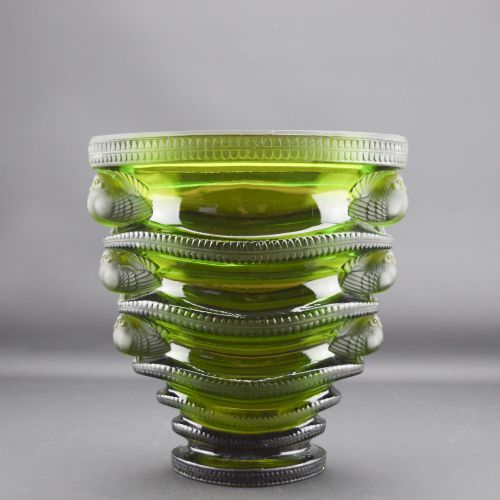
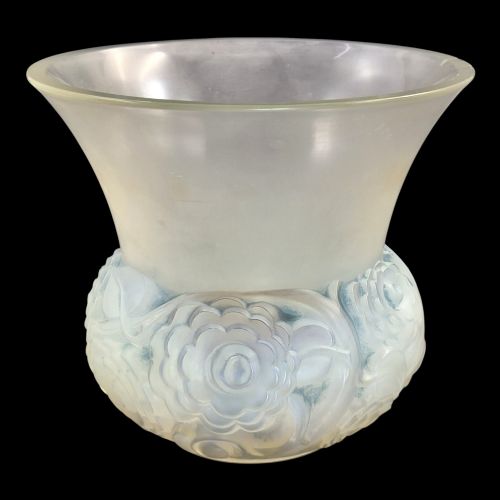
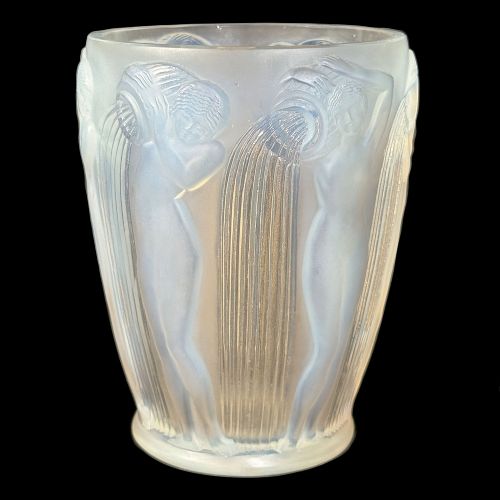
The aesthetic is firmly rooted in Art Deco and Art Nouveau styles, capturing natural motifs such as birds, flowers, fruit and figures. Forms range from large statement vessels like the Ceylan and Saint-Marc vases to smaller tableware items including Coquilles plates and Moineau ashtrays.
Materials and production methods
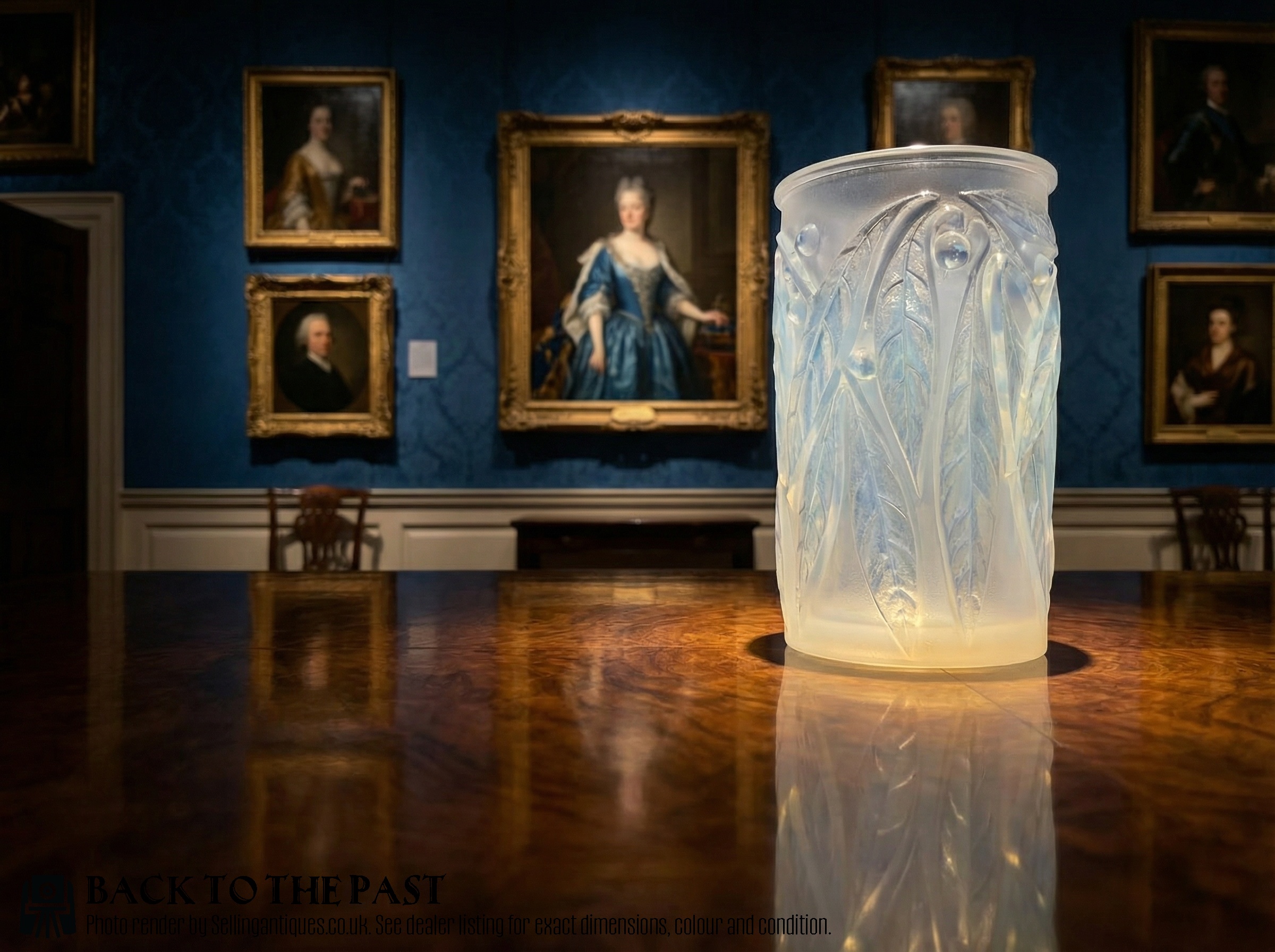
Makers utilised glass, crystal, opalescent glass, frosted glass, clear glass and pressed glass to achieve varied optical effects. Molten material was shaped through moulding techniques that allowed intricate relief work on vessel walls and plate borders.
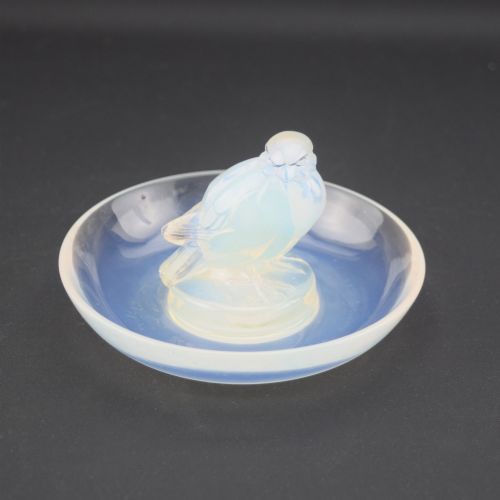
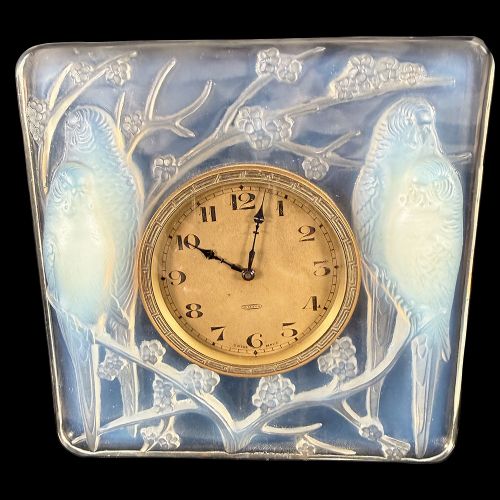
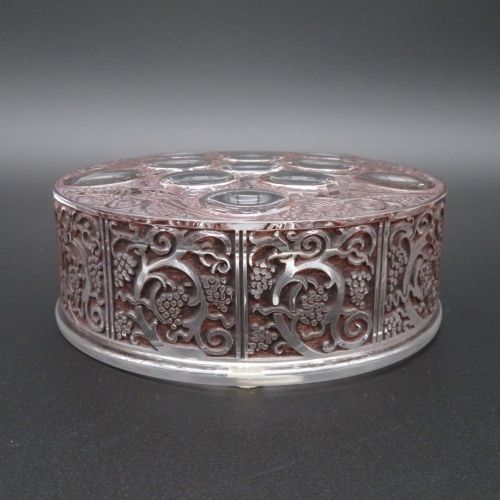
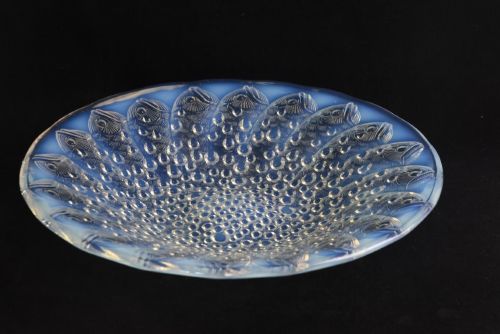
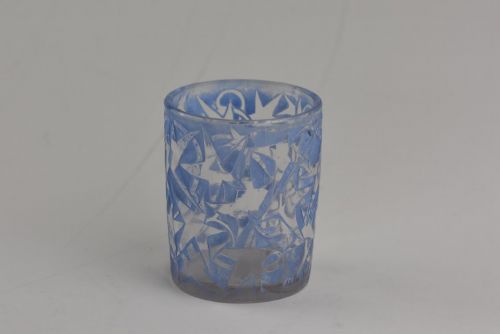
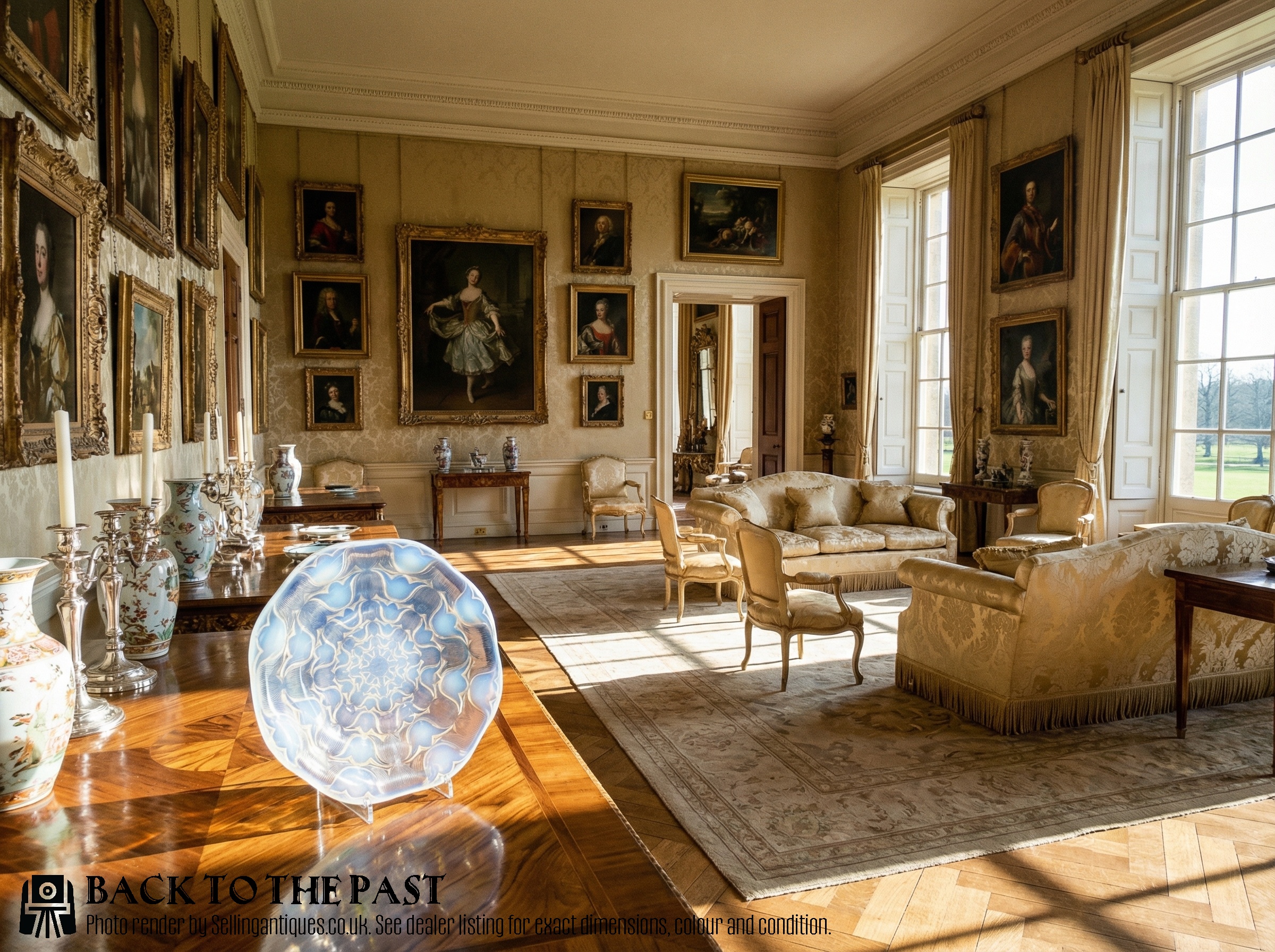
Surface treatments included sepia stains and blue staining applied to recesses and high relief details to accentuate the depth of the design. Opalescent glass shifts in tone between warm amber and cool blue depending on the direction of transmitted light.
Vintage Lalique Glassware Retail Price Guide 2026
Typical asking prices for vintage lalique glassware among the pieces listed under this phrase on Sellingantiques today, from the lower quarter to the upper quarter. They describe what is for sale here now, not the wider market.
Sparrows and love birds perch permanently on ashtrays and clocks, bringing avian company to desks and dressing tables.
Distinctions in quality and execution
Quality rests upon the crispness of the moulded relief and the successful distribution of opalescence or colour staining across the glass body. Strong contrast between frosted elements and clear or stained sections indicates careful control during the cooling and finishing stages.
The clarity of the signature or mark and the precision of the surface finish distinguish standard production pieces from finer examples. Heavier objects with substantial crystal weight demonstrate superior substance in the hand.
Rene Lalique
The Vintage Lalique Glassware Glossary
- Opalescent glass
- Glass that diffuses light to display a milky, iridescent quality shifting between blue and amber tones. This optical effect is achieved through the addition of specific chemical agents to the molten batch.
- Frosted glass
- Glass treated to create a textured, matte surface that diffuses light instead of transmitting it clearly. It provides contrast against polished clear sections in relief designs.
- Moulded glass
- Glass shaped by being pressed into or blown within a prepared form to repeat complex decorative patterns. This technique allowed intricate figural and botanical motifs to be produced consistently.
- Coupe ouverte
- An open bowl or shallow vessel form designed for display or serving. These pieces often feature wide rims decorated with repeated natural motifs.
- Sepia stain
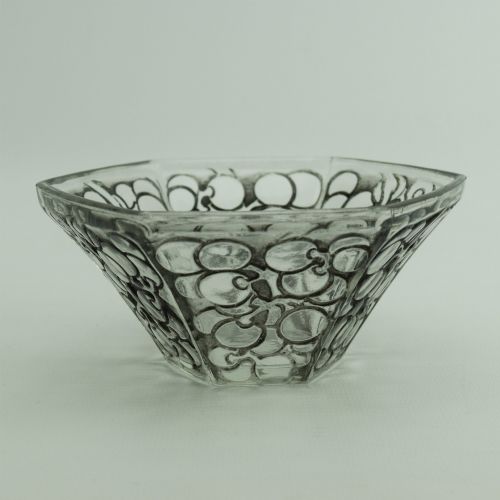
- A brownish pigment applied to the recessed portions of a glass design to create shadow and depth. It highlights the modelled details against the frosted or opalescent background.
Vintage Lalique Glassware: Frequently Asked Questions
What periods do these pieces date from?
The pieces date primarily from the nineteen-twenties and nineteen-thirties, aligning with the height of the Art Deco movement.
Production methods and stylistic motifs from these decades reflect the dominant design trends of the interwar period in France.
How do I care for vintage glassware?
Wash items gently by hand using lukewarm water and a mild detergent, avoiding abrasive cloths or harsh cleaning chemicals.
Take care with pieces featuring coloured stains or delicate frosted surfaces to preserve the original finish.
What is opalescent glass?
Opalescent glass contains ingredients that scatter light, causing the material to appear milky bluish-white when viewed with reflected light and amber when seen against transmitted light.
This property gives the relief designs a luminous three-dimensional quality.
How were these objects used?
Many items served practical domestic functions alongside their decorative appeal, including vases for flowers, powder boxes for dressing tables, and decanters for dining.
Smaller objects such as ashtrays and cigarette holders formed part of contemporary entertaining accessories.