
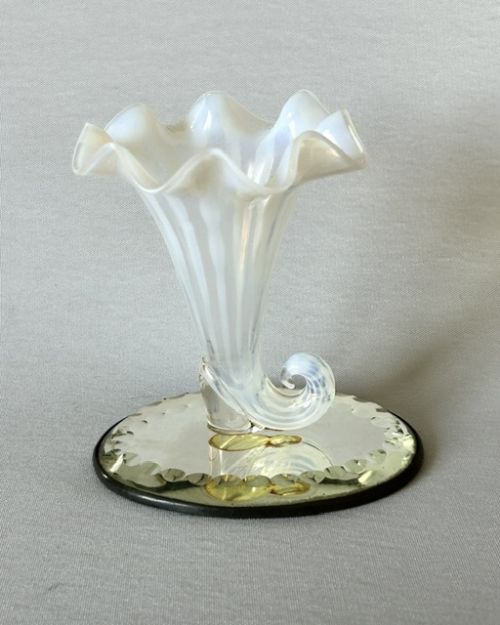


Opalescent Glass Vase
An opalescent glass vase catches the light with milky translucency and shifting fire, bringing tactile depth to a room.
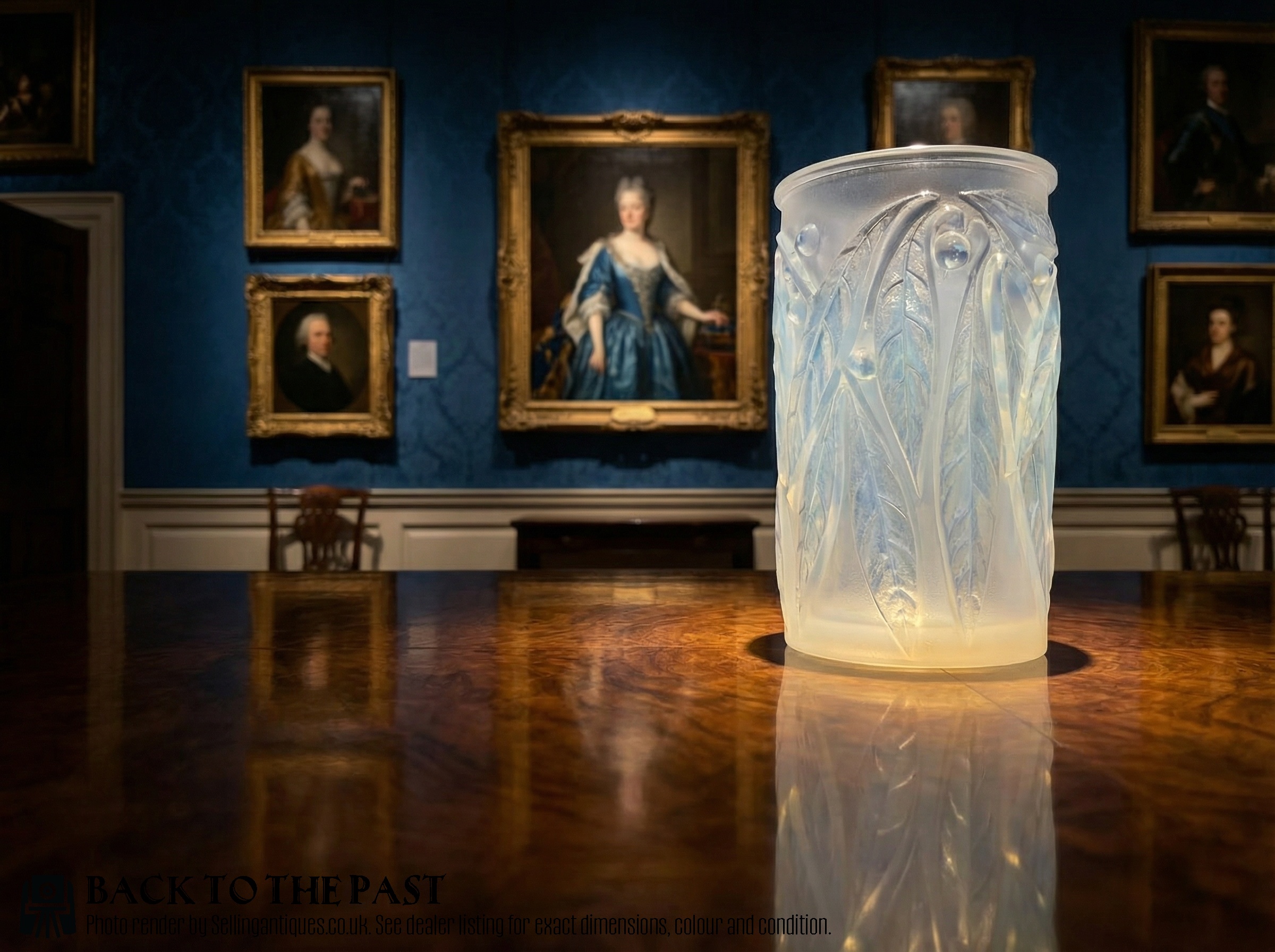
Opalescent Glass Vase
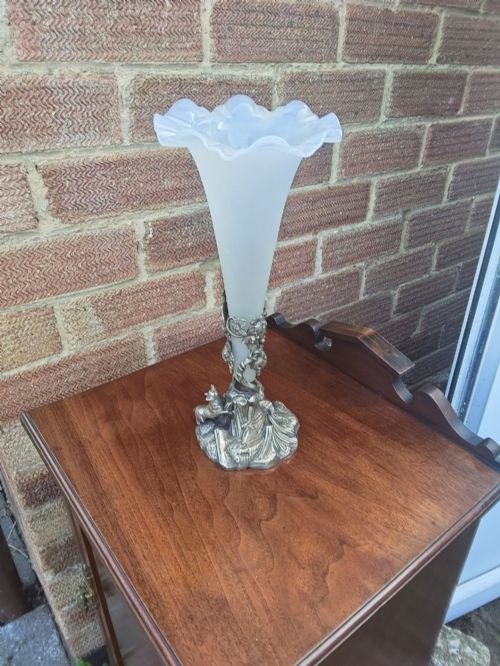
An opalescent glass vase captures the search phrase through shifting milky tones and iridescent fire, often taking the form of bulbous vessels, trumpets, or cornucopias. The most common examples met here span the Victorian, Edwardian, and Art Deco periods, ranging from British press-moulded homewares to French studio masterpieces.
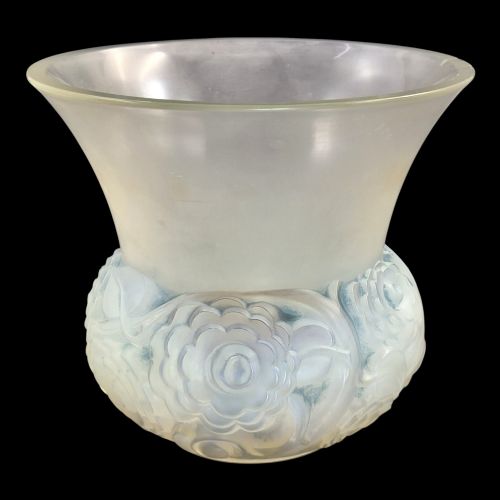
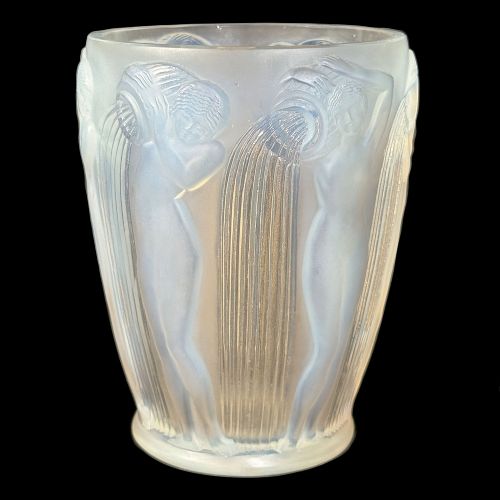
Makers shaped these vessels using pressed glass, hand-blown techniques, and cameo carving, resulting in forms decorated with motifs like rams, fish, water carriers, and botanical themes. Collectors encounter both standalone vases and multi-trumpet epergnes designed as table centrepieces.
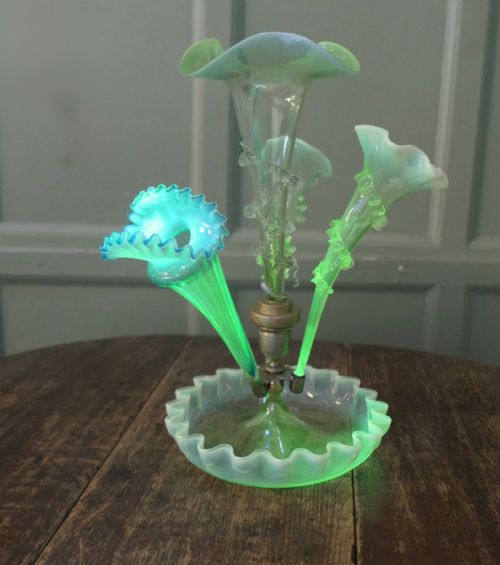
The material vocabulary moves from standard opalescent and frosted glass to uranium glass, vaseline glass, and opaque glass. Pieces originate from British, French, and Bohemian workshops active across the nineteenth and twentieth centuries.
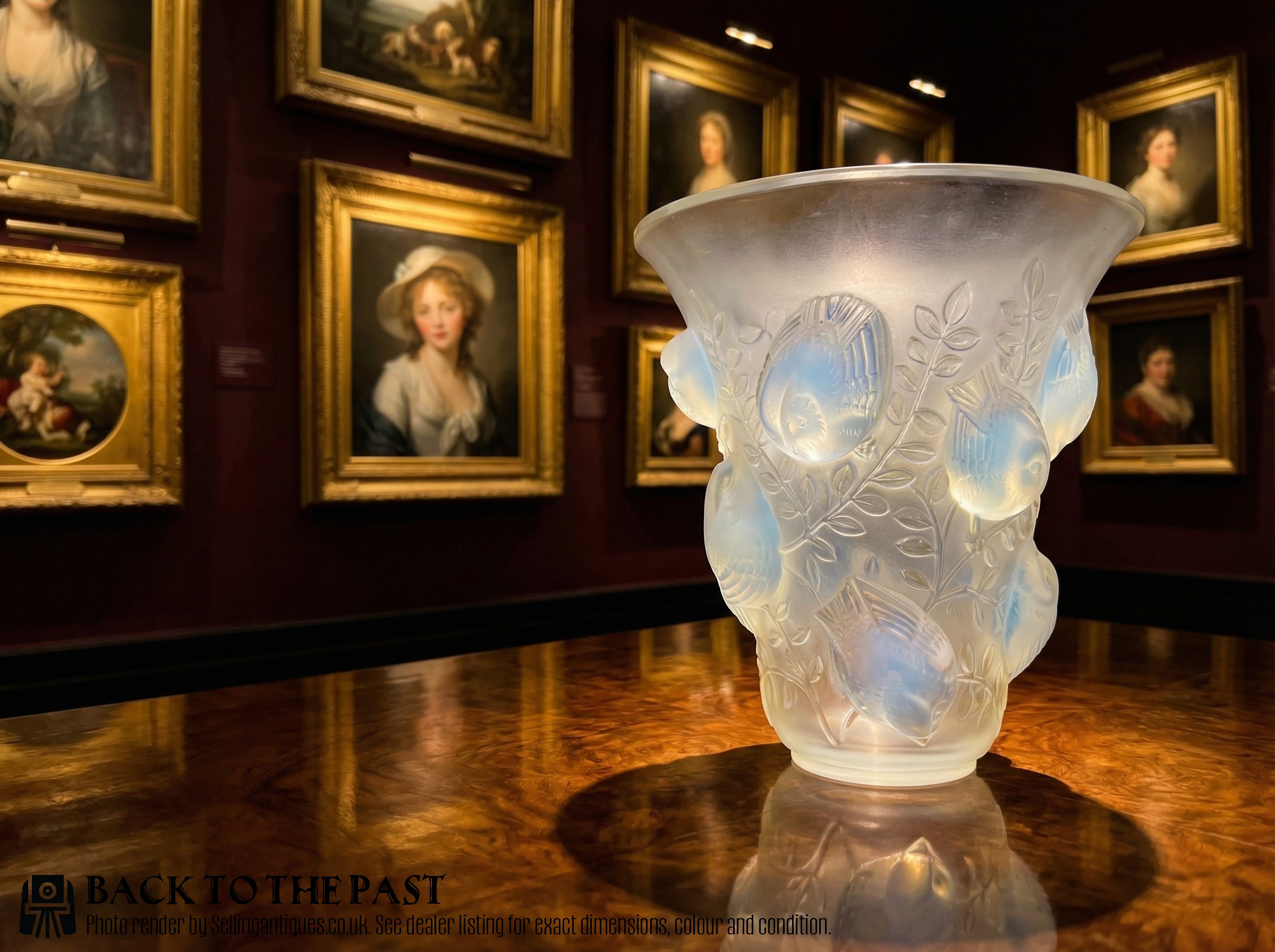
How they were made
Workers manipulated molten batches by hand blowing or pressing the material into metal moulds to achieve the characteristic milky opacity and surface texture. Chemical agents added to the mix created the signature internal light scattering that shifts from pale blue to amber.
Makers finished surfaces through acid etching, staining, or cameo carving to accentuate moulded details such as flora and fauna. Brass, white metal, and crystal fittings occasionally supplemented multi-part epergnes and centrepieces.
Mould seams, pontil marks, and hand-applied colour washes record the manual steps involved in production across different European glasshouses.
Opalescent Glass Vase Retail Price Guide 2026
Typical asking prices for opalescent glass vase among the pieces listed under this phrase on Sellingantiques today, from the lower quarter to the upper quarter. They describe what is for sale here now, not the wider market.
The listings combine British, French, and Bohemian production across the Victorian, Edwardian, Art Deco, and mid-twentieth-century periods.
What varies in quality
Quality rests on the crispness of the moulded relief and the depth of the opalescent fire within the glass matrix. Sharp definition in figural motifs and balanced distribution of milky translucency separate finer studio output from standard production.
The complexity of the form and the skill of the secondary surface treatment, such as blue staining or acid finishing, define the upper tier of the range. Maker attribution and the precision of assembly in multi-part epergnes further distinguish individual examples.

Rene Lalique·Julien Glass France·Galle·Pierre D Avesn·Sabino
The Opalescent Glass Vase Glossary
- Opalescent glass
- Glass containing bone ash, arsenic, or other agents that scatter light, creating a milky blue or white appearance that shifts when viewed against different backgrounds. This optical effect gives the pieces their characteristic glow.
- Vaseline glass
- Pressed or blown glass containing uranium dioxide, which produces a transparent yellow-green colour and a bright green glow under ultraviolet light. It is frequently found in Victorian opalescent pieces.
- Epergne
- A centrepiece stand featuring a central bowl and multiple detachable trumpets or cornucopias used for holding flowers or fruit. They often combine opalescent glass with metal mounts.
- Cameo glass
- Vessels made with two or more distinct layers of coloured glass, where the outer layer is carved away to leave a raised design. This technique appears on turn-of-the-century French vases.
- Press-moulded
- Glass shaped by being pressed into a metal or wooden mould with a plunger, allowing for repetitive decoration and sharp exterior relief. It accounts for many Victorian and Art Deco table pieces.
Opalescent Glass Vase: Frequently Asked Questions
How do I identify a period piece?
Examine the weight, the mould seams, and the chemical tint of the material to determine the manufacturing era. Victorian examples often show vaseline tones or cranberry borders, while Art Deco pieces tend to feature stylised French motifs and signatures.
Look closely at the base for pontil marks, engraved signatures, or moulded factory marks. Stylistic cues like naturalistic flora point towards earlier dates, whereas geometric patterns align with later twentieth-century production.
What is vaseline glass?
Vaseline glass is a type of translucent glass coloured with uranium oxide that yields a distinct yellow or greenish-yellow hue. It reacts strongly under ultraviolet light by glowing bright green.
Victorian makers utilised this material extensively for pressed opalescent vases, cornucopias, and plates, often combining the yellow body with a milky white ruffled rim.
How were epergnes used?
Epergnes served as elaborate table centrepieces during formal Victorian and Edwardian dining, holding fruit in the base bowl and floral arrangements in the attached trumpets. They acted as decorative focal points for the middle of the dining table.
The detachable trumpets allowed hosts to rearrange blooms easily, while the reflective opalescent surfaces caught the candlelight during evening meals.
What causes the opalescent effect?
The milky blue or white glow results from particles suspended within the glass matrix that scatter shorter wavelengths of light more than longer ones. Glassmakers introduced specific opacifying agents into the molten batch to achieve this optical phenomenon.
When the vessel cools and catches direct light, the translucent areas take on a fire-like quality that contrasts with the clearer parts of the body.