


Press Moulded Glass Vase
These press moulded glass vase examples bring tangible Art Deco elegance to a room, capturing light through sculptural relief and opalescent depth.
Press Moulded Glass Vase
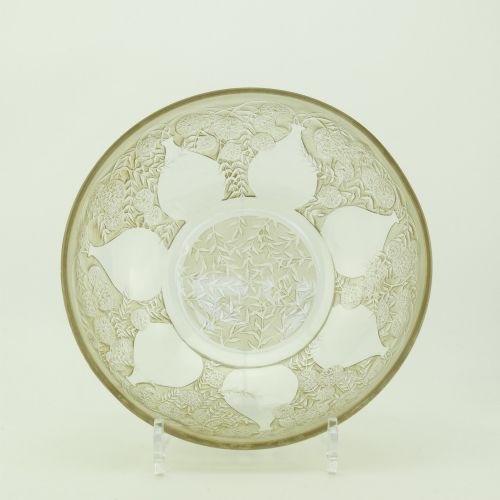
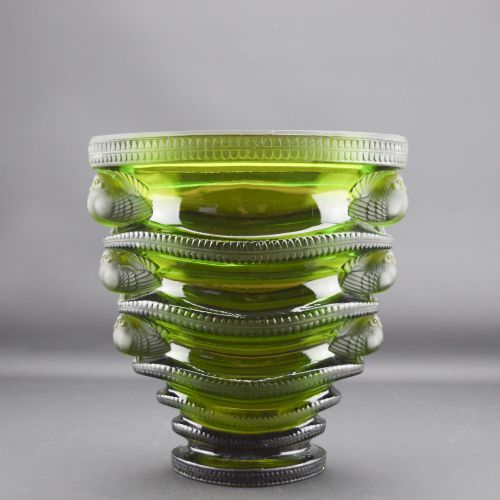
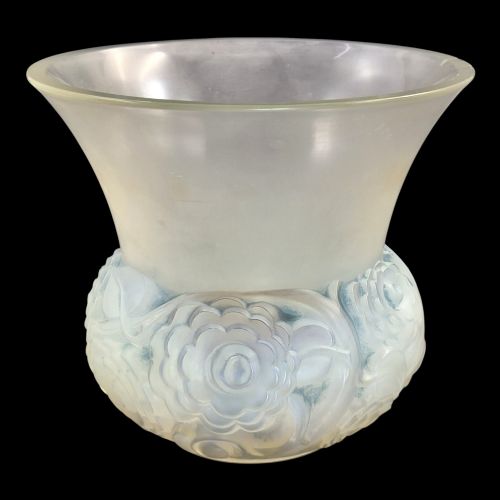
When you search for a press moulded glass vase, you encounter substantial vessels created primarily during the 1920 and 1930 periods. The forms on this page include distinct decorative bowls and vases, frequently showcasing characteristic Art Deco motifs.
You are most likely to meet French production from this era, particularly the notable works designed by René Lalique. These vessels combine functional form with high artistic relief, embodying the decorative ambitions of the interwar decades.
How they were made
Makers utilised heavy iron moulds to shape molten material under mechanical pressure, creating sharp relief and thick walls. This industrial method allowed for intricate surface patterns that define the style of the period.
The choice of medium heavily influenced the visual outcome, with clear glass, frosted glass, and opalescent glass dominating the output. Artisans often applied staining or patina to highlight the intricate details moulded into the surface.
Early glass pressers often worked near roaring furnaces with iron levers heavy enough to test the resolve of any apprentice.
What varies in quality
The clarity of the relief and the sophistication of the finish dictate the standing of an individual piece. Finer examples display crisp botanical or geometric detailing where the mould seams are expertly finished and integrated into the design.
The visual effect of the medium itself creates distinction, particularly in how opalescent glass captures light and shifts tone from blue to amber. The harmony between the sculptural form and the tactile surface texture separates standard production from exceptional work.
René Lalique
The Press Moulded Glass Vase Glossary
- Press-Moulded Glass
- Glass formed by pressing molten metal into a metal mould using a plunger. This technique enables complex relief patterns and consistent production.
- Opalescent Glass
- Glass containing agents that cause it to diffuse light, appearing milky blue in daylight and warm amber against direct light. It creates a striking dual-tone effect across raised surfaces.
- Frosted Glass
- Glass treated to achieve a matte, non-reflective surface texture. This finish accentuates sculptural depth by contrasting with polished highlights.
- Art Deco
- The dominant design style of the 1920 and 1930 periods, characterised by stylized floral motifs, symmetry, and bold geometric lines.
Press Moulded Glass Vase: Frequently Asked Questions
How do I clean an old glass vase?
Wash the vessel gently by hand using lukewarm water and mild soap, avoiding harsh abrasives that could damage delicate frosted or patinated surfaces.
Dry the piece immediately with a soft, lint-free cloth to prevent water spots and preserve the clarity of the material.
Are these pieces suitable for fresh flowers?
While these vessels were designed as decorative objects, many function adequately for holding water and floral arrangements. Care must be taken with heavy stems to avoid chipping the rim during placement.
Residue from stagnant water can harm historical surfaces over time, so empty and clean the interior promptly after use.
How do I date a glass vase?
Examine the style of the decoration, noting whether it aligns with Art Deco aesthetics typical of the 1920 and 1930 periods. Maker signatures, registry numbers, and base wear provide additional chronological clues.
Compare the moulding technique and material composition against known production records from the same era to narrow down the timeframe.
Where should I display my vase?
Position the vessel in a location with strong natural light to activate the optical properties of opalescent or frosted glass. Ensure the display surface is stable and secure given the substantial weight of press-moulded objects.
Keep the piece away from direct heat sources and areas prone to heavy vibrations or accidental knocks.