
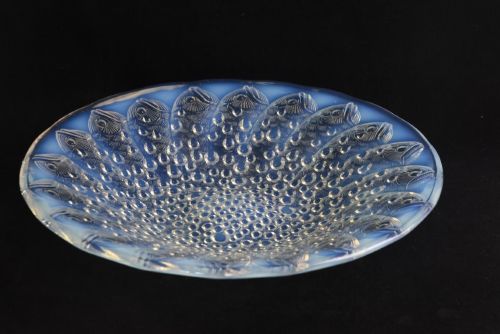


Opalescent Art Deco Glassware
Opalescent art deco glassware brings milky, shifting tones to twentieth-century interiors through moulded bowls, vases, and clocks.
Opalescent Art Deco Glassware
Opalescent art deco glassware comprises decorative objects produced during the 1920s and 1930s that display characteristic milky, translucent qualities shifting between blue and amber tones in changing light. The pieces on this page are predominantly French decorative items, dominated by vases, bowls, plates, and clocks created in the Art Deco style.
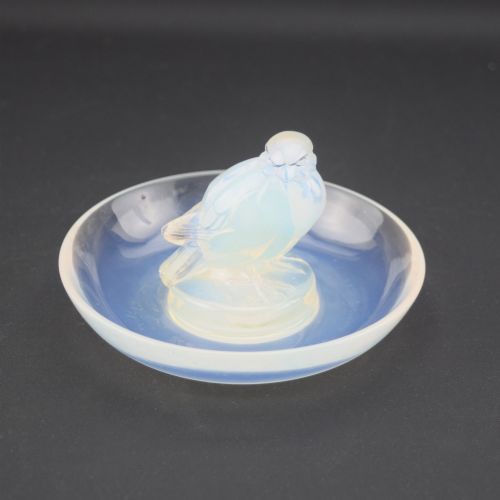
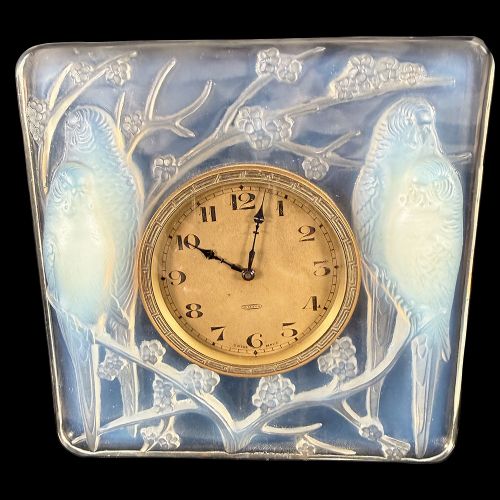
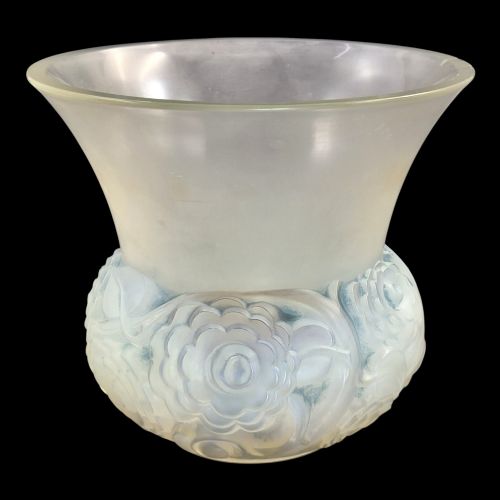
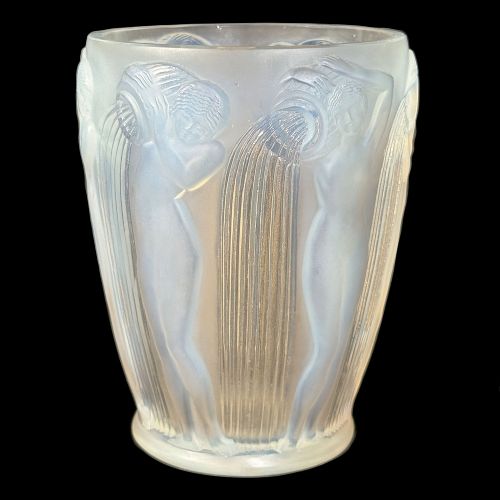
Vases and bowls form the majority of what a buyer meets, often moulded with relief motifs of flora, fauna, and figures such as birds, fish, or water carriers. Plates and coupes appear frequently, alongside occasional specialised items like perfume bottles, ashtrays, and clocks incorporating metal and frosted glass.
The aesthetic relies on the interplay of light across moulded surfaces, where raised details catch highlights while recessed areas hold deeper opalescent or stained colour. Most examples date from the nineteen-twenties and nineteen-thirties, aligning with the height of interwar design.
Materials and Techniques
Production relies on glass, pressed glass, crystal, and frosted glass, frequently manipulated to achieve the milky opalescent effect through chemical additives during the melting process. Metal, wood, and stained glass appear in composite objects such as clocks and fitted desk items.
Moulds shape the heavy vessels, allowing intricate relief designs of animals, plants, and geometric patterns to emerge directly from the glass press. Artisans often enhanced these moulded details by applying blue or dark staining to contrast with the opalescent body.
Listings feature items from the 1920s and 1930s, utilising materials including opalescent glass, frosted glass, crystal, metal, wood, and stained glass.
Evaluating Quality
The depth and intensity of the opalescence separate standard production from superior examples, as does the crispness of the moulded relief details in subjects like birds, fish, and floral patterns. Greater definition in complex designs indicates finer execution of the mould.
The retention of original staining, where darker pigments highlight the recessed parts of the design, contributes significantly to the visual impact. The weight and clarity of the glass or crystal body also reflect the manufacturing standard.
Rene Lalique·Etling·Sabino
The Opalescent Art Deco Glassware Glossary
- Opalescent Glass
- Glass that diffuses light to display a milky, bluish, or amber glow depending on the angle of illumination. This optical effect is achieved through specific chemical agents added to the batch.
- Pressed Glass
- Glass shaped by being pressed into a metal mould using a plunger, allowing complex patterns and high-relief designs to be produced consistently. It forms the basis of many decorative bowls and plates.
- Frosted Glass
- Glass treated to create a textured, matte surface that diffuses light rather than allowing direct transparency. It is frequently combined with clear or opalescent sections on vases and clocks.
- Coupe Ouverte
- An open bowl or shallow dish used for display or table service. These pieces often feature moulded rims decorated with repeated motifs such as shells or leaves.
- Tazza
- A decorative pedestal bowl or shallow cup raised on a stem. They appear in interwar glass and metal compositions.
Opalescent Art Deco Glassware: Frequently Asked Questions
What is opalescent art deco glassware?
It is decorative interwar glassware that uses special agents to create a milky, light-shifting appearance, mostly taking the form of vases, bowls, and plates.
Created largely in France during the nineteen-twenties and thirties, these items combine heavy moulded glass with distinct Art Deco motifs.
How were these glass objects used?
They served as decorative centrepieces, display vessels, and functional objects like clocks, perfume bottles, and ashtrays in interwar interiors.
Their primary purpose was aesthetic, catching and diffusing light through relief surfaces in domestic settings.
How do I care for opalescent glass?
Clean these pieces gently using lukewarm water and mild soap, avoiding harsh abrasives that can damage frosted or stained surfaces.
Handle heavy items with care, supporting the base rather than the rim, due to the substantial weight of the moulded glass.
How can I tell the period of these pieces?
The objects date to the 1920s and 1930s, identifiable through characteristic Art Deco styling, moulded signatures, and specific material formulations.
Subject matter such as stylized flora, fauna, and geometric relief work helps anchor pieces to this interwar timeframe.