


1920s French Glass Vase
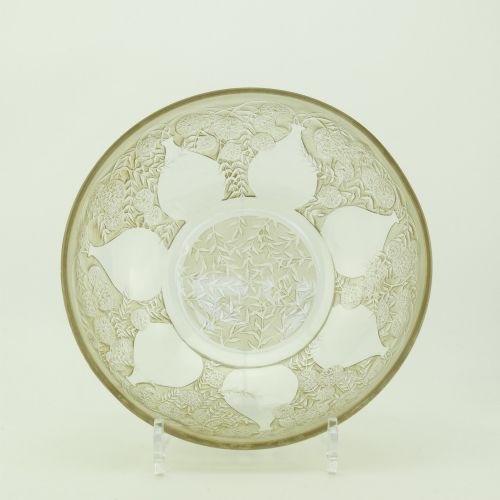
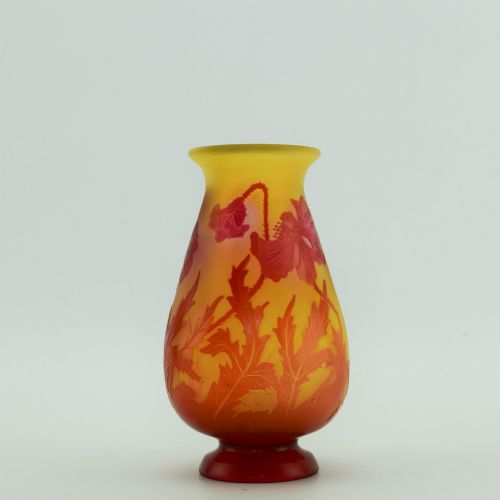
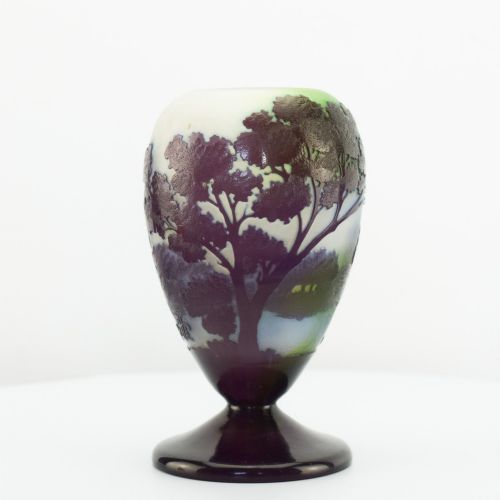
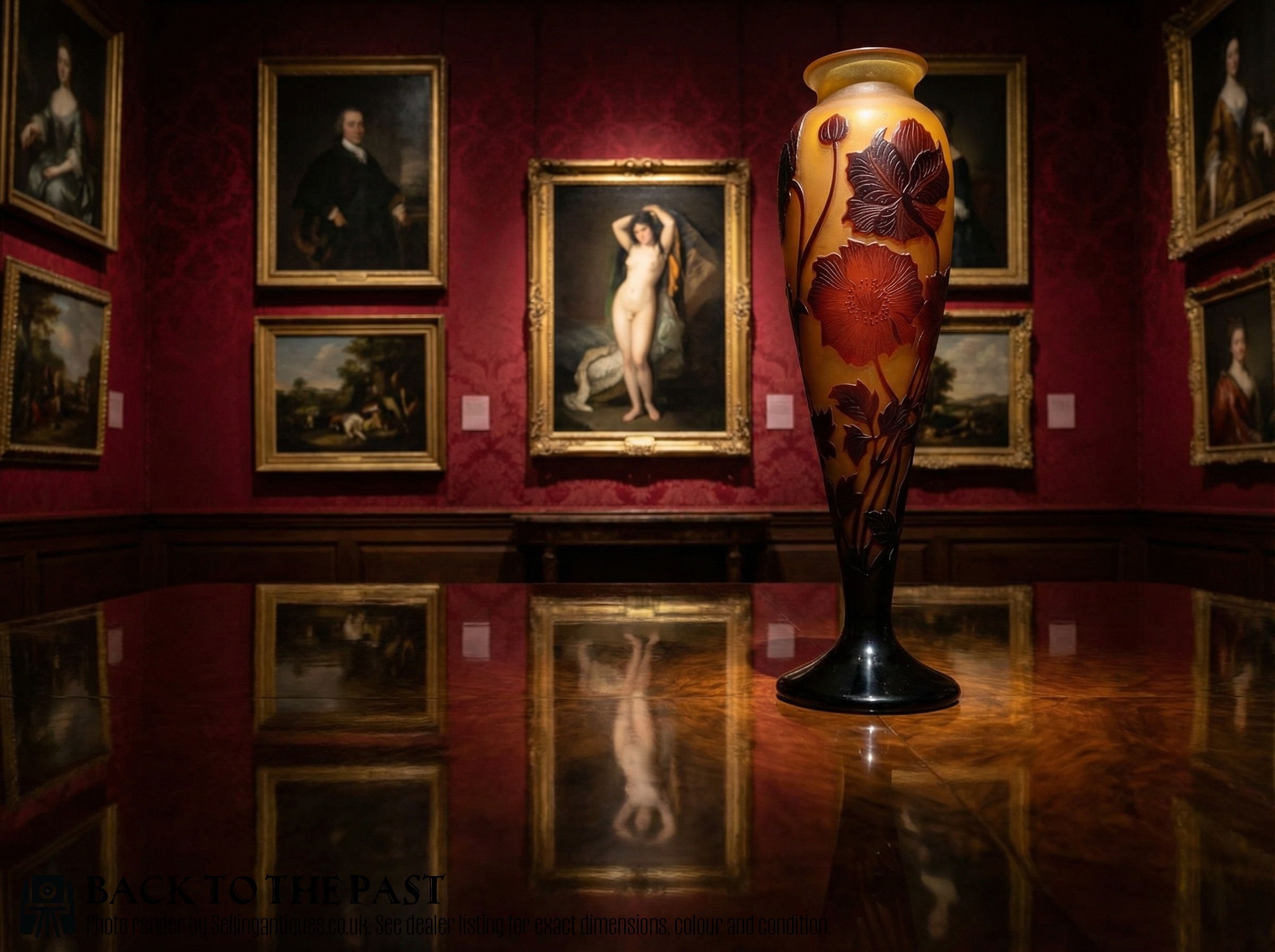
A 1920s french glass vase brings sculptural Art Deco and Art Nouveau form into a room through rich colour and tactile surface texture.
1920s French Glass Vase
When you search for a 1920s french glass vase, you encounter works defined by the Art Deco and Art Nouveau movements. These vessels combine heavy crystal or pressed forms with organic motifs, floral patterns, and geometric precision.
You are most likely to meet opalescent or cameo glass pieces created by prominent French makers working around the 1920 period. The selection includes large footed bowls, decorative vases, and vessels featuring contrasting colour layers.
Many examples utilise specialised manufacturing techniques such as acid-etching or mould-pressing to achieve high relief designs. Forms range from botanical subjects like poppies and cornflowers to abstract bubbles and animal motifs.
How they were made
Makers utilised layered molten glass or pressed moulding techniques to build depth and tactile dimension into each vessel. Acid-etching and cameo carving removed surface layers to reveal contrasting colours beneath, creating distinct botanical and geometric patterns.
Opalescent glass required precise chemical additions during cooling to scatter light and produce milky, glowing effects across the surface. Some pieces incorporated wrought iron mounts or enamel staining to accent the moulded relief details.
1920s French Glass Vase Retail Price Guide 2026
Typical asking prices for 1920s french glass vase among the pieces listed under this phrase on Sellingantiques today, from the lower quarter to the upper quarter. They describe what is for sale here now, not the wider market.
Several vases on display feature wrought iron collars shaped like delicate berries, proving that iron and crystal make surprisingly harmonious dance partners.
What varies in quality
The distinction at the top of the range lies in the crispness of the cameo carving and the depth of the opalescent glow. Superior vessels display meticulous hand-finishing that sharpens the botanical details and smooths the heavy crystal body.
Complexity of colour combination and the integration of auxiliary materials like wrought iron separate standard production from masterworks. The clarity of the signature and the harmonious balance of form dictate the standing of each piece.
Rene Lalique·Emile Galle·Daum·Schneider·Paul Nicholas for D'Argental
The 1920s French Glass Vase Glossary
- Cameo glass
- A technique involving multiple layers of coloured glass fused together and carved away to create a raised design. This method produces high contrast between the background and the foreground motifs.
- Opalescent glass
- Glass that diffuses light to appear milky or bluish depending on the angle of illumination. It is often moulded in high relief to catch the light across botanical patterns.
- Acid-etched glass
- A process where hydrofluoric acid eats into the surface of the glass to create frosted textures or patterned designs. It allows for intricate surface decoration without manual carving.
- Art Deco
- A design style characterised by sleek geometric shapes, stylised natural motifs, and streamlined forms. It superseded Art Nouveau in the period leading into the 1920s.
- Wrought iron mount
- A hand-forged metal support or collar fitted around the glass body. This technique adds structural weight and industrial contrast to delicate vessels.
1920s French Glass Vase: Frequently Asked Questions
How do I identify a 1920s French glass vase?
Look for signature stampings or engraved signatures near the base, alongside distinct manufacturing traits such as acid-etched cameo layers or opalescent moulding.
The presence of characteristic Art Deco geometric lines or Art Nouveau floral subjects helps confirm the period of origin.
What is cameo glass?
Cameo glass is formed by fusing two or more distinct layers of coloured glass together before carving away the exterior layer.
This painstaking subtraction reveals the contrasting design in relief against the background colour.
Where should I display these vases?
Place them in areas with direct natural light to activate the opalescent glow and highlight the layered cameo colours.
Ensure they sit on stable, level surfaces away from heavy traffic due to the substantial weight of the crystal bodies.
How do I clean opalescent glass?
Dust gently with a soft, dry microfibre cloth to prevent accumulation in the moulded crevices of the design.
Avoid harsh chemical cleaners or submersion in hot water, which can damage delicate surface patinas or stained details.