


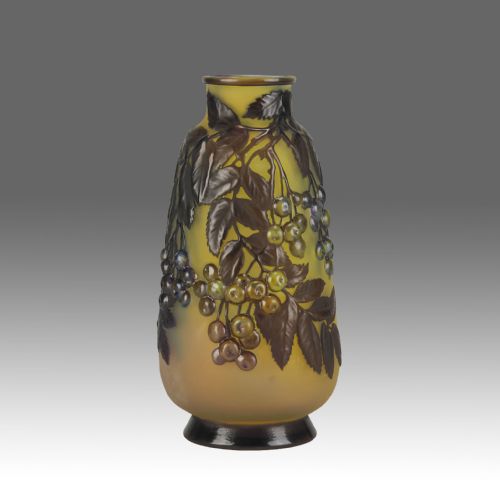

French Cameo Glass Vase
A French cameo glass vase brings layered colour and naturalistic motifs to a room, showing the height of glassmaking skill from the late nineteenth and early twentieth centuries.

French Cameo Glass Vase
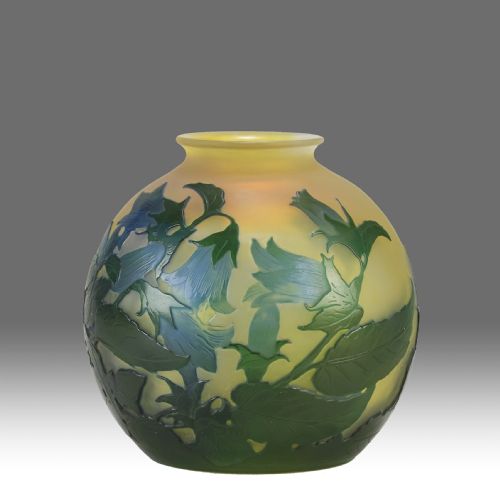
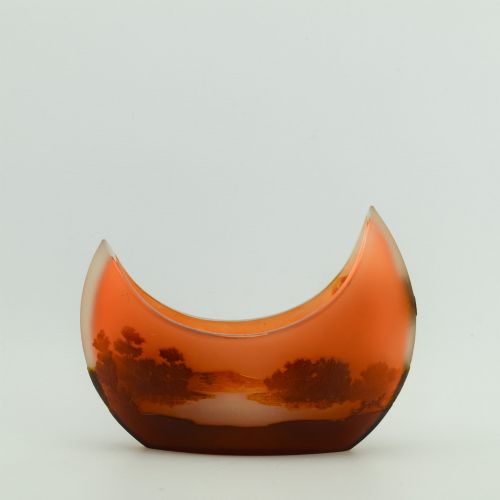
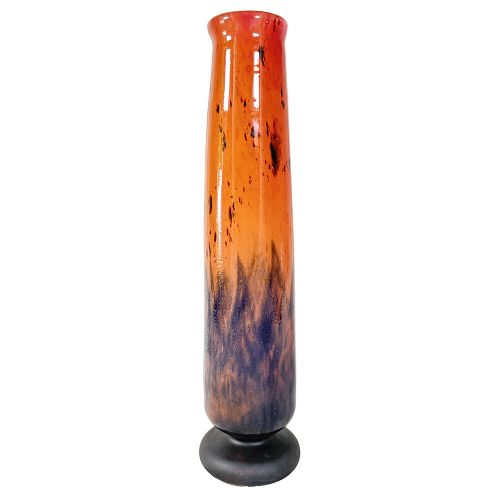
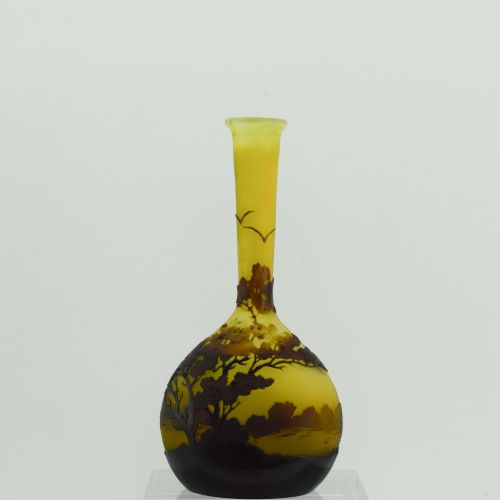
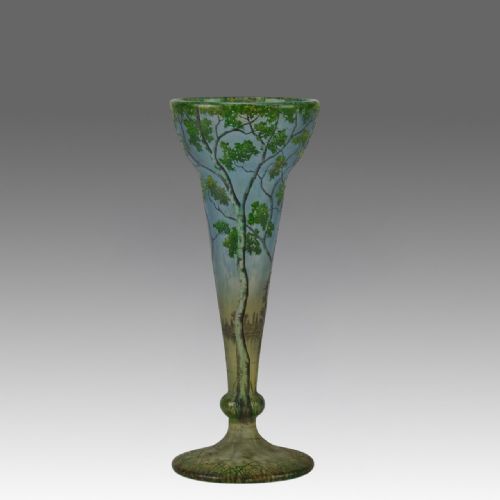
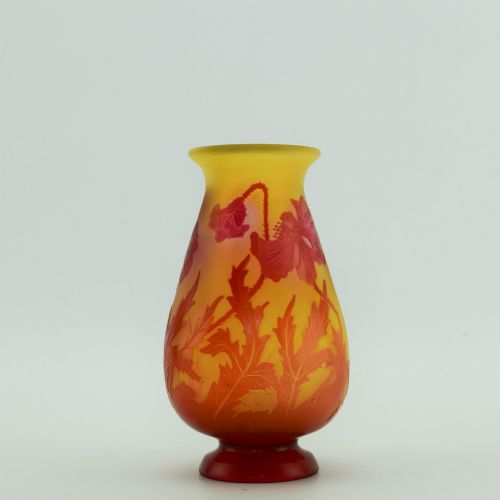
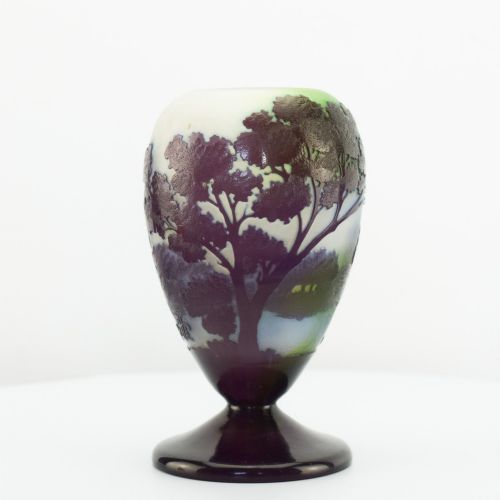
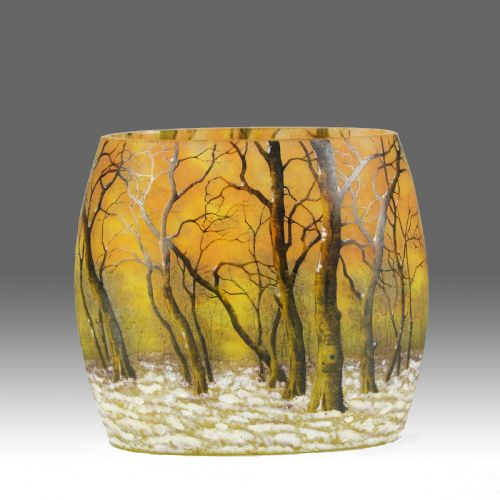
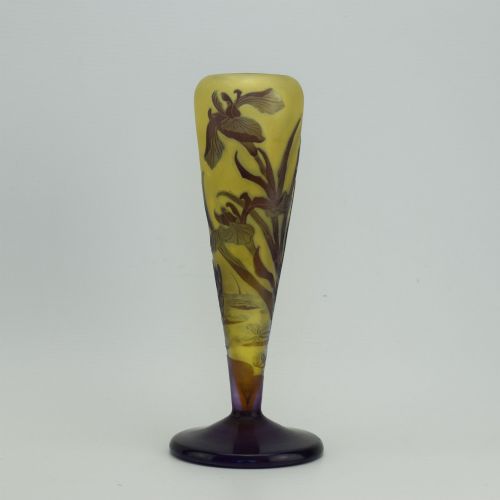
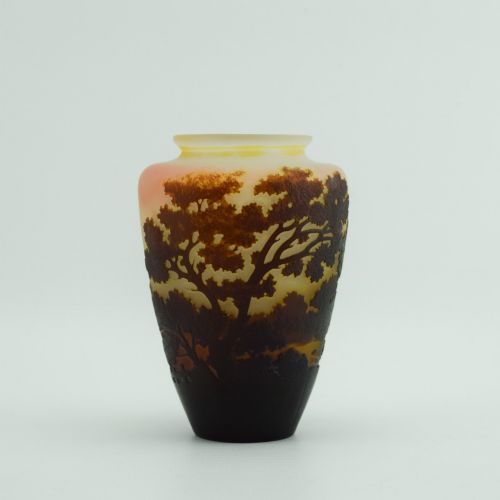
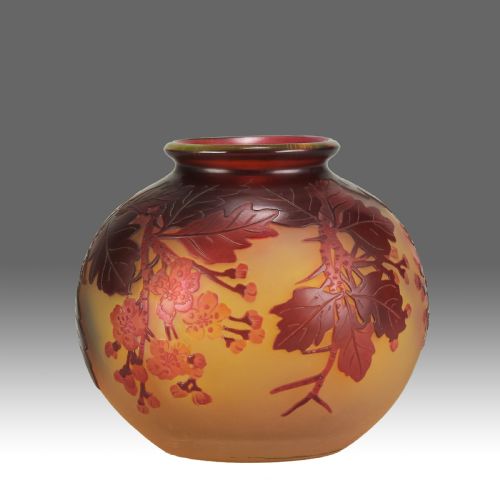
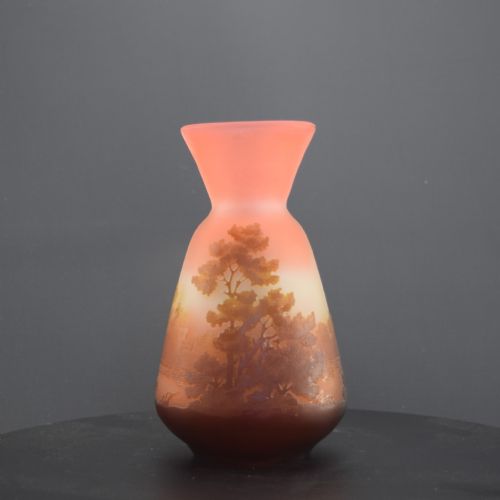
When you search for a french cameo glass vase, you are looking at vessels created predominantly during the Art Nouveau and Art Deco periods, spanning from the 1890s through to the 1930s. These pieces take the form of vases, including banjo, footed, crescent, and oviform shapes, designed to display complex botanical or landscape scenes.
The version you are most likely to meet on this page is an early 20th-century piece featuring floral or scenic decoration, reflecting the organic forms popularised by renowned workshops of the era. Makers utilised distinct techniques to build up relief designs on blown glass, resulting in varied profiles from miniature vessels to large, commanding centerpieces.
Originating primarily from French glasshouses, these vases combine sculptural depth with coloured glass layers. The results range from delicate floral depictions of campanula, poppies, and iris to atmospheric winter landscapes and forest scenes.

How they were made
Makers formed these vessels using blown glass, often layering multiple colours of glass gather upon gather to achieve a rich base for subsequent carving. Acid-etched glass techniques were then applied, using hydrofluoric acid to eat away the outer layers and reveal contrasting shades beneath.
Detailing was frequently enhanced with enamel, gold leaf, or further manual wheel-engraving to refine the surface texture and depth of the design. Frosted glass backgrounds were also employed to create a matte contrast against polished, raised motifs.
French Cameo Glass Vase Retail Price Guide 2026
Typical asking prices for french cameo glass vase among the pieces listed under this phrase on Sellingantiques today, from the lower quarter to the upper quarter. They describe what is for sale here now, not the wider market.
Materials recorded across the selection include blown glass, acid-etched cameo layers, frosted finishes, enamel, and gold leaf.
What varies in quality
The distinction between tiers of work rests on the complexity of the layering and the precision of the acid-etching or carving. Superior examples exhibit multiple distinct colour strata that allow for subtle tonal shifts in landscape and floral subjects, whereas simpler pieces rely on fewer layers.
Artistic execution in the handling of natural motifs, such as botanical accuracy in leaves and flowers or atmospheric perspective in winter scenes, separates standard production from exceptional studio outputs. The integration of supplementary decoration like enamel or gold leaf further elevates the sophistication of a piece.
Emile Gallé·Daum Frères·Le Verre Francais·Paul Nicholas·Legras
The French Cameo Glass Vase Glossary
- Cameo Glass
- Glass formed with multiple layers of contrasting colours, where portions of the exterior layers are carved or etched away to leave a raised design. This technique draws inspiration from ancient carved stone vessels.
- Acid-Etched Glass
- A method where hydrofluoric acid eats into the surface of the glass to remove material and create recessed backgrounds or textured patterns. It allowed makers to produce intricate repeatable designs during the Art Nouveau period.
- Art Nouveau
- An international style of art and architecture that flourished between 1890 and 1910, characterised by sinuous lines and natural forms inspired by plants and flowers. It heavily influenced the floral and aquatic designs found on early French glass.
- Art Deco
- A design movement that emerged in the 1920s, favouring stylised geometries, clean lines, and symmetrical patterns over organic curves. Pieces from this era show a shift towards more streamlined or geometric interpretations.
- Enamel
- Opaque glass paint applied to the surface of a vessel and fired in a kiln to fuse with the glass body. It adds surface colour and fine detailing to botanical subjects like iris and cornflowers.
French Cameo Glass Vase: Frequently Asked Questions
How do I identify a Galle vase?
Look for cameo signatures incorporated directly into the design of the glass itself, typically rendered in relief to match the surrounding motifs. The subject matter often leans towards botanical studies or atmospheric landscapes characteristic of the Nancy school.
Examine the weight, the depth of the acid-etching, and the harmony of the layered colours, as authentic works display meticulous control over the multi-stage manufacturing process.
What is the difference between Art Nouveau and Art Deco pieces?
Art Nouveau examples, predominantly produced around the turn of the twentieth century, feature flowing organic lines, floral subjects, and naturalistic landscape scenes. These designs mimic the asymmetry and movement found in growing plants.
Art Deco items, emerging by the 1920s, pivot towards bolder colour contrasts, stylised motifs, and more structured geometric forms. The overall aesthetic becomes cleaner and more formally balanced.
Where were these pieces made?
These works originated primarily in France, with specific regional hubs like Nancy serving as major centres for artistic glass production. Leading workshops and independent artists operated within these areas to develop innovative layering and etching techniques.
French glasshouses dominated the production of cameo glass during this period, establishing distinct regional styles that collectors still categorise by maker and origin.
How should I display a cameo glass vase?
Position the vessel in a location with good natural light to allow the layered colours and translucent qualities of the glass to be fully appreciated. Placing it near a light source helps reveal the depth created by the acid-etching process.
Ensure the vase sits on a stable, secure surface away from direct edge hazards, as the blown glass construction requires careful placement to prevent accidental impact.