




Edwardian Art Glass Vase
These edwardian art glass vase examples bring rich colour and organic forms straight into a room, offering immediate visual impact.

Understanding Edwardian Art Glass Vases
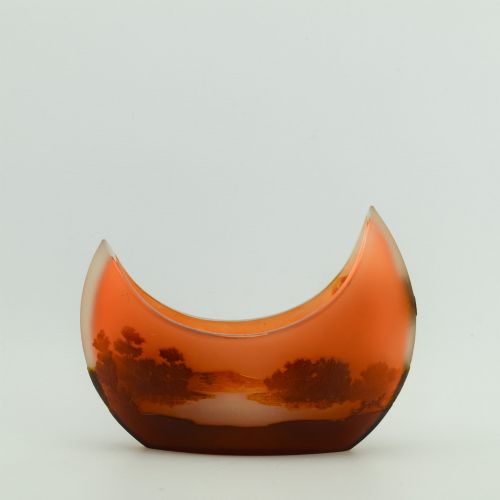
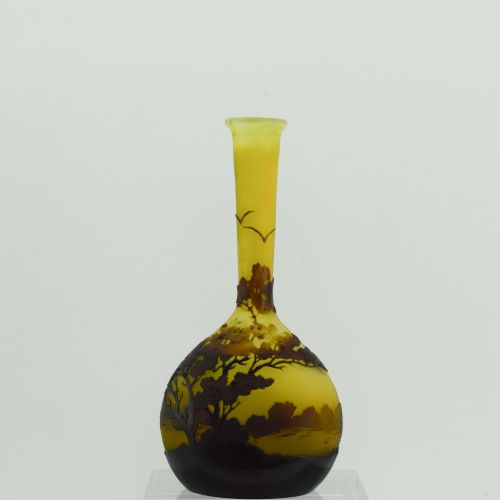
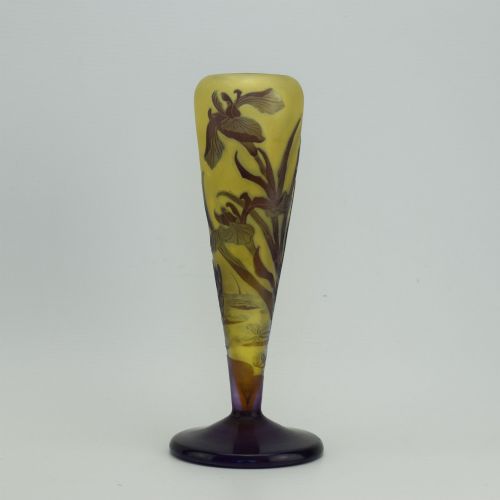
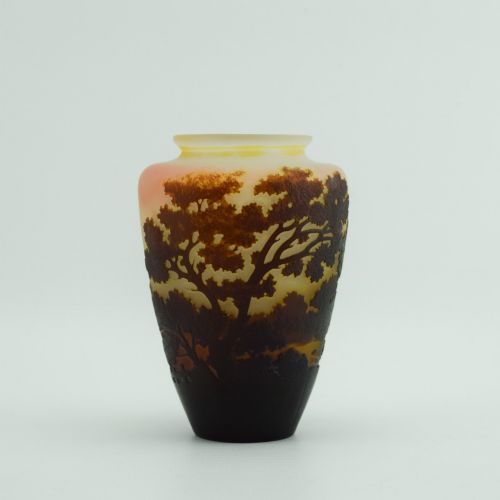
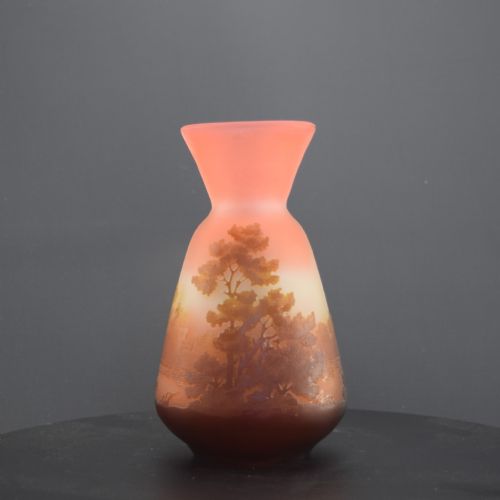
An edwardian art glass vase typically showcases the flowing organic lines and natural motifs characteristic of the Art Nouveau movement. These pieces range from woodland landscapes and aquatic scenes to striking iridescent surfaces.
Makers working during this era produced distinctive vessels featuring cameo techniques, layered colours, and acid-etched details. The examples on this page span the early decades of the twentieth century, capturing a period of immense creativity in glassmaking.
Materials and Techniques
Artisans utilised blown glass as the foundation for these vessels, applying multiple layers of coloured glass to create depth and contrast. Techniques such as acid-etching allowed makers to cut back the outer layers and reveal intricate foreground details like trees or flowers.
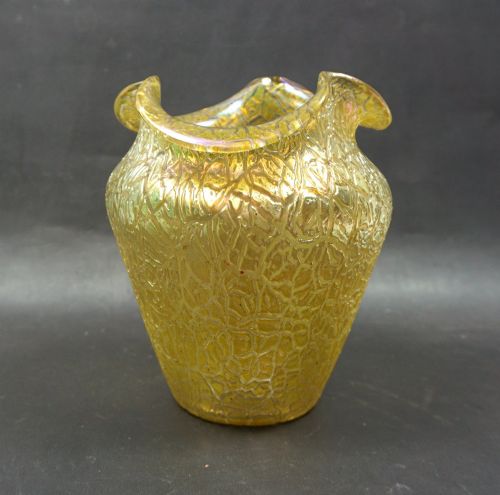
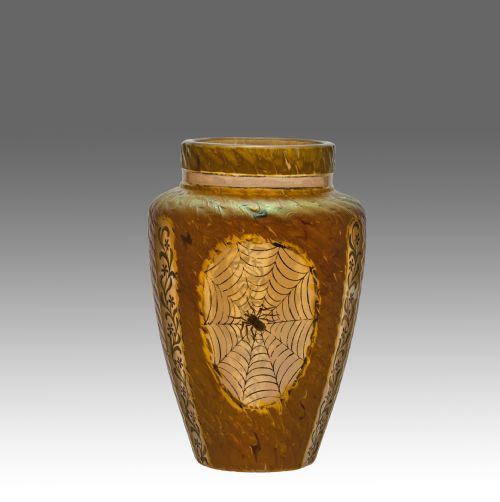
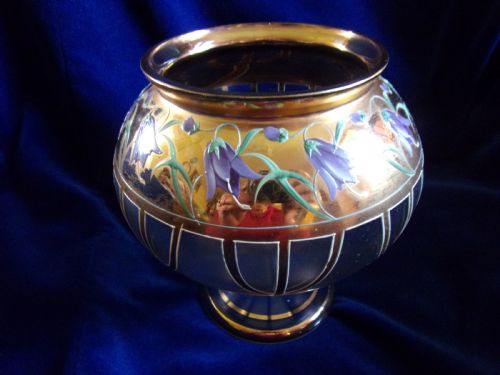
Specialised treatments produced iridescent finishes that shimmered with metallic hues, while cameo glass required precise carving or chemical biting to achieve distinct relief patterns. Enamel and frosted glass finishes further expanded the textural possibilities of the medium.
Retail Price Guide 2026
Typical UK retail prices for edwardian art glass vase, calculated from the Sellingantiques database of over a million retail prices indexed since 2003. This retail price guide relies exclusively on Sellingantiques data; no external sources or auction records are used, so the figures do not describe the wider market.
Current listings feature cameo glass, iridescent glass, and acid-etched glass exclusively within the Art Nouveau style.
Assessing Quality
Superior examples demonstrate exceptional depth in the cameo carving, where the contrast between background and foreground appears crisp and deliberate. The complexity of the landscape or floral design dictates the visual success of the vessel.
The sophistication of the colour palette and the smoothness of the surface finish separate finer pieces from simpler production work. Harmony between the glass body and the applied decoration remains a primary indicator of skilled execution.
Emile Galle·Loetz·Kralik Glass
The Edwardian Art Glass Vase Glossary
- Cameo Glass
- Glass formed with multiple layers of different colours, where top layers are carved, etched or cut away to reveal the design in relief. This technique creates strong tonal contrasts.
- Iridescent Glass
- Glass treated with metallic salts while hot to produce a shimmering, rainbow-like surface sheen. This finish catches the light from various angles.
- Acid-Etched Glass
- Glass decorated by applying acid to eat away exposed portions of the surface. It provides precise control over design depth without manual cutting.
- Art Nouveau
- An international style of art and architecture prevalent around the turn of the twentieth century. It is characterised by intricate linear designs and flowing, plant-inspired motifs.
Frequently Asked Questions
What defines an edwardian art glass vase?
These vessels are defined by their distinct Art Nouveau influence, featuring naturalistic motifs and sophisticated glassworking techniques from the early twentieth century.
They combine artistic ambition with skilled craftsmanship, utilising cameo carving, iridescence, and multi-layered glass.
How should I display my vase?
Place your piece in a position where natural light can pass through the glass, particularly for iridescent or cameo examples.
Good illumination reveals the subtle depth of the layered colours and highlights the texture of the etched surfaces.
Are these vases signed?
Many significant pieces carry acid-etched or cameo signatures from the workshops or makers who produced them.
Signatures often appear near the base or within the main design motif, though unsigned examples also exist.
What subjects appear on these vases?
Common subjects include woodland landscapes, aquatic scenes, and floral studies rendered in naturalistic tones.
These designs reflect the era's fascination with organic forms and the beauty of the natural world.