



Gold Art Glass Vase
A gold art glass vase brings a shimmering metallic warmth to a room, catching the light across periods from the Victorian era to the mid-twentieth century.
Gold Art Glass Vase
A gold art glass vase encompasses iridescent, enamelled and gilded vessels produced across the nineteenth and twentieth centuries. These works span decorative bowls, pitchers and floriform shapes created by European and American glasshouses.
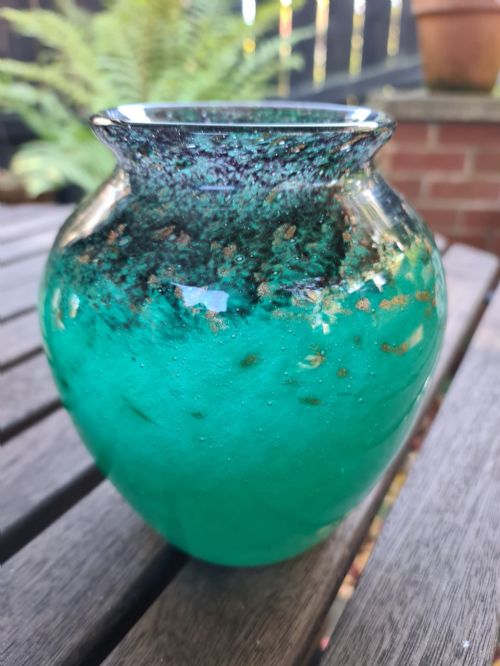
The pieces appearing on this page lean heavily towards the Art Nouveau period, alongside Victorian, Art Deco and mid-century examples. Makers utilised techniques such as gold leaf and metallic oxides to achieve permanent shimmering surfaces.
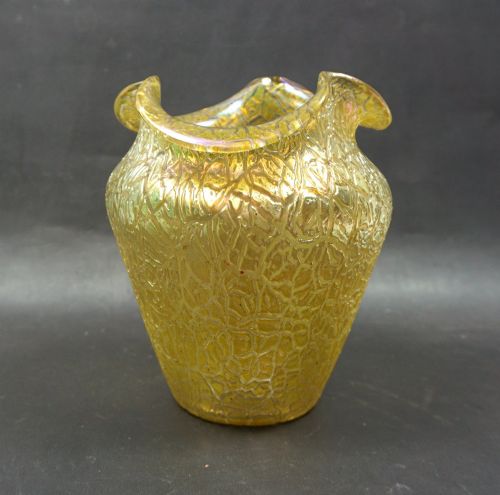
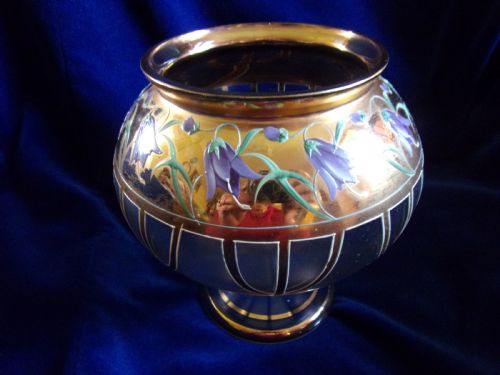
Buyers encounter distinct regional approaches, from Bohemian iridescent designs to French enamelled creations and American Favrile glass. Each example displays the specific decorative vocabulary of its decade, from organic lotus motifs to geometric silver overlays.
Materials and Technique
Vessels are formed from blown glass, often manipulated while hot to create organic shapes such as lobed bodies, ruffled rims or applied elements like snakes and handles. Artisans introduced metallic compounds into or onto the molten metal to secure iridescent effects.
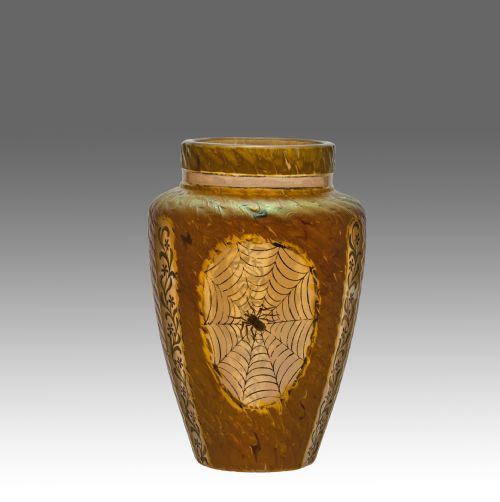
Surface ornamentation relies on gold leaf, metallic enamels, and sterling silver mounts or overlays applied after the initial blowing process. Aventurine inclusions and paste gilt decoration add internal depth and surface reflection to the crystal matrix.
Several pieces feature startled glass snakes creeping up the neck, proving that Victorian decorators enjoyed a sudden morning fright.
Assessing Quality
Excellence in a gold art glass vase rests upon the control of the iridescent sheen and the precision of the applied decoration. Stronger pieces display a deep optical play of colour across the glass body rather than a flat surface coating.
The integration of metal work, such as silver overlays or mounts, distinguishes finer workshop output from simpler production. Maker attribution and the crispness of enamelled botanical motifs further separate standard decorative vessels from exceptional examples.
Loetz Glass·Kralik Glass·Legras·St Louis Glassworks·LC Tiffany·Daum·Ferdinand von Poschinger·Booms Glass·AVEM
The Gold Art Glass Vase Glossary
- Iridescent Glass
- Glass treated with metallic vapours while hot to produce a rainbow or metallic sheen on the surface. This technique creates the signature lustrous finish seen on many Art Nouveau pieces.
- Favrile Glass
- An iridescent art glass developed and patented by Louis Comfort Tiffany. The term denotes handmade glass where metallic oxides were fused into the molten metal.
- Aventurine
- Glass containing microscopic crystals of metallic copper or other minerals that sparkle in the light. It imparts a glittering golden depth within the material.
- Peachblow
- A nineteenth-century glass type characterised by a shaded colour gradient, typically transitioning from pink to white or yellow. It provides a soft pastel ground for gilt or enamelled decoration.
- Hyalite
- An opaque black or coloured glass developed in nineteenth-century Bohemia. It serves as a stark background for contrasting enamel or gilt painting.
Gold Art Glass Vase: Frequently Asked Questions
How do I clean a gold art glass vase?
Dust the surface gently with a soft, dry microfibre cloth to remove everyday particles without disturbing delicate enamel or silver overlay.
Avoid using liquid cleaners, chemical solvents or abrasive cloths, which can damage historic gilt details and fragile iridescent surface treatments.
Can I put water in these vases?
Most antique pieces function best as decorative objects rather than utilitarian containers for fresh flowers and water. Moisture and mineral deposits can damage internal surfaces or corrode delicate metallic components over time.
If you do use them for display, insert a small separate liner to protect the historic glass interior from direct contact with moisture.
How do I identify an Art Nouveau piece?
Look for organic motifs inspired by nature, including lotus flowers, palmettes, poppy heads and sinuous vine tendrils. The forms often mimic natural growth with floriform rims and iridescent finishes that capture shifting light.
Techniques such as applied metallic snakes and trailing gold enamel work are typical decorative markers of this specific design era.
What is the difference between gilt and gold leaf?
Gold leaf involves applying extremely thin sheets of hammered gold to the exterior surface of the vessel, often secured with size or fired lightly. It yields a rich, reflective metallic layer.
Paste gilt uses a mixture of powdered gold and a binder painted onto the glass before firing, resulting in a slightly textured, matte or burnished golden detail.