


Antique Iridescent Vase
An antique iridescent vase catches light with a metallic sheen, bringing surface movement and fluid colour directly into a room.
Antique Iridescent Vase
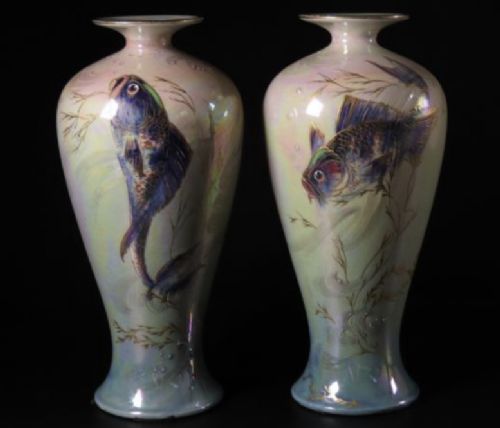
When you search for an antique iridescent vase, you enter a domain defined by lustrous glass surfaces and shimmering metallic sheens. The pieces collected here span the Victorian, Edwardian, and twentieth-century periods, capturing the shifts in taste from elaborate nineteenth-century forms to clean modernist lines. You are most likely to encounter blown glass and earthenware vessels produced during the height of the Art Nouveau and Art Deco movements.
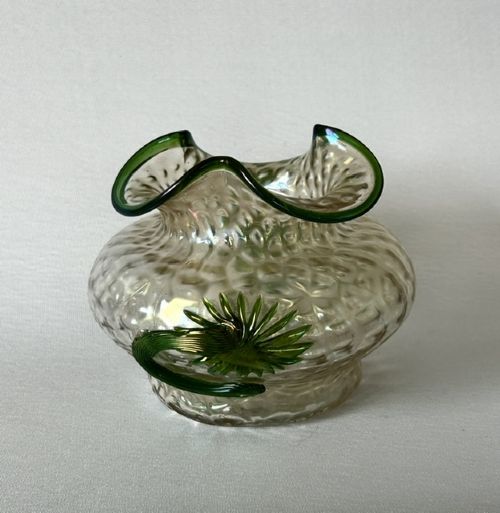
The assortment includes notable European and English output, ranging from Austrian iridescent art glass to English lustre pottery. Forms vary from slender balusters and organic floriform shapes to table centrepieces and epergnes fitted with sterling silver mounts or metal overlays. These items reflect the technical experiments of leading glassworks and potteries operating around nineteen hundred and the decades following.
Materials and technique
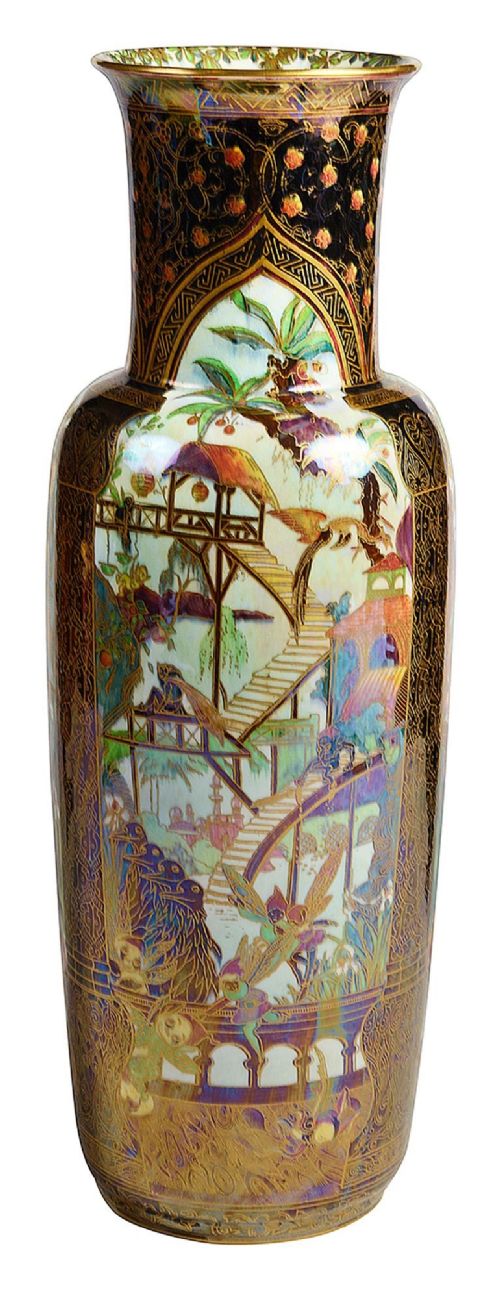
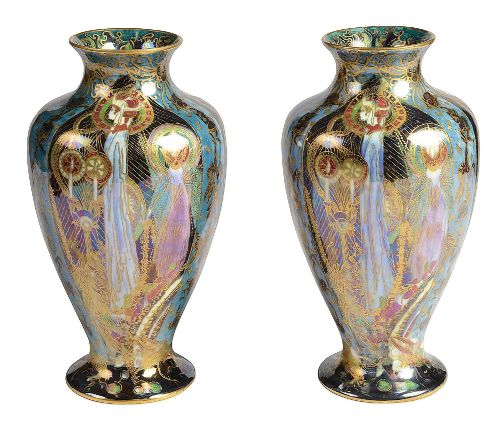
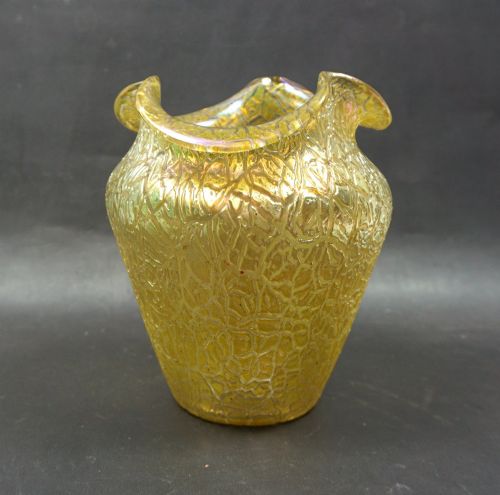
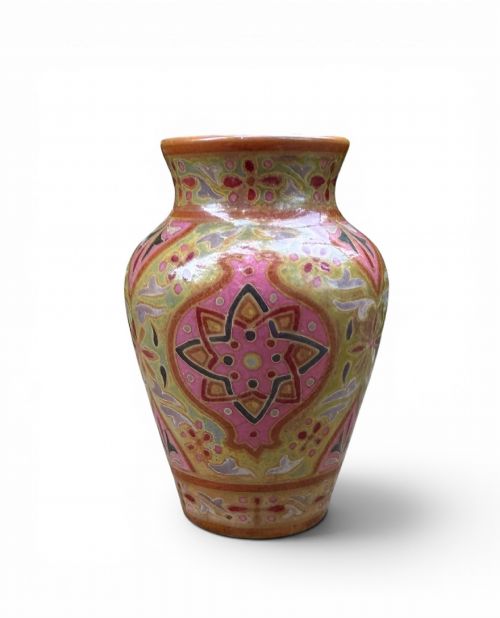
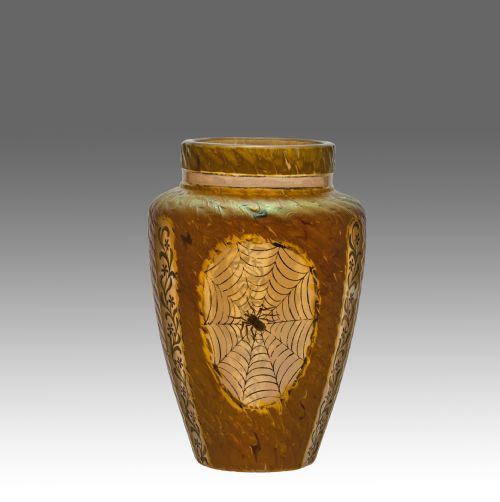
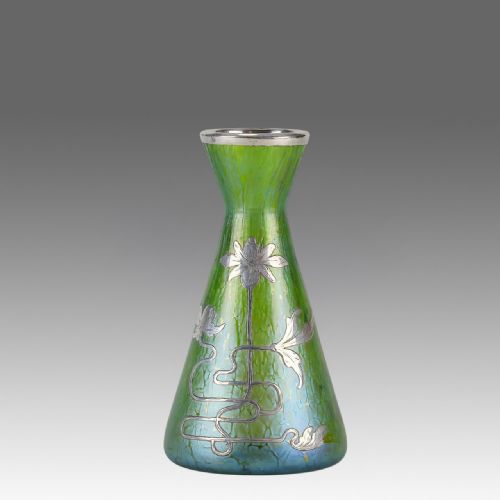
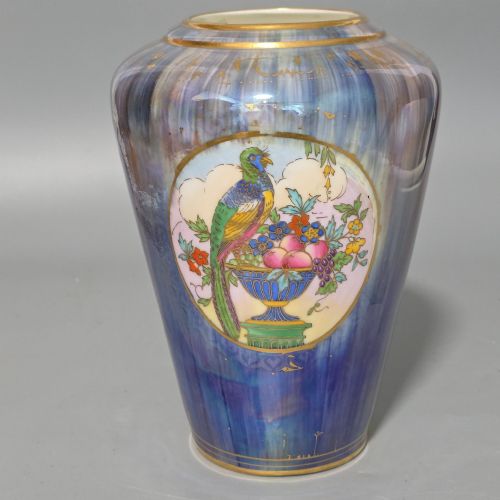
Makers achieved iridescent effects by treating hot glass surfaces with metallic vapours or by applying chemical oxides during the blowing process. This created the characteristic oil-slick sheen, pearl gloss, and Papillon patterns seen on Austrian and Bohemian art glass. Earthenware alternatives relied on metallic lustre glazes, sometimes enhanced with gold leaf, enamel work, or hand-painted animal and figural designs.
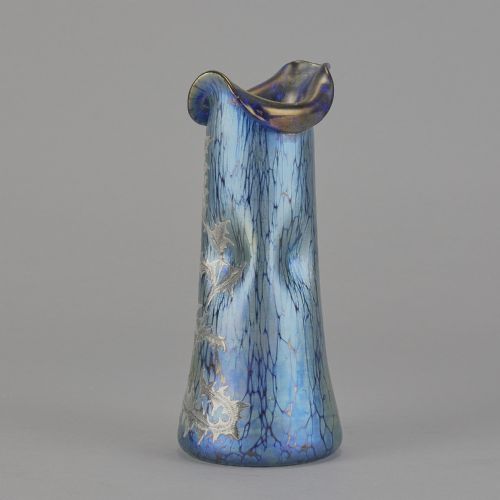
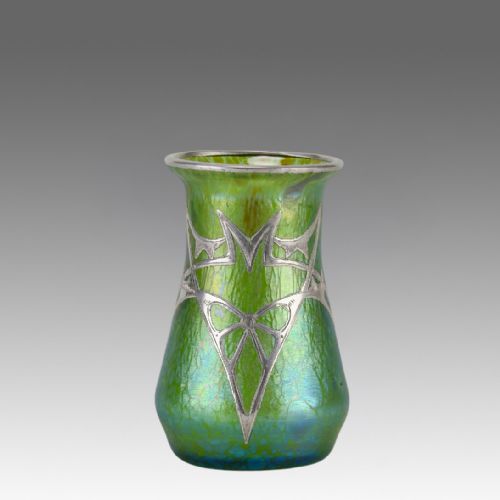
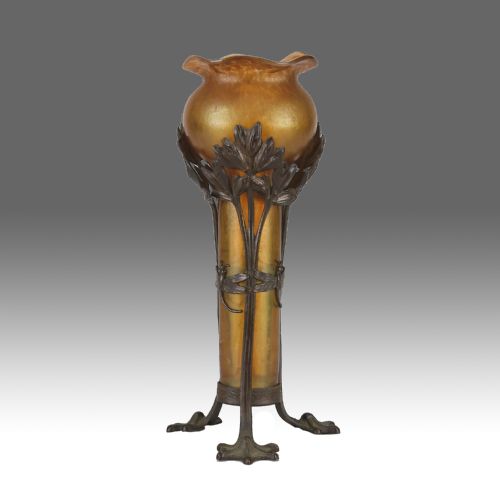
Many glass vessels incorporated bronze mounts, pewter stands, or silver overlay to complement the shimmering body. Techniques such as martele cutting, applied trailing snakes, and organic shaping turned simple glass forms into complex sculptural objects. The combination of blown glass or earthenware with applied metalwork remains a defining technical signature of the period.
Materials documented here include blown glass, sterling silver, gold leaf, and enamel applied across diverse European and English workshops.
Judging quality and execution
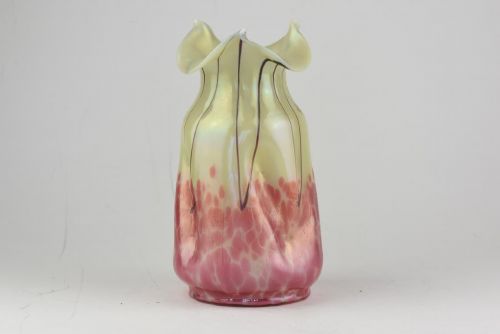
Quality rests upon the depth and complexity of the optical effect across the surface of the vessel. Superior examples display a rich interplay of shifting hues, from peacock blues to warm golds, rather than a flat or dull metallic coating. The control shown in organic forms, whether a fluted jack-in-the-pulpit rim or a balanced baluster body, separates master production from standard output.
The integration of secondary materials further distinguishes the tier of a piece. Finer items feature crisply worked silver overlay, heavy bronze mounts, or finely detailed enamel painting that complements rather than overpowers the optical glass below. The crispness of the underlying form beneath the iridescent skin dictates the standing of the work.
Daisy Makeig Jones·Loetz Witwe·Johann Loetz·Pallme Konig·Walter Slater·Kralik Glass·Minton·Richard Joyce·LC Tiffany·Ferdinand von Poschinger·Charlotte Rhead
The Antique Iridescent Vase Glossary
- Iridescence
- An optical phenomenon causing surfaces to appear to change colour as the angle of view or illumination shifts. This shimmer is achieved through metallic oxides applied to hot glass or specialised lustre glazes on pottery.
- Lustre
- A ceramic glaze containing metallic salts that produce an iridescent or pearlescent finish upon firing in a reduction kiln. English and Hungarian potteries utilised this technique extensively for decorative vases.
- Papillon
- A specific organic glass décor featuring mottled, iridescent spots resembling butterfly wings. Loetz popularised this technique during the Art Nouveau period.
- Silver Overlay
- Decorative sterling silver work applied directly to the exterior of a glass vessel, often in floral or abstract patterns. This metalwork is bonded permanently to the glass body.
- Floriform
- A design style mimicking the natural shape of a flower, with flared rims and organic curves. These vases often sit on slender stems or lobed bases.
Antique Iridescent Vase: Frequently Asked Questions
How do I clean an iridescent glass surface?
Dust the surface gently with a soft, dry cloth to prevent accumulation. Avoid abrasive cleaners or soaking, as chemical treatments can damage the delicate metallic sheen.
Maintain stable indoor humidity away from direct sunlight to preserve the optical layer. Handle pieces by the body rather than delicate rims or applied metal mounts.
What period do most iridescent vases belong to?
The majority of pieces date from the early twentieth century and the late Victorian era. This period encompassed the rise of Art Nouveau and Secessionist design across Europe and England.
Production continued into the nineteen twenties with Art Deco lustre wares. Stylistic markers and maker signatures help narrow the date of manufacture.
How can I tell glass from lustre pottery?
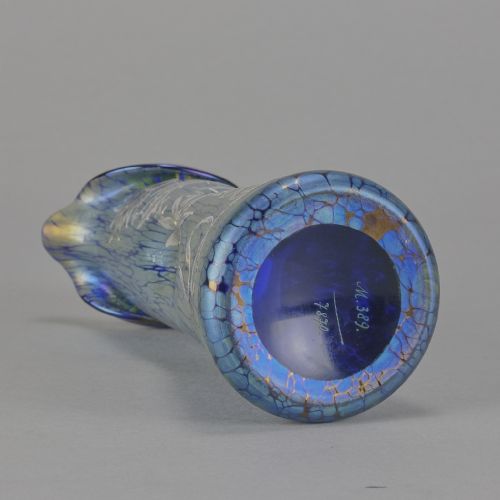
Glass vessels are translucent or transparent beneath their metallic skin, often showing blown bubbles or pontil marks on the base. Earthenware and pottery bodies are opaque ceramics covered in a reflective glaze.
Weight and rigidity also offer clues, as pottery feels denser and heavier than blown art glass. Examining the unglazed base reveals the underlying clay body.
Were these vases meant for flowers?
Many forms, particularly floriform and baluster shapes, served as functional vessels for cut stems. Others functioned purely as decorative ornaments or table centrepieces.
Displaying them in natural light enhances the optical play of the iridescent surface. Some fragile examples with silver overlay or delicate mounts are best kept as cabinet pieces.