
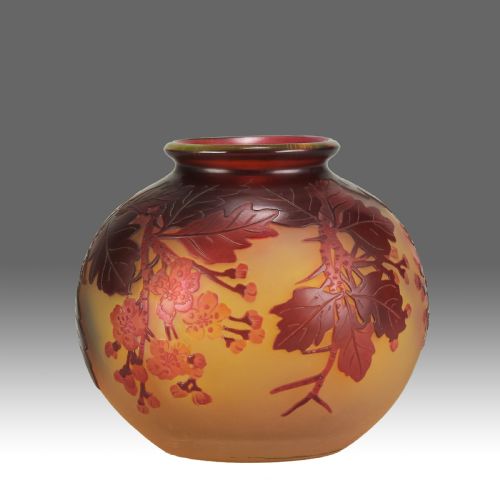
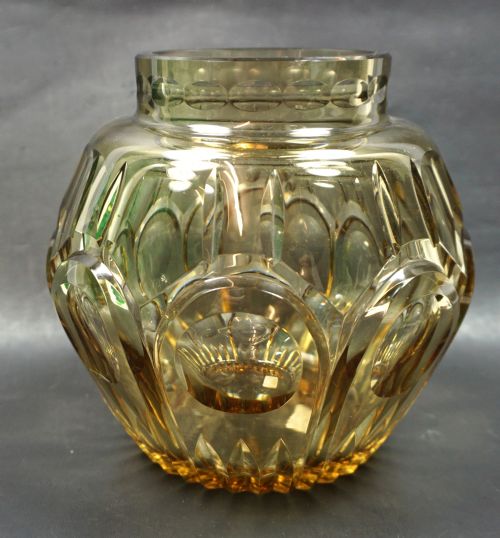


Amber Glass Vase
An amber glass vase brings a rich, warm glow to a room, catching the light in ways clear or opaque vessels simply cannot.
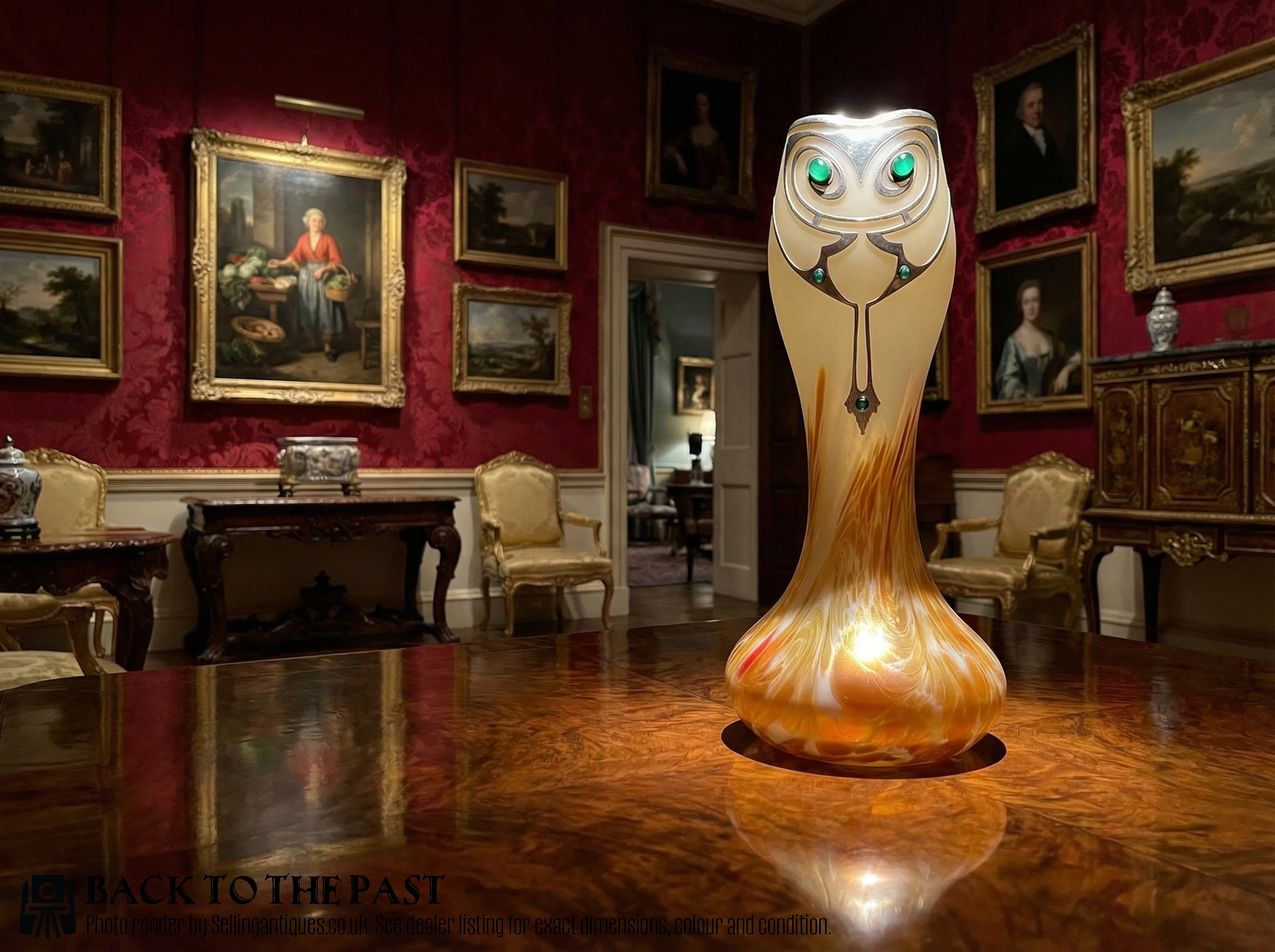
What these pieces are
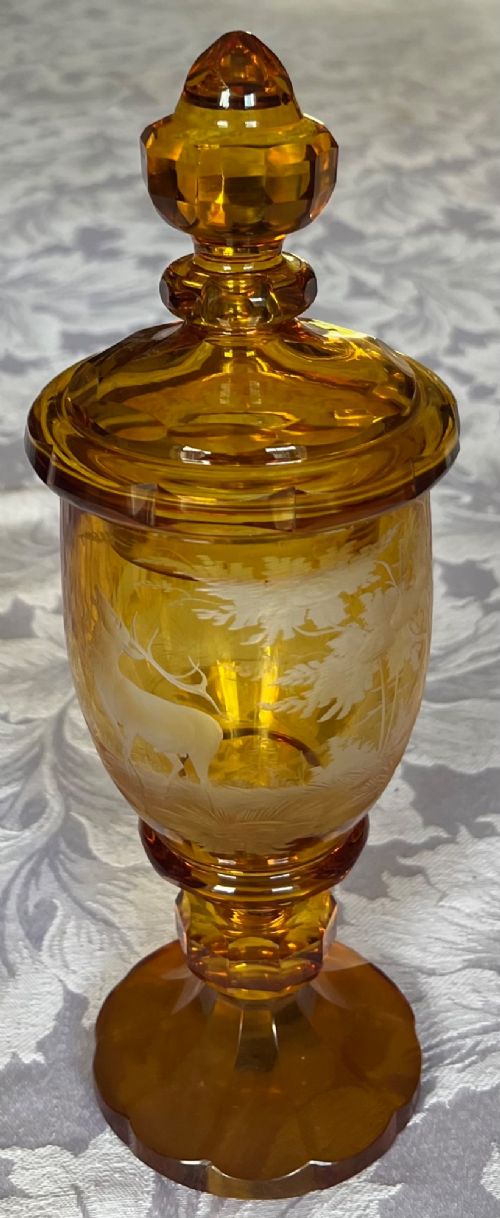
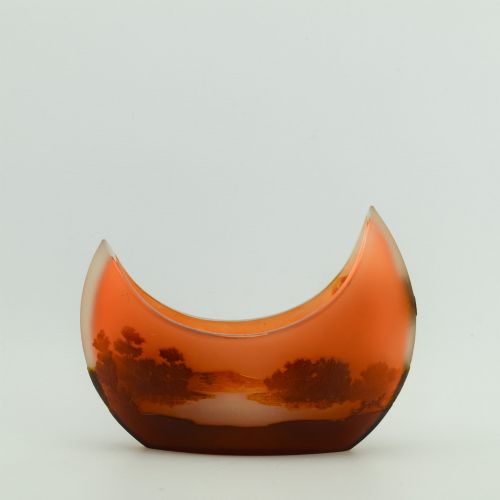
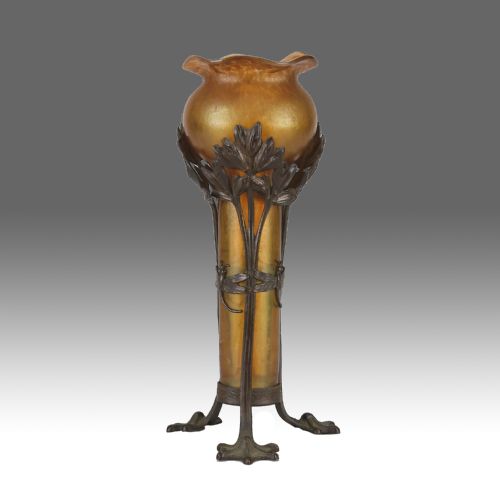
When you search for an amber glass vase, you encounter works spanning from the late Victorian era through the Art Nouveau and Art Deco periods. These vessels range from simple specimen forms to elaborate creations featuring bronze mounts, silver overlay, or engraved and cut decoration.
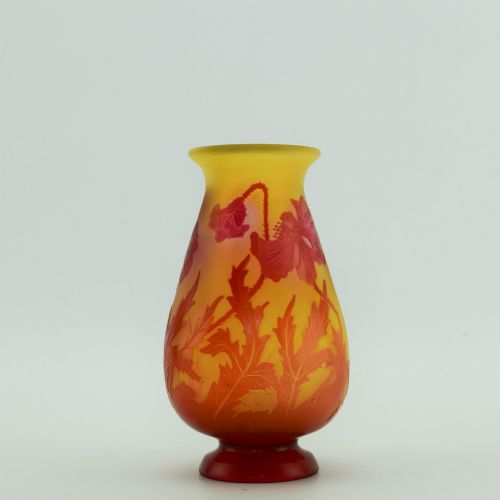
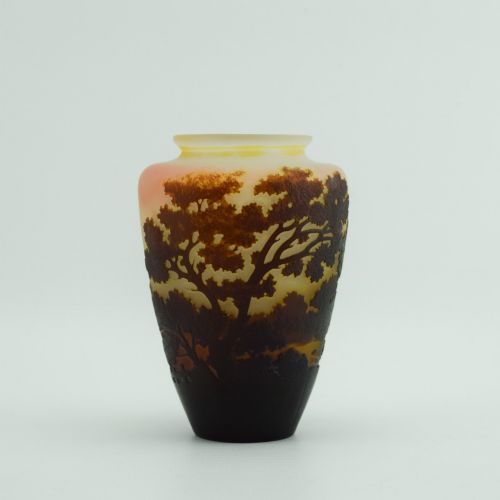
The selection here encompasses diverse international origins, including Bohemian, Belgian, French, and Czech workshops. Pieces include floriform shapes, oviform bodies, and covered urns produced across the opening decades of the twentieth century.
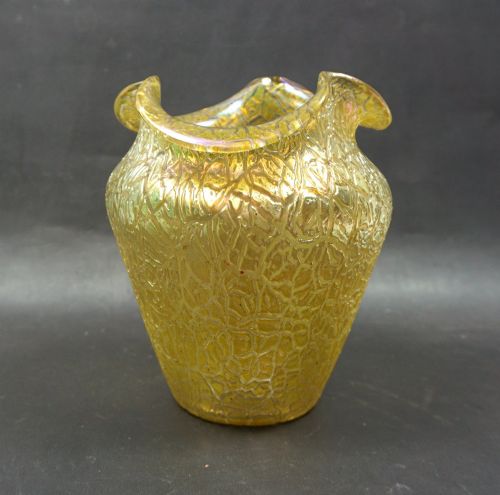
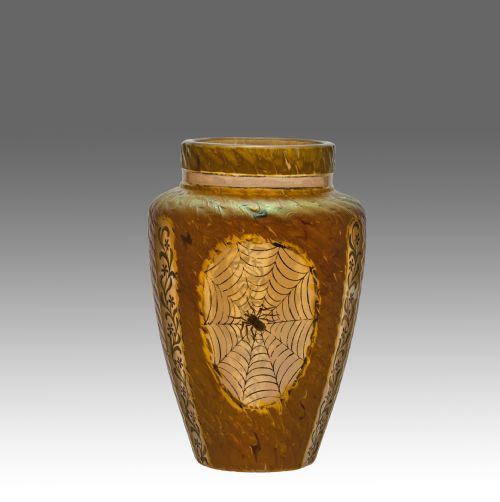
The physical form varies considerably, from small Victorian specimen tubes designed for single stems to substantial Art Deco statement pieces. Collectors find both plain transparent tones and complex iridescent surfaces that shift in colour under changing light.
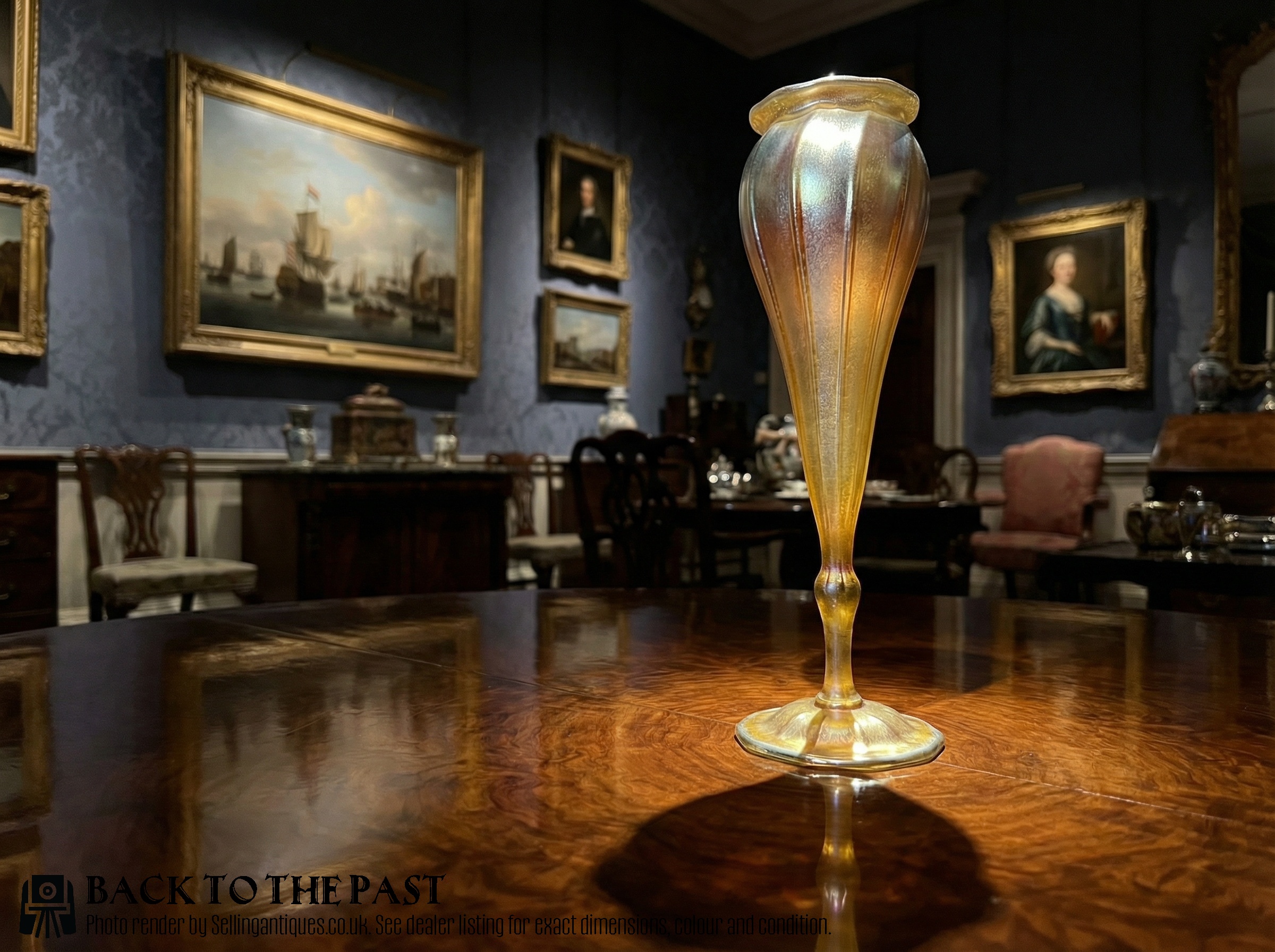
How they were made
Maker utilise molten glass manipulated by hand, often incorporating metallic oxides into the batch to achieve the characteristic amber colouration. Surface effects are built up through techniques such as iridescence, acid-etching, and enamel painting.
Many examples combine the glass body with metal elements, incorporating bronze mounts or silver overlay secured directly to the vessel. Cutting and engraving are executed on wheel-carved blanks to create sharp geometric or organic patterns.
Retail Price Guide 2026
Typical UK retail prices for amber glass vase, calculated from the Sellingantiques database of over a million retail prices indexed since 2003. This retail price guide relies exclusively on Sellingantiques data; no external sources or auction records are used, so the figures do not describe the wider market.
What varies in quality
The distinction between standard production and exceptional work rests on the depth of the colour, the precision of any cut or engraved decoration, and the complexity of surface treatments like iridescence. Superior examples display a rich internal luminosity rather than a flat surface tint.
The integration of metalwork, such as bronze mounts or silver overlay, separates finer pieces from simpler vessels. Where a recognised designer or workshop oversaw the production, the artistic ambition of the form and the crispness of the finishing elevate the piece.
Loetz·Kralik Glass·Joseph Simon for Val St. Lambert·Legras·LC Tiffany·Ferdinand von Poschinger·Karl Palda·Rene Lalique
The Amber Glass Vase Glossary
- Iridescent Glass
- Glass treated with metallic salts while hot to produce a rainbow sheen across the amber surface. This technique was widely favoured by Art Nouveau makers to mimic ancient patinated finds.
- Floriform
- A shape modelled directly on the petals or stem of a flower. These organic silhouettes define many early twentieth-century vessels.
- Oviform
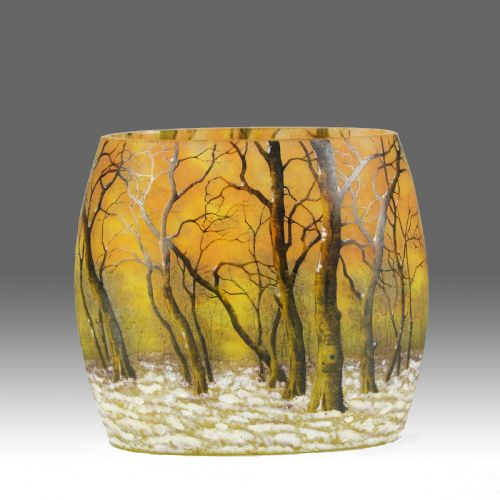
- An egg-shaped vessel profile that tapers gently towards the base and rim. This form provides a smooth canvas for landscape enamel decoration.
- Silver Overlay
- Sterling silver deposited in decorative patterns directly onto the exterior of the glass. The metal contrasts sharply with the warm amber background.
Frequently Asked Questions
What periods do these vases come from?
The available evidence spans from the Victorian era around eighteen ninety through the nineteen tens, nineteen twenties, and into the nineteen thirties. These decades cover the height of both the Art Nouveau and Art Deco movements.
Maker output during these periods shifted from delicate Victorian specimen holders to bold, geometric Art Deco forms and iridescent Art Nouveau creations.
How do I identify an Art Nouveau amber glass vase?
Look for organic, plant-like silhouettes, floriform shapes, and iridescent surfaces that shimmer with multiple colours. Many incorporate naturalistic elements such as bronze mounts or silver overlay.
Makers from this movement often prioritized fluid lines and experimental glass chemistry over strict symmetry.
What is the difference between cut glass and enamel decoration?
Cut glass involves grinding and polishing patterns directly into the thick body of the vessel using a wheel. Enamel decoration applies coloured glass pastes to the surface which are then fired to bond permanently.
Cut decoration relies on light refraction through the amber material, whereas enamel introduces entirely new opaque or translucent pigments.
How should I display an amber glass vase at home?
Place the vessel near a natural light source, such as a windowsill or mantelpiece, to allow sunlight to pass through the amber tint. This activates any iridescence or engraved details present on the surface.
Avoid overcrowding the piece with other objects so the specific silhouette and colour remain the focal point of the display.