




Iridescent Art Glass
Iridescent art glass brings together luminous surface sheens and organic forms created during the late nineteenth and early twentieth centuries.
Iridescent Art Glass
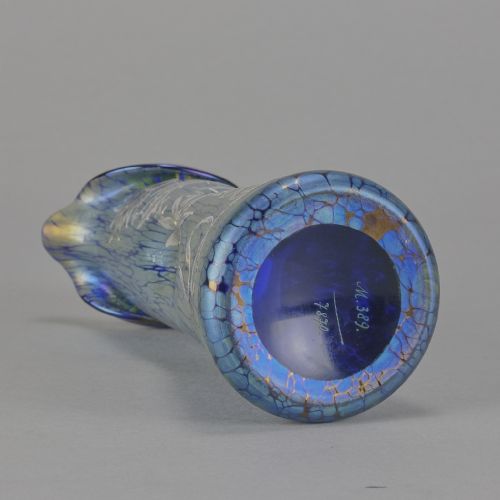
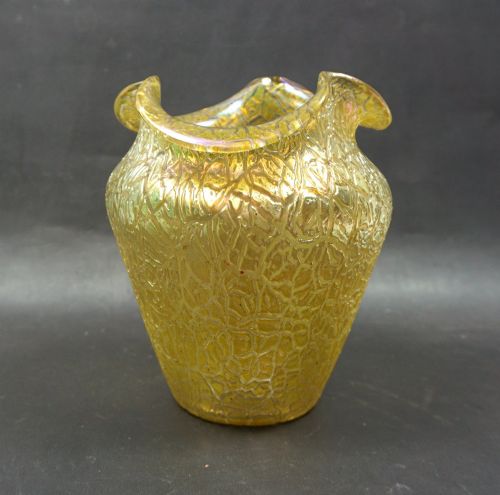
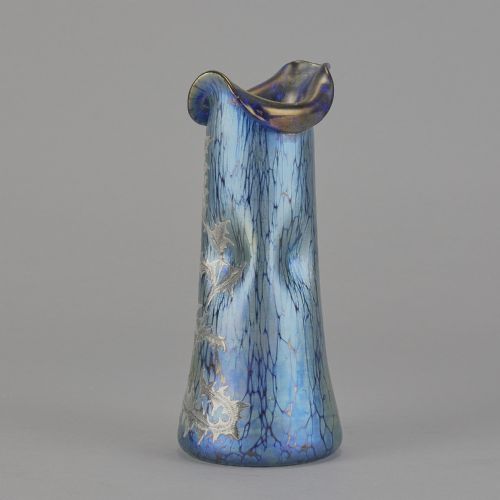
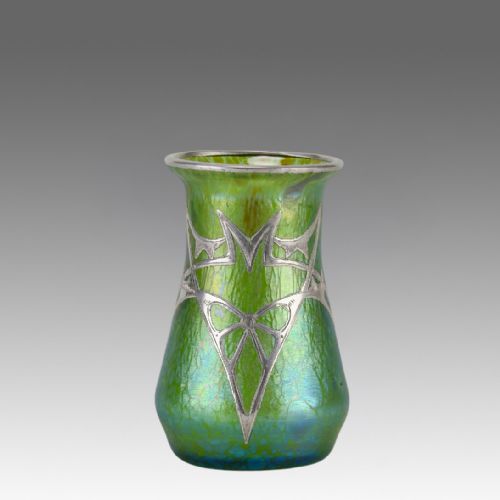
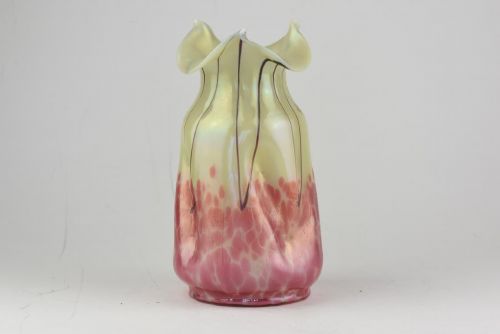
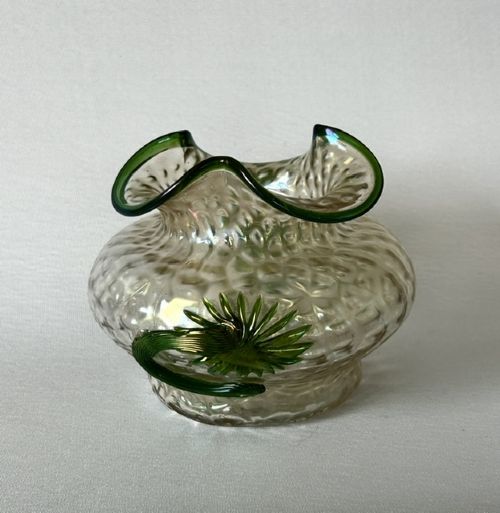
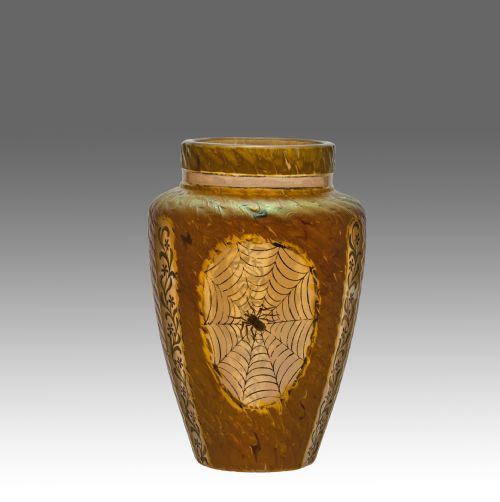
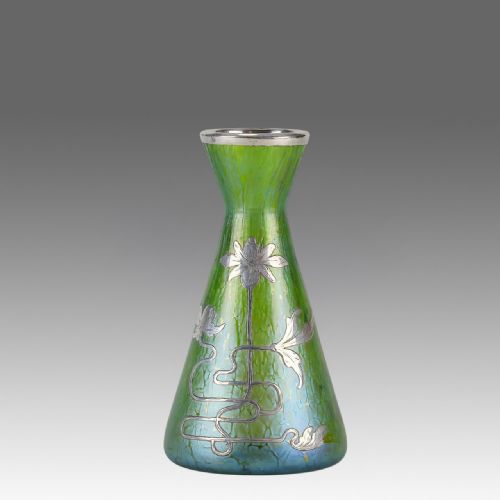
When searching for iridescent art glass, buyers encounter vessels and decorative objects that display a shimmering, oil-slick metallic sheen across their surfaces. The selection relies heavily on pieces originating from around nineteen hundred, dominated by Austrian makers and the broader Art Nouveau movement.
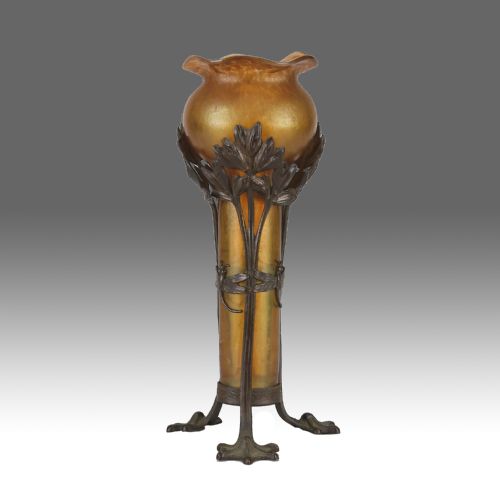
Vases form the core of what appears on this page, ranging in scale from squat inkwells to tall floriform vessels. Alongside these receptacles, collectors find bowls, trays, and small sculptural figures produced in blown glass, often augmented with metal mounts or silver overlay.
The aesthetic is distinctly fluid, drawing inspiration from natural shapes such as flowers, unfolding leaves, and insect wings. Victorian and Edwardian examples sit alongside later Art Deco items, demonstrating how the lustrous treatment evolved over decades of design.
Production and materials
Makers achieved the characteristic optical effects of iridescent art glass by treating hot-blown glass with metallic vapours or salts during the forming process. This technique bonded metallic oxides directly to the surface, creating permanent prismatic reflections that shifted in tone according to the light.
Factories utilised hand-blown glass combined with applied elements such as threaded trails, organic handles, and moulded dimples. Many vessels received secondary mountings in sterling silver, bronze, or pewter to frame the lustrous bodies.
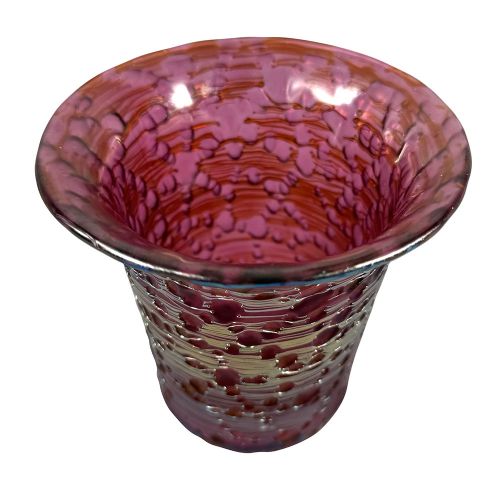
Specific decors like Papillon or Phänomen required precise thermal manipulation of molten material to draw threads across the vessel wall. Artisans then shaped the glass while hot, ensuring each piece developed unique patterns within the iridescent skin.
Several pieces incorporate preserved butterfly wings beneath protective glass trays and brooches, capturing natural colour that refuses to fade.
Assessing quality and execution
Quality in iridescent art glass rests primarily on the depth and complexity of the optical sheen across the piece. Superior examples display rich, multi-layered colour play rather than a flat, uniform metallic coating.
The relationship between the glass body and any metal mountings also dictates distinction. Finely executed silver overlays, secure bronze stands, and integrated pewter frames indicate higher workshop standards during production.
Original decors executed with controlled thermal threads or complex surface textures separate exceptional studio output from standard commercial output. The crispness of the hand-blown form and the stability of applied decorative details define the upper tier of surviving items.
Loetz Witwe·Kralik Glassworks·Pallme Konig·LC Tiffany·Ferdinand von Poschinger
The Iridescent Art Glass Glossary
- Papillon décor
- A surface treatment created by Loetz that produces a mottled, butterfly-wing pattern across the glass. Tiny droplets of metallic oxides catch the light to form shimmering spots.
- Phänomen décor
- An intricate glass-making technique involving combed threads of glass applied to the hot body and manipulated into wave-like patterns. This method creates complex optical depth beneath the iridescent skin.
- Epergne
- A tiered table centrepiece designed to hold fruit or flowers, frequently incorporating trumpet-shaped glass vases. Victorian versions often combined green glass with ruffled rims.
- Jack in the Pulpit
- A distinctive vase form featuring a wide, sweeping flared rim that mimics the shape of the woodland flower. Makers utilised the stretched glass technique to create dramatic, asymmetric profiles.
Iridescent Art Glass: Frequently Asked Questions
What caused the iridescent effect?
Glastmakers produced this shimmering finish by exposing hot glass to metallic vapours, tin, or bismuth salts inside the kiln. The chemical reaction bonded thin metallic films directly to the outer surface of the vessel.
As light strikes these microscopic layers, it refracts into multiple wavelengths, creating the characteristic rainbow colours seen on the finished pieces.
How do I identify a Loetz vase?
Look for specific signature decors such as Papillon, Candia, or Phänomen, combined with characteristic Austrian Art Nouveau forms. Many early pieces feature polished pontil marks on the base rather than factory signatures.
Consulting period catalogues helps confirm workshop attributions, as only a portion of production received acid-stamped marks.
Were these pieces used daily?
Most of these vessels served as decorative ornaments, table centrepieces, or vanity items for wealthy households. Fragile forms like thin vases and delicate bowls were primarily displayed in parlours rather than used for heavy service.
Items such as inkwells and scent bottles combined practical function with ornamental design, sitting on desks and dressing tables.