
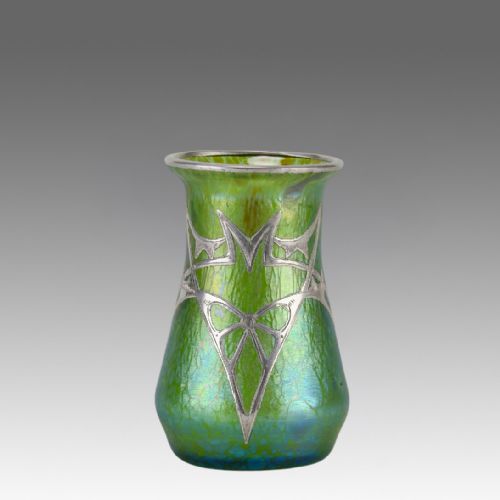
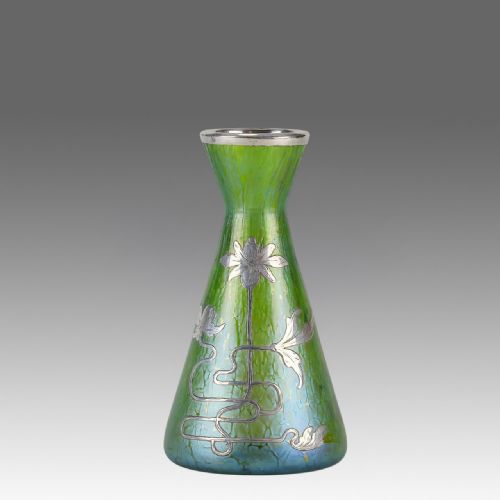


Silver Overlay Vase
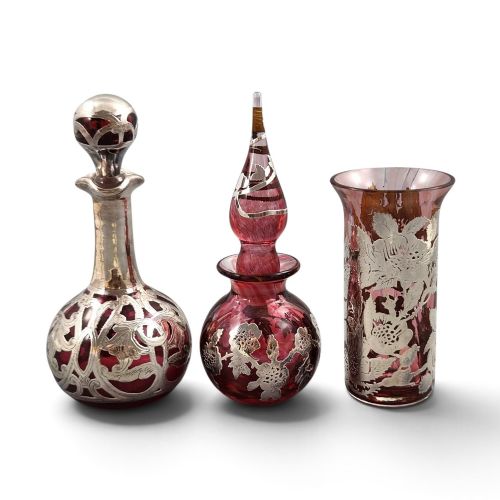
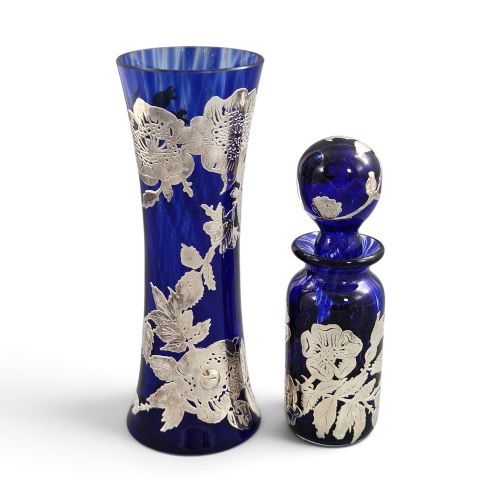
These silver overlay vases are striking Art Nouveau and Secessionist pieces that bring distinct early 20th-century craftsmanship into a modern interior.
Understanding silver overlay vase pieces
When you search for silver overlay vase examples, you encounter early 20th-century glass vessels adorned with metallic decoration. The forms originate from notable European makers working around nineteen hundred.
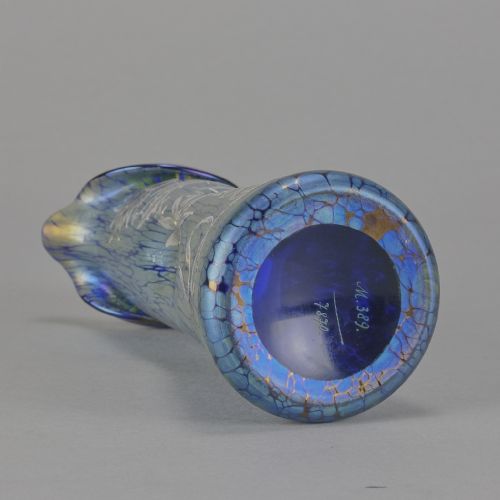
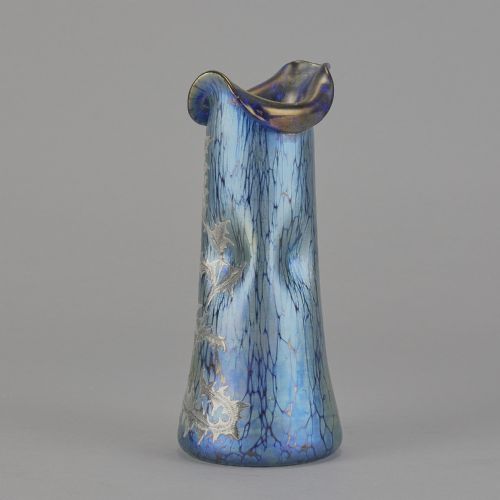
You are most likely to meet iridescent glass bodies in shades like blue papillon, paired with sterling silver metalwork. These pieces embody the defining aesthetic of the Art Nouveau and Vienna Secession movements.
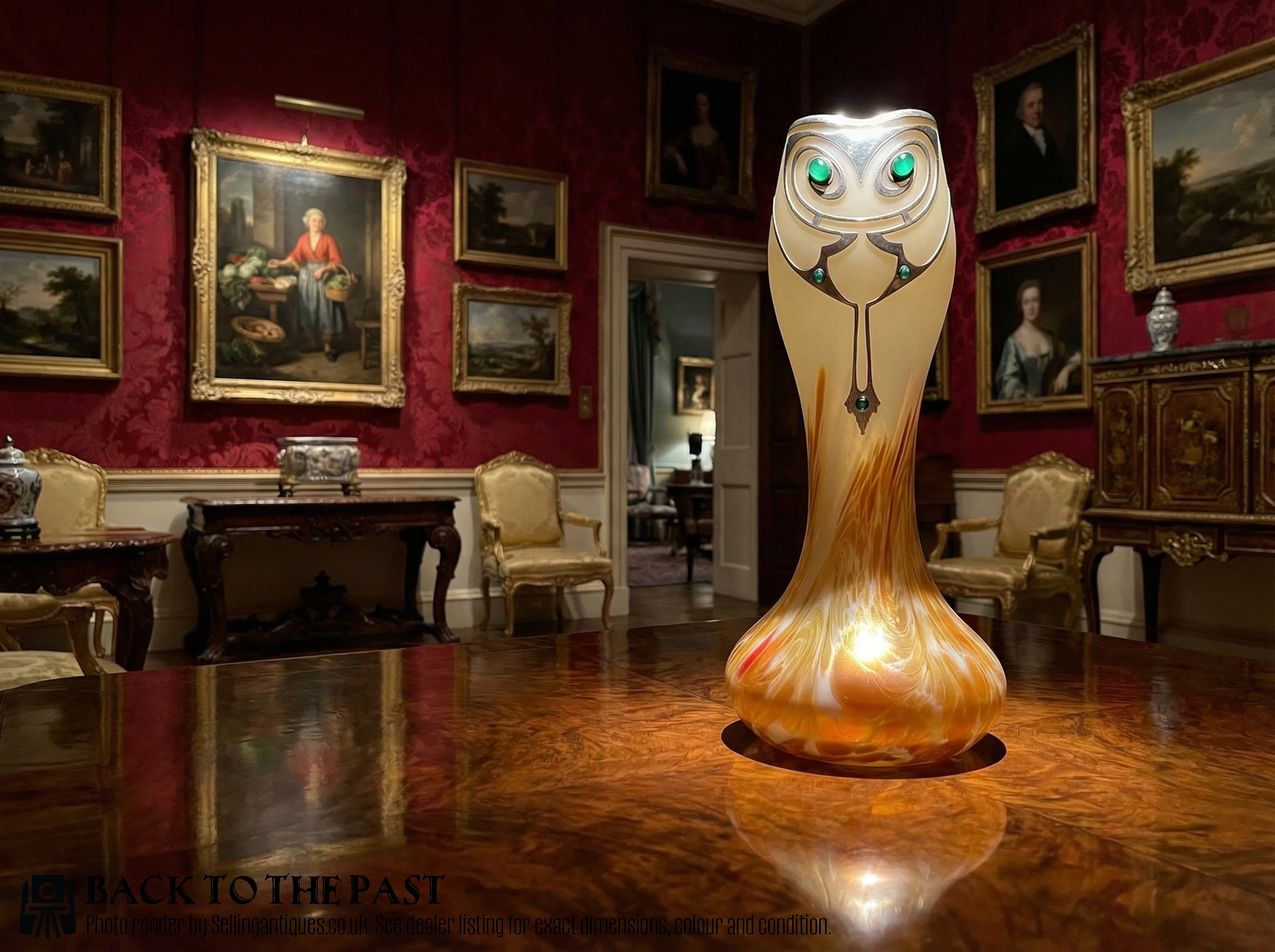
The archive shows both continental European works and English sterling-marked baluster shapes. Dimpled bodies and applied cabochons appear frequently among the surviving examples.
Materials and construction methods
The makers utilised blown iridescent glass as the foundation for these vessels. Molten metal was shaped into baluster forms before receiving decorative surface treatments.
Sterling silver was applied directly to the glass surface, often creating intricate floral or geometric patterns. Artisans occasionally integrated cabochons into the metallic designs for added texture.
Some vases wear their silver like liquid armour, frozen mid-spill down a shimmering glass shoulder.
Distinguishing quality across the range
Quality in these vessels rests on the harmony between the glass body and the applied metalwork. Superior examples display precise silver coverage that complements the iridescent sheen beneath rather than overpowering it.
The ambition of the form also dictates the tier of the piece. Standard baluster shapes contrast with complex dimpled bodies and integrated cabochons, which demand greater skill from the maker.
Loetz Witwey·Johann Loetz·Ferdinand von Poschinger
The Silver Overlay Vase Glossary
- Silver Overlay
- A technique where sterling silver is bonded to a non-metallic vessel, typically glass or ceramic. This creates a contrasting metallic pattern across the body.
- Iridescent Glass
- Glass treated with metallic salts to produce a shimmering, rainbow-like sheen on the surface. It shifts in colour depending on the light.
- Cabochon
- A polished gemstone or rounded glass piece set without facets into the metalwork. It provides a raised decorative accent on the vase.
- Baluster
- A bottle-like architectural form featuring a rounded body that tapers towards the neck. Many glass vases adopt this traditional silhouette.
- Art Nouveau
- An international style prominent around nineteen hundred characterised by organic, flowing lines and natural motifs. It heavily influences the decoration on these vessels.
Frequently Asked Questions
What is silver overlay?
Silver overlay is a decorative technique where sterling silver is applied directly to the surface of a glass or ceramic vessel.
Artisans create intricate patterns that wrap around the body of the object, fusing the metal with the underlying material.
How old are these vases?
The pieces shown here date from the early 20th century, specifically around nineteen hundred.
This period encompasses the height of the Art Nouveau and Vienna Secession design movements in Europe.
What glass types are used?
The primary material seen in these listings is iridescent glass, often featuring blue papillon effects.
The glass surface catches the light, providing a vibrant backdrop for the metallic silver decoration.
Where were they made?
The evidence points to continental European workshops, including Austrian makers like Loetz and German makers such as Ferdinand von Poschinger.
English pieces with sterling silver hallmarks also appear in the historical record.
How do I care for silver overlay?
Clean the glass body gently with a soft, damp cloth and avoid harsh chemical dips that might damage the metal.
Sterling silver components require occasional light polishing to maintain their shine without rubbing against the glass.