
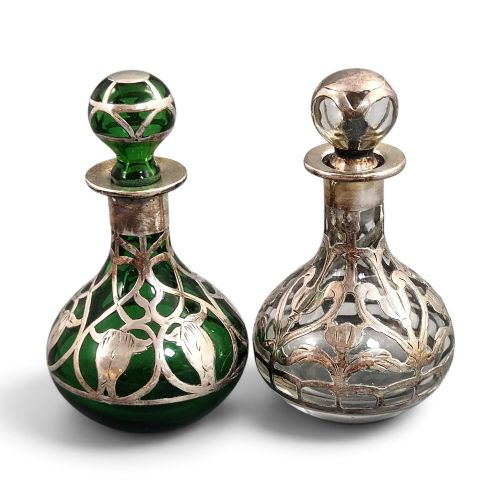
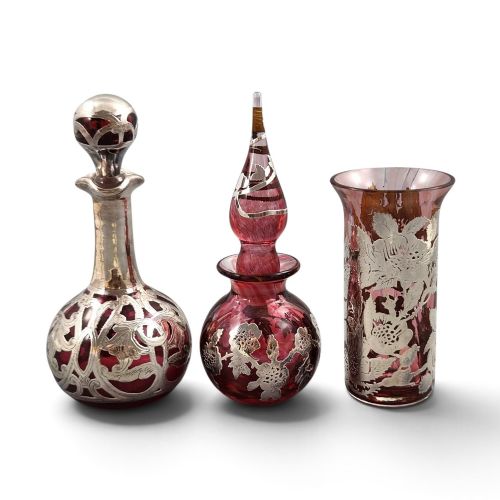
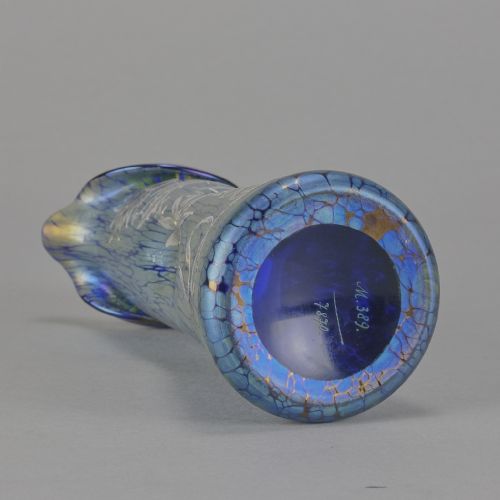
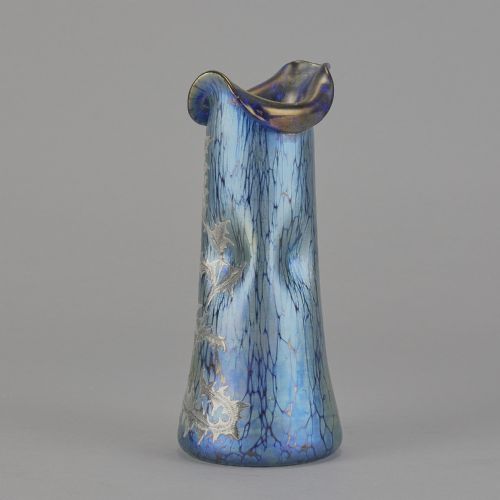
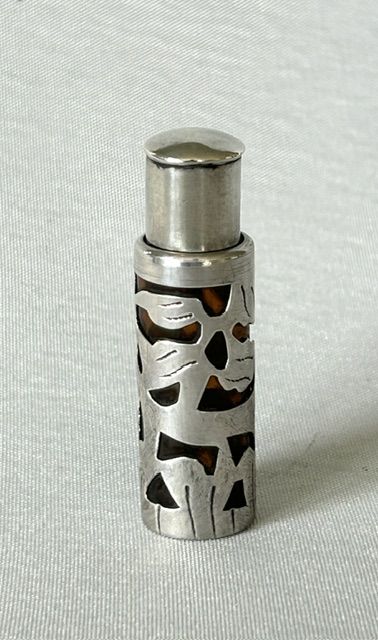
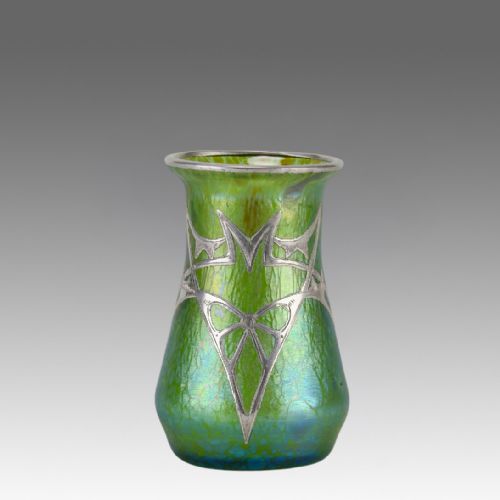
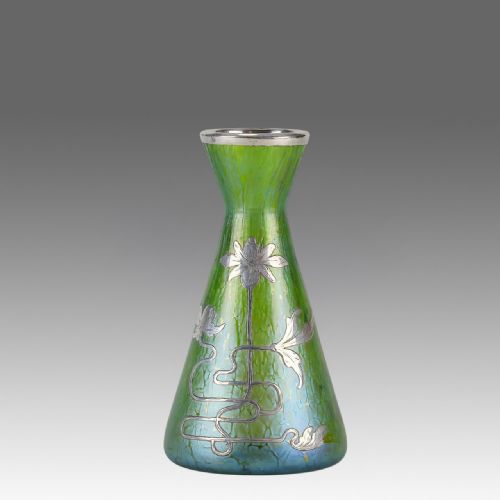


Art Nouveau Silver Overlay
Art nouveau silver overlay brings together fluid metalwork and coloured glass, offering a distinct aesthetic that collectors prize for its organic curves.
What these pieces are
Art nouveau silver overlay describes vessels and scent bottles where sterling silver is applied directly to a glass or ceramic body. The phrase captures pieces primarily originating around nineteen hundred, alongside Edwardian examples and later twentieth century production.
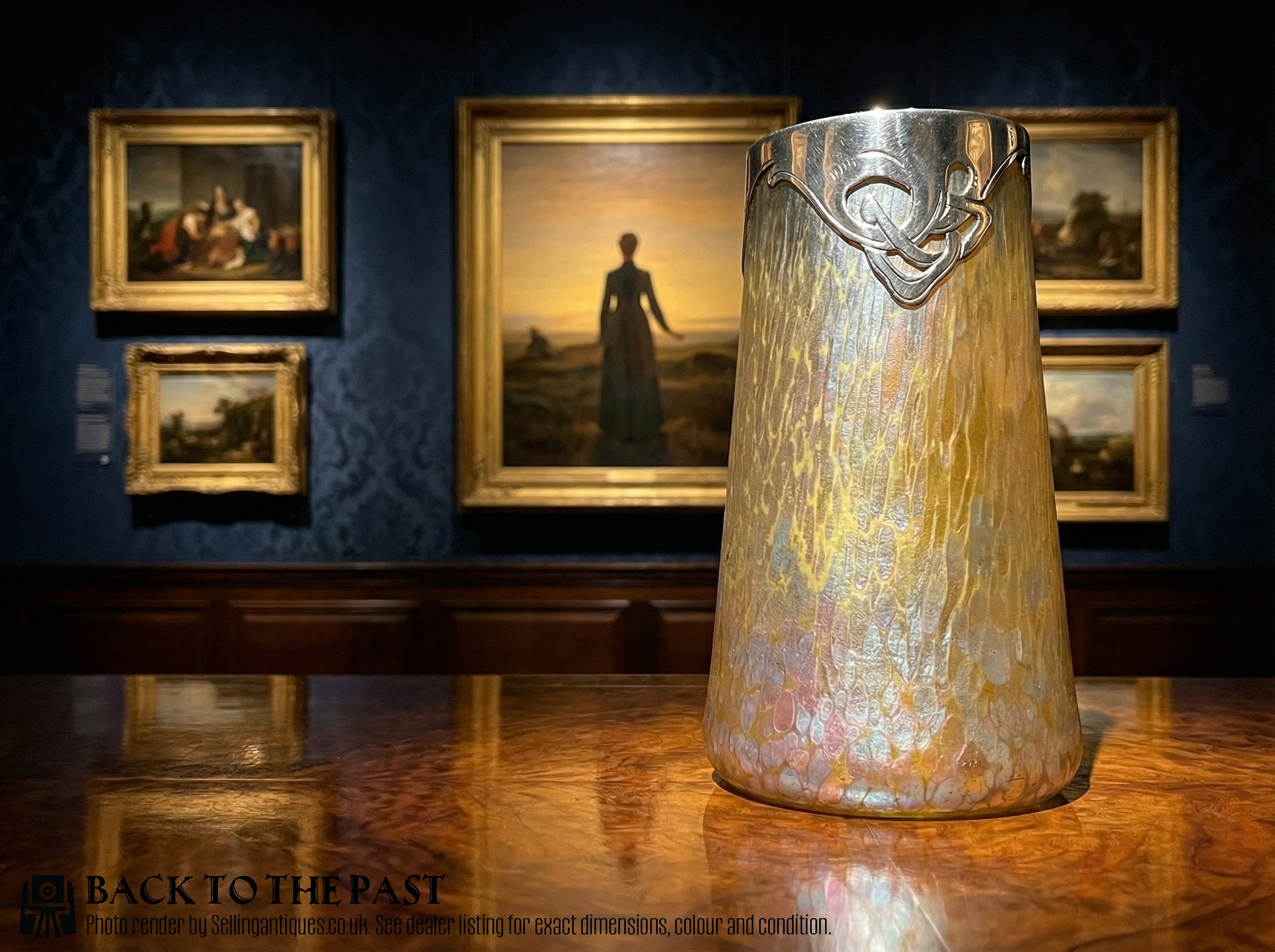
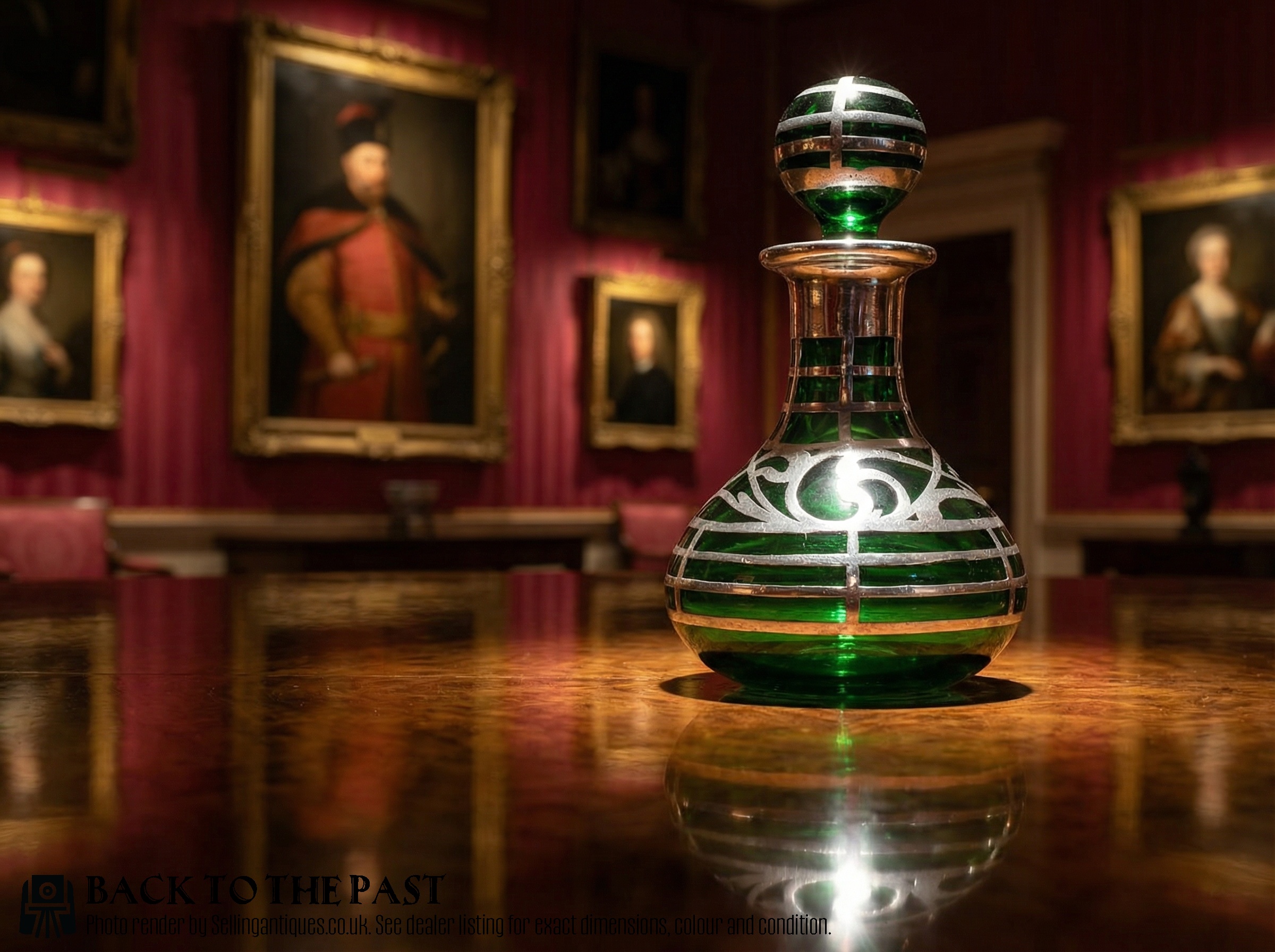
Vases and perfume bottles dominate the forms available, frequently utilising iridescent, green, blue or cranberry glass bodies. Makers combine the sinuous lines of the style with metallic foliage and abstract motifs.
Buyers encounter both European houses and American firms working within the aesthetic. The resulting objects range from cabinet pieces to functional tablewares.
How they were made
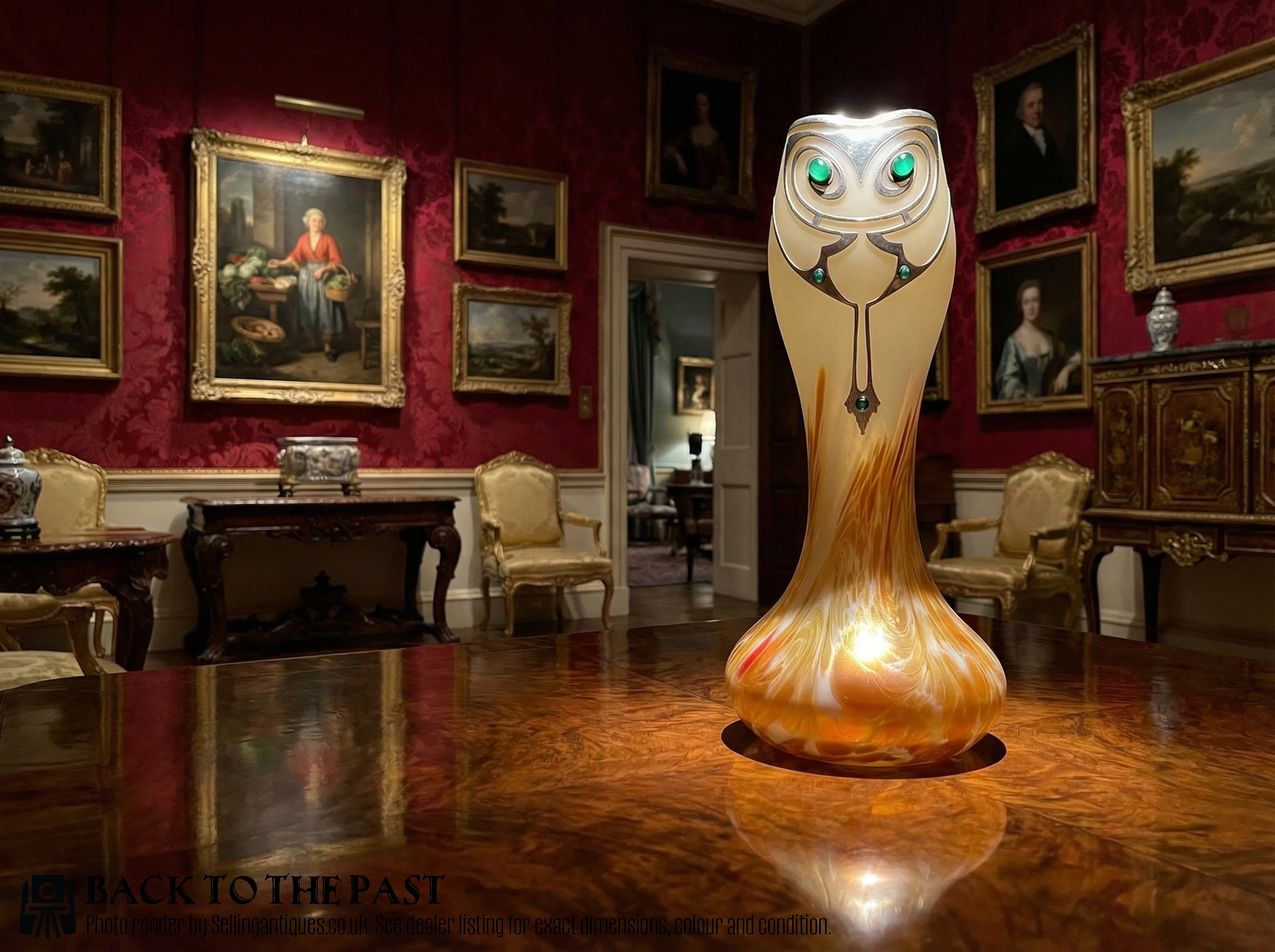
Craftsmen apply molten silver or silver sheets directly onto blown glass or ceramic surfaces, often securing the metal through chemical bonding or physical adhesion. Some examples incorporate cabochons into the design.
Glass bodies include iridescent, papillon, and coloured varieties such as Bristol green and blue. Sterling silver is then cut and chased to form organic, flowing patterns that wrap around the vessel.
Retail Price Guide 2026
Typical UK retail prices for art nouveau silver overlay, calculated from the Sellingantiques database of over a million retail prices indexed since 2003. This retail price guide relies exclusively on Sellingantiques data; no external sources or auction records are used, so the figures do not describe the wider market.
Listings feature sterling silver combined with iridescent glass, green glass, and ceramic bodies across the nineteen hundred and Edwardian periods.
What varies in quality
The sophistication of the metalwork defines the upper tier of pieces, where intricate chasing and substantial sterling silver create deep relief against the glass. Simpler applications sit at the other end, featuring thinner metal layers with minimal hand finishing.
The quality of the underlying glass body also dictates value, particularly when utilising scarce Loetz or iridescent art glass rather than standard commercial vessels. Harmonious integration between the silver overlay and the contours of the vase separates standard production from exceptional work.
Ferdinand von Poschinger·Alvin Sterling·Lenox
The Art Nouveau Silver Overlay Glossary
- Sterling silver
- A silver alloy containing ninety-two point five percent pure silver by mass. This material provides the ductile medium necessary for intricate overlay work.
- Cabochon
- A gemstone or piece of glass polished rather than faceted. These often accent the metalwork on significant pieces.
- Iridescent glass
- Glass treated with metallic salts to produce a rainbow-like sheen. It forms a common luminous background for silver decoration.
- Secessionist
- A modernist design movement related to art nouveau. It influences the geometric tendencies found in certain overlay pieces.
- Baluster
- A small arched column or vase shape swelling at the base. Several recorded vases employ this distinctive silhouette.
Frequently Asked Questions
What is art nouveau silver overlay?
Art nouveau silver overlay consists of decorative glassware or ceramics adorned with cut sterling silver motifs. The metal forms organic patterns across the surface of the vessel.
These objects gained popularity around nineteen hundred, blending metallic craftsmanship with colourful art glass bodies.
How do I clean silver overlay?
Cleaning requires a soft cloth and gentle silver polish applied strictly to the metal areas. Care must be taken to avoid harsh chemicals touching the glass or ceramic ground.
Regular light dusting helps preserve both the silver shine and the underlying iridescent or coloured glass surface.
Are these pieces fragile?
The combination of glass and metal demands careful handling during movement and display. While the silver offers some external bracing, the primary glass body remains susceptible to impact.
Placement away from edges and high traffic areas ensures safe daily enjoyment of these delicate vessels.
How can I tell the period?
Dating relies on stylistic markers such as flowing organic lines, specific glass types like iridescent or papillon finishes, and maker hallmarks. Pieces from nineteen hundred typically exhibit distinct art nouveau abstraction.
Edwardian and later twentieth century examples introduce subtle variations in the weight of the silver and the form of the glass.