


Sterling Silver Overlay
Sterling silver overlay combines precious metalwork with colourful glassware to create intricate vessels that collectors prize for their tactile ornamentation.
Sterling Silver Overlay
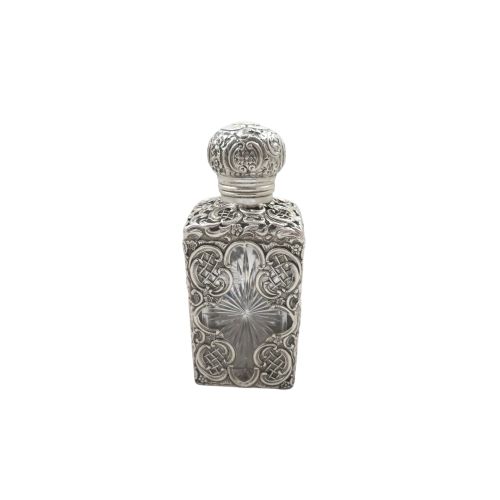
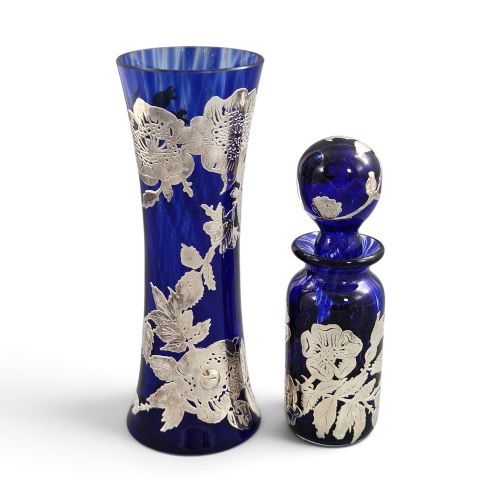
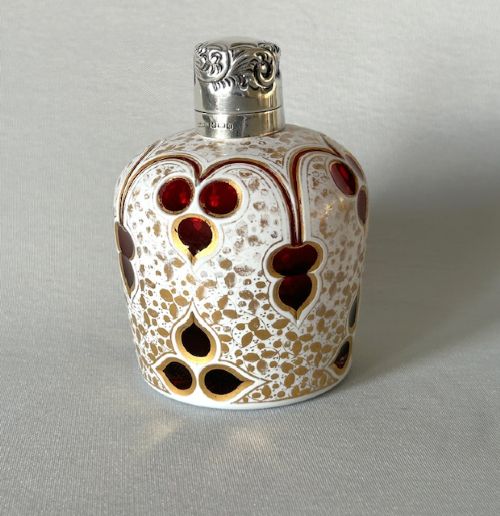
When you search for sterling silver overlay, you encounter items where metalwork bonds directly to glass bodies, primarily taking the form of scent bottles, perfume bottles, and vanity glassware. These pieces span from the late nineteenth century into the twentieth century, with Edwardian and Victorian examples appearing frequently alongside Art Nouveau designs.
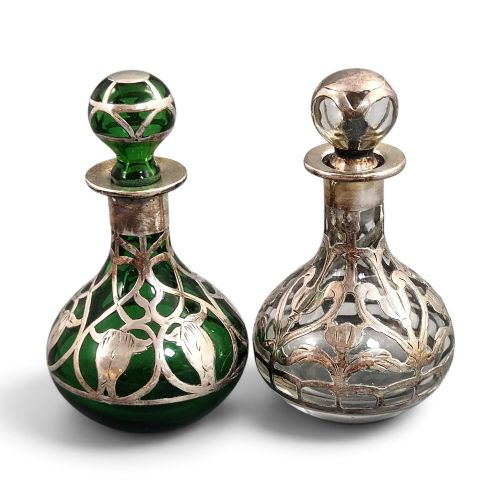
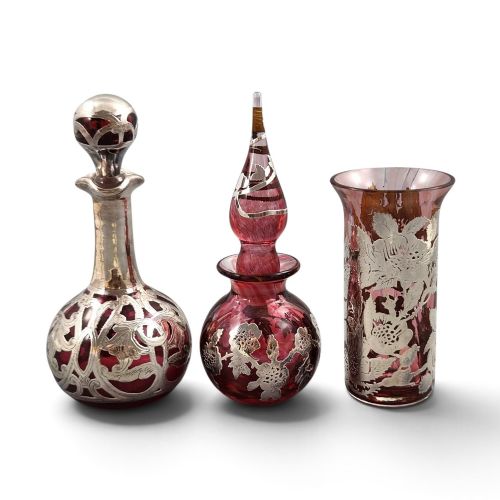
The objects serve decorative and practical domestic functions, ranging from small vanity jars and rouge pots to hip flasks, table bells, and larger cocktail shakers. Green glass, ruby glass, and cobalt glass bodies frequently provide the colourful backdrop for the silver decoration.
How they were made
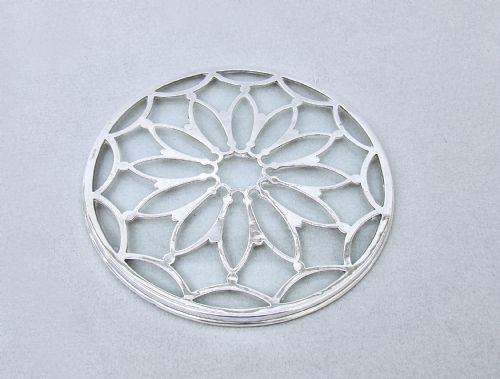
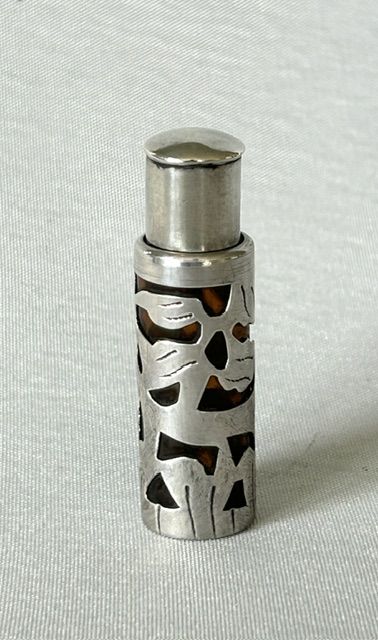
Craftsmen applied sheet silver directly onto glass bases, often cutting openwork patterns through the metal to reveal the coloured glass beneath. This method required precise fitting between the malleable sterling silver and the rigid glass vessel.
Makers utilised various glass types including cut glass, bohemian glass, and studio glass, which were then mounted with silver collars, stoppers, and decorative floral or geometric overlays.
Table bells featuring ornate figural silver handles ensure that calling for tea involved ringing through solid metalwork.
What varies in quality
The refinement of the silver piercing dictates the visual success of the piece, with dense and intricate floral or Art Nouveau motifs showing superior handwork compared to sparse designs. The thickness of the silver gauge also matters, as heavier metal resists denting and maintains crisp detail.
The quality of the underlying glass body sets the baseline for the object, with coloured cut glass and specialised Bristol green or cobalt vessels elevating the piece above standard clear glass equivalents.
Harrods Ltd·Gorham·Laugharne Glass·Hasset and Harper·Alvin
The Sterling Silver Overlay Glossary
- Overlay
- A layer of sterling silver applied over a glass body, usually pierced in decorative patterns. This technique allows the underlying colour of the glass to show through the metal design.
- Vanity glassware
- Small glass containers and bottles used on a dressing table for perfumes, powders, and cosmetics. These items frequently feature silver mounts and stoppers.
- Bohemian glass
- Glassware produced in the Bohemia region known for rich colours and heavy cutting. It frequently serves as the substrate for silver overlay decoration.
- Hallmark
- Official stamps applied to silver items indicating the metal standard, assay office, and date letter. English examples often display specific maker marks and assay town symbols.
Sterling Silver Overlay: Frequently Asked Questions
What is sterling silver overlay?
Sterling silver overlay consists of a fine layer of silver bonded to a glass or ceramic core, typically worked into botanical or abstract patterns.
The metal covers sections of the vessel while leaving windows of coloured glass exposed underneath.
How do I clean silver overlay?
Clean the silver elements carefully with a specialised silver cloth, avoiding harsh liquid dips that might damage the glass or weaken the adhesive bond.
Keep moisture away from the interior of vintage perfume bottles to protect any original cork stoppers.
Are these pieces marked with hallmarks?
Many English and American pieces carry hallmarks or maker marks stamped directly into the silver mount or along the edge of the overlay.
These marks indicate the silver standard and often record the specific year and maker of the metalwork.
What glass colours are most common?
Green glass, cobalt blue, and ruby or cranberry glass appear frequently among surviving examples from the Victorian and Edwardian periods.
Clear cut glass and amber tones also serve as common bases for the silver decoration.
How were perfume bottles used?
Perfume bottles sat upon dressing tables within complete vanity sets alongside jars, brushes, and matching glassware.
Owners filled them with liquid scents, utilising fitted stoppers to control the fragrance application.