
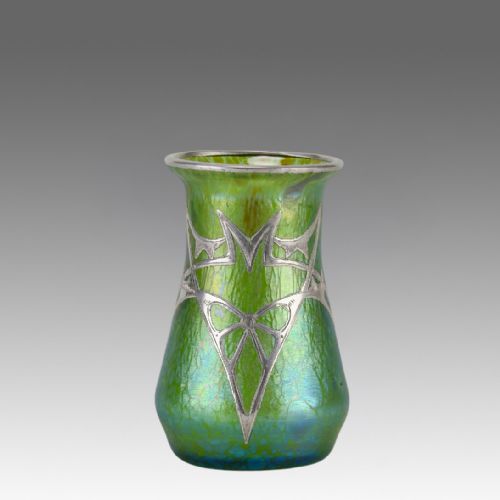
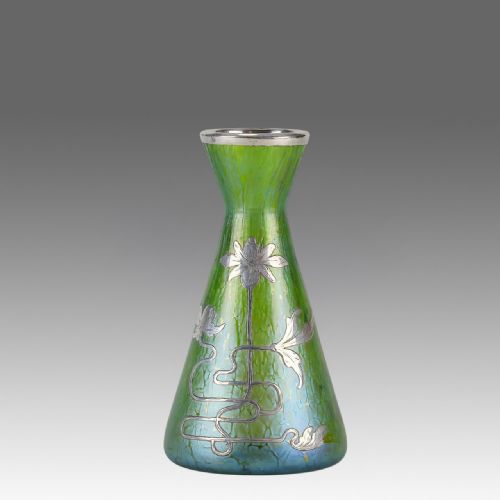


Silver Overlay Glass
Discover silver overlay glass pieces, blending precious metal and tinted vessels for your collection.
Silver Overlay Glass
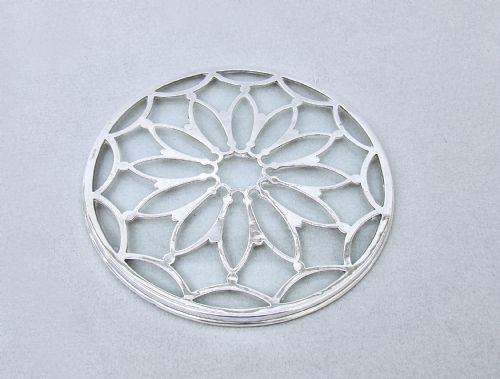
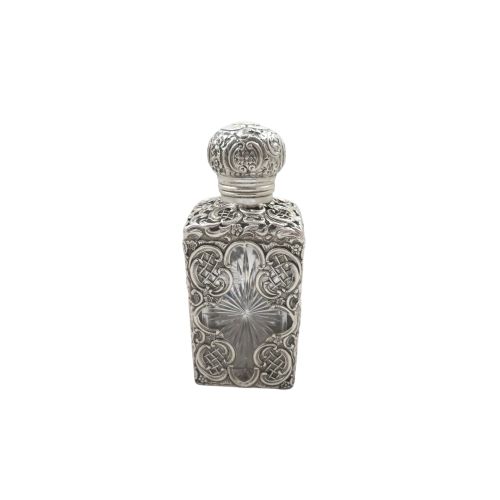
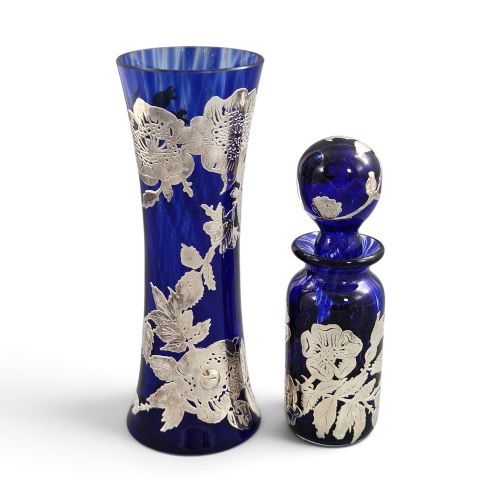
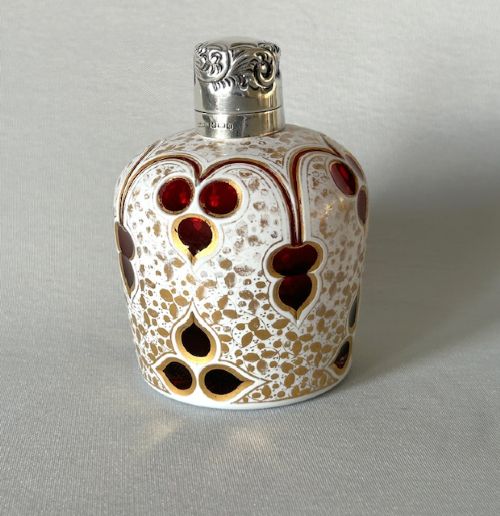
Collectors seeking silver overlay glass evaluate items primarily manufactured during the Victorian and Edwardian eras, alongside pieces originating from around nineteen hundred. These decorative and functional objects include scent bottles, perfume bottles, vases, decanters, vanity sets, and teapot stands.
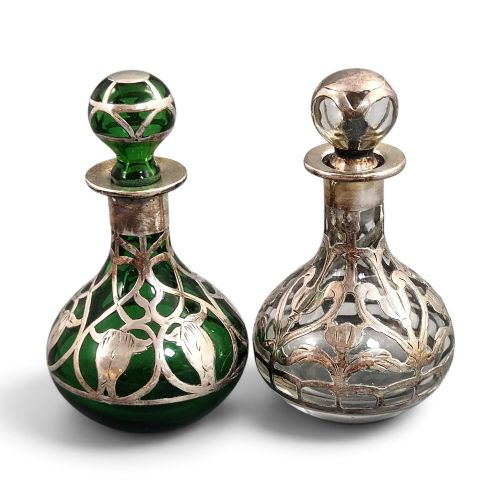
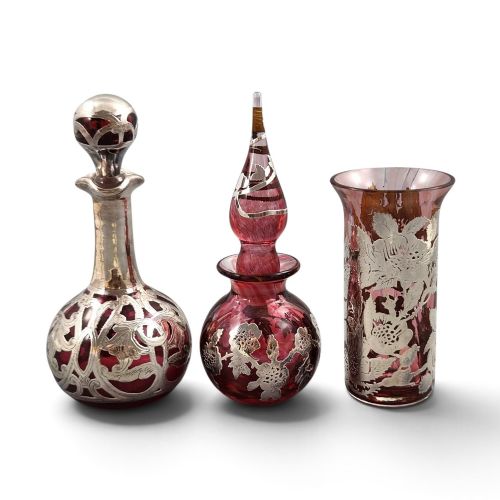
Vessels made from cobalt, cranberry, amethyst, green, and clear glass dominate the selection, often shaped in flowing Art Nouveau contours. Buyers encounter both small miniature scent flasks and larger display vases adorned with floral or abstract metallic patterns.
How They Were Made
The creation of these items involves fusing precious metal directly onto a blown or cut glass substrate through specialised deposition and electroplating techniques. Artisans apply liquid silver onto the cooled vessel in specific patterns, which is then bonded and polished to a bright finish.
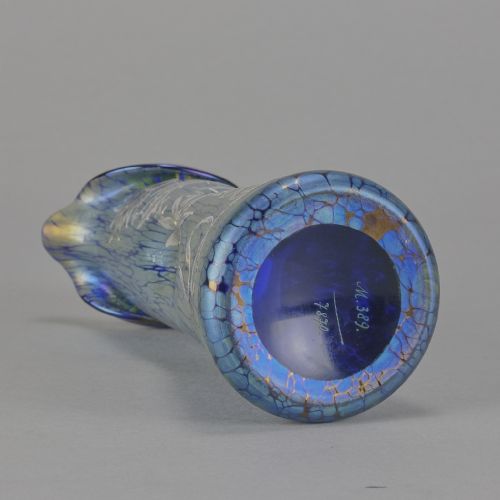
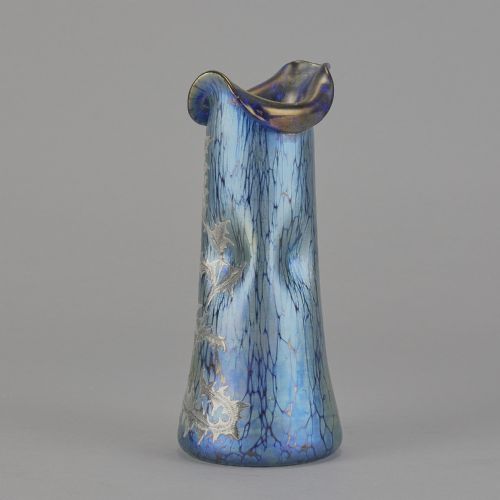
Makers utilise various glass types, including iridescent art glass, mercury glass, and heavy cased or flash-overlay glass, providing a contrasting background for the reflective metal decoration. The combination of sterling silver and coloured glass requires precise thermal management during manufacture to prevent cracking.
Silver Overlay Glass Retail Price Guide 2026
Typical asking prices for silver overlay glass among the pieces listed under this phrase on Sellingantiques today, from the lower quarter to the upper quarter. They describe what is for sale here now, not the wider market.
Some Victorian ladies carried tiny glass scent bottles dangling from their belts, ensuring a favourite fragrance stayed close during long carriage rides.
What Varies in Quality
The distinction between ordinary production and superior craftsmanship rests in the weight, depth, and detail of the metallic decoration. Heavier gauges of sterling silver and more complex, deeply etched floral or Secessionist motifs indicate higher manufacturing standards.
Artistic execution also separates standard items from exceptional pieces, particularly seen in the organic flow of Art Nouveau designs and the optical quality of the underlying iridescent or cased glass. Hallmarks indicating specific silversmiths and assay offices provide further distinction for collectors evaluating provenance.
Harrods Ltd·Gorham·Laugharne Glass·Loetz Witwe·Johann Loetz·Ferdinand von Poschinger·Alvin·Charles May·The Boots Company·Mousley Brothers·John Douglas
The Silver Overlay Glass Glossary
- Silver Overlay
- A decorative technique where sterling silver or silver plate is applied in patterns directly onto the surface of a glass vessel. This method gained immense popularity during the Art Nouveau period.
- Cased Glass
- A method of blowing glass with multiple distinct layers of different colours, often cut away to reveal the contrasting hue underneath. This technique provides the rich background colours seen on many nineteenth-century pieces.
- Iridescent Glass
- Glass treated with metallic salts while hot to produce a shimmering, rainbow-like surface sheen. Makers such as Loetz utilised this effect extensively alongside metal mounts.
- Sterling Silver
- An alloy consisting of ninety-two point five percent silver and seven point five percent other metals, typically copper. Most quality antique mounts bear hallmarks certifying this standard.
- Chatelaine Scent Bottle
- A small perfume container fitted with a chain or hook designed to be suspended from a waist belt. These portable accessories were fashionable during the Victorian era.
Silver Overlay Glass: Frequently Asked Questions
How do I clean silver overlay glass?
Clean the glass body using a soft cloth and mild soapy water, avoiding harsh abrasives that might scratch the surface. Polish the metal portions gently with a specialised silver cloth while keeping moisture away from any exposed glass edges.
Take care around delicate mountings and hinged collars on scent bottles to prevent loosening the metalwork from the glass substrate.
What is mercury glass?
Mercury glass is a double-walled silvered glass popular during the nineteenth century, creating a highly reflective mirror-like appearance. Despite the name, elemental mercury was not used in the final manufacturing process.
These pieces often feature silver overlay applied directly over the reflective coating, producing a luminous decorative effect.
Are these pieces marked with hallmarks?
Many English and American items feature stamped hallmarks on the silver portion, indicating the purity, maker, and assay office. British pieces commonly show lion passant and anchor or leopard head symbols.
Continental or unmarked pieces rely on stylistic attributes and glass characteristics to determine approximate age and origin.
How can I date an item?
Dating relies on stylistic movements such as Victorian revivalism, Edwardian elegance, or organic Art Nouveau forms. Assay office marks and maker's stamps provide precise calendar years for fully hallmarked items.
The colour palette and glass-making technique also offer strong clues to the decade of production.