


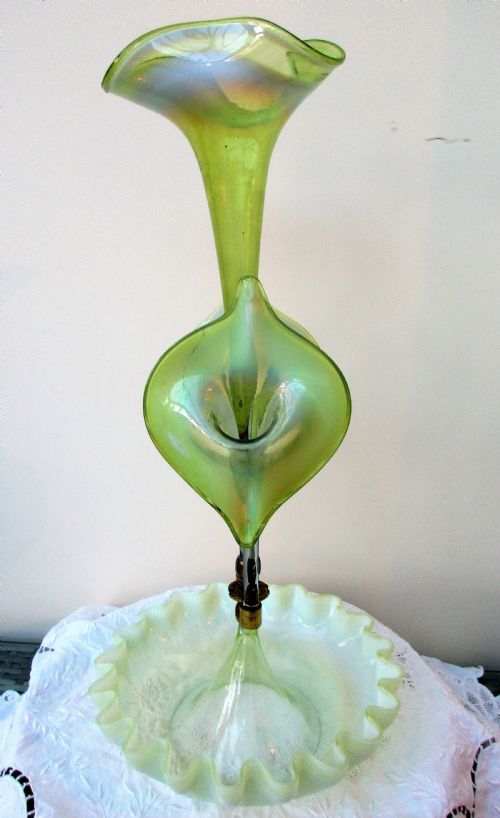


Iridescent Green Vase
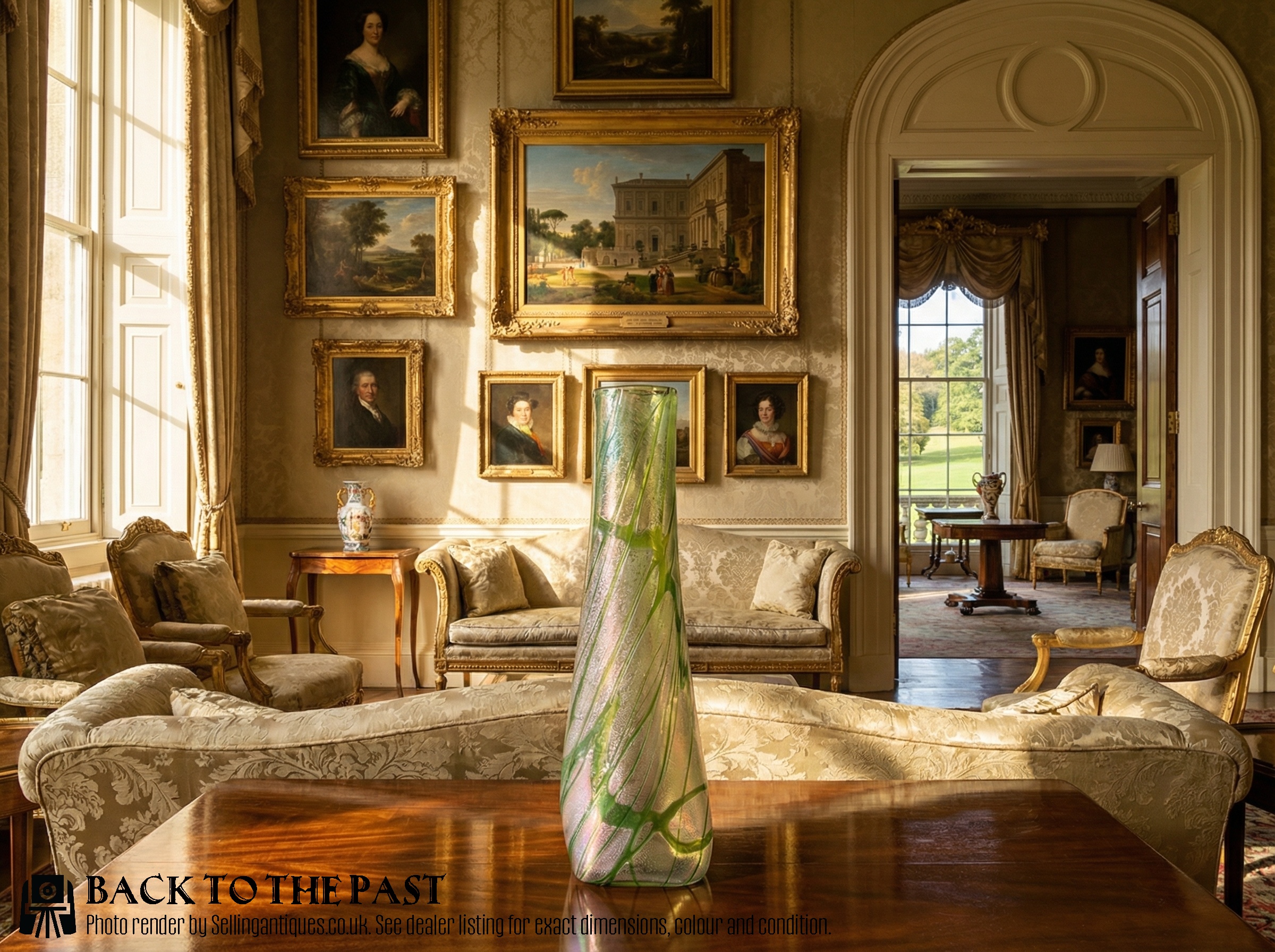
An iridescent green vase catches the light with oil-slick sheens, bringing organic Art Nouveau form and shimmering colour straight into any room.
What these pieces are
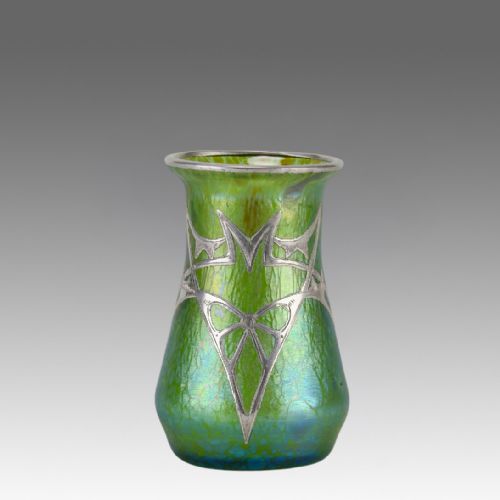
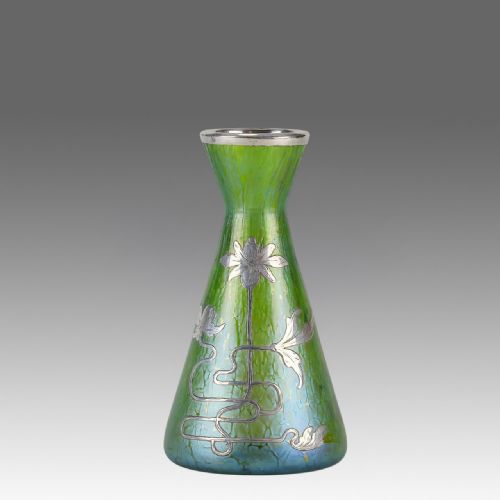
An iridescent green vase represents the peak of turn-of-the-century glassmaking, originating predominantly around nineteen hundred during the height of the Art Nouveau and Vienna Secession movements. These pieces take various organic shapes, including trumpet, conical, Jack in the Pulpit, and bulbous forms, often inspired by natural flora.
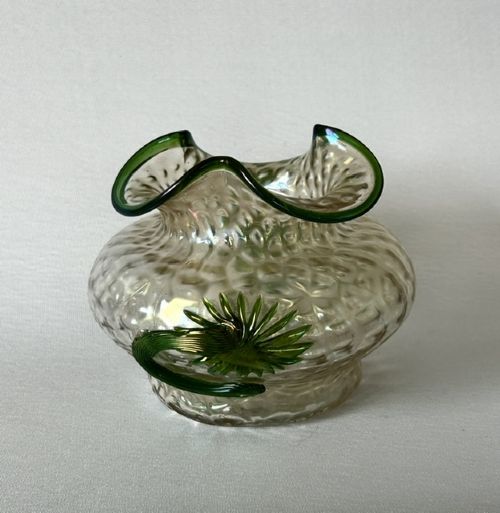
Makers utilised special chemical treatments on green glass to achieve shimmering, oil-slick finishes that mimic beetle wings or water surfaces. Buyers frequently encounter iconic designs featuring distinct optic patterns like spiraloptisch or papillion finishes, as well as textured surfaces.
Many examples are elevated by contrasting mounts, housing the green glass bodies within elaborate sterling silver overlay, silvered frameworks, or pewter stands by makers such as J Reinemann. These decorative additions transform simple glass vessels into heavy, sculptural art objects characteristic of early twentieth-century luxury.
How they were made
Makers blew green glass into moulds or worked it freehand before applying metallic salts while the metal was still hot to create the signature iridescent surface sheen. Techniques like the Phänomen application involved combing molten trails of glass across the surface to produce intricate, feather-like optical effects.
Metalsmiths added structural complexity by wrapping the glass vessels in sterling silver overlay or mounting them securely inside cast pewter stands. Artisans then polished and etched the metal components to complement the shimmering, reflective quality of the iridescent glass beneath.
Retail Price Guide 2026
Typical UK retail prices for iridescent green vase, calculated from the Sellingantiques database of over a million retail prices indexed since 2003. This retail price guide relies exclusively on Sellingantiques data; no external sources or auction records are used, so the figures do not describe the wider market.
Materials documented across the pieces include iridescent glass, sterling silver overlay, plain green glass, and cast pewter.
What varies in quality
The sophistication of the optical effects and the depth of the iridescent sheen dictate the visual hierarchy of these vessels. Multi-layered finishes like papillion or complex combed Phänomen patterns require exceptional technical mastery during blowing.
The presence and execution of metalwork significantly elevate a piece, particularly heavy cast pewter stands or intricate silver overlay work. Combinations featuring documented workshop mounts demonstrate greater ambition than standard blown glass alone.
Johann Loetz·Loetz Witwe·Kralik·J Reinemann
The Iridescent Green Vase Glossary
- Iridescent Glass
- Glass treated with metallic oxides while hot to produce a rainbow-like, shimmering surface sheen. This optical trick mimics the natural play of light on oil or beetle shells.
- Art Nouveau
- A decorative art style popular around nineteen hundred characterised by fluid, organic lines and floral motifs. Pieces from this era lean heavily into asymmetry and naturalism.
- Phänomen
- A specific Loetz technique involving combed trails of molten glass applied to create feather or wave patterns. It represents some of the most complex thermal manipulation of the period.
- Silver Overlay
- Pure or sterling silver applied directly to the glass surface in decorative patterns, often chemically etched. This technique marries delicate glassware with heavy metalwork.
- Vienna Secession
- An Austrian art movement that favoured geometric shapes and restrained ornamentation over traditional academic styles. It heavily influenced the more structural designs of early twentieth-century glass.
Frequently Asked Questions
What periods do these vases come from?
Almost all recorded examples date from around nineteen hundred, right at the turn of the twentieth century. This narrow window captures the height of Art Nouveau and Vienna Secession aesthetics.
Production methods rely heavily on the specific glass-blowing chemistry and metalworking techniques perfected during this exact era. Later reproductions lack the specific weight and chemical signatures of genuine period pieces.
Why do some vases have metal stands?
Metal stands and silver overlays were added to provide structural contrast and elevate the status of the decorative object. Pewter and silver frames protected vulnerable glass edges while adding architectural weight.
Collaboration between glasshouses and metal workshops like J Reinemann produced hybrid objects that combined shimmering glass with sculptural metal framing.
How do I identify a Phänomen vase?
Look for distinct, combed iridescent glass trails that create feathered or wave-like patterns across the body. These optical designs were pulled into loops while the glass remained molten.
The resulting surface appears remarkably dynamic, shifting in colour and pattern as the viewing angle and ambient light change.