




Green Glass Scent Bottle
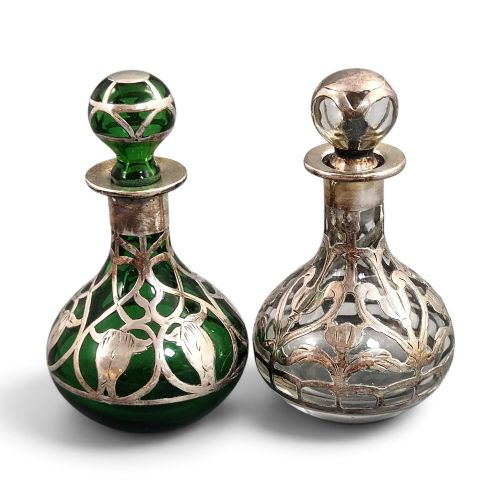
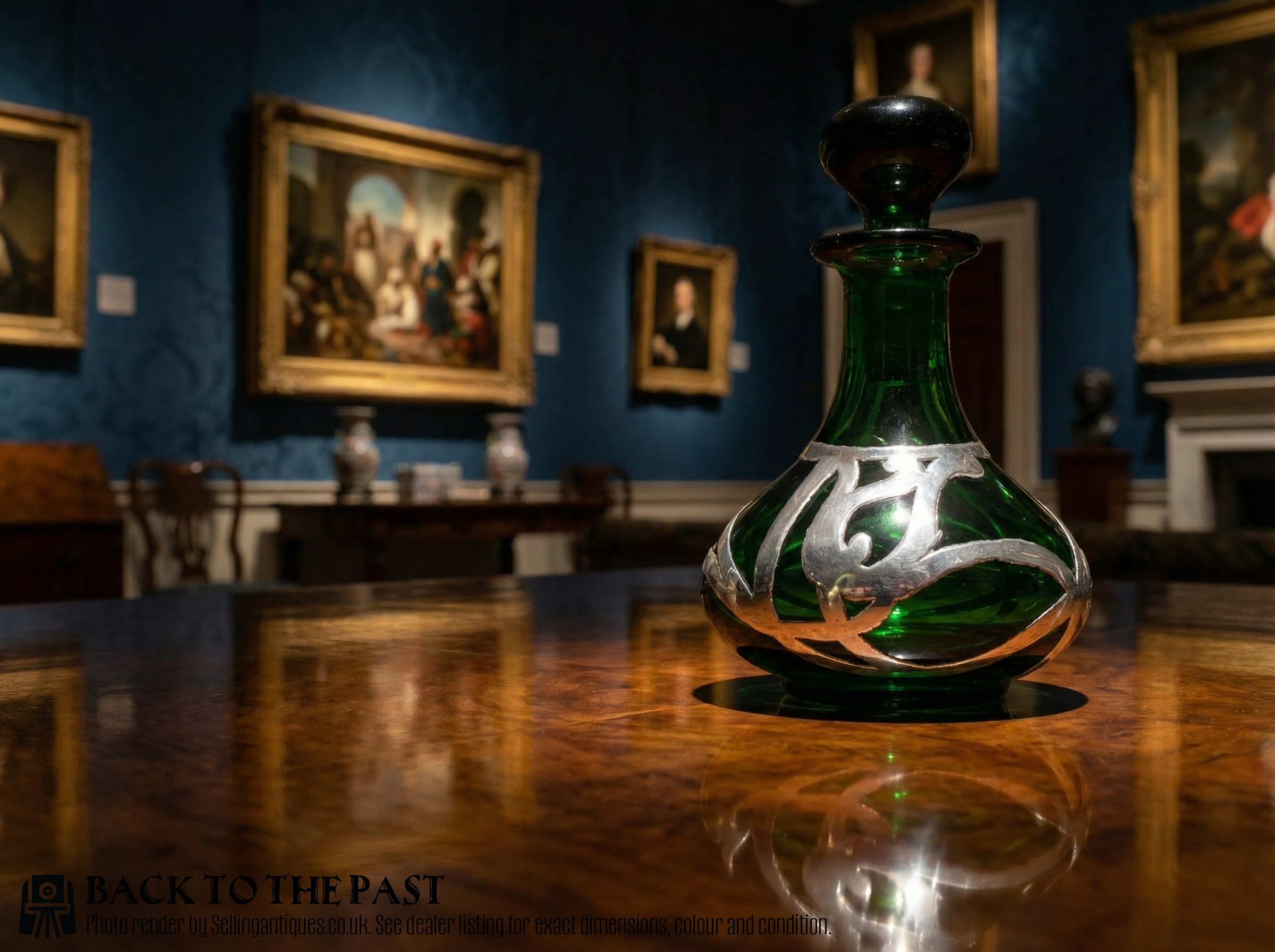
A green glass scent bottle brings vibrant colour and refined craftsmanship to a dressing table, combining rich glass tones with precious metal mounts.
Green Glass Scent Bottle
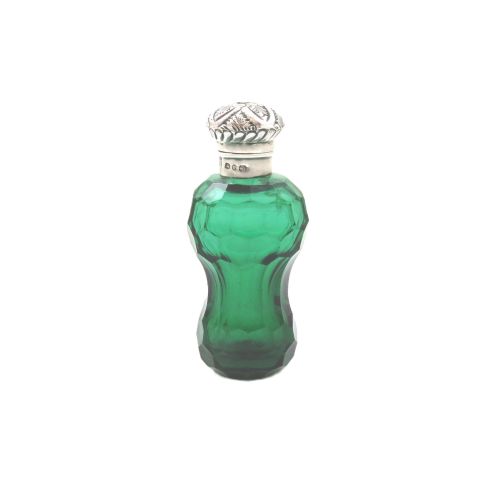
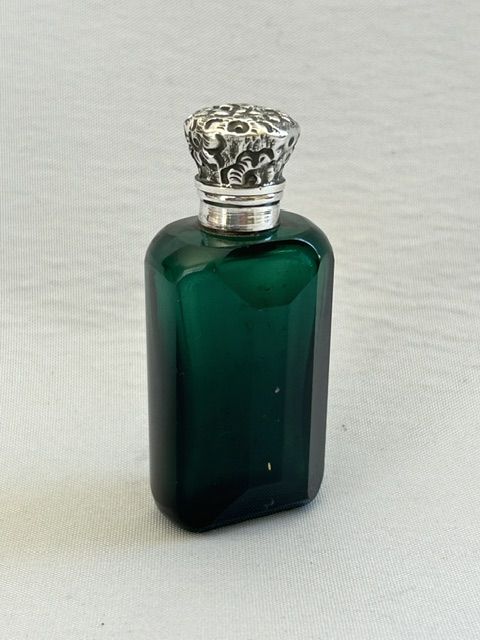
A buyer seeking a green glass scent bottle encounters a rich variety of nineteenth and twentieth-century containers, ranging from small pocket vessels to grand dressing table pieces. The selection spans vivid Bristol green, lime, vaseline, and olive tones shaped across Victorian, Edwardian, and Art Deco periods.
Most examples originate from British, French, or Bohemian workshops, frequently pairing vibrant glass bodies with hallmarked sterling silver lids, collars, or hinged caps. Double-ended formats and overlay designs appear alongside atomic sprayers and minimalist modernist cylinders.
Collector interest often centres on mounted pieces where the glass body interacts directly with metalwork, enamel details, or intricate overlay patterns. These varied forms reflect shifting domestic fashions from the grand vanity displays of the nineteenth century to the geometric restraint of the nineteen-thirties.
Materials and construction
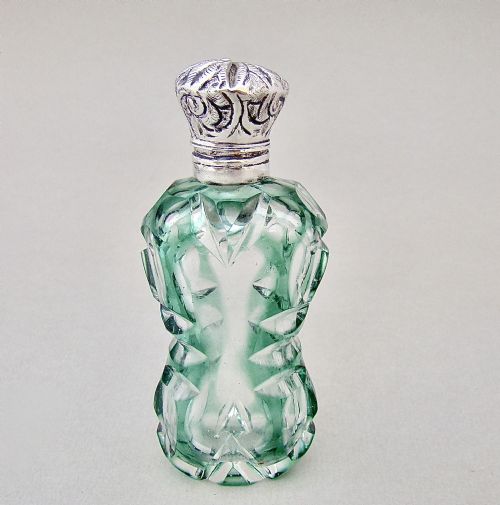
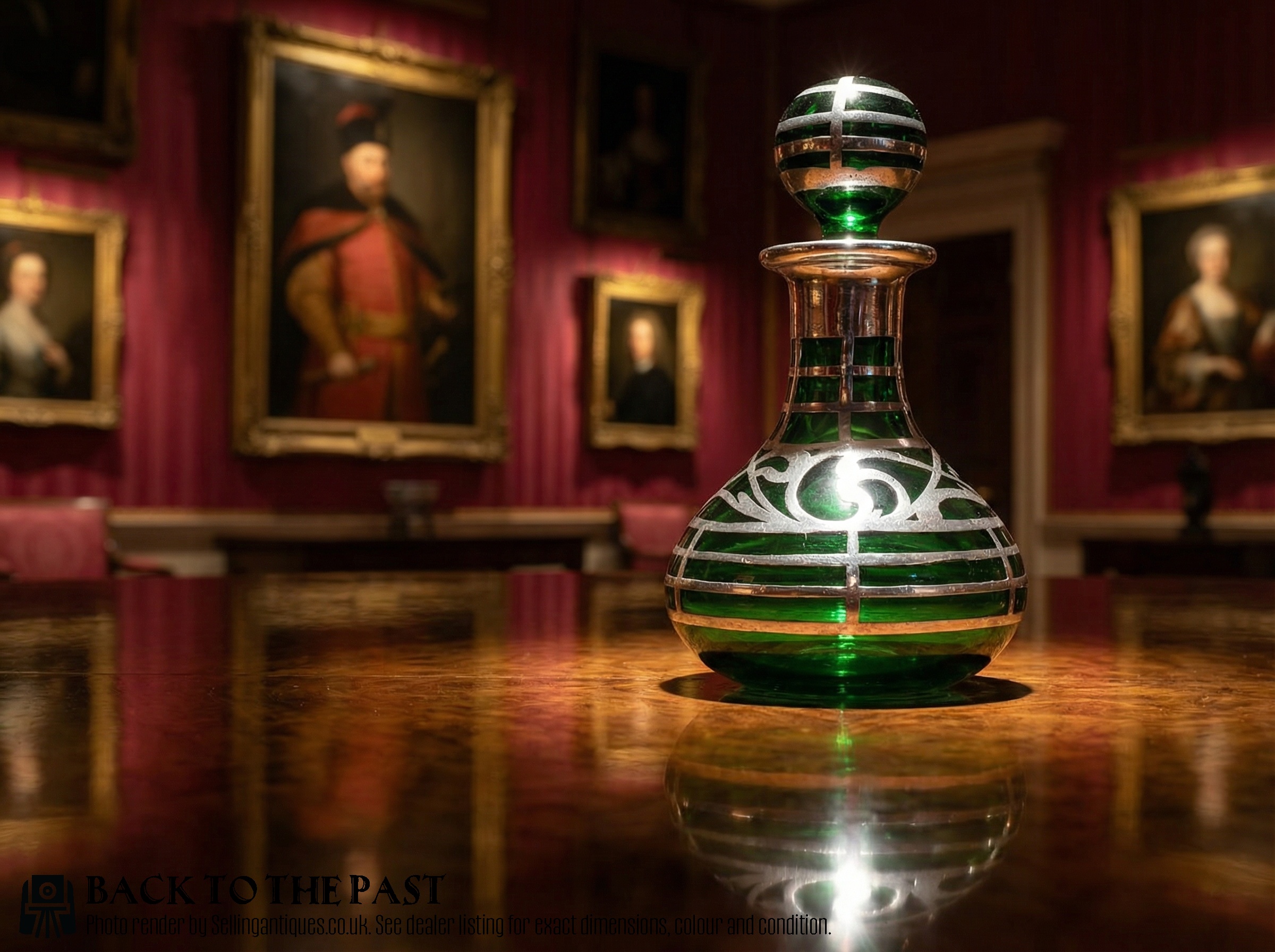
Makers formed the vibrant bodies using techniques such as free-blowing, mould-pressing, and cased overlay glass, where a clear or contrasting layer covers a rich green core. Sliced-cutting and facet-cutting revealed the depth of the colour, while enamel painting and gilt decoration added surface detail directly onto the vessel.
Precious metal components, primarily sterling silver and silver gilt, were cast, pierced, or embossed to create secure screw caps, hinged lids, and decorative overlays. Artisans also integrated brass, chrome, fabric, and bronze mounts, particularly in later Art Deco atomisers and fitted dressing table caskets.
Green Glass Scent Bottle Retail Price Guide 2026
Typical asking prices for green glass scent bottle among the pieces listed under this phrase on Sellingantiques today, from the lower quarter to the upper quarter. They describe what is for sale here now, not the wider market.
Listings feature green glass scent bottle examples spanning the Victorian, Edwardian, and Art Deco periods, utilising sterling silver, enamel, and cut glass.
Factors determining quality
Superior examples display exceptional crispness in the cutting and clarity in the coloured glass, free from cloudiness or heavy internal bubbles. The weight and thickness of the material dictate presence, with heavier overlay or cased glass indicating greater ambition from the maker.
The precision of the metal mounts heavily influences the overall standard of the piece, particularly where silver overlay clings tightly to the contours of the glass or where hinged lids close with exact alignment. Hallmarks bearing the marks of known silversmiths further elevate the standing of a mounted bottle.
Henry Matthews·Charles May·Henry Perkins·Karl Palda·Richard Comyns
The Green Glass Scent Bottle Glossary
- Bristol green
- A deep, rich shade of translucent green glass popular in nineteenth-century English tableware and dressing table items. It provides a striking contrast when paired with bright sterling silver mounts.
- Overlay glass
- A technique involving two or more distinct layers of glass, where portions of the outer layer are cut away to reveal the contrasting colour beneath. This method creates bold geometric or floral patterns.
- Guilloche enamel
- A decorative technique where intricate geometric patterns are machine-engraved into metal and covered with translucent enamel. It frequently appears on Edwardian and mid-century bottle caps.
- Vaseline glass
- A type of yellowish-green glass containing uranium dioxide, which produces a distinctive fluorescent glow under ultraviolet light. Victorian makers utilised this material for striking novelty scent containers.
- Double-ended bottle
- A symmetrical vessel featuring a compartment at each end, allowing the owner to carry two different perfumes simultaneously. These pieces typically incorporate hinged silver caps on both extremities.
Green Glass Scent Bottle: Frequently Asked Questions
How do I date a silver-mounted bottle?
Dating relies primarily on the assay office hallmarks stamped onto the sterling silver mounts, which indicate the exact year and city of manufacture. Stylistic clues such as floral chasing or geometric facets also help align the piece with Victorian, Edwardian, or Art Deco eras.
Unmounted glass bodies require visual analysis of the pontil mark, wear patterns at the base, and manufacturing techniques characteristic of nineteenth or twentieth-century glasshouses.
How should I clean my antique bottle?
Cleaning requires gentle care, using warm water and a mild detergent applied with a soft cloth to protect delicate glass surfaces and enamel work. Submerging pieces with old cork stoppers or metal internal components should be avoided to prevent moisture trapping.
Silver mounts respond well to careful polishing with a specialised microfibre cloth, keeping polish away from the glass body and any painted enamel details.
Are these bottles still usable today?
Many antique bottles remain functional, though original stoppers and corks often require careful handling due to age. Cork deterioration is common, so modern display is frequently preferred over active daily use.
Leakage can occur in vintage atomisers and double-ended vessels, making them best appreciated as decorative dressing table display objects.