

Victorian Glass Perfume Bottle
These delicate victorian glass perfume bottle pieces are miniature feats of vanity, offering a glimpse into nineteenth-century dressing habits.
Victorian Glass Perfume Bottle Types
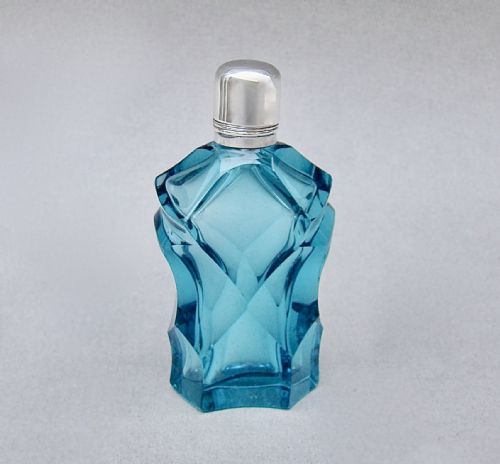
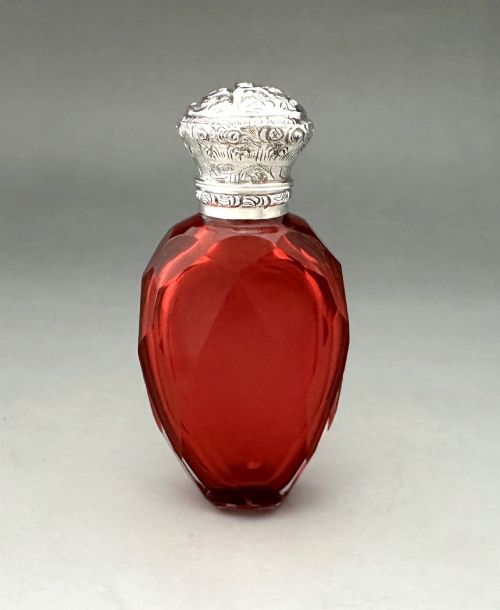
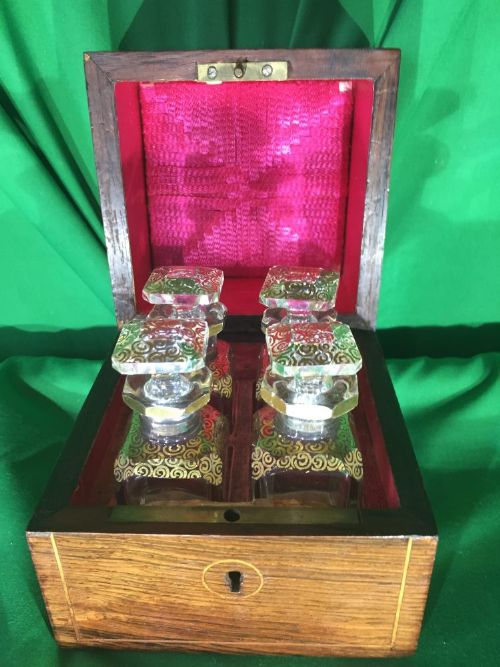
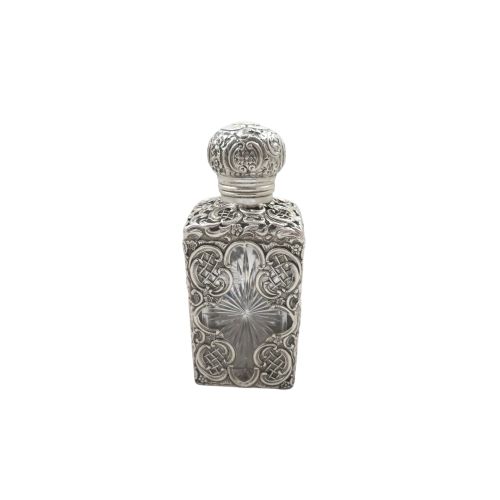
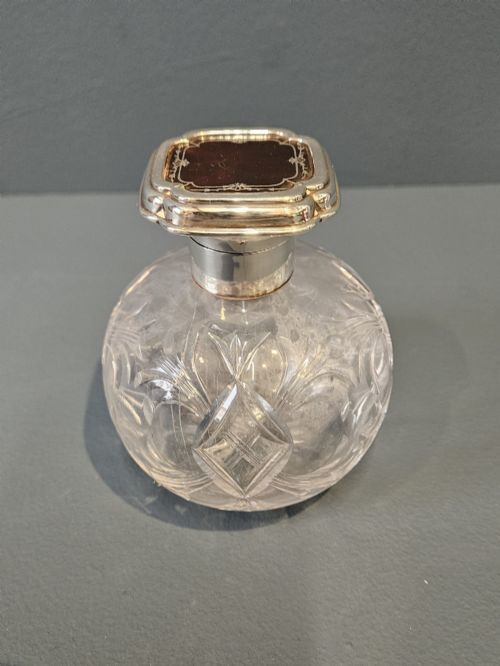
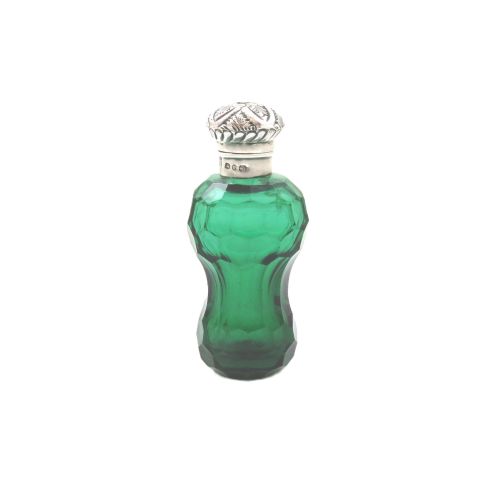
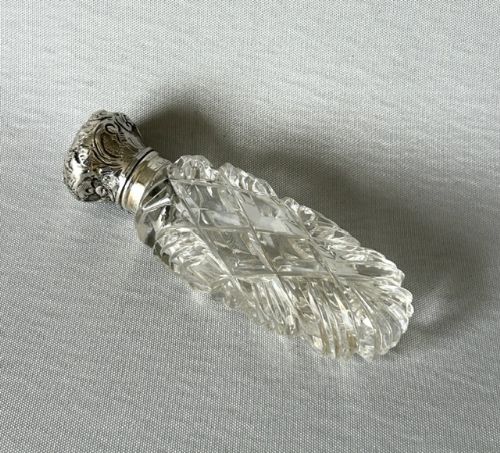
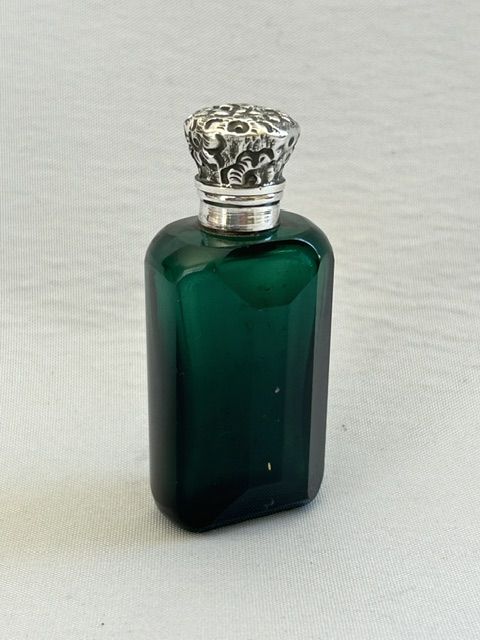
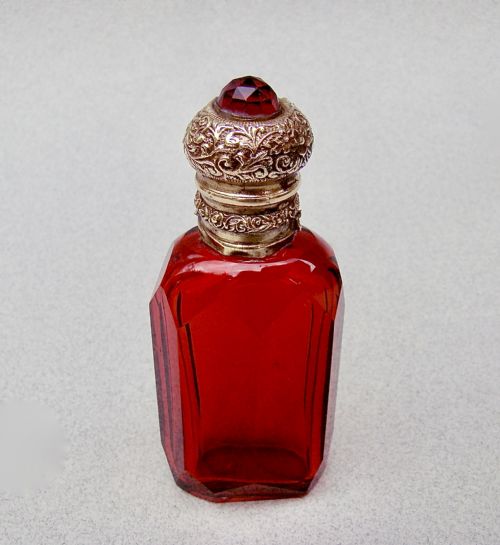
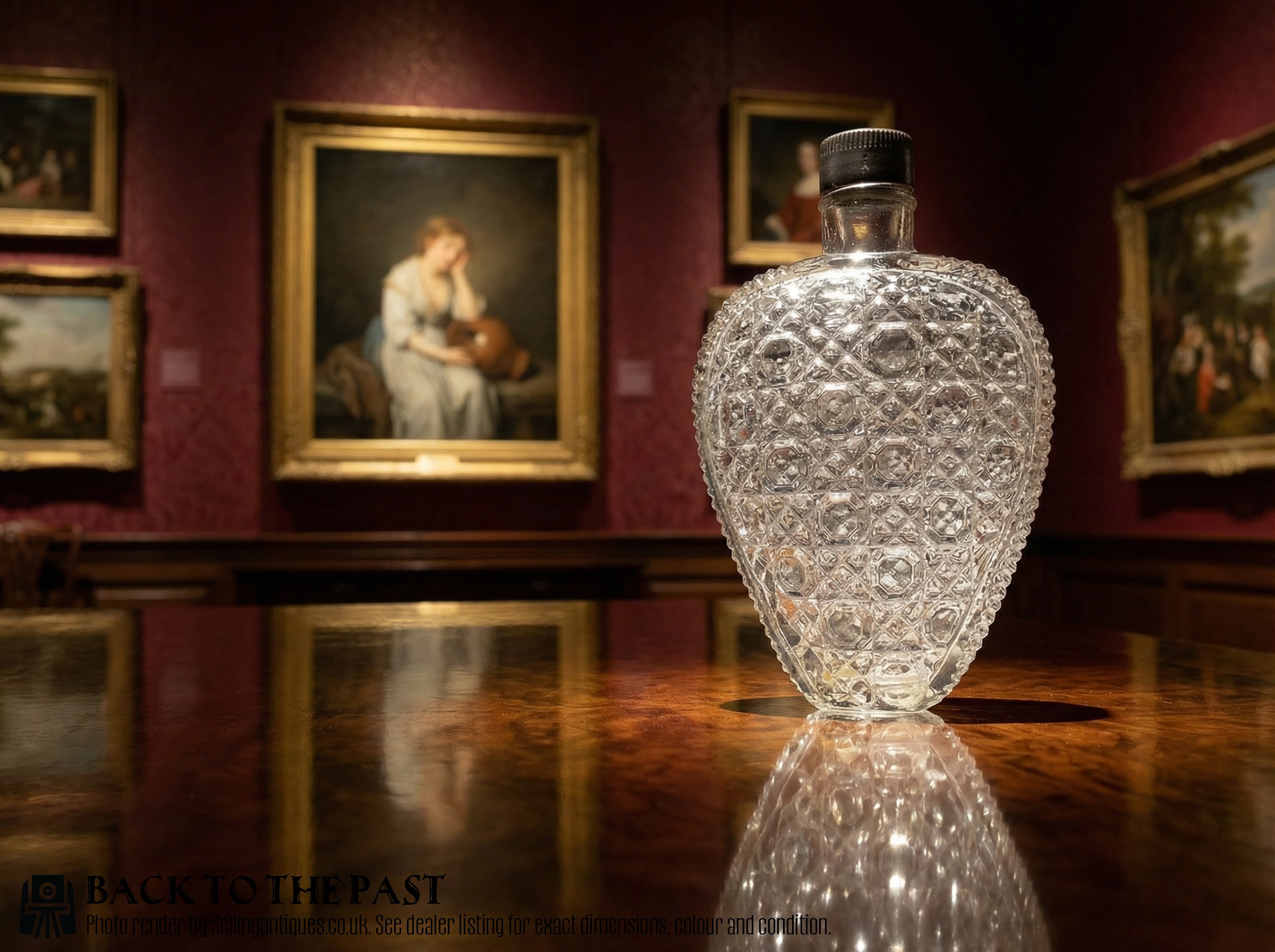
A victorian glass perfume bottle combines functional dressing table utility with decorative glasswork, often taking the form of scent bottles or dressing table sets. These pieces appear most frequently in cut glass paired with sterling silver or silver gilt mounts.
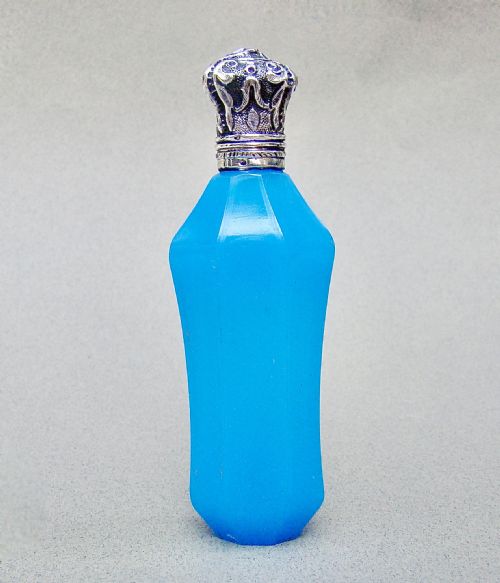
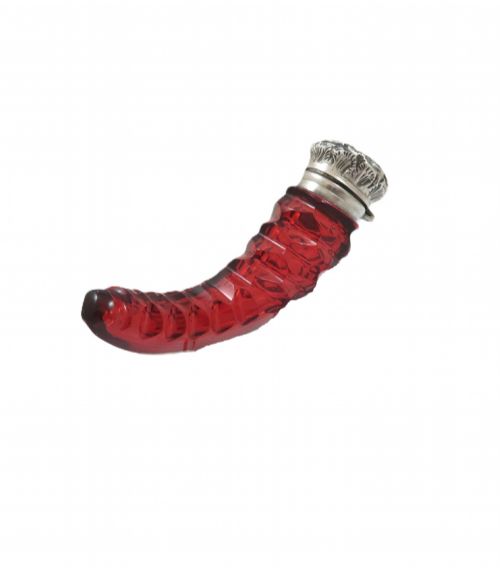
Makers utilised various distinctive glass forms during the period, including spiral fluted shapes, heart silhouettes, fish designs, and clover motifs. Coloured glass variations such as cranberry, blue overlay, green, purple, and amethyst frequently emerge alongside clear cut glass.
The archive also records specialised items like combined perfume bottles and patch boxes, alongside Venetian murrine work and Mary Gregory green dressing table sets. Edwardian examples occasionally bridge the late nineteenth-century aesthetic into the subsequent decade.
Materials and Technique
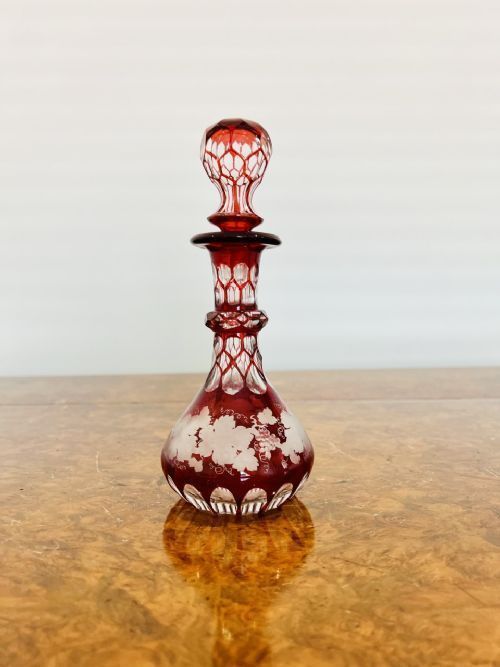
Craftsmen shaped glass through blowing and mould-pressing before applying intricate wheel-cutting techniques to create facets on overlay glass. Coloured glass varieties derived their rich hues from specific mineral oxides added during the melting process.
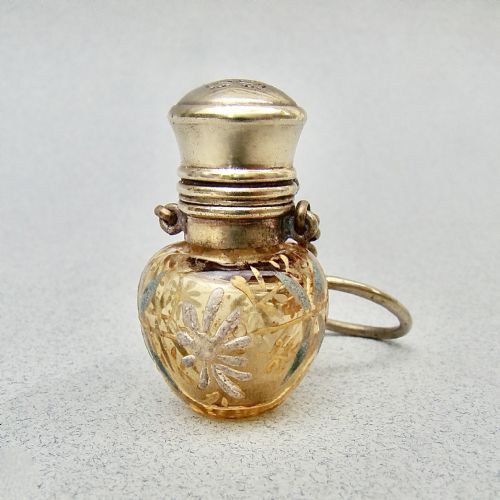
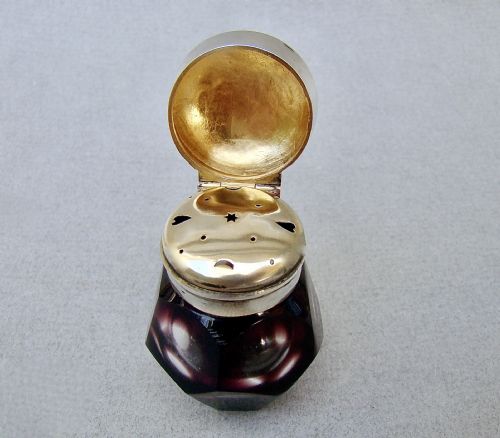
Metal components, notably sterling silver and silver gilt, were worked into hinged caps, screw tops, and collars secured directly to the glass necks. Enamel work and detailed murrine canes further embellished specialised pieces.
Retail Price Guide 2026
Typical UK retail prices for victorian glass perfume bottle, calculated from the Sellingantiques database of over a million retail prices indexed since 2003. This retail price guide relies exclusively on Sellingantiques data; no external sources or auction records are used, so the figures do not describe the wider market.
Listings demonstrate glass materials including sterling silver, cut glass, murrine, cranberry glass, enamel, and various coloured overlays.
Distinctions in Quality
Quality rests in the crispness of the glass cutting and the weight of the sterling silver mounts supplied by prominent makers. Overlay glass demonstrates superior craftsmanship when the exterior colour layer is cleanly cut away to reveal the contrasting glass beneath.
The sophistication of the metalwork, including chased silver tops or marked maker stamps, elevates standard dressing table items into distinguished pieces. Miniature decorative elements like integrated murrine glass threads indicate higher artisanal skill.
Franchini & Bigaglia·Sampson Mordan & Co.·William Comyns
The Victorian Glass Perfume Bottle Glossary
- Overlay Glass
- A manufacturing technique involving a core layer of clear or coloured glass cased inside one or more distinct coloured layers. These outer layers are partially cut away to create contrasting patterns.
- Silver Gilt
- Sterling silver that has been coated with a thin layer of gold, providing a rich yellow metallic finish to bottle caps and mounts.
- Murrine
- Coloured glass canes heated and drawn out, then sliced transversely to reveal mosaic patterns within pieces such as Venetian scent bottles.
- Mary Gregory
- A style of decorative white enamel painting depicting silhouetted Victorian children amidst foliage, typically applied to green glass.
- Cranberry Glass
- A rich red transparent glass coloured with gold chloride, frequently utilised for Victorian scent bottles.
Frequently Asked Questions
How were victorian glass perfume bottles used?
These vessels held concentrated liquid scents on dressing tables or inside purses for personal freshness. Their tight-fitting silver or gilt caps prevented evaporation of expensive floral essences.
Ladies carried smaller examples in chatelaines or reticules, whilst larger faceted glass bottles remained stationary on mirrored plateau trays.
What colours are common for these bottles?
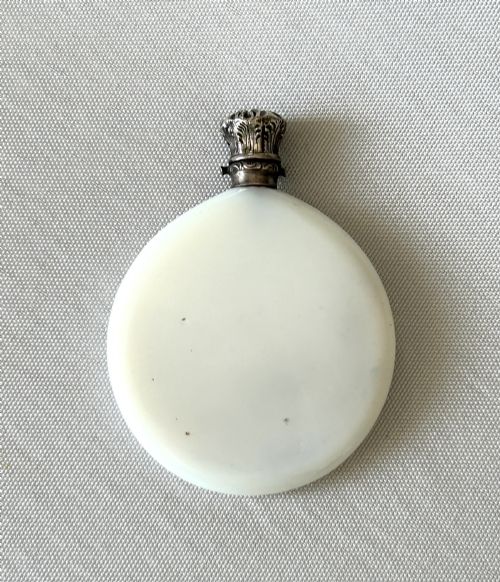
Cranberry red and deep cobalt blue overlay cut glass appear frequently across nineteenth-century examples. Green, amethyst, purple, and opaline blue represent other established colourways.
Clear cut glass paired with sterling silver mounts remains the most widely encountered style in surviving collections.
How do I identify a Victorian piece?
Look for hallmarks on the sterling silver mounts, which often provide exact assay dates and maker marks. Specific Victorian design motifs like spiral fluting, overlay cutting, and Mary Gregory enamel scenes also indicate the period.
Edwardian items tend to show slightly softer transitions in style, whereas nineteenth-century pieces lean towards heavier cut glass facets.
Did makers sign these perfume bottles?
Silversmiths often stamped their initials onto the metal caps or collars rather than signing the glass itself. Notable firms like Sampson Mordan & Co. and William Comyns marked their metalwork reliably.
Venetian glass pieces from Murano generally relied on distinctive techniques rather than physical signatures to denote origin.