
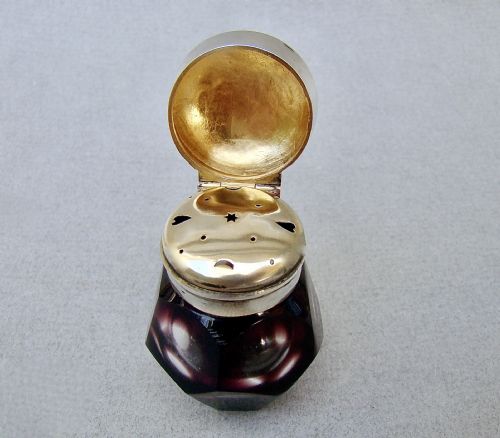


Victorian Glass Perfume Flask
A victorian glass perfume flask is a portable vanity vessel prized for its coloured glass and precious metal mount.
Victorian glass perfume flask
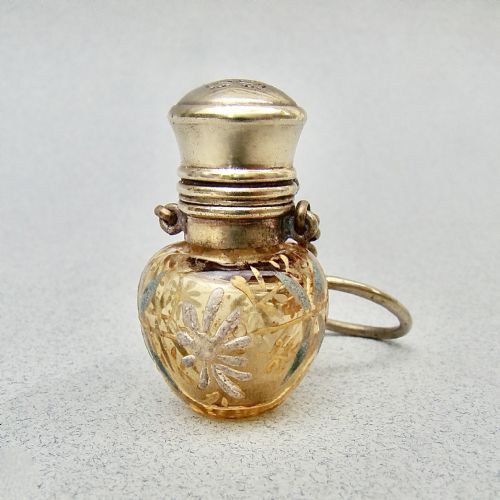
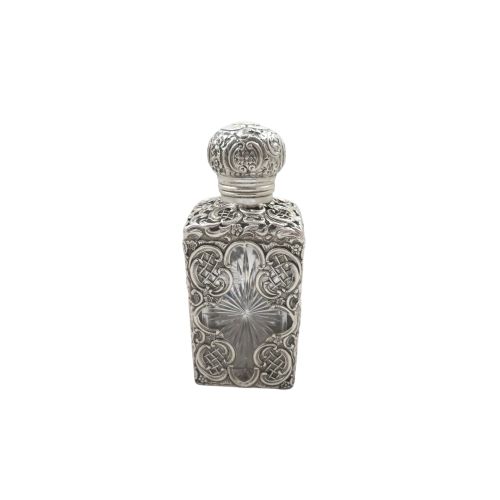
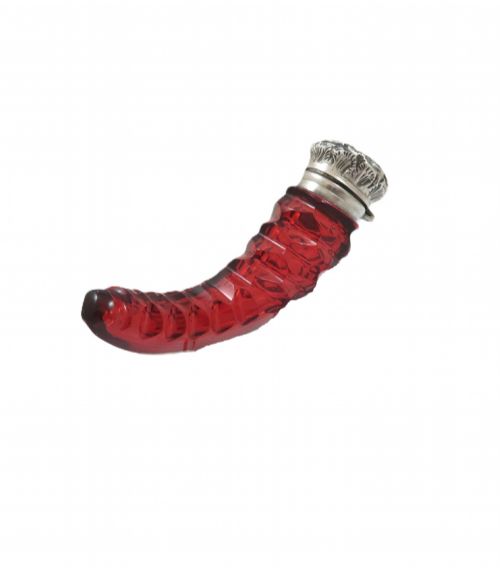
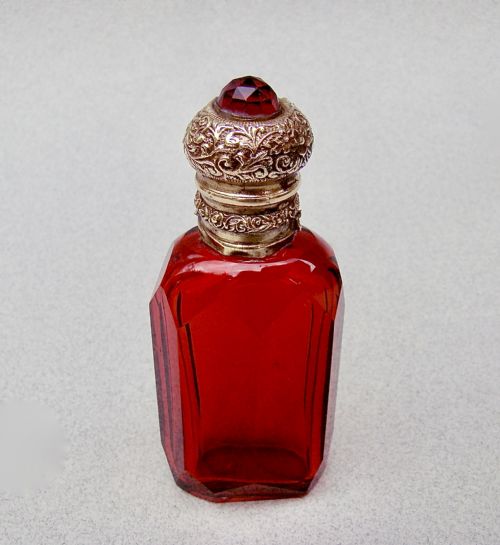
A victorian glass perfume flask is a small scent container designed for the pocket or dressing table during the nineteenth century. These vessels combine hand-formed glass bodies with fitted metal mounts, most frequently in silver or sterling silver. They survive in various forms including dedicated perfume and cologne bottles.
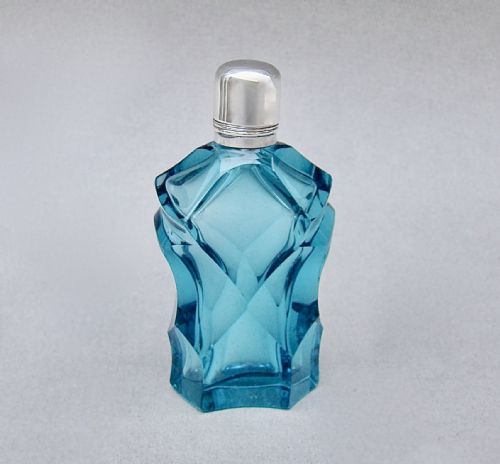
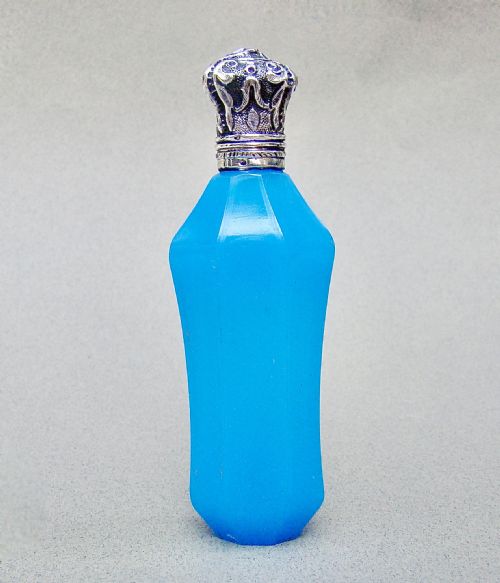
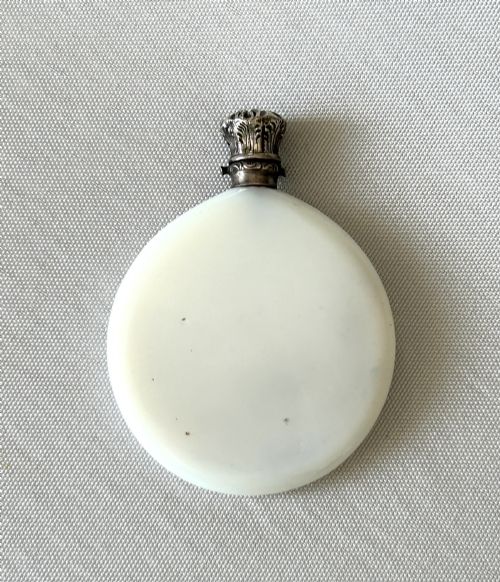
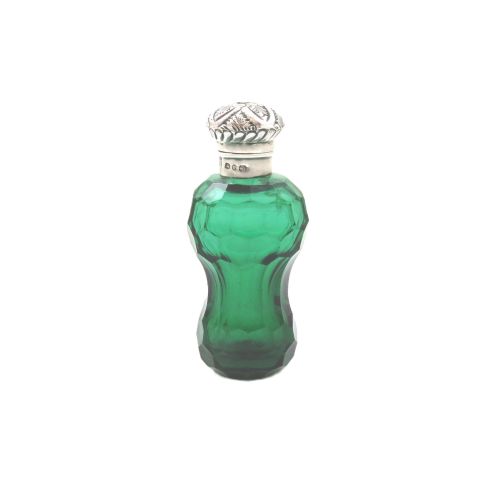
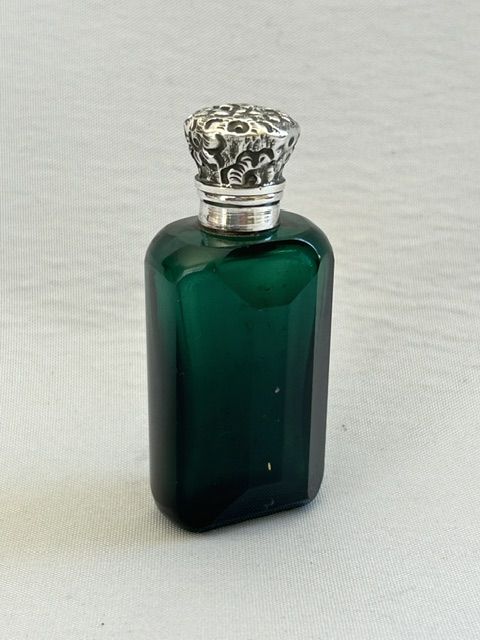
The most common examples on this page date from the late Victorian period, specifically around the eighteen-seventies and eighteen-eighties. Buyers frequently encounter pieces fashioned from Bristol green glass, opaline glass, or sliced-cut teal glass. Each specimen reflects the domestic and personal habits of the Victorian era.
Makers housed these bottles in sturdy forms designed to protect delicate liquids while travelling. The integration of silver tops and screw caps provided a secure seal for volatile scents. Surviving examples demonstrate how these items bridged utility with personal ornamentation.
Materials and construction
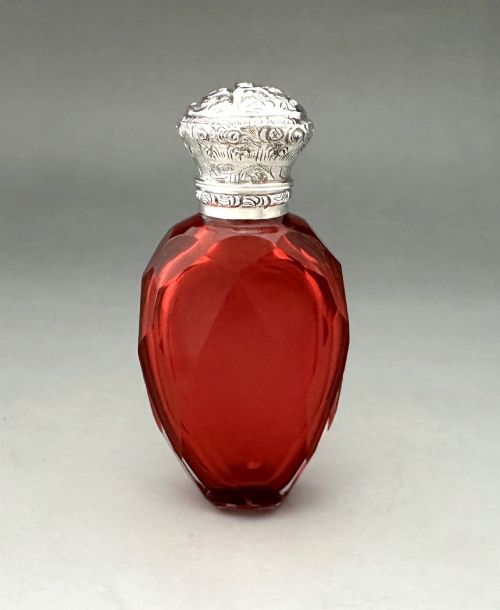
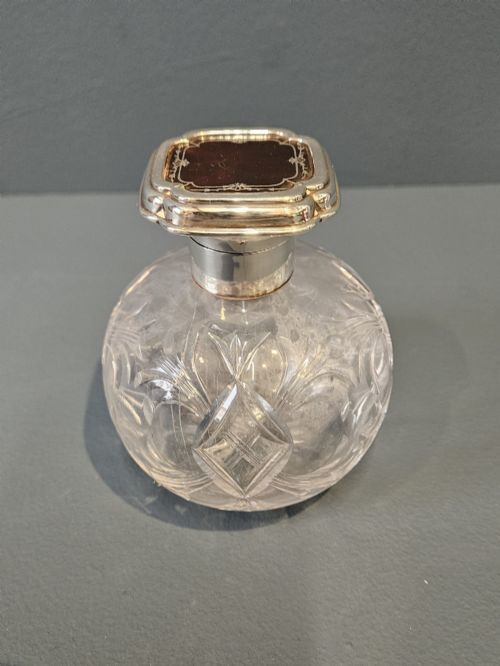
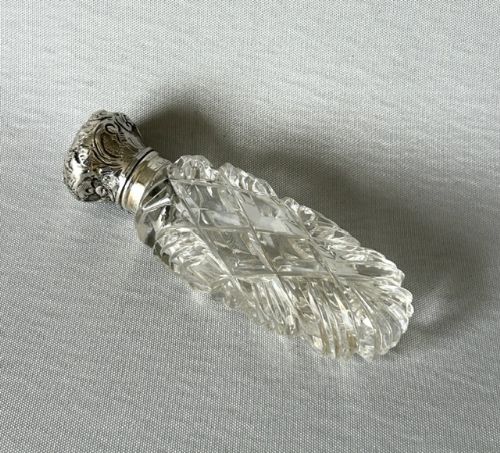
The body of a victorian glass perfume flask begins with blown or moulded glass, often enhanced with cut decoration such as sliced-cut facets. Coloured glass varieties like Bristol green and opaline provide the primary visual contrast against the metal components. Artisans shaped these glass reservoirs into portable vessels intended for daily use.
Silver mounts and sterling silver caps are secured to the neck of the glass body to complete the construction. Silversmiths worked metal directly onto the glass rims or fitted hinged tops with internal stoppers. The combination of heavy cut glass and solid silver creates a balanced weight in the hand.
Retail Price Guide 2026
Typical UK retail prices for victorian glass perfume flask, calculated from the Sellingantiques database of over a million retail prices indexed since 2003. This retail price guide relies exclusively on Sellingantiques data; no external sources or auction records are used, so the figures do not describe the wider market.
Listings feature Victorian pieces utilising silver, sterling silver, cut glass, opaline glass, and green glass.
Judging quality
Quality in a victorian glass perfume flask rests upon the clarity and depth of the glass colour combined with the precision of any cut decoration. Sliced-cut teal or rich Bristol green glass displays greater artisanal ambition than plain translucent material. The crispness of the facets dictates the visual success of the body.
The relationship between the glass vessel and its silver mount reveals the standard of manufacture. Well-made examples feature heavy sterling silver tops that fit the contours of the glass precisely without excess solder or mismatched proportions. The integration of hallmarked elements anchors the integrity of the piece.
The Victorian Glass Perfume Flask Glossary
- Opaline glass
- Opaque or translucent glass with a milky appearance, popular for nineteenth-century vanity items. It provides a smooth, pastel ground for decorative mounts.
- Bristol green
- A deep, saturated green glass traditionally associated with English glasshouses. This intense hue defined many portable scent bottles of the period.
- Sliced-cut
- A decorative technique involving wide, flat facets ground into the surface of the glass. This method catches the light and reveals the thickness of the material.
- Sterling silver
- An alloy of silver containing ninety-two point five percent pure silver by mass. It provides the durable metal tops and screw caps found on these flasks.
Frequently Asked Questions
What is a victorian glass perfume flask?
A victorian glass perfume flask is a nineteenth-century personal container used for carrying scents or colognes. These vessels feature glass bodies paired with protective metal mounts.
They were essential accessories for personal grooming during the period, designed to fit securely into small bags or travel cases.
How do I date a glass scent bottle?
Dating relies on stylistic clues, manufacturing techniques, and any accompanying metal hallmarks on the silver mounts. Pieces from the eighteen-seventies and eighteen-eighties often display specific colour palettes like Bristol green.
Examining the depth of the glass cutting and the weight of the sterling silver top helps narrow the period of manufacture.
What colours of glass are typical?
Typical colours include rich Bristol green, opaque opaline, and teal glass. These shades reflect the Victorian preference for saturated, vibrant tones in decorative objects.
Clear glass enhanced with sliced-cut facets is also characteristic of nineteenth-century vanity pieces.
Are the silver tops marked?
Many silver mounts on these flasks feature hallmarks indicating the standard of the metal and the year of production. Sterling silver components often bear stamps that verify their composition.
These marks assist in confirming the exact decade of manufacture for individual bottles.