


Diamond Cut Crystal Bottle
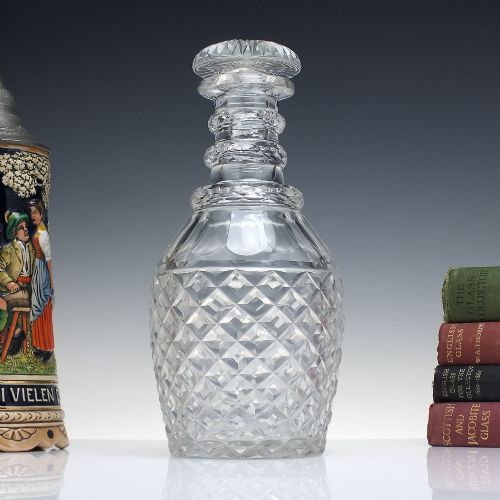
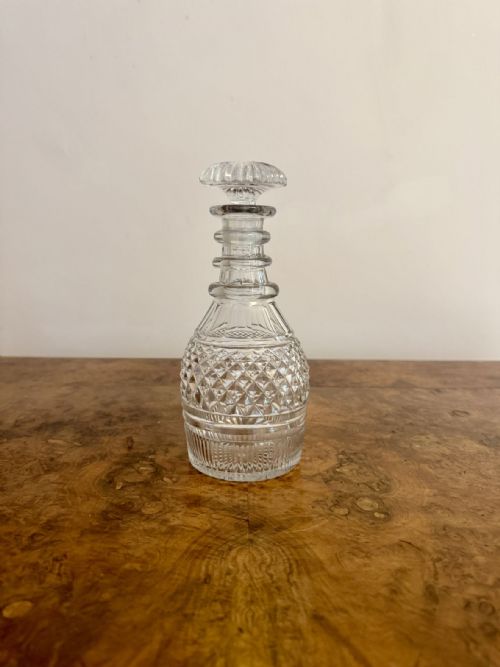
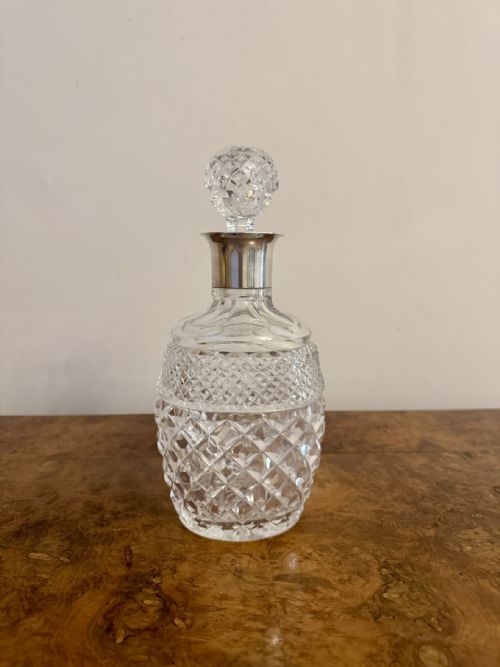
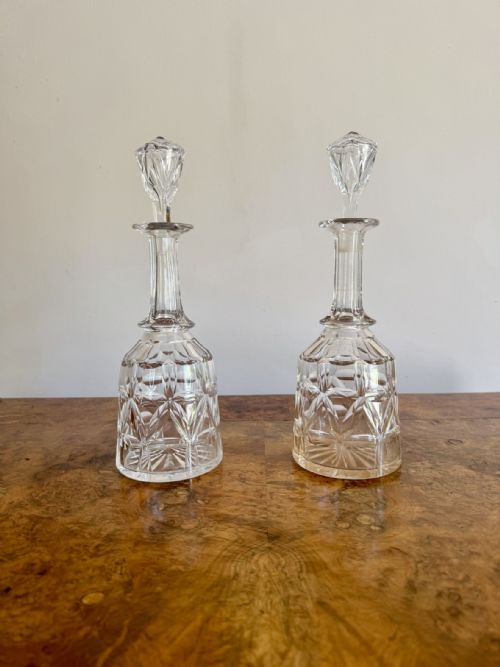
A diamond cut crystal bottle brings brilliant facets and heavy weight to the table, catching the light across decanters and scent bottles.
Diamond Cut Crystal Bottle
A diamond cut crystal bottle encompasses functional vessels designed for the dining table, sideboard, and dressing table. These pieces span decanters, cruet sets, carafes, champagne coolers, and scent bottles.
Materials and construction
These items utilise lead glass and crystal shaped through deep wheel-cutting to create sharp geometric facets. Heavy glass bodies provide the requisite weight and clarity for traditional service.
Many vessels incorporate mounts, collars, and tops in sterling silver, silver plate, or gilt bronze. Metalwork components are secured directly to the glass necks or rims, sometimes bearing hallmarks from early twentieth-century makers.
One novelty decanter takes the unusual botanical form of a Scottish thistle, complete with a silver-plated mount.
Distinctions in quality
Depth and crispness of the wheel-cut facets separate standard production from finer work. Superior examples display sharp, well-defined intersecting lines that refract light intensely.
Weight and metal components also indicate standard. Thicker lead crystal combined with hallmarked sterling silver collars or gilt bronze mounts distinguishes the more substantial pieces.
Hukin & Heath
The Diamond Cut Crystal Bottle Glossary
- Diamond cut
- A pattern of intersecting cuts forming small pyramid shapes across the glass surface. This technique maximises light refraction and provides a tactile grip.
- Decanter
- A vessel used for holding and serving wine or spirits. These pieces typically feature a narrow neck, a flared base, and a matching glass stopper.
- Cruet
- A small container or set of containers designed to hold condiments, oil, or vinegar for the table. They frequently incorporate silver collars and matched glass bodies.
- Lead crystal
- Glass containing a high proportion of lead oxide, which increases brilliance, density, and softness for cutting. It accounts for the substantial heft found in these bottles.
- Sterling silver collar
- A band of high-purity silver fitted around the neck of a bottle or decanter. It often provides structural reinforcement and aesthetic contrast to the cut glass.
Diamond Cut Crystal Bottle: Frequently Asked Questions
How do I clean an old decanter?
Fill the vessel with warm water and mild detergent, avoiding sudden temperature shifts that can crack aged glass.
Use specialist cleaning beads rather than abrasive brushes to reach the base without scratching the interior walls.
Are these stoppers original to the bottles?
Many Edwardian and Georgian decanters retain their matched original stoppers, which were ground to fit specific necks during production.
Examine the frosted grinding on the lower stem to check whether the stopper matches the wear patterns inside the mouth.
What is the difference between crystal and glass?
Crystal contains lead oxide, which adds significant weight, greater clarity, and a resonant ring when struck.
Standard glass lacks this lead content, resulting in a lighter body and less intense light dispersion through the cut facets.
How do I date a cut glass decanter?
Inspect the base for pontil marks, manufacturing style, and the shape of the body, which shifted from mallet forms in the Georgian era to more cylindrical Edwardian profiles.
Silver collars bearing hallmarks provide exact assay years for the mounted metal components.