


Sterling Silver Overlay Bottle
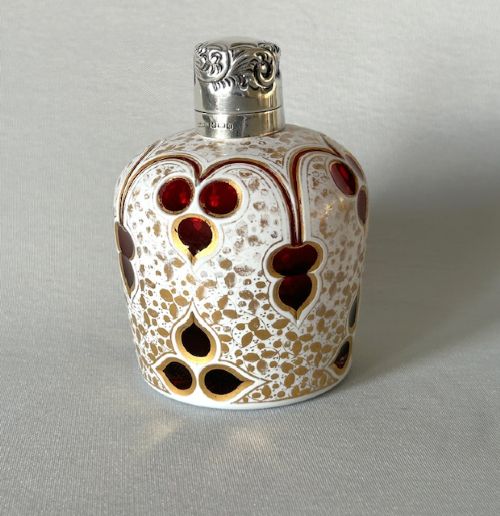
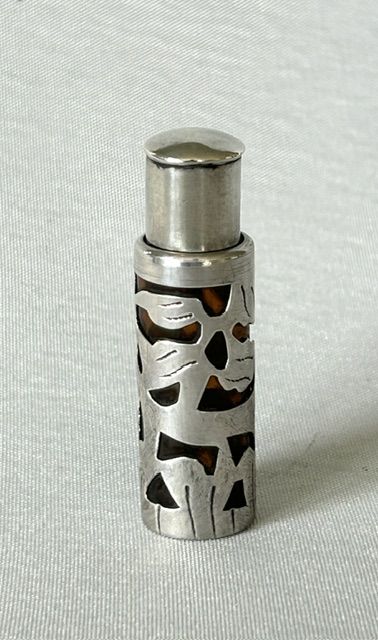
These sterling silver overlay bottle examples combine pierced precious metal with coloured glass to create striking vanity pieces.
Sterling Silver Overlay Bottle
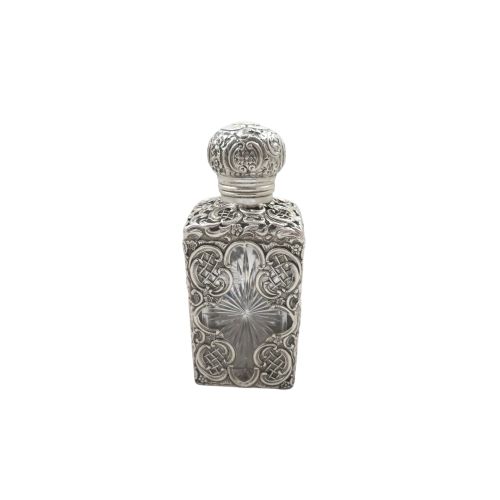
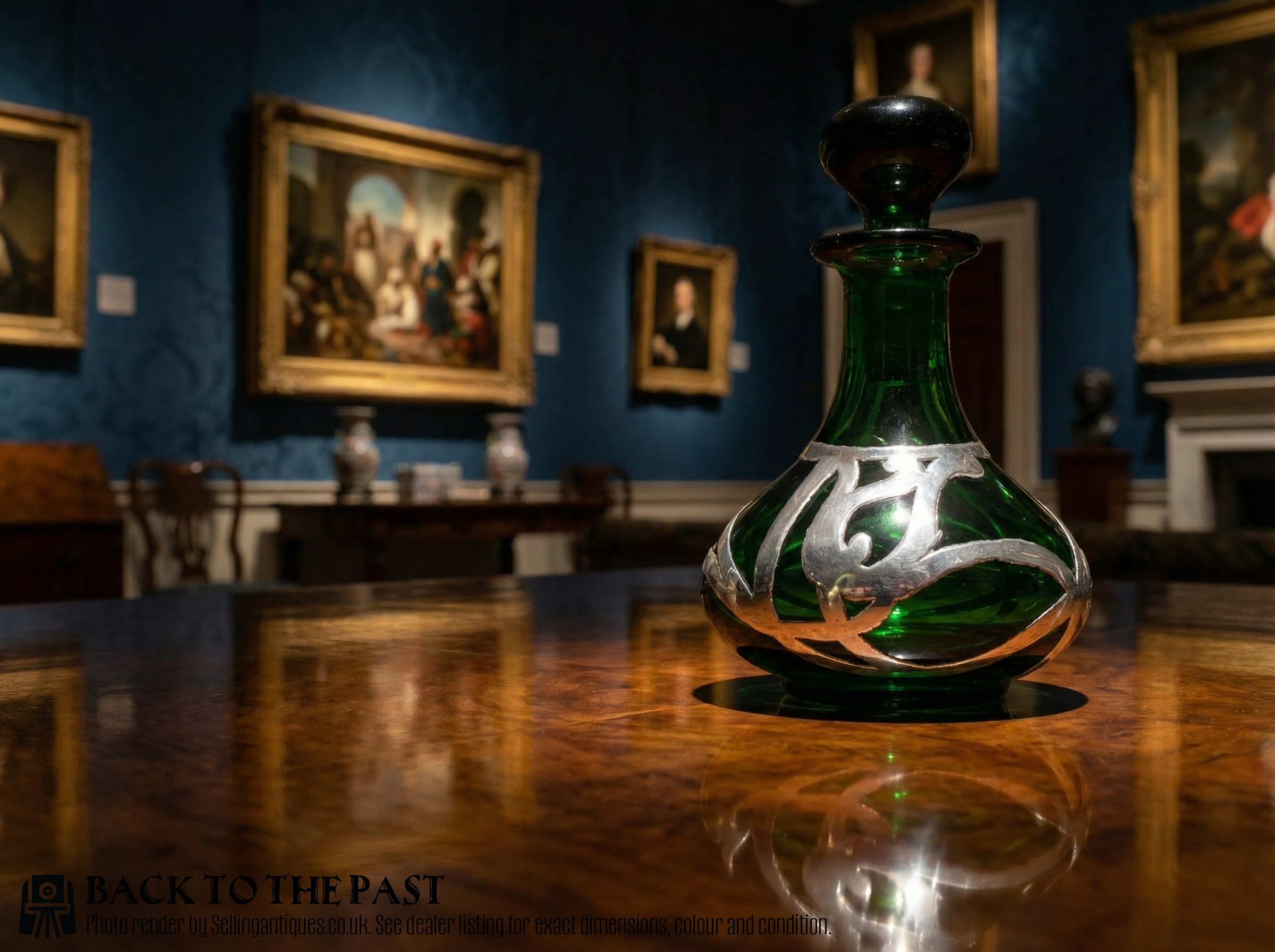
A sterling silver overlay bottle unites a glass body with pierced or solid silver decoration applied to the exterior. Scent bottles, perfume bottles and vanity items dominate the selection across Victorian and Edwardian periods.
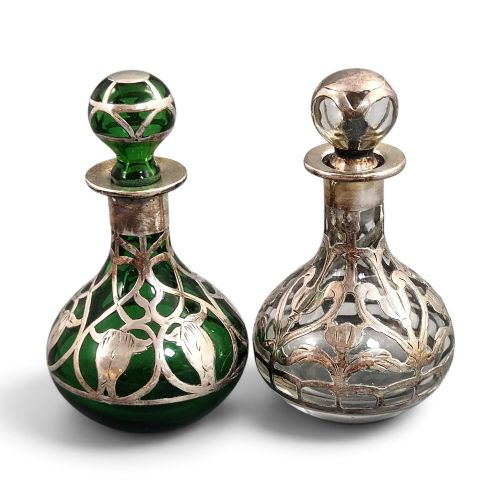
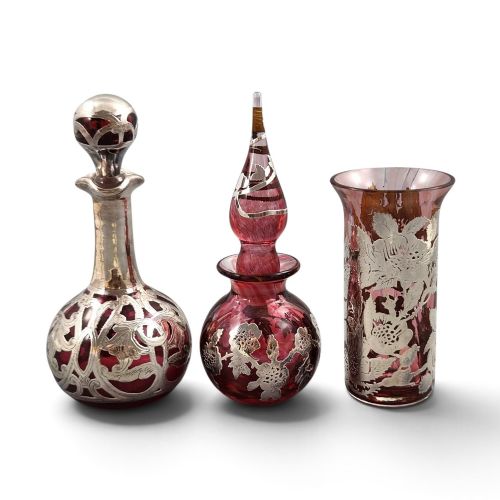
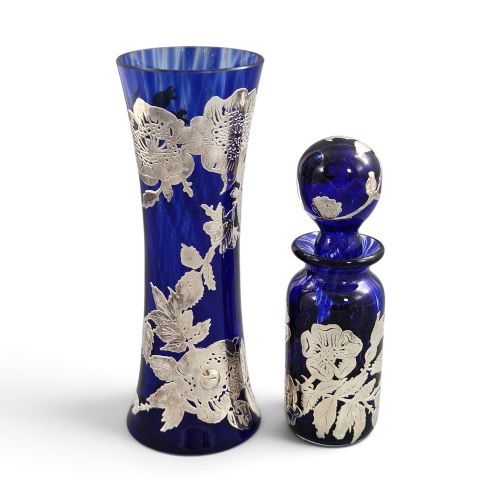
Green glass, ruby glass, cobalt glass and cut glass bodies provide colourful contrasts to the metallic silver sheath. Art Nouveau floral motifs and geometric patterns frequently wind across the glass surface in these designs.
How they were made
Silversmiths applied thin sheets of sterling silver directly onto blown or cut glass vessels, often using chemical bonding or mechanical gripping techniques to secure the metal. The silver was then hand-engraved or pierced to reveal the coloured glass beneath.
Makers utilised rich jewel tones in the glass, including Bristol green, cranberry and cobalt, which intensified the visual impact of the metal overlay. Glasshouses shaped decanters and perfume flasks before silversmiths added their decorative mounts.
Some Edwardian dressing tables held matching sets where a single vibrant bottle sat proudly amidst silver brushes and trays.
What varies in quality
The weight and thickness of the silver overlay distinguish finer examples from simpler production pieces. Heavier gauge silver allows for deeper hand-chasing and more intricate piercing work.
The precision of the fit between the silver sheath and the underlying glass vessel dictates the overall refinement. Superior pieces display seamless integration without gaps between the metalwork and the contour of the bottle.
Gorham·Alvin·Laugharne Glass
The Sterling Silver Overlay Bottle Glossary
- Overlay
- A layer of sterling silver applied directly to the exterior of a glass bottle or vase. This technique creates a strong contrast between the polished metal and the coloured glass beneath.
- Sterling silver
- An alloy of silver containing ninety-two point five percent pure silver and seven point five percent other metals, usually copper. This standard composition provides durability for detailed piercing and engraving.
- Art Nouveau
- A style popular around nineteen hundred characterised by flowing, organic lines and floral motifs. Pieces from this period often incorporate sinuous plant tendrils into the silver metalwork.
- Cut glass
- Glassware shaped and patterned by abrasive wheel cutting before the application of silver mounts. Faceted surfaces catch the light alongside the polished metal.
Sterling Silver Overlay Bottle: Frequently Asked Questions
How do I clean the silver without damaging the glass?
Use a soft cloth and a gentle silver polish applied sparingly to the metal portions only. Avoid immersing antique bottles in harsh liquid dips that might loosen the adhesive bond between the silver and glass.
Keep moisture away from the interior corks or stoppers to preserve any original fitting. Professional care ensures the delicate overlay remains securely attached to the vessel.
Are these bottles safe for holding perfume today?
Most antique scent bottles function better as display objects than as daily carriers for modern cosmetics. Older stoppers often lack modern airtight seals, meaning liquid contents can evaporate or leak over time.
Enjoy them as vanity dressing table accessories rather than functional travel flasks. Empty interiors prevent residue build-up inside fragile coloured glass bodies.
How can I tell Victorian from Edwardian examples?
Victorian pieces frequently feature geometric cut glass paired with heavier, structured silver mounts dating from the late nineteenth century. Hallmarks stamped into the silver provide exact assay dates for British items.
Edwardian and nineteen-hundreds pieces lean heavily into flowing Art Nouveau botanical designs. Lighter, more sinuous silver work characterises the turn-of-the-century aesthetic.
Why do some bottles have coloured glass underneath?
Coloured glass provides a striking visual background that accentuates the cut-out patterns in the silver overlay. Jewel tones like green, ruby and cobalt became popular choices for Victorian and Edwardian vanity items.
The contrast allows the intricate metalwork to stand out clearly against the vibrant body of the flask.