
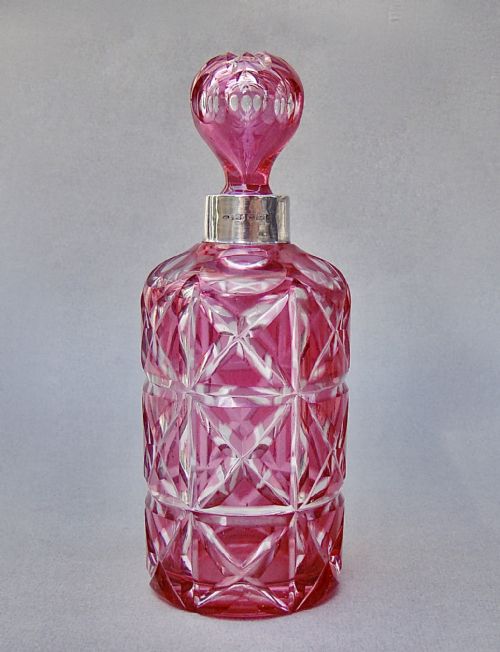


Edwardian Glass Perfume Bottle
When you search for an edwardian glass perfume bottle, you find portable vanity vessels combining heavy cut glass with hallmarked sterling silver mounts.
Edwardian Glass Perfume Bottle
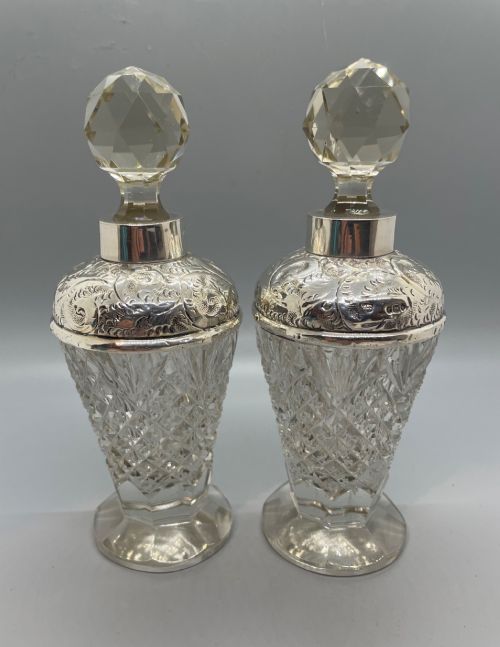
An edwardian glass perfume bottle is a vanity accessory designed for travelling or dressing table display, combining a glass reservoir with a protective metal collar and lid. The pieces seen here span from the late nineteenth century into the 1930s, encompassing Victorian, Edwardian, Art Nouveau, and Art Deco aesthetics alongside George V examples.
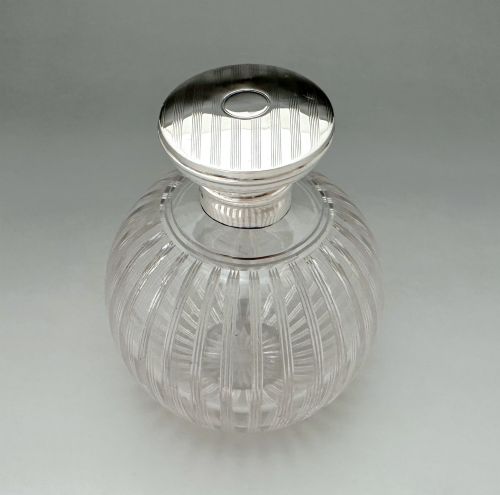
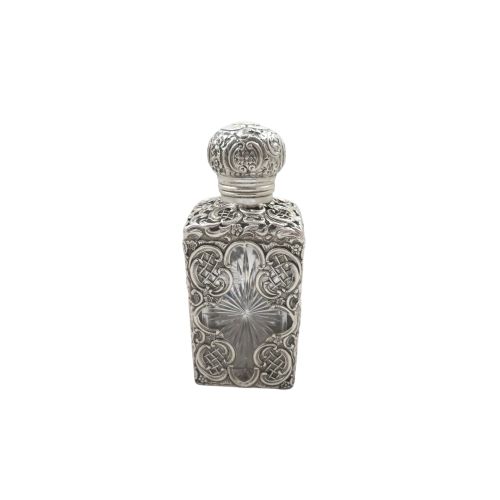
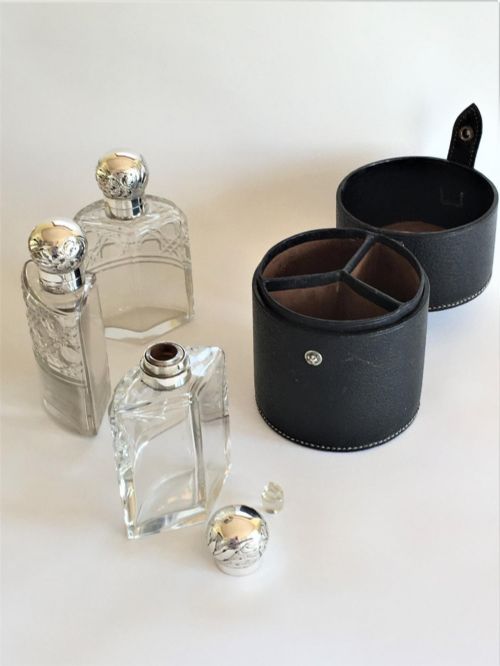
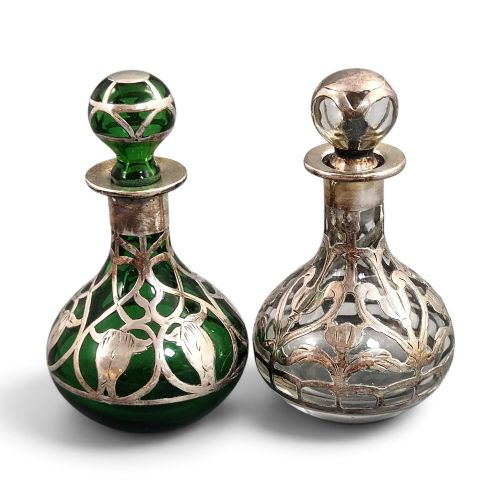
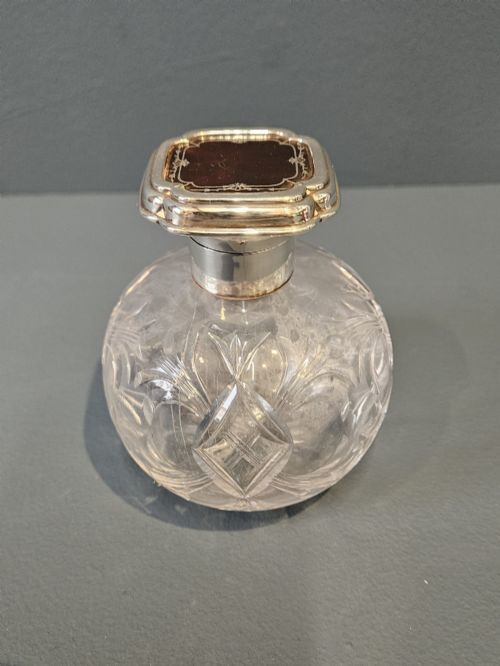
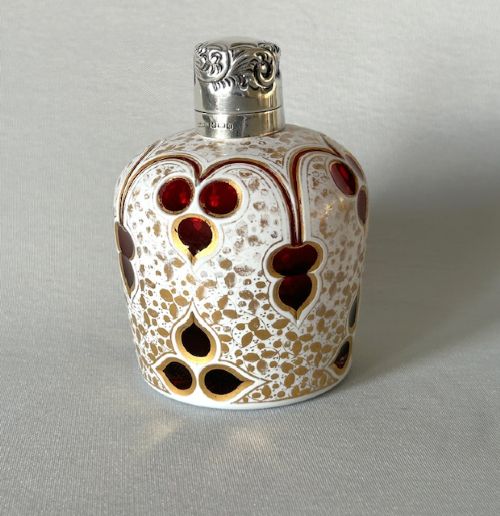
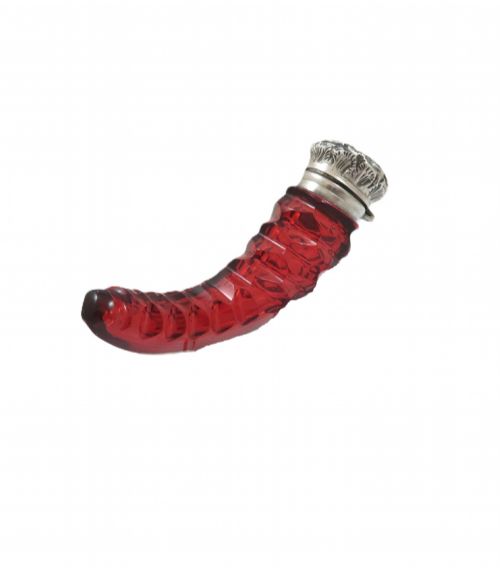
You will most commonly encounter cut glass bodies fitted with sterling silver screw caps or hinged lids, often bearing hallmarks from Birmingham or Chester. Alongside standard upright vessels, forms include globular decanters, cased travel trios, and overlay glass coloured in deep cranberry, ruby, or green.
How they were made
Makers formed the glass bodies using heavy lead crystal or coloured glass, applying deep diamond cutting or overlay techniques to create faceted and textured surfaces. Artisans then fitted these vessels with custom sterling silver collars, often embellished with chased floral motifs or organic Art Nouveau metalwork overlays.
Where colour is present, such as in cranberry or ruby glass, workers fused metallic oxides into the molten material before shaping. Additional luxury finishes include guilloche enamel panels, inset tortoiseshell plates, and finely engraved glass designs.
Listings feature sterling silver, cut crystal, tortoiseshell, and guilloche enamel across Victorian, Edwardian, and Art Deco periods.
What varies in quality
Quality rests upon the weight and depth of the glass cutting, the crispness of the silver hallmarks, and the structural integrity of the hinged mounts. Superior vessels feature thick lead crystal that catches the light cleanly, paired with substantial silver lids that close flush against the collar.
The sophistication of the secondary materials also divides standard production from finer output. Pieces incorporating hand-applied guilloche enamel, intricate silver overlay, or unusual forms like owls and hearts represent the upper tier of maker craftsmanship.
Gorham·Harold Bushell & Co·Barnsley & Co·George Unite·Rene Lalique·Henry Matthews·J. Gloster
The Edwardian Glass Perfume Bottle Glossary
- Cut glass
- Glassware shaped and patterned by holding the vessel against a rotating abrasive wheel. This technique creates sharp, light-reflecting facets across the body of the bottle.
- Sterling silver mount
- The protective metal collar and cap fitted to the neck of the bottle. These mounts often carry full assay office hallmarks indicating the year of manufacture.
- Cranberry glass
- Transparent red glass produced by adding gold chloride to the molten batch. It is frequently seen paired with silver mounts in pieces from this era.
- Guilloche enamel
- Decorative metalwork covered in translucent enamel over an engine-turned geometric pattern. It provides a colourful, patterned finish to silver lids.
- Overlay
- A decorative technique where a second layer of coloured glass or pierced metal is fused over a clear body. The outer layer is then cut away to reveal the contrasting base material underneath.
Edwardian Glass Perfume Bottle: Frequently Asked Questions
What is an edwardian glass perfume bottle?
These items are small personal vanity vessels created to hold liquid scents and colognes on a dressing table or inside a travelling case. They combine glass reservoirs with protective metal hardware.
The category encompasses straightforward cut crystal cylinders alongside richly decorated vessels featuring silver overlay, enamel work, and coloured glass bodies from the early twentieth century.
How do I date a silver mounted scent bottle?
Dating relies primarily on the assay office hallmarks stamped into the sterling silver collars or lids. These tiny marks indicate the city of testing, the standard of silver, and a specific date letter for the year.
Stylistic indicators such as flowing Art Nouveau metalwork or geometric Art Deco enamel panels also help narrow down the period of production when hallmarks are rubbed or absent.
Were these bottles meant for travel?
Many examples were specifically engineered for portability, housed in fitted leather cases or secured with tightly threaded screw caps to prevent leaks during transit. Gentleman's versions even included lockable mechanisms.
Larger stationary pieces remained on dressing tables, while smaller globular or pocket-sized variants accompanied their owners on journeys.
What colours of glass were used?
Makers utilised clear lead crystal alongside vibrant saturated tones such as cranberry, ruby, and green. Overlay techniques combined these colours with clear glass to create contrasting visual patterns.
Tortoiseshell insets and guilloche enamel in various shades further expanded the palette beyond plain glass and silver.