
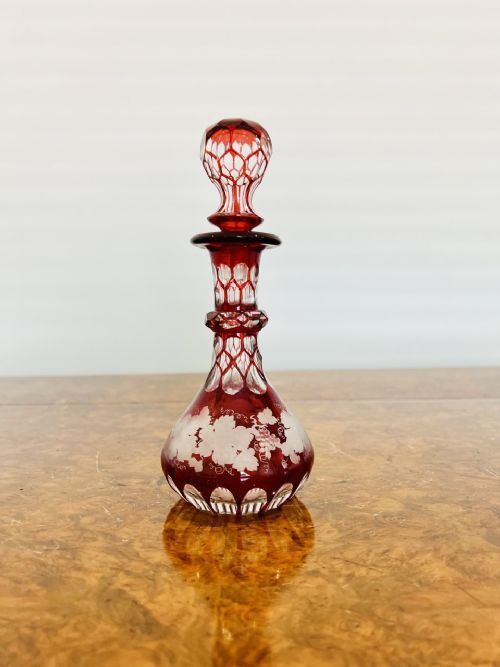


Ruby Glass Perfume Bottle
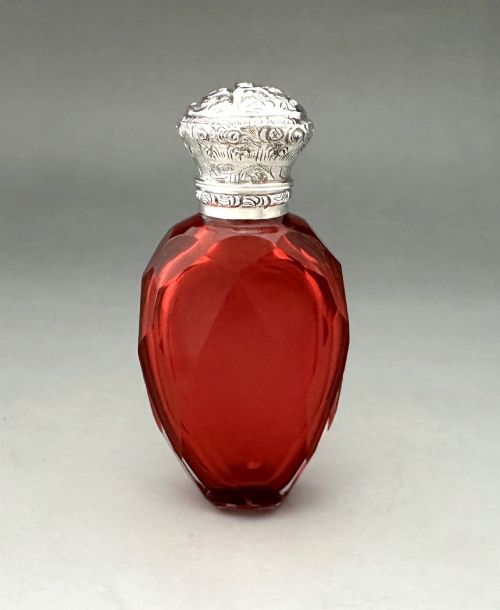
A ruby glass perfume bottle offers deep crimson tones and functional elegance, catching the light on any dressing table.
What these pieces are
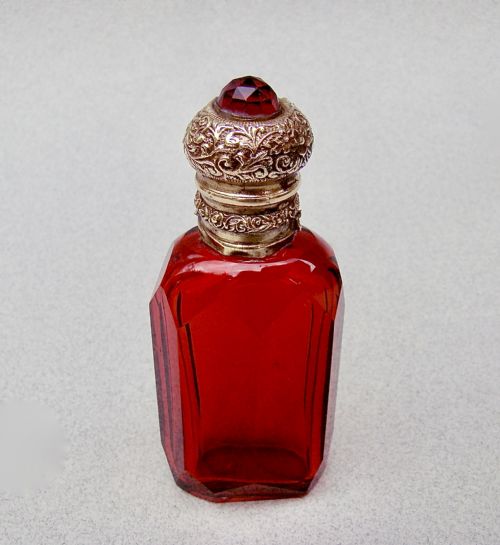
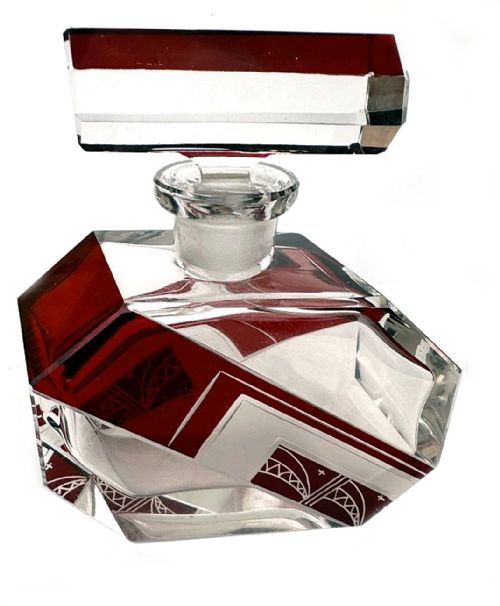
A ruby glass perfume bottle encompasses small scent containers shaped by Victorian, Edwardian, and Art Deco aesthetics. These vessels range from tiny pocket sizes to larger vanity set centerpieces.
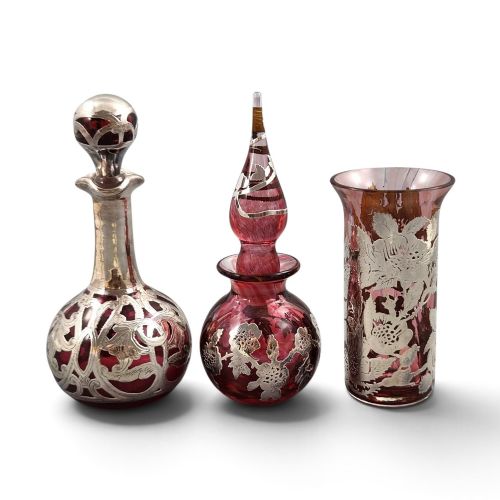
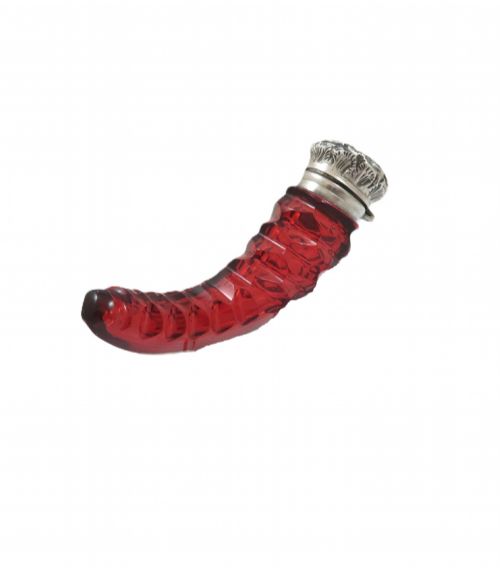
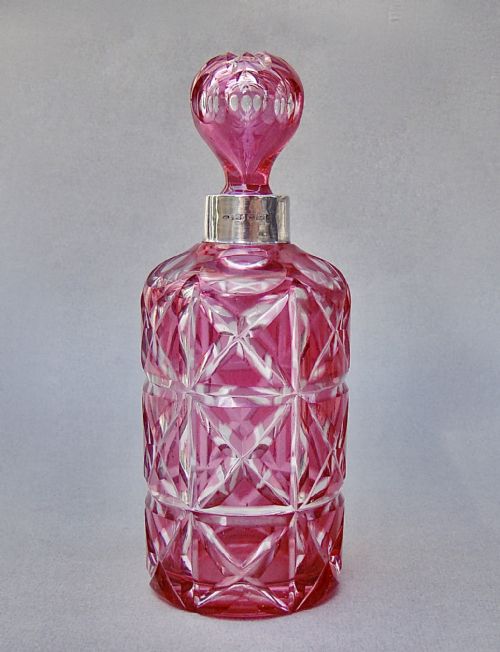
You will most frequently encounter examples paired with sterling silver caps, mounts, or intricate silver overlays. The records show forms spanning faceted double-end designs, triangular cuts, and smooth overlay cylinders.
How they were made
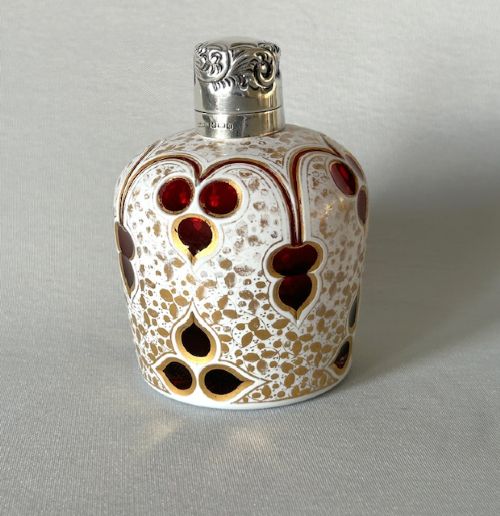
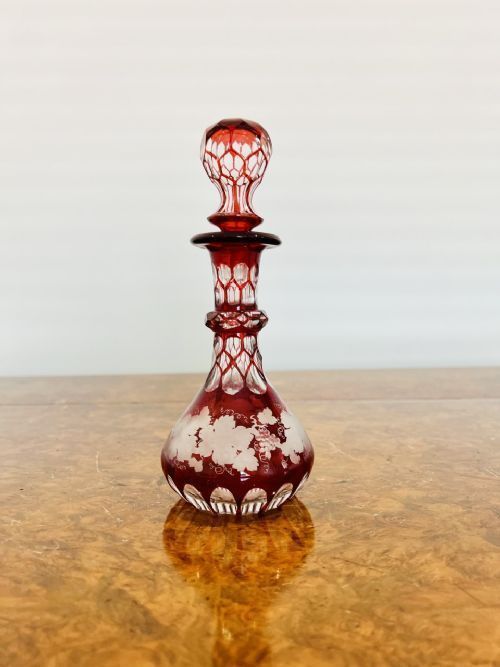
Makers utilised rich ruby, cranberry, and mercury glass, often shaping the material through cutting, facet grinding, and overlay techniques. The glass body provides a deep crimson ground for external decoration.
Silversmiths finished these vessels with sterling silver caps, hinged tops, or pierced metal overlays. Some pieces incorporate silver gilt or feature engraved details directly onto the metal mounts.
Retail Price Guide 2026
Typical UK retail prices for ruby glass perfume bottle, calculated from the Sellingantiques database of over a million retail prices indexed since 2003. This retail price guide relies exclusively on Sellingantiques data; no external sources or auction records are used, so the figures do not describe the wider market.
What varies in quality
The sophistication of the silver mounts and the precision of the glass cutting separate standard examples from finer works. Deep facet cutting and substantial sterling silver overlay demonstrate superior craftsmanship.
The depth and consistency of the red glass colour, alongside the integration between glass body and metal mount, determine the overall character of the piece.
Gorham·Harold Bushell & Co·Sampson Mordan
The Ruby Glass Perfume Bottle Glossary
- Ruby glass
- A type of red glass coloured with gold or copper compounds during manufacture. It yields a rich, transparent crimson hue.
- Cranberry glass
- A transparent pinkish-red glass created by adding gold to the molten batch. It is frequently seen alongside ruby glass in historical scent bottles.
- Silver overlay
- A decorative technique where sterling silver is applied directly onto the surface of the glass in intricate patterns. This method became popular during the Victorian and Edwardian periods.
- Double end
- A scent bottle design featuring two separate compartments accessed from opposite ends, often holding two different perfumes or salts.
- Mercury glass
- A blown double-walled glass coated on the inside with a silver liquid solution to create a reflective mirror effect.
Frequently Asked Questions
How do I clean my scent bottle?
Wipe the glass gently with a soft cloth and avoid submerging antique silver mounts in harsh cleaning solutions. Keep moisture away from internal cork or paper liners.
Polish the sterling silver components carefully with a specialist cloth, taking care not to snag the metal on the glass body.
Were these bottles used for travel?
Smaller examples with secure screw caps or tightly fitted silver lids were designed for pocket or handbag use during travel. Double-end versions allowed users to carry multiple scents.
Larger vanity bottles remained stationary on dressing tables as part of matching grooming ensembles.
How can I date a bottle?
Examine the hallmarks on the sterling silver caps or mounts to identify the assay office and exact year of manufacture. Stylistic markers like Art Deco geometry or Victorian floral overlays also point to specific decades.
Glass manufacturing techniques, such as hand-cutting or overlay application, help confirm the broader period of origin.
What is mercury glass?
Mercury glass is a blown double-walled material featuring a silvered inner lining that gives it a bright, reflective appearance. It mimics solid mercury without using the toxic metal.
These pieces often have a small pontil mark where the glass blower sealed the base after coating.