
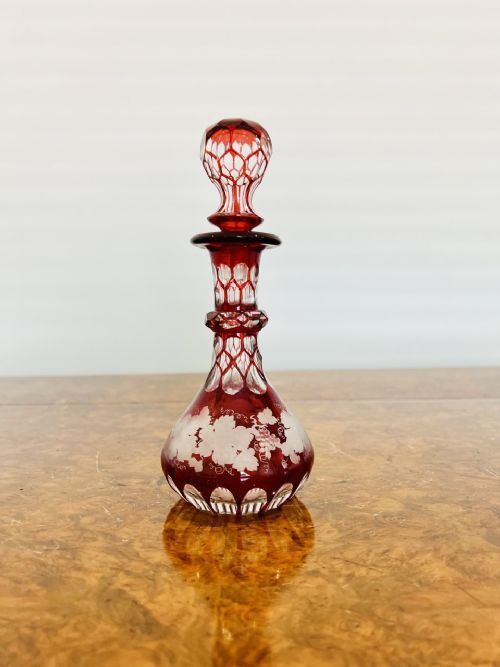


Ruby Glass Scent Bottle
A ruby glass scent bottle combines deep, rich colour with silver or gilt mountings to hold precious perfume on a dressing table or chatelaine.
Ruby Glass Scent Bottle
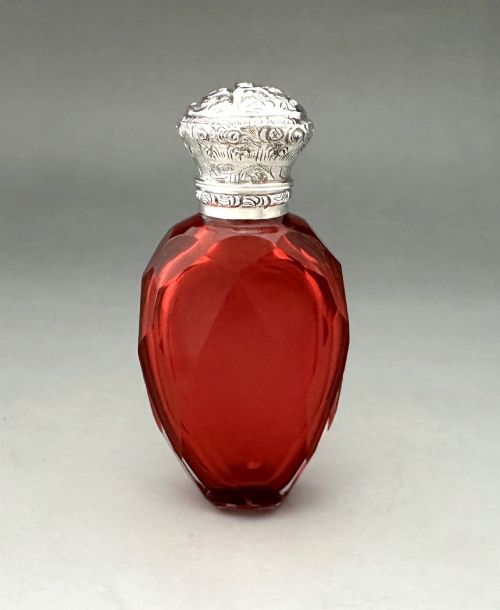
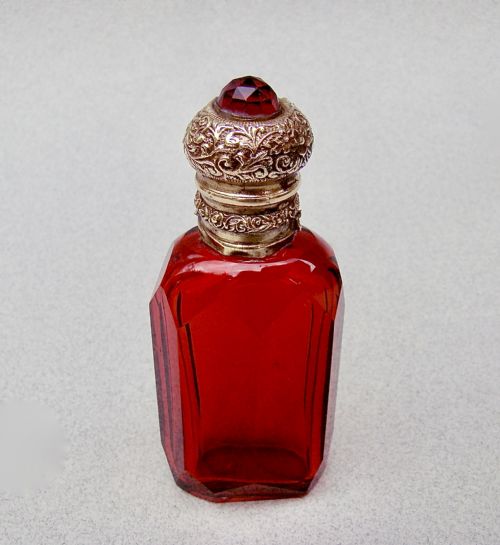
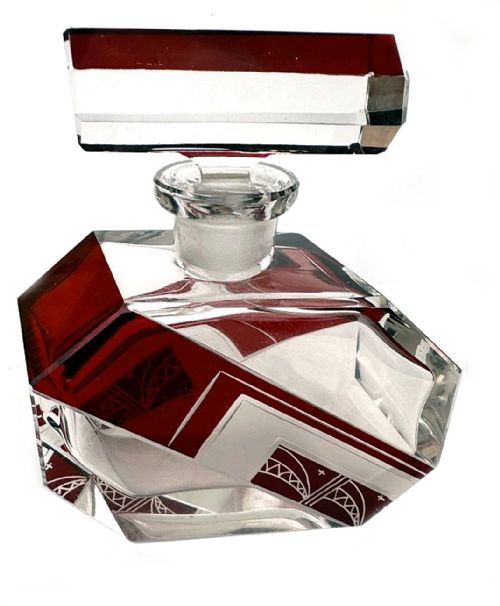
A ruby glass scent bottle is a small vessel designed to hold perfume, most commonly encountered from the Victorian and Edwardian periods alongside later examples from the Art Deco era. The selection spans single-ended pocket containers and double-ended designs with stoppers or caps at both extremities for distinct scents.
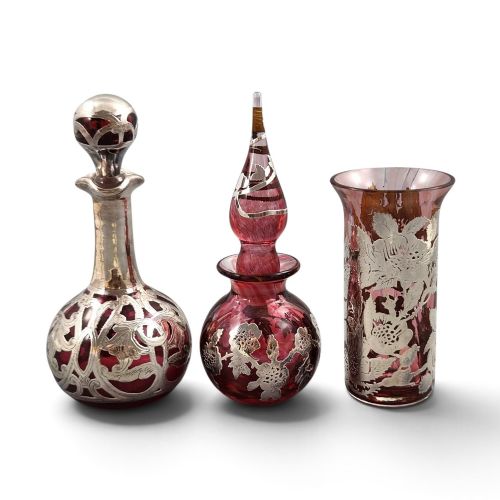
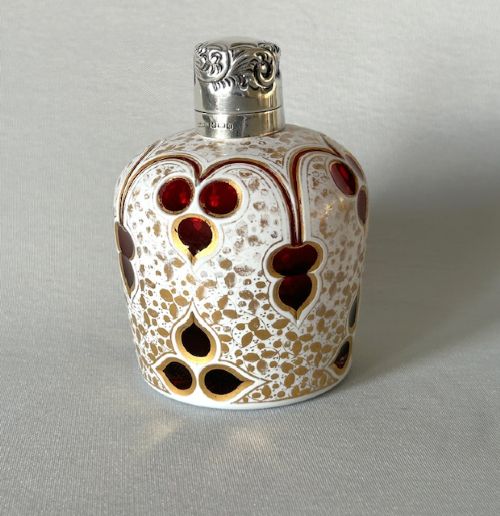
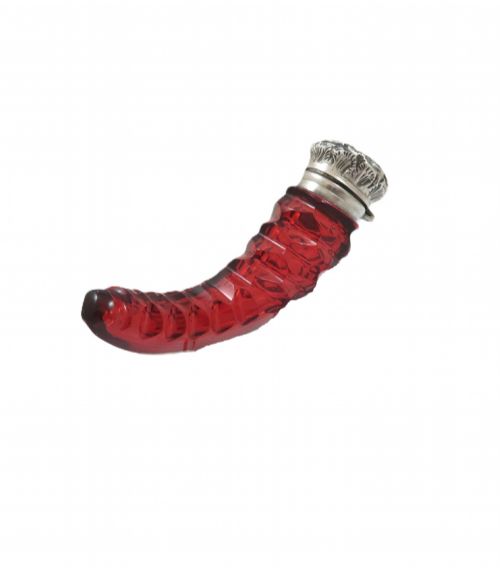
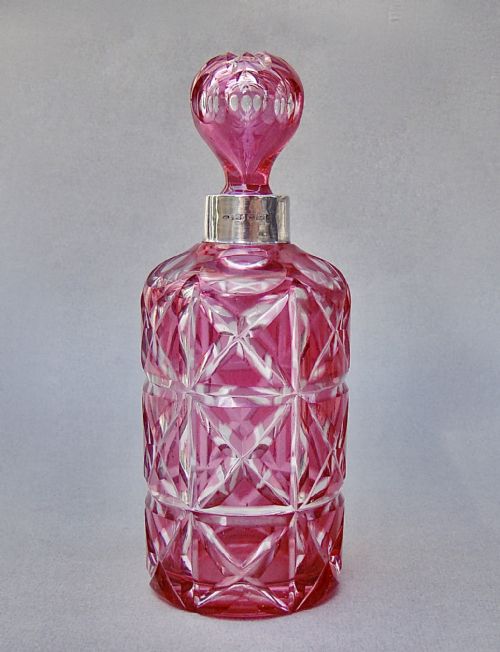
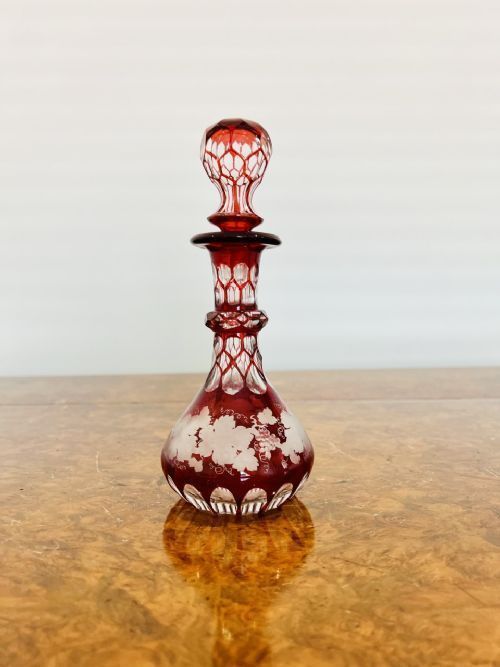
Many of these bottles are paired with sterling silver, silver gilt, or ormolu mountings, whilst others take specific forms such as cornucopias, owls, or overlay glass tubes. Bohemian workshops and English makers alike produced these pieces in varying hues of ruby and cranberry glass, often enhanced by cutting, gilding, or enamel work.
Materials and manufacture
The vessels rely on glass coloured with gold or copper compounds to achieve deep ruby and cranberry tones, sometimes shaped through overlay techniques where clear or white glass is cased with coloured layers before being cut away.
Silversmiths and metalworkers fitted these glass bodies with hinged or screw caps, often decorated with embossed designs, chasing, or gilt finishes to complete the piece.
Ruby Glass Scent Bottle Retail Price Guide 2026
Typical asking prices for ruby glass scent bottle among the pieces listed under this phrase on Sellingantiques today, from the lower quarter to the upper quarter. They describe what is for sale here now, not the wider market.
Listings span Victorian, Edwardian, and Art Deco periods, featuring sterling silver, cranberry glass, and cut crystal.
Markers of quality and execution
Quality rests in the depth and clarity of the ruby glass, the precision of the facet cutting, and the intricacy of the silver or gilt mountings applied to the body.
Maker marks on the silver caps, well-fitted original stoppers, and unusual structural forms such as double-ended vessels or figural designs elevate the distinction of individual pieces.
Sampson Mordan·George Brace·Harold Bushell and Co·Charles May·Karl Palda·Gorham and Laugharne
The Ruby Glass Scent Bottle Glossary
- Cranberry glass
- A transparent pinkish-red glass created by adding gold to the molten mixture, frequently seen in Victorian scent bottles.
- Double-ended
- A bottle featuring compartments and caps at both ends, allowing the owner to carry two separate perfumes.
- Overlay glass
- A technique involving layers of different coloured glasses where the outer layer is partially cut away to reveal the contrasting colour underneath.
- Vinaigrette
- A small ornamental box or bottle containing a perforated grille over a sponge soaked in aromatic vinegar, often combined with scent compartments.
- Chatelaine
- A decorative belt hook worn with suspended chains carrying household accessories like scent bottles, keys, and watches.
Ruby Glass Scent Bottle: Frequently Asked Questions
How do you use a double-ended scent bottle?
Each end unscrews or unclips to reveal a separate stopper, allowing two different perfumes to be stored in one vessel.
They were designed for pocket or chatelaine use when travelling.
What is the difference between ruby glass and cranberry glass?
Both use gold chloride in the batch, but ruby glass is typically deeper and darker in tone.
Cranberry glass tends towards a brighter, lighter pinkish-red shade.
Are original stoppers common?
Many surviving bottles retain their internal glass stoppers beneath the outer silver caps, though replacements do occur.
Original stoppers enhance the completeness of the piece.
How can you date an antique scent bottle?
Hallmarks on the silver mounts provide exact assay office years and maker marks for English pieces.
Glass styles, overlay techniques, and colour preferences offer clues for unmarked examples.