

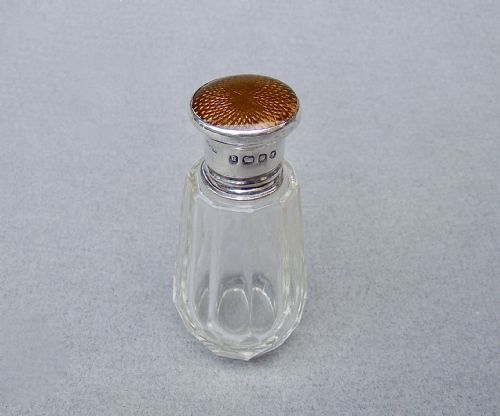


1930s Glass Perfume Bottle
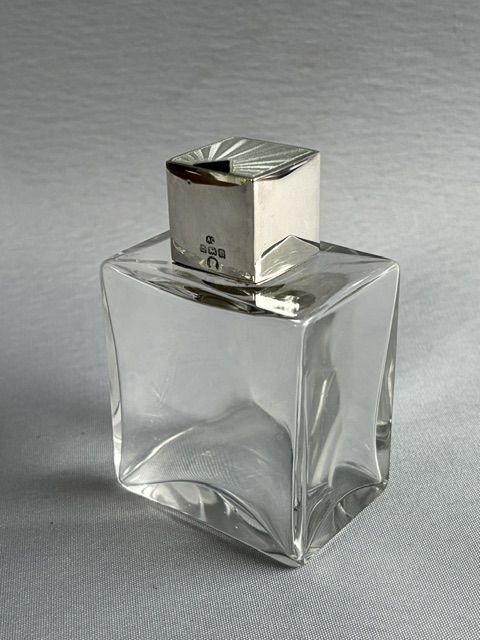
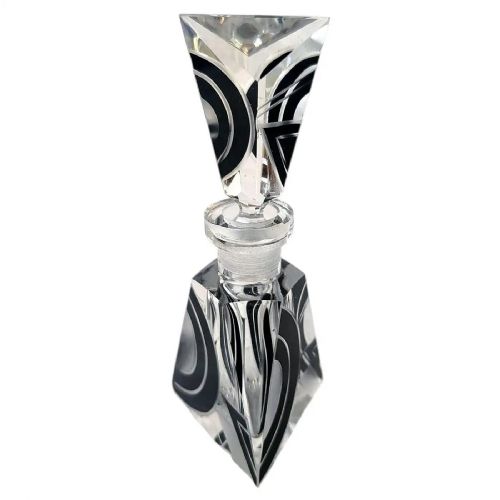
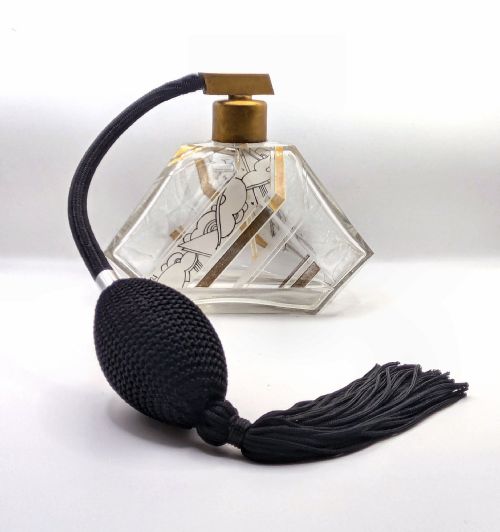
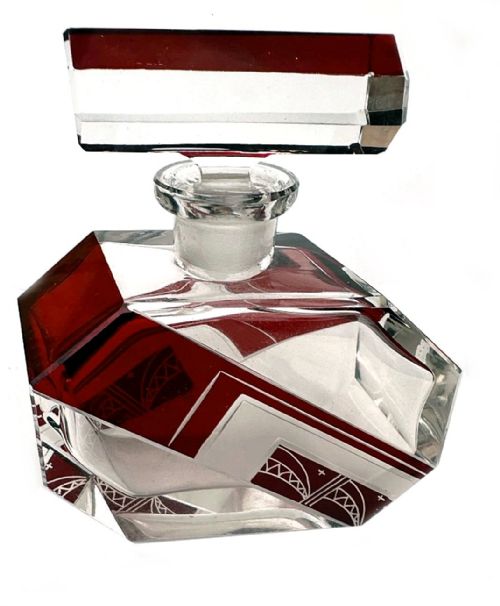
These pieces are a 1930s glass perfume bottle, bringing Art Deco geometry and colour to the dressing table.
1930s Glass Perfume Bottle
A 1930s glass perfume bottle takes the form of scent bottles, atomisers with spray bulbs, and matching vanity jars designed for the dressing table. Most examples seen here originate from Czechoslovakia, France, and Britain during the Art Deco period.
Makers produced these containers in geometric shapes, globes, and tall silhouettes, often pairing moulded or cut glass with metal mounts. The selection ranges from simple coloured glass vessels to complex atomisers mounted on stands.
French makers such as Rene Lalique and Sabino contributed opalescent pieces, while Bohemian workshops produced heavy cut crystal and enamelled designs. Buyers encounter both stoppered scent bottles and functional atomisers equipped with chrome or fabric hardware.
Materials and Construction
Makers combined glass with sterling silver, chrome, enamel, and fabric to build these vanity items. The glass bodies relied on moulding, cutting, or crystal techniques to achieve geometric facets and opalescent depths.
Metal components, including sterling silver mounts and mechanical atomiser hardware, were soldered or fitted directly to the glass necks. Enamel work, particularly guilloche patterns, added coloured ornamentation to the silver collars and lids.
1930s Glass Perfume Bottle Retail Price Guide 2026
Typical asking prices for 1930s glass perfume bottle among the pieces listed under this phrase on Sellingantiques today, from the lower quarter to the upper quarter. They describe what is for sale here now, not the wider market.
Listings feature glass, enamel, chrome, and sterling silver across Czech, French, and British origins.
Assessing Quality and Manufacture
Quality rests in the weight of the crystal, the precision of the geometric glass cutting, and the crispness of the moulded details. Pieces with complex colouration, such as deep amber or opalescent tones, show superior material handling.
The integration of metalwork distinguishes the tier of manufacture, where heavy sterling silver and detailed guilloche enamel indicate workshop production over standard commercial output. Intricate atomiser stands and intact mechanical hardware complete the upper end of the range.
Karl Palda·Henry Perkins·Rene Lalique·Rudolf Hlousek·Goldsmith's and Silversmith's Co.·Hermanova
The 1930s Glass Perfume Bottle Glossary
- Atomiser
- A perfume bottle fitted with a spray mechanism, often including a rubber bulb and fabric mesh. This hardware allowed the user to mist fragrance directly onto the skin.
- Guilloche
- An intricate mechanical engraving technique used on metal surfaces beneath translucent enamel. It produces repeating geometric patterns that catch the light.
- Opalescent Glass
- Glass containing additives that create a milky, semi-translucent appearance with shifting blue and amber tones. This technique was favoured by French makers of the period.
- Sterling Silver
- A silver alloy containing ninety-two point five percent pure silver by mass, used for the lids and collars of vanity items. British pieces carry hallmarks verifying this standard.
1930s Glass Perfume Bottle: Frequently Asked Questions
How do I use a vintage atomiser?
Vintage atomisers rely on a rubber bulb and internal tube to draw liquid up and disperse it as a fine spray. Many surviving examples retain hardened rubber or missing bulbs that require replacement for functional use.
Buyers often keep these pieces for display rather than daily application. The original mechanisms require careful handling to preserve the vintage metal components.
What is guilloche enamel?
Guilloche enamel is a decorative technique where a metal base is machine-engraved with precise geometric patterns before being coated in translucent coloured enamel. This allows the engraved pattern to show through the glossy surface.
Silver items from British makers frequently feature this coloured decoration on lids and collars. The style matches the geometric lines typical of the period.
Did these bottles come in sets?
Makers frequently produced matching vanity sets that included perfume bottles, powder boxes, and atomisers designed to sit together on a mirrored tray. Surviving matched pairs, such as globe bottles, indicate how they were originally displayed.
Individual pieces often became separated over decades of use. Finding a complete matching set remains less common than encountering single vessels.