

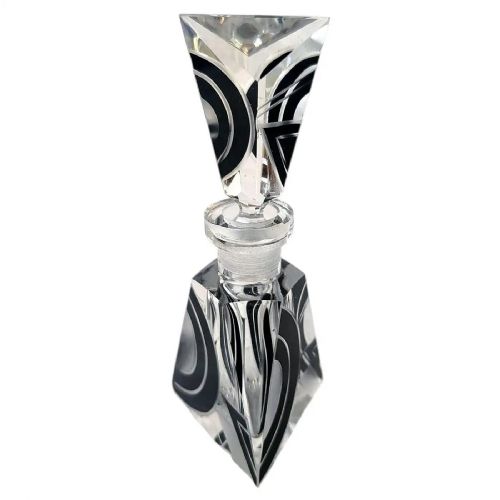


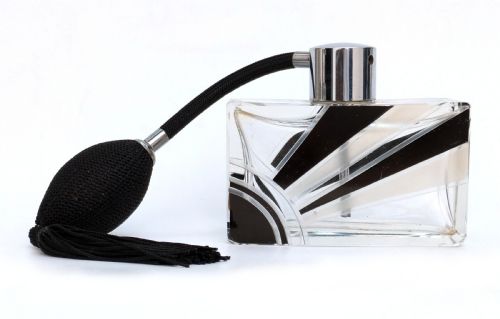


Black Enamel Perfume Bottle
These black enamel perfume bottle examples bring striking Art Deco geometry and rich colour to a vanity table.
Black Enamel Perfume Bottle
A black enamel perfume bottle represents a distinct form of vanity accessory designed during the Art Deco period of the 1930s. When you search for a black enamel perfume bottle, you encounter vessels that combine dark enamelling with cut glass and clear glass bodies.
The objects on this page span the 1930s and originate from places such as the Czech Republic. Alongside standard perfume bottles, you will find related forms including scent bottles and ladies perfume atomizers.
Most pieces date to around 1930 and incorporate geometric motifs typical of the Art Deco style. Makers such as Karl Palda contribute significant examples featuring enamel, metal, and fabric elements.
How they were made
These items utilise materials such as glass, cut glass, clear glass, black enamel, and metal, sometimes accented with gold leaf or fabric. Artisans shaped glass vessels through cutting and moulding techniques before applying enamel decoration.
The combination of glass and metal components required precise assembly during the 1930s manufacturing process. Atomizer mechanisms and enamel surface treatments demand specialised craftsmanship typical of Czech glassworks from the period.
Black Enamel Perfume Bottle Retail Price Guide 2026
Typical asking prices for black enamel perfume bottle among the pieces listed under this phrase on Sellingantiques today, from the lower quarter to the upper quarter. They describe what is for sale here now, not the wider market.
Listings demonstrate that 1930s Art Deco pieces frequently combine black enamel with cut glass, clear glass, and metal components.
What varies in quality
The standard of a piece depends heavily on the precision of the cut glass facets and the durability of the enamel work. Finer examples display crisp geometric lines and careful application of materials like gold leaf.
Design complexity also separates standard items from superior pieces, particularly in works associated with known designers like Karl Palda. The integration of metal hardware and fabric components influences the overall refinement of each scent bottle.
Karl Palda
The Black Enamel Perfume Bottle Glossary
- Art Deco
- A design style from the 1920s and 1930s characterised by geometric shapes and streamlined forms. This aesthetic defines the architectural lines of these scent bottles.
- Atomizer
- A spray mechanism attached to a perfume bottle for dispensing fragrance in a fine mist. Ladies perfume atomizers from this era often feature complex metal hardware.
- Cut glass
- Glass decorated by cutting facets into the surface using a wheel. This technique creates sparkling geometric patterns on the body of the vessel.
- Enamel
- A glassy substance fused to metal or glass through firing to provide colour and decoration. Black enamel provides a stark contrast to clear or coloured glass bodies.
Black Enamel Perfume Bottle: Frequently Asked Questions
What is a black enamel perfume bottle?
A black enamel perfume bottle is a vanity container typically produced during the Art Deco era of the 1930s. These vessels combine dark enamelled decoration with glass bodies.
Many examples originate from the Czech Republic and feature geometric cutting characteristic of the period.
How do I date these perfume bottles?
You can date these items by examining their stylistic markers, such as Art Deco geometric cuts and specific enamel colour palettes. Most pieces in this category originate from around 1930.
Maker attribution and Czech origins also help place these objects firmly within the interwar period.
What materials are used?
These vanity items incorporate glass, cut glass, clear glass, and black enamel as primary components. Additional materials include metal, fabric, and occasional applications of gold leaf.
Atomizer versions incorporate functional metal spray hardware alongside the glass reservoir.
How were atomizers used?
An atomizer served as a functional dispenser that transformed liquid perfume into a fine mist via a squeeze bulb and metal tube. Ladies utilised these vessels on dressing tables for daily fragrance application.
The mechanical parts required careful manufacturing to ensure proper pressure and fluid delivery.